Oct. 2025 Recs: Tasty Tales


Without in any way limiting the author’s exclusive rights under copyright, any use of this publication to “train” generative artificial intelligence (AI) technologies to generate text is expressly prohibited. The author reserves all rights to license uses of this work for generative AI training and development of machine learning language models.


Little blog update: there won’t be a book list in November, since I’m traveling for most of this month. 

Welcome to October! 

 I’d originally planned to make a list featuring some more scary stories, but after several tough weeks, I decided to focus on something lighter and tastier: food! Have you ever thought about how the things we eat affect our lives? Wondered about how it got on your plate? Did you know you’ve probably only eaten a single banana species your entire life? Or maybe you’re more interested in trying new foods, or expressing yourself through the culinary arts. Food is an important part of everyone’s lives, and that’s what this book list is all about. Get your favorite fall treats and dive into some delicious reads. 

Nonfiction

Eating to Extinction: The World’s Rarest Foods and Why We Need to Save Them by Dan Saladino

This is one of my favorite books that I’ve read in the last couple years. Saladino travels the globe to find and taste the rarest foods in the world: wild honey in Tanzania, the hardy Scottish grain bere, the rare black Korean chicken Yeonsan Oyge (literally all black, including its bones), and many others. Each chapter focuses on a different rare food while also offering deep dives on food and agricultural history. It looks at how scientific processes like selective breeding and gene editing have helped create our diets today, and shows the efforts to preserve diverse and traditional foods today. Throughout the book, Saladino expresses the need for more genetic diversity in our current food systems. For example, the Cavendish banana, which is probably the only type of banana you’ve ever eaten, is incredibly vulnerable to disease because it can only be produced by cloning. Eating to Extinction weaves history, science, culture, and economics together to create an utterly fascinating book. I was totally hooked by the first chapter, which shows how the loss of wild honey affects not only the Hadza people who rely on it as a major part of their diets, but the honeyguide as well, a bird that leads humans to bee colonies. I highly recommend this one to anyone who eats food.

Fiction

Celestial Banquet by Roselle Lim

Once in a generation, the Major Gods announce the Celestial Banquet. In this delicious and deadly competition, cooks from across the Continent come to serve the gods sumptuous dishes made with fantastical ingredients. The winning team will receive peaches of immortality, which can extend one’s life or be sold for riches beyond their wildest dreams. Headstrong Cai is a noodle chef, and certain she has what it takes to win the peaches. After proving her worth to the raggedy Minor God Kama, she heads to the capitol with him, her crush Seon, and taciturn protector Tala. Once there, Cai is in for the challenge of her life, gathering dangerous ingredients and cooking for the capricious gods Luck, Temperance, and Indulgence. The novel draws from Southeast Asian folklore and cuisine, and includes some drool-worthy descriptions of fantasy dishes. It hits on familiar YA tropes with varied success (the romance sub-plot feels very flat), but the adventure and competition is a lot of fun to read.
Sep. 2025 Book Recs.: Hispanic Heritage Month

Without in any way limiting the author’s exclusive rights under copyright, any use of this publication to “train” generative artificial intelligence (AI) technologies to generate text is expressly prohibited. The author reserves all rights to license uses of this work for generative AI training and development of machine learning language models.


And we’re back! Thank you to everyone who read my work for Flash Fiction Month.

September marks the beginning of Hispanic Heritage Month! Hispanic Heritage Month celebrates the achievement, culture, and traditions of Latinx Americans of Mexican, Central American, South American, Caribbean, and Spanish ancestry.

Hispanic Heritage Month officially begins on September 15, and goes until October 15. The mid-month start date is because many Hispanic countries declared their independence from Spain in September. Costa Rica, El Salvador, Guatemala, Honduras, and Nicaragua all declared independence on September 15, 1821. Mexico declared its independence on September 16, 1810, and Chile did so on September 18, 1810. Over 150 years later, years later, Belize would declare independence from Great Britain on September 21, 1981.


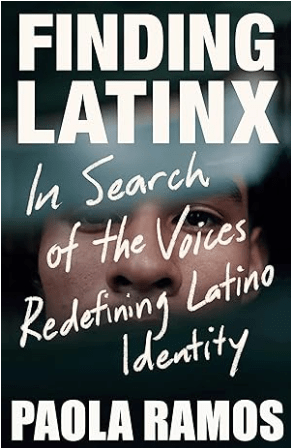
Nonfiction: Finding Latinx: In Search of the Voices Redefining Latin Identity by Paola Ramos

What does it mean to be Latinx? For journalist Paola Ramos, “Latinx” covers who she is: Latina, Cuban, Mexican, and American. But who are the millions of Americans who identify as Latinx? Ramos traveled across the United States to find out. She met with farmworkers in California, old friends in Miami, and Indigenous Maya communities in the Southern United States. She shares an iftar meal with Latinx Muslims in Washington, D.C. and cheers on an undocumented drag queen competing in the Miss Gay America pageant in Missouri. Ramos even sits down with Enrique Tarrio to try to understand what drove this Afro-Latinx man to the White supremacist group, The Proud Boys. (Note: Tarrio’s role in the Jan. 6 attacks is not mentioned. This book was published in 2020, and this chapter was likely written prior to the event.) Ramos gives readers a snapshot of the rich diversity of Latinx people in the United States, from the every day to the extraordinary. 

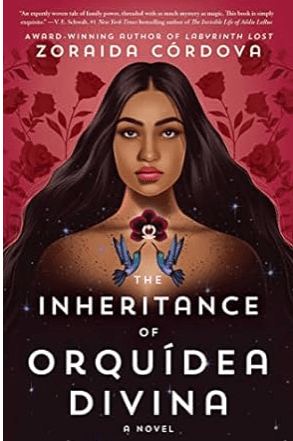
Fiction: The Inheritance of Orquídea Divina by Zoraida Córdova

Orquídea Montoya’s living descendants receive a mysterious message from the matriarch of the family: I am dying. Come and collect your inheritance. When the family gathers at the homestead in Four Rivers, but instead of dying, Orquídea transforms into a ceiba tree. Two of Orquídea’s grandchildren, Rey and Marimar, are left with flowers growing out of their bodies, as is Orquídea’s great-granddaughter, Rhiannon. The family is left with more questions than answers, with Marimar pondering Orquídea’s parting words: protect your magic. When a mysterious force begins tearing through the Montoyas, the family travels to Ecuador, Orquídea’s birthplace, searching for answers. Orquídea’s history unfolds in alternating chapters, with her story dovetailing beautifully with her descendents’ during the climax. This is an intergenerational story of magic, monsters, and family secrets coming to light. And if you’re a regular reader of this blog, you’ll see it has something rare: an omniscient narrator that I actually liked. 

June 2025 Book Recs: Read with Pride

Without in any way limiting the author’s exclusive rights under copyright, any use of this publication to “train” generative artificial intelligence (AI) technologies to generate text is expressly prohibited. The author reserves all rights to license uses of this work for generative AI training and development of machine learning language models.


Before we begin, just a couple updates for summer. I’m trying to get back to two posts a month, but I’ve been really busy this spring. July is Flash Fiction Month, so I’ll be posting some short fiction here every day (hopefully). Summer is the busiest time of the year for me, so August is going to be a rest month. 

June is Pride Month! Pride celebrates LGBTQIA+ history, culture, and. well…pride! Pride began with the Stonewall riots in June and July of 1969, and June was officially recognized as “Gay and Lesbian Pride Month” in 1999. LGBTQIA+ rights have come a long way, but there’s still a lot of progress to be made, especially as the trans community is increasingly under attack. PFLAG has a really useful Executive Order Explainer that tracks anti-LGBTQIA+, anti-DEI, anti-immigration, anti-reproductive health, and anti-voting rights executive orders. It also includes links to resources like the Trans Legal Survival Guide from Advocates for Trans Equality, along with resources for mental health, advocacy, and legal help. 

LGBTQIA+ covers a huge range of identities, and two books can’t cover all of them. May was also an incredibly busy month for me, so I wasn’t able to do as much reading as I would like. I still hope this small selection of books enhances your Pride month!

Non-fiction

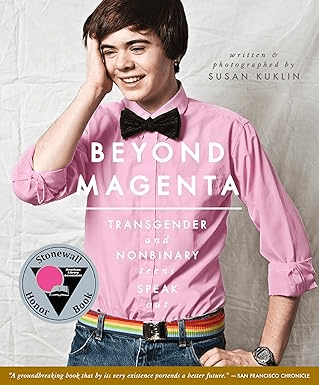
Beyond Magenta: Transgender Teens Speak Out by Susan Kuklin

Six teens and young adults – two trans girls, two trans boys, two nonbinary individuals (one of whom is intersex) – share their stories. With honesty and courage, these young people tell their stories about their early lives, their families, discovering their gender identities, and eventual transitions. They come from a range of backgrounds and experiences, like Luke who has a supportive family and realized he was trans with the help of his queer theatre group, or Mariah, who lived in poverty and has experienced violence due to her gender identity. (Note: Mariah’s chapter includes disturbing content, including sexual abuse.) She began to transition openly during her senior year at an all-boy Catholic school, in the face of bullying, an unsupportive mother, and punishments from the school. Many teens talk about the spectrum of gender and gender as a social construct. Most importantly, each chapter shows the subjects as whole, complex individuals, who are more than just their gender identity. 

Trans issues are a hot topic right now, and there is a lot of discourse and misinformation about gender identity, sexuality, and youth. It’s important for young trans and nonbinary people to have a seat at the table and tell their own stories. 

Fiction

The Gentleman’s Guide to Vice and Virtue by Mackenzie Lee

There is only one thing that Henry “Monty” Montague is looking forward to, probably for the rest of his life: his Tour of the European Continent. The Tour is something of a rite of passage for wealthy noblemen in the eighteenth century: a year of gambling, drinking, and debauchery before he returns to England to work alongside his father.  What he’s most interested in, however, is spending a year with his best friend, Percy. Monty has been secretly in love with Percy for years, and the Tour might be the last chance Monty has for something to happen with him. At the end of the Tour, Percy will be attending law school in Amsterdam, leaving Monty alone. Traveling with them is Monty’s intelligent but taciturn younger sister, Felicity, who struggles to understand Monty’s bisexuality. After a visit to Versailles ends in disaster worthy of being disinherited over, Monty, Percy, and Felicity find themselves being hunted down by bandits, catching rides on pirate ships, and – most terrifying of all – growing as people. This novel is a fun romp around Europe, full of adventure, romance, a bit of magic, and a few steamy scenes. The Montague siblings’ adventures continue in two sequels. 

March 2025 Book Recs: Women’s History Month

Without in any way limiting the author’s exclusive rights under copyright, any use of this publication to “train” generative artificial intelligence (AI) technologies to generate text is expressly prohibited. The author reserves all rights to license uses of this work for generative AI training and development of machine learning language models


March is Women’s History Month in the U.S.! Women’s History Month began in California in 1978 as “Women’s History Week.” It was kicked off the week of March 8, International Women’s Day. In 1987, Congress designated March as Women’s History Month. It’s kind of crazy to me that Women’s History Month isn’t even 40 years old yet! 

Women’s History Month is a time to celebrate the achievements and contributions of women that have often been left out of history books. It’s also a time to celebrate the women and girls leading us into the future. 

Quick note: There won’t be a book list for April, but you’ll be getting extra for May.

Nonfiction

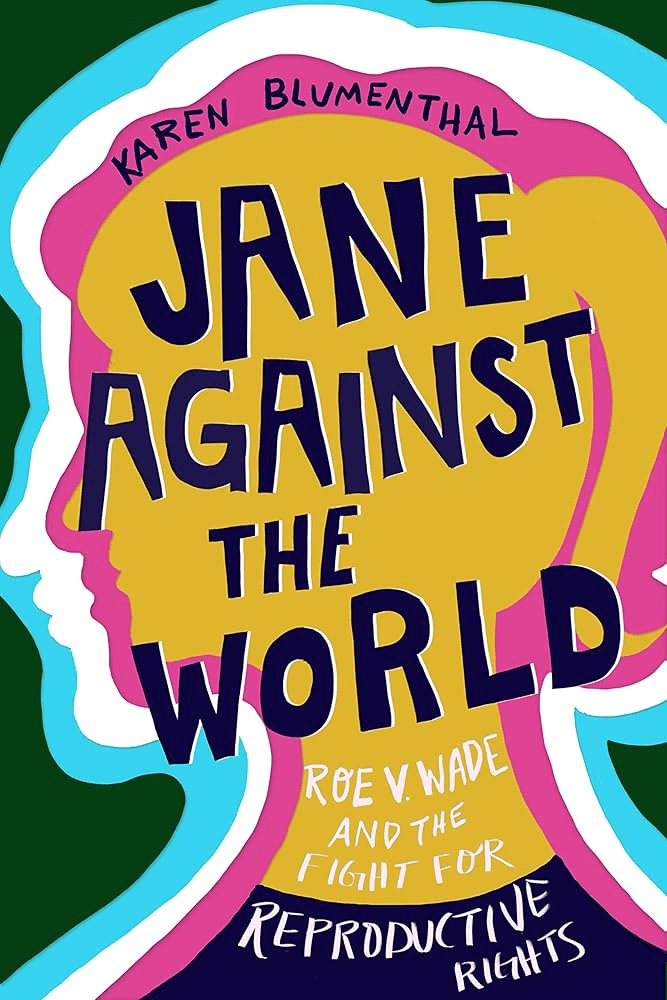
Jane Against the World: Roe v. Wade and the Fight for Reproductive Rights by Karen Blumenthal 

I can think of no topic that’s as controversial or ignites as many passionate debates than abortion. But how did we get here? How did women get abortions and reproductive care before Roe vs. Wade? And what comes after it? Jane Against the World looks at the history of abortion and birth control in the United States, reform and repeals, and Roe vs. Wade. The book is broken into four parts. Restrictions is dedicated to the history of abortion and abortion providers in the United States from the 1800s to the 1960s, and highlights the Comstock Act of 1873, about which much debate has arisen following the Dobbs vs. Jackson Women’s Health Organization in 2022. Reform covers reform of abortion laws, legal gray areas of performing abortions, and the beginnings of the pro-life movement, and the road to Roe v. Wade. In part 3, Roe v. Wade, Blumenthal breaks down the complex case in a way that every reader can understand, and goes into detail on court memos, opinions, especially Justice Harry Blackmum’s contribution to the Court’s decision. After Roe chronicles the pushback against Roe v. Wade, including violence against abortion providers and laws that restrict abortion at the state level. Written in 2019 and published in 2020, this book does not include the Dobbs decision that overturned Roe in 2022. While abortion is not an easy topic to read about or discuss, it’s very important to understand how we got to where we are today. 

Fiction

When the Mapou Sings by Nadine Pinede


This novel in verse begins in 1936, two years after the United States ended its occupation of Haiti. While things are still dangerous for those who would speak up against the government, Lucille and her best friend Fifina have big plans of their own. Hungry for knowledge, they dream of opening up a school for girls. Lucille’s world crashes down around her when Fifina’s father is imprisoned, Fifina disappears, and Lucille’s beloved Mapou tree is cut down by the section chief. After receiving a dream from the Mapou, Lucille confronts the section chief, hoping to find Fifina. This act of defiance puts her and her family in danger, and Lucille is forced to leave her home. She works first as a maid for a wealthy Haitian woman, and then for an American woman in Haiti for research. Lucille doesn’t know quite what to make of Mamzelle Hurston, but the two develop a special bond during their time together. Working for Mamzelle Hurston opens up new doors for Lucille, even though it may lead her into danger and hard decisions. This is a fictionalized account of the real servant of Zora Neale Hurston during the time Hurston lived in Haiti, working on Their Eyes Were Watching God. Fictionalizing real people can be a touchy subject, but the setting and themes are thought-provoking. While I thought the ending tied things up just a little too neatly, I wanted to highlight this book because it takes place during a unique time in history which gets very little attention.

Feb. 2025 Book Recommendations: Black History Month

Without in any way limiting the author’s exclusive rights under copyright, any use of this publication to “train” generative artificial intelligence (AI) technologies to generate text is expressly prohibited. The author reserves all rights to license uses of this work for generative AI training and development of machine learning language models.


Welcome back! Thank you to everyone who read, shared, or commented on my most recent post about libraries in the Trump administration. Please take care of yourselves and keep fighting for your loved one, and supporting community organizations like your library. 

Just a couple blog updates before we start on this month’s book list. First, there probably won’t be recommendation lists for April, July, August, or December, unless I’m really inspired and suddenly have a surge in free time. I do a lot of reading for these lists, not just the 2-4 recommended books, and it takes up a lot of time. I’ve read a lot of really great stuff and things that I might not have picked up otherwise, but it also makes it harder to find the time to read other things, including books for blog posts. All that said, I am doing much better than I was months ago, and I’m going to once again endeavor to write two posts a month. 

February is Black History Month in the U.S.! Though Black History Month was first officially recognized by President Gerald Ford in 1976. However, Black History Month goes back much further than that. It was actually started in 1926 as “Negro History Week” by historian and author Carter G. Woodson.  Black History Month honors the contributions and celebrates the triumphs of Black Americans, while acknowledging the hardships and struggles caused by systemic racism. 

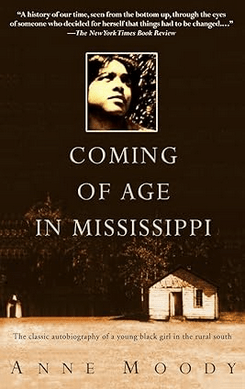
Coming of Age in Mississippi by Anne Moody

Anne Moody (born Essie Mae) was born to two poor sharecroppers in 1940 in Centerville, Mississippi. An observant and intelligent young woman, Moody would go on to graduate from Tougaloo College and become actively involved in the Civil Rights movement in the 1960s, participating in sit-ins and joining organizations the NAACP, Student Non-Violent Coordinating Committee (SNCC), and the Congress of Racial Equality (CORE). She endured harassment and violence, but her anger and determination kept her fighting against racism and sexism. Published in 1968, Moody’s memoir is broken into four parts. Childhood begins with Moody at a young age and ends with her eighth grade graduation. This section her family’s struggles with poverty and Moody working as a maid for White families, some of which were White supremacists with ties to the Ku Klux Klan. In High School,  Moody learns about the murder of Emmet Till, an event that would shape her worldview forever. She is witness to a rash of violence against Black people in her community, including a family burnt to death in their own home. She also travels to New Orleans and works to become financially independent. In College, Moody finds her calling as an activist and community organizer, beginning with a protest against her junior college after one of her classmates finds maggots in the dining hall food. Finally, The Movement chronicles Moody’s involvement in the Civil Rights movement, including being beaten at a sit-in and working for CORE. Given the time period the memoir was written in, some of the language is dated, but Moody’s experiences also feel fresh and immediate. A great choice for anyone looking for a personal account of the Civil Rights movement. 

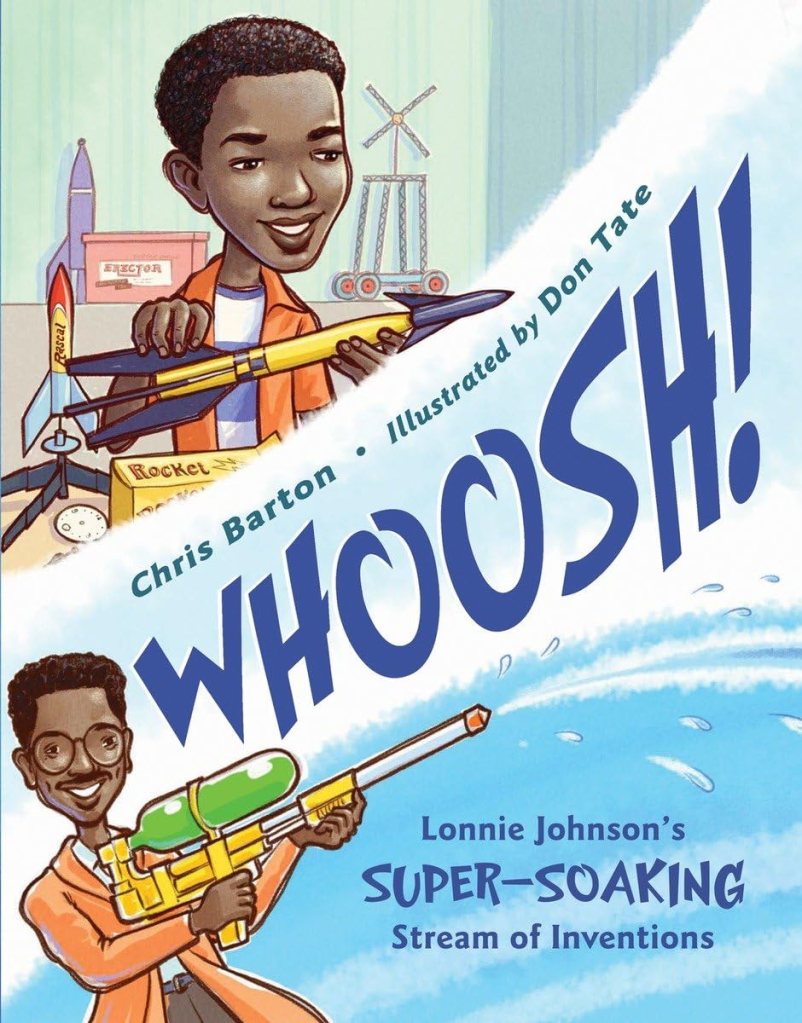
Bonus Book: Whoosh! Lonnie Johnson’s Super-Soaking Stream of Inventions by Chris Barton

Lonnie Johnson is an inventor and former NASA engineer, but for many kids (and more than a few adults), his greatest invention is the Super-Soaker. This picture book biography tells Lonnie’s story of building a robot, helping the Galileo space probe get to Jupiter, and finding the inspiration to make this summertime staple. An unsung hero of childhood, thank you, Lonnie, for so many great memories. 

Fiction

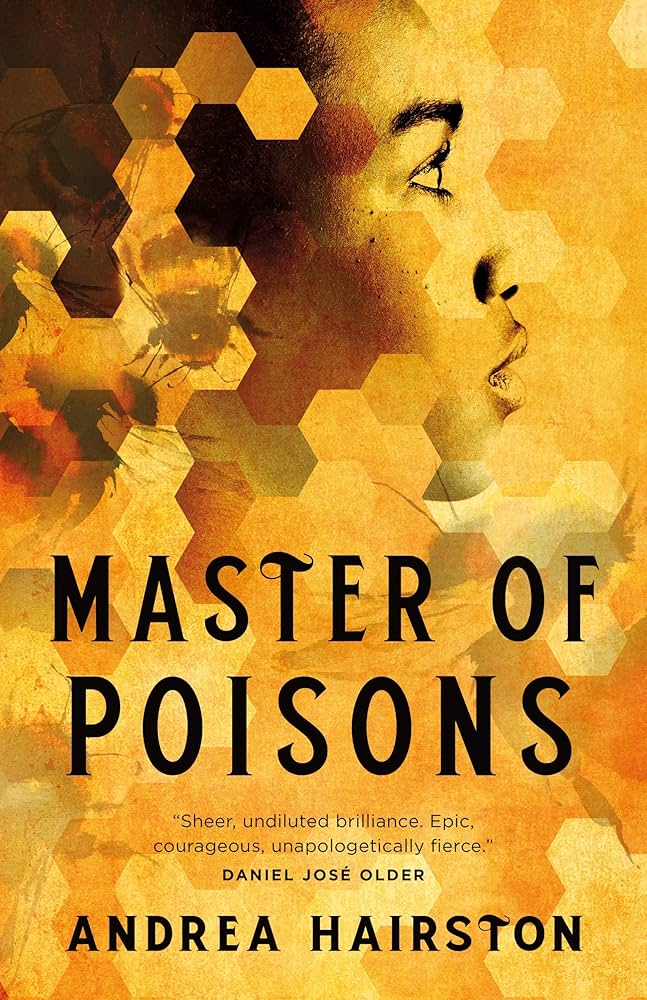
Master of Poisons by Andrea Hairston

A poison desert stretches across the Arkhysian Empire. Djola, Master of Poisons, has been tasked by the emperor to find a way to halt its spread. He is working to create a “map to the future” and heal the land by mastering the secret and powerful conjure Xhalan Xhala. As the poison desert continues to spread, Djola is exiled from Emperor Azizi’s Council. The only way he can return to his family is to find Xhalan Xhala, and stop the desert once and for all. 

Young Awa is able to traverse the Smokelands, an ethereal place of dreams and magic that reflects the physical world. At the age of 12, her father sells her to the Green Masters, a nomadic group of storytellers and warriors who can use powerful conjure. Awa is in training to be a griot (storyteller), and her ability to cross the Smokelands and special connection to bees may make her the next griot of griots like her mentor, Yari. 

Hairston creates a vivid African-inspired fantasy world, rich with folklore and African traditions. This complex story is written with lyrical prose that makes the novel utterly captivating. Hairston has three other historical-fantasy books that would also be good fits for Black History Month (Redwood and Wildfire, Will Do Magic for Small Change, and Archangels of Funk), but Master of Poisons sucked me in from the first page.

December Book Recs: Right Stuff, Wrong Sex


Without in any way limiting the author’s exclusive rights under copyright, any use of this publication to “train” generative artificial intelligence (AI) technologies to generate text is expressly prohibited. The author reserves all rights to license uses of this work for generative AI training and development of machine learning language models.


Credit where it’s due: the title for this post was “borrowed” from the book Right Stuff, Wrong Sex by Margaret A. Weitekamp. 

We’ve made it through another year, and what a year it’s been. I’ll have a short post for January. For the rest of 2025, my goal is to start posting twice a month again. Until then, here’s the last book recommendation list for 2024.

Also, hi, Yvette, the lady I met during OT this week. Thanks for your encouragement! 

The book sommelier is back! For December, here’s two books that pair together nicely for a stellar reading experience. 

Nonfiction

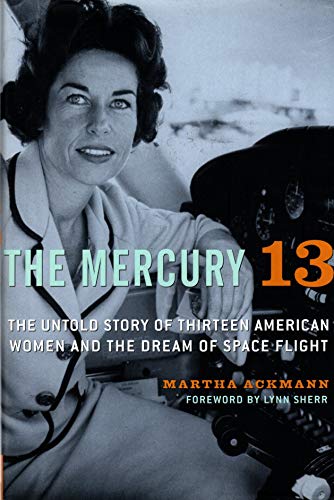
The Mercury 13: The Untold Story of Thirteen American Women and the Dream of Space Flight by Martha Ackmann

Before there was Sally Ride, there was Jerrie Cobb. All eyes were on the Project Mercury astronauts, Air Force test pilots who were all deemed to have “the right stuff” to go into space. Dr. William Randolph Lovelace II wanted to cast a broader net than just the men that the government thought were worthy of going to space. There were many accomplished women pilots in the country, but as women were barred from flying in the military, they were automatically disqualified as astronaut candidates. Dr. Lovelace theorized that women might make better astronauts than men, and pushed for “lady astronauts.” Jerrie Cobb, a woman with an impressive list of aviation achievements, eagerly trained, hoping to be one of the first women in space. When she proved that she could pass the same tests that the prospective male pilots did, more women joined this secret project. Thirteen women passed the arduous tests which proved women were space-worthy, but societal customs and political maneuverings meant that none of the Mercury 13 would ever leave Earth. The Mercury 13 tells the largely unknown story of the women who dared to reach for the stars. Detailed biographies of Jerrie Cobb, Dr. Lovelace, and celebrated pilot Jackie Cochran are woven in with the narrative. Interviews with the women who underwent the Lovelace tests offer personal insight into their experiences. Inspiring and disheartening all at once, Ackmann finally brings to light the story of these brave and tenacious women who were willing to give everything they had for a moonshot of their own.

Note: This book has two different subtitles: The Untold Story of Thirteen American Women and the Dream of Space Flight, and The True Story of Thirteen Women and the Dream of Space Flight. I used the “Untold” version since that’s the copy of the book I have. The actual text of the book is the same in either one.

Fiction

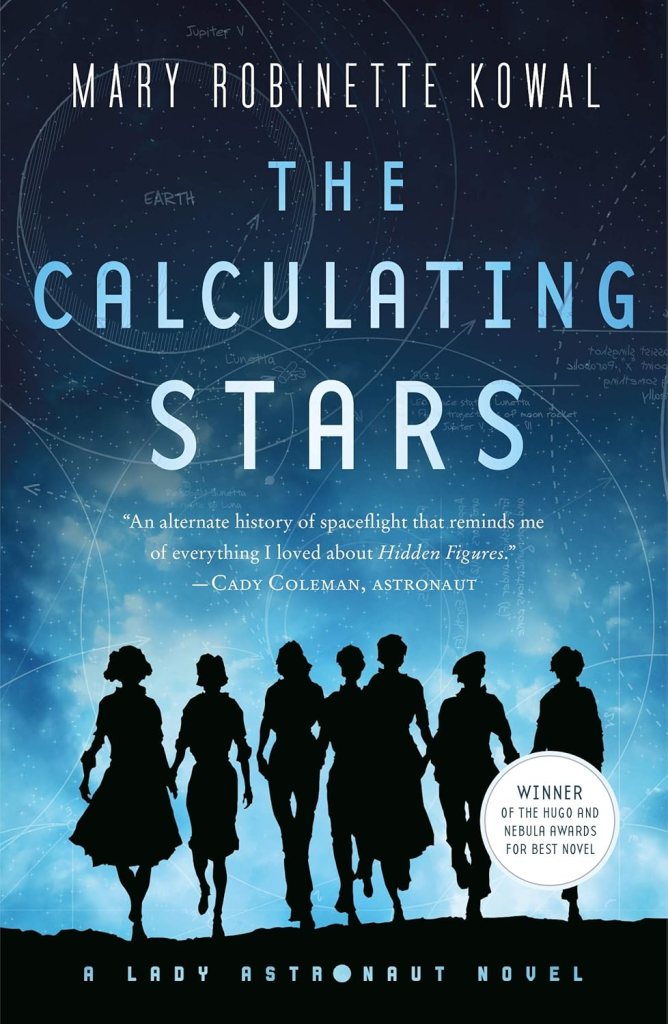
The Calculating Stars by Mary Robinette Kowall

In 1952, Elma York and her husband, Nathaniel, are lucky to be alive after a devastating meteorite strike obliterates much of the eastern coast of the U.S. Elma, a physicist, mathematician, and pilot, is eager to do something, anything, to help survivors and rebuild the country, but her talents are overlooked in favor of men. That is, until she calculates what the long-term effects of the meteorite strike will be. A climate disaster will make Earth unsuitable for habitation, and colonizing space becomes humanity’s only chance for survival. Elma joins the fledgling international space agency, IAC, as a computer, performing calculations that will put a man into orbit. But with so many qualified women pilots and scientists working alongside her, Alma starts to wonder: why can’t women be astronauts? When Elma makes headlines during an all-women airshow, she finally has a chance to advocate for her cause. Sexism and her crippling anxiety would have her stay on the ground, but Elma’s determined – for herself, and for all the brilliant women whose skills have gone unnoticed. One thing I liked was the inclusion of women of color in Elma’s crusade. Elma does have her prejudices and blind spots, but she learns from her mistakes. The real-life Project Mercury astronauts and Mercury 13 were all White, and I was glad to see diversity being added to the space race. The Calculating Stars is great for fans of alt-history and realistic sci-fi. 

See you next year!

Nov. 2024 Recs: Native American Heritage Month

Without in any way limiting the author’s exclusive rights under copyright, any use of this publication to “train” generative artificial intelligence (AI) technologies to generate text is expressly prohibited. The author reserves all rights to license uses of this work for generative AI training and development of machine learning language models.


November is Native American Heritage Month! Native American Heritage Month was established in 1990 to recognize and celebrate the diverse cultures of Indigenous Americans. There are 574 federally recognized Indigenous nations in the United States. Native Land Digital contains a map which shows the original territories of Indigenous peoples across the globe. I encourage everyone to check it out and learn about the original inhabitants of your area. 

Nonfiction

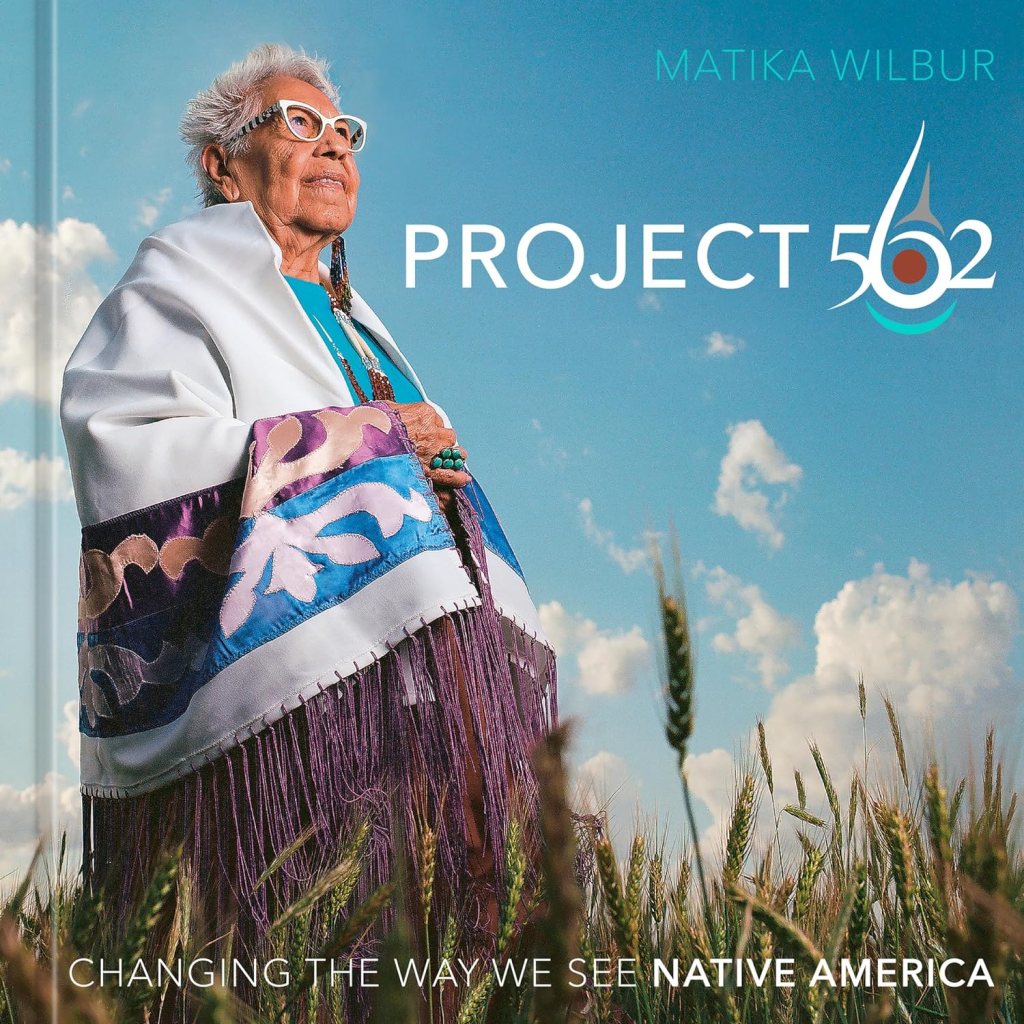
Project 562: Changing the Way We See Native America by Matika Wilbur

“Representation without us is representation done to us.” With these words, Matika Wilbur introduces Project 562, a photojournalism project that shares the lives of Indigenous People across the United States. Traveling thousands of miles, Wilbur set out to interview and photograph someone from each Indigenous nation. (Note: when the project began in 2012, there were 562 federally recognized Indigenous Nations; there are now 574.) Wilbur’s portrait photography is gorgeous, each accompanied by the subject’s story: an Ojibwe man harvesting wild rice; Two Spirit powwow dancers; a woman recounting how boarding school has shaped her family for generations; the teen beauty queen who entered the pageant because everyone told her she wouldn’t win. This work captures the diversity of contemporary Indigenous people while honoring tradition and heritage. Wilbur’s beautiful work is not to be missed, and serves as a reminder that  “Indigenous existence is all around us. It is up to us to listen.”

Fiction

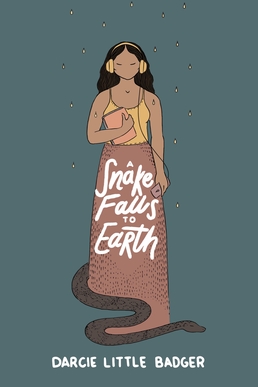
A Snake Falls to Earth by Darcie Little Badger

Nina, a Lipan Apache teen living in Texas, has family mysteries to solve. Specifically, the last story her great-great grandmother Rosita would ever tell her. There’s one big problem: Rosita told the story in Spanish and Lipan Apache, and Nina has no idea what she was trying to say. As she painstakingly works on translating the story, she discovers more mysteries. Did Rosita really see a fish-girl in her seemingly bottomless well? Why does Grandma get sick when she leaves the land that’s been in her family for generations? And are those mysterious people who come to her father’s bookstore really animal-people from the Reflecting World? 

Meanwhile, in the Reflecting World, Oli is a timid cottonmouth snake reluctantly forced into adulthood. After a rough start, Oli makes a life for himself. It’s not always easy, though he tries to steer clear of the catfish cultists and bear bounty hunters. When his best friend, a toad named Ami, falls ill, Oli is terrified that Ami’s species is facing extinction – a death sentence for the animal-people in this world. If he can get to the human world, maybe he can find out what’s happening to Ami’s species and fix it. With a pair of rambunctious coyote sisters and a red-tailed hawk at his side, Oli is ready to go to the ends of the earth (or fall to it) to save his friend. 

Sep. 2024 Recs: Hispanic Heritage Month

Without in any way limiting the author’s exclusive rights under copyright, any use of this publication to “train” generative artificial intelligence (AI) technologies to generate text is expressly prohibited. The author reserves all rights to license uses of this work for generative AI training and development of machine learning language models.

Just a couple blog updates before we get started with this month’s book list. First: most of my stuff for Flash Fiction Month has been taken down, but there’s still a few stories I decided to leave on here. Second: until the end of the year, I’ll only be posting book recommendation lists here with any consistency. I may have a couple extra posts every so often (I’m working on one now!) but don’t expect them regularly.


September marks the beginning of Hispanic Heritage Month! Hispanic Heritage Month celebrates the achievement, culture, and traditions of Latinx Americans of Mexican, Central American, South American, Caribbean, and Spanish ancestry.

Hispanic Heritage Month officially begins on September 15, and goes until October 15. The mid-month start date is because many Hispanic countries declared their independence from Spain in September. Costa Rica, El Salvador, Guatemala, Honduras, and Nicaragua all declared independence on September 15, 1821. Mexico declared its independence on September 16, 1810, and Chile did so on September 18, 1810. Over 150 years later, years later, Belize would declare independence from Great Britain on September 21, 1981.

For this month’s list, I’ve chosen to only feature graphic novels. I love graphic novels for many reasons, one of which is accessibility. They’re great for reluctant readers, or people who find reading difficult. Graphic novels are also not just for kids! They’re a unique medium that combines art and text to tell stories that can be as emotional, complex, and well-told as any novel. If you’ve never read a comic book as an adult, give ‘em a shot. There’s a ton of great stuff out there! 

¡Vamos a leer!

Nonfiction

Mexikid: A Graphic Memoir by Pedro Martín

Pedro calls himself a Mexikid. His parents and older siblings came to the U.S. as immigrants, while he and his younger siblings were born in the United States. With nine kids, life in the Martín house is cramped and chaotic, and Pedro can’t believe that Apá wants to bring their Revolution-era Abuelito from Mexico to live with them. Even more unbelievable, the whole family – all 11 of them – are driving down to Mexico to pick him up. This rollicking road trip is full of pranks, half-bananas, and family legends about Abuelito. Once they arrive, though, Pedro starts to doubt the legends – and himself. Can this old man really be “The Mexican Jedi” he’s heard so much about, and how can artsy Pedro connect with him? Is Pedro “Mexican enough” to really be a part of his extended family? And can he really step up to help his parents, like his older sister believes he can? This is a humorous and often moving memoir, told from the backseat of a Winnebago.

Fiction 

Invisible by Christina Diaz Gonzalez and Gabriela Epstein 

People think that George, Sara, Dayara, Nico, and Miguel must be the same because they all speak Spanish. The five middle schoolers know differently: the only thing they have in common is that they speak Spanish, and they’re all assigned to clean the cafeteria before school starts. At first, the kids only see the categories their classmates fit into: the brain, the weirdo, tough kid, the entitled rich kid, and the athlete. When George meets a young girl and her mom that really need help, the kids band together. As they do, they learn that there’s more to all of them than just their labels. Each kid has their own problems, and their own strengths and weaknesses. Yet they’re united in their compassion, and determined to help someone truly in need. Can this middle school breakfast club really make a difference in someone’s life? Or will they remain invisible? 

April Book Recs: Let There (Not) Be Light

At a restaurant, a sommelier might recommend the perfect red wine to go with your steak. I aspire to be a book sommelier who finds nonfiction and fiction that complement each other, bringing out the best flavors in each text to enhance your reading experience. For April, I would like to offer two books that pair well together for a little bit of “light” reading.

Nonfiction

The End of Night: Searching for Natural Darkness in the Age of Artificial Light by Paul Bogard

Have you ever seen the Milky Way with your naked eye? When was the last time you saw a truly starry sky? Earth is brighter than ever, but does that mean that it’s better for its residents? Starting with the brightest light on the planet – The Luxor Sky Beam in Las Vegas –  and ending with the darkest skies in the United States, Bogard examines the multitude of ways that widespread artificial lighting has changed our world. He interviews engineers, astronomers, ecologists, third-shift workers, and even clergy members about what the loss of darkness means for humans and the natural world. Starlight is not the only thing we risk losing when dark skies disappear: Bogard also investigates the health and safety risks associated with artificial lighting, and the disconnect between ourselves and nature. This is a thought-provoking book that will make you see your world – both in day and night – a little differently. 

Fiction

The City of Ember by Jeanne DuPrau

Twelve-year-olds Lina and Doon have lived in the city of Ember their entire lives, where nothing is more important than light. Without the electric lights, the city would be in complete darkness all the time. With no known way to make portable light, blackouts are frightening for all the city’s residents. When Assignment Day arrives, Lina is disappointed that she’s been assigned to be a laborer at the Pipeworks. Much to her surprise, Doon trades assignments with her. Now Lina can spend her days running through Ember as a messenger, while Doon descends into the bowels of the city. With blackouts increasing at an alarming rate, Doon knows that something is wrong in Ember. If he can get close to the generator that powers the city, maybe he can learn why the blackouts are happening. Meanwhile, Lina discovers a two-hundred-year-old message from the founders of the city. Parts of it have been destroyed, but whatever it contains could be the key to saving Ember. She and Doon must work together to discover the forgotten secrets of Ember, and maybe even bring its citizens into the light. 

March Book Recs: The Troubles

March is Women’s History Month, and it’s also Irish Heritage Month! I’ve decided to combine both of those things for this list. Media often show stereotypical depictions of the Irish, flattening an entire culture into a few jokes about alcoholism and leprechauns. Like millions of Americans, I have Irish heritage, and these depictions have always irked me. 

One part of Irish history that has long been close to my heart is The Troubles. The Troubles were 30 year period of political and sectarian violence between Unionists and loyalists (mostly Ulster Protestants) who wanted Northern Ireland to remain part of the U.K., and Irish nationalists and republicans (mostly Irish Catholic) who wanted Northern Ireland to join the Republic of Ireland. The Troubles officially came to an end with the 1998 Good Friday Agreement, which ended much of the violence in Northern Ireland. But my personal connection with The Troubles isn’t just from my Irish-Catholic heritage or watching the show Derry Girls. In the early 2000s, my family hosted a girl from Derry for three summers. Those were the best summer vacations I’d ever have. My mom described them as “a six-week sleepover.” While our guest did talk about some of the violence she and her family experienced, my memories of her and our summers together are full of laughter, dares, and the filthiest jokes I’d ever heard. 

For the March recommendation list, I’ve chosen two books where The Troubles play a central role in the lives of women. These are both great as audiobooks. Other than the readers’ lovely Irish accents, you’ll also be able to hear the correct pronunciation of Irish words.

Nonfiction

Thin Places: A Natural History of Healing and Home by Kerri ní Dochartaigh

Kerri ní Dochartaigh was born in Derry halfway through The Troubles to a Protestant father and Catholic mother. She lost two homes in the span of one year, once due to a petrol bomb, and once due to harassment. To escape the violence in Derry, she found solace in the natural world, in her cement-filled backyard and “thin places” where the Veil between this world and the spiritual one is thin. ní Dochartaigh’s memoir is one of great sadness as she writes about the emotional scars that have shaped her entire life. Yet there is great beauty to be found in it as well, as she tenderly writes about her beloved thin places, the endangered Irish language, the resiliency of moths, and what it means to be an Irish woman. She also discusses violence in Northern Ireland following Brexit, and what she fears and hopes for Derry, the city she loves and hates. Often heartbreaking, Thin Places is a gorgeously written meditation on loss, trauma, and healing. 

Fiction

Factory Girls by Michelle Gallen

It’s 1994, and smart-mouthed Maeve cannot wait to get out of her small town in Northern Ireland and start studying journalism in London. She and her friends Caroline and Aoife must first get their exam results to confirm their places in their chosen universities. To save up for their futures, the three young women get jobs in the local shirt factory for the summer. The job brings new challenges Maeve has never faced before: ironing 100 shirts a day, working alongside Protestants for the first time, and avoiding the advances of the factory’s lecherous English owner, Andy Strawbridge. Tensions rise between the Catholic and Protestant workers whenever there’s a bombing or murder, which occurs all too frequently. As the summer goes on, Maeve starts to realize that there is something going on behind the scenes at the factory, but standing up for herself and her friends could cost her dearly. Flashbacks show Maeve’s experiences growing up during The Troubles, including the death of her elder sister and bombings that were called “lucky” because everyone survived. As a slice-of-life novel, the plot can feel thin at times. However, Maeve’s narration and snappy dialogue is laugh-out-loud funny, and watching her and her friends find their path to adulthood is satisfying. Though the main characters are teenagers, frequent sexual references make this a book better suited to an adult audience.