Sunshine State Books: The Lost Year by Katherine Marsh

Without in any way limiting the author’s exclusive rights under copyright, any use of this publication to “train” generative artificial intelligence (AI) technologies to generate text is expressly prohibited.


It took some time, but I’m back! I have lots of literary-based goals for 2026. I’ve already started one of them: The OKayest Travel Blog. I spent two weeks in Japan last fall, and I wanted to share stories about my trip. Right now there are only a couple posts, but I aim to get one up once a month. I’m also in the early stages of starting a BookTok, so I’ll be sharing that when it finally happens. I’m doing plenty of writing, and even more reading. Which brings us to our first book review of the new year…

Every year, the Sunshine State Young Readers Award (SSYRA) Program in Florida names several lucky books Sunshine State books. These books have been voted on by schools across Florida as “the best” books for K-12 students. Alongside students’ and teachers’ votes, these books are “selected for their wide appeal, literary value, varied genres, curriculum connections, and/or multicultural representation.” As soon as the annual list gets released, your friendly Florida public librarians scramble to get them onto the shelves and into kids’ hands ASAP. The Sunshine State books make up the bulk of summer reading lists, and they fly off the shelves.  There have been many books that I would just love to read, but I hold off until winter or the next summer. The demand for these books is just too high, especially in the summer and fall, and I want to make sure that the kids who need them for school have them. 

But this year was different. A local school reached out to the public libraries and asked for help with their annual Battle of the Books. The librarians who signed up had to read two books from the Grade 6-8 list and write fifteen open-ended comprehension questions about them. A chance to read cool kids’ books on the clock? I jumped at the opportunity. 

The Lost Year by Katherine Marsh is the first of the two Sunshine State books I read. Here’s the SSRYA summary of the book: 

Thirteen-year-old Matthew is miserable. His journalist dad is stuck overseas indefinitely, and his mom has moved his one-hundred-year-old great-grandmother in with them to ride out the pandemic. Matthew is stuck at home during the early days of the pandemic, and he would rather play video games than hang out with his great-grandmother, GG. But Matthew’s mom has other plans. Forced to unpack GG’s storage boxes, Matthew finds a tattered blackand-white photo in his great-grandmother’s belongings that serves as a clue to a hidden chapter of her past, one that will lead to a life-shattering family secret. 

One of the reasons I wanted to read this book was because it took place, in part, during the COVID lockdown. It’s not a time that I look back on fondly, but I was one of the lucky few that was comfortable during that strange time. It was an unexpected break from a job I hated, my husband was still working, so we still had an income, and I was taking a young adult literature class in grad school. I spent most of my lockdown reading YA books, writing poetry, and playing Monster Prom. I wanted to see COVID from a kid’s perspective. I also wanted to see this modern historical event in fiction. It’s one thing to read about World War II in a novel, but another to read about an event you actually lived through. 

The other reason was that I wanted to know what the family secret was. I assumed that it was something World War II related. World War II is practically its own fiction genre at this point. I was wrong.

The novel is still centered around a major historic event in the 20th Century, but one I didn’t expect: the Holodomor. The Holodomor was a human-made famine in Ukraine from 1932 to 1933 which resulted in the deaths of millions of Ukrainians. I knew a little bit about the Holodomor, mostly because I’d read about Walter Duranty’s infamously inaccurate reporting of the famine. I’ve never seen it in a fiction book before. I’m sure that many young readers had never heard of the Holodomor before picking up The Lost Year either. While you should stick to non-fiction resources when you’re doing research, I think novels are a really good entry point for kids to learn more about history. Case in point: I wouldn’t be nearly as interested in Revolutionary War history as I am today if not for Felicity from the American Girl franchise. 

Despite what the summary led me to believe, most of the story is not about Matthew. It’s about three cousins leading very different lives in 1933, until they all brought together by the famine. Matthew’s chapters largely act as framing devices as he learns their stories from GG. He’s not as well developed as the cousins, but his character arc has a satisfying conclusion that works beautifully with the book’s theme. 

The cousins Matthew’s learns about are Helen, Mila, and Nadiya. Mila lives an easy life in Kyiv, the daughter of a high-ranking Soviet officer. Nadiya is from the Ukrainian countryside, and everything changes when she knocks on Mila’s door. Nadiya claims that she is Mila’s cousin, which Mila denies. To Mila, this girl is a kulak, an enemy of the State, and has to be lying about Mila’s father. When Mila discovers that Nadiya really is her cousin, and people are starving to death all around her, she has a choice to make. Can she protect Nadiya? Should she?

Helen lives with her family in New York City and strives to be a normal American girl, not the child of immigrants. When she reads Walter Duranty’s infamous “Russians Hungry, But Not Starving” article about the famine, she knows that it isn’t true. According to her parents, her family in Ukraine is struggling to survive. After some urging from a new friend, Helen sets out to collect the stories of friends and neighbors about the famine their relatives are experiencing. As she records history, she’s determined to help her relatives across the sea any way she can. 

My short review: The Lost Year is really good and you should read it. 

It isn’t always easy to read. It obviously deals with a heavy subject matter, and some readers may not be ready to revisit COVID. As I got to the end of the book, I  even put off reading it for a few days because I was so worried about one of the characters. Even so, it became one of my favorite books that I read in 2025. To me, it’s comparable with Out of the Dust or Number the Stars. All three books take place during a troubled time, and they don’t shy away from the dangers and tragedies of those time periods. 

There are those who think children need to be shielded from tragedy, and I understand that. I even agree, to a point. But I also believe that children are often more robust than we give them credit for. I also think that fiction is a safe way to introduce children to hard things. For example, one of the picture books I had growing up was called I Had a Friend Named Peter by Janice Cohn. In it, a young girl’s friend, Peter, dies. The book uses a narrative to teach children about death, and help facilitate conversations between children and their caregivers on the subject. In my opinion, the narrative makes it easier to engage with these topics. While I Had a Friend Named Peter is pretty didactic, I believe this is true of many books. There are so many great books that deal with tough subjects, whether they be historical events like the Holodomor, or things that are universally relevant to all of us: loss, love, friendship, jealousy, navigating relationships. 

I think this is true of books that are not strictly meant to teach as well. There are so many books that deal with tough subjects that are relevant to everyone’s life. Fiction can be a shield. It allows us to experience things through the eyes of characters. We can share their feelings, but also put the book away when we need to. When we encounter hard times, we have someone we can relate to, and even look to for comfort. 

There were a lot of things that I loved about the book. I’m very picky when it comes to historical fiction, but Soviet Union history is something that I have a lot of interest in. I also really like the small details of everyday life in historical settings when they’re interwoven in the text. I really hate a research dump in fiction, which was one of the problems I had with Magic Lessons. Here, those little details come naturally, like Mila’s favorite candy being Bumble Bears, or the characters playing the Russian card game Trust, Don’t Trust. 

Even the 2020 timeline has this. Maybe the COVID shutdown isn’t far enough back to be considered historical fiction, but someday it will be. Ten, fifteen, twenty years from now, those details of school over Zoom, only being able to see your friends if they walk by your house, and the anxiety and monotony of lockdown will be one way that kids will learn about what that strange time was really like.

I really liked the character arcs for Helen and Mila. Helen just wants to be a regular American girl. She doesn’t want to stick out, and wants to hide what makes her different from all the other kids she goes to school with. After she learns about the famine, and her family’s personal connection to it, she starts to change. Over the course of the novel, Helen learns how to find her voice and takes pride in her Ukrainian heritage. She takes an active role in preserving history, even if she doesn’t see it that way at the time. Her clever thinking helps save Nadiya’s life, and she pushes the adults in her life into action. 

The character who goes through the most change is Mila. She starts the novel as the spoiled daughter of a high-ranking Soviet officer and has an easy life full of luxuries the rest of the Soviet people do not have. Mila is ignorant of the things happening all around her, and sees the world in a black and white way. You are either a good Communist, protected by Papa Stalin, or you are a kulak, and deserve whatever happens to you. When Nadiya knocks on her door, Mila doesn’t believe that a kulak could be her cousin, or that the famine is even real. Instead of staying in her comfortable world of piano lessons and propaganda, she chooses to learn more and discover the truth for herself. 

The other thing I loved about the book was the overarching theme of storytelling. Storytelling plays a significant role for each of the three POV characters. In 2020, as GG tells Matthew her story, he discovers that there’s so much more to her than he ever knew. He also learns that her whole story has never been told, not even to her daughter or her cousin Helen. Matthew records GG’s stories, but ultimately gets her to share her story with the world, so that the truth of what happened to her won’t be forgotten. 

Mila’s father tells her stories every day. Instead of fairytales, though, he tells her stories of Soviet heroes and the greatness of the Soviet Union. Mila eagerly absorbs these stories and never thinks to question them. Those stories form the basis of her beliefs about the Soviet Union and her own life. When Nadiya forces her to confront the truth, Papa’s stories become just as fanciful as Baba Yaga. The book also shows how it’s hard to let go of the things you believe, even when it’s staring you in the face. 

Helen collects personal stories about the Holodomor at first to write to The New York Times with a rebuttal to Duranty’s reporting on the famine. These stories help her become engrained in her community and spur her into action. As we see in the epilogue, Helen’s dedication to sharing the truth about the Holodomor shapes her entire life. Her work helps preserve the true history of both her family and the famine, but it also guides her into the future. 

When we read about historical events, it can be easy to get lost in the numbers. Storytelling and oral history puts a face on the survivors. I can read facts about the Dust Bowl, but it won’t make me feel anything as much as my grandma’s stories about living through it did. Stories are entertaining, of course. But they can also be used to teach, to put a face on history, and to keep the memories of our loved ones alive. The Lost Year does all of these. 

If you’re interested in learning more about the Holodomor, you can visit the Holodomor Research and Education Consortium (HREC) website. The section Witness Accounts contains links to oral history collections and other primary resources. Author Katherine Marsh and her cousin, Andrea Zoltanetzky, share their family’s memories of the Holodomor and the Ukrainian immigrant experience in the book’s backmatter, and in this YouTube video: 

The discussion questions I wrote for the book: 

1.       What do you think The Lost Year refers to for Matthew? What does it refer to for Helen and Mila?

2.       Helen’s mother and Matthew’s mother warn them that they’re upsetting people by asking for their stories. Why did GG and the people Helen interviewed share their stories, even if they’re upsetting?

3.       What role does storytelling play in the story for Mila, Helen, and Matthew?

4.       Ruth says that Helen is a good leader. In what ways is she a leader?

5.       How does Mila deal with losing faith in her father, while at the same time loving him very much?

6.       How does meeting Nadiya change the way that Mila understands the world? 

7.       How is Mila’s friendship with Nadiya different from her friendship with Katya? How is it similar?

8.       Why did GG hide her true identity for so long?

9.       Why does Helen want to be seen as a normal American girl?

10.   The main characters’ parents all guide them in different ways through the novel. How does their parents’ guidance shape them at the start of the book? How does it shape them by the end of the book?

11.   What similarities does the book show between the COVID-19 pandemic and the Holodomor?

12.   How does Mila see Dasha at the beginning, middle, and end of the book? How does Dasha see Mila?

13.   Anna Mikhailovna says that Mila is either foolish or lucky. How is she foolish, lucky, or both?

14.   Why did Helen think that she couldn’t write to The New York Times?

15.   How did Mila’s and Nadiya’s roles reverse by the end of the novel?

Dec. 2025 Book Recs: Just Books I Liked


Without in any way limiting the author’s exclusive rights under copyright, any use of this publication to “train” generative artificial intelligence (AI) technologies to generate text is expressly prohibited.


Quick announcement before we begin: I’ve decided that I will not be doing book recommendation lists in 2026. Making these lists has been a great experience, and I’ve read a lot of excellent books that I might not have picked up otherwise. They’ve really helped me diversify my book shelves and read outside my comfort zone, and I hope they’ve done the same for you too. 

It’s also a lot of work. I don’t just read two books a month – I “sample” several, which usually means reading at least 100 pages. Most of the reading I’ve done for the past two years has been just for these recommendation lists, and it’s time to take a break and read…well, whatever I want. Maybe I’ll finally get around to Sunrise on the Reaping. This doesn’t mean that the blog is finished, though. I’ll still be doing “books I didn’t pick” and “dusty” titles, and hopefully more. I’d really love to do something about literature and theatre, and Shakespeare adaptations. (But have you ever read Shakespeare? It’s hard.) 

Let’s get into the final book recommendation list: Just Stuff I Liked. These are books that are worthy of sharing, but never made it onto a list before. Here are some of my favorite books in the last few years that never made it to the blog.

Nonfiction

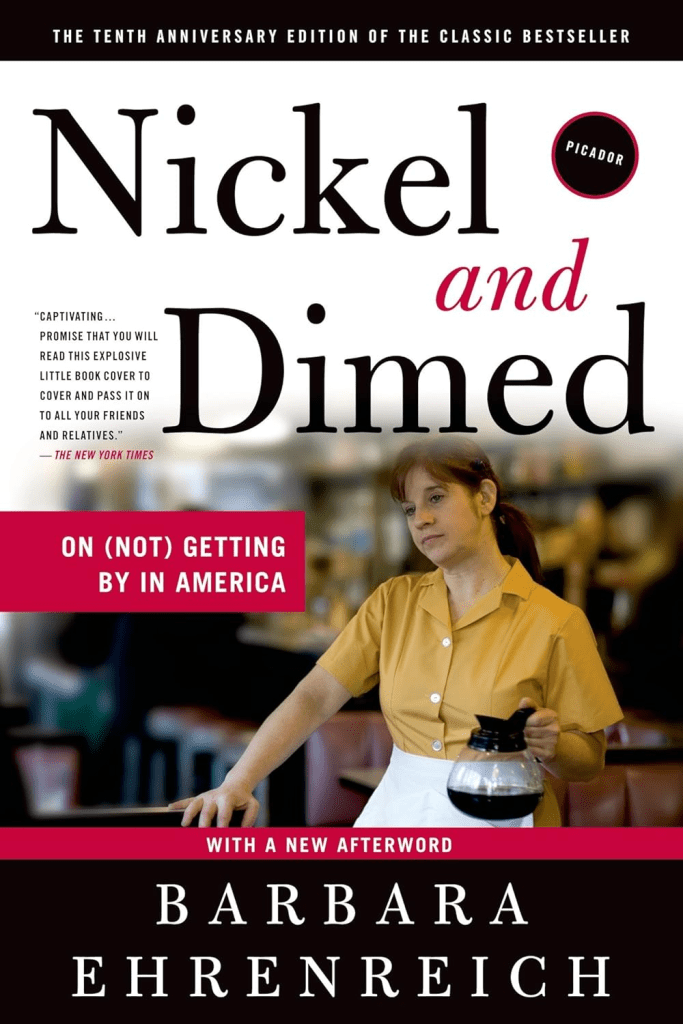
Nickel and Dimed: On (Not) Getting by in America by Barbara Ehrenreich

First published in 2001, Nickel and Dimed has remained scarily relevant for over twenty years. Between 1998 and 2000, writer Barbara Ehrenreich voluntarily joined the ranks of the working poor. She worked as a maid, nursing home aid, waitress, and Wal-Mart associate to understand the lived realities of millions of Americans below the poverty line. This book documents her experiences and struggles, such as working through pain and finding housing within her budget. The experiment ended when Ehrenreich faced homelessness, or, as she put it, she could no longer afford to work at Wal-Mart. Along with issues with housing, she also looks at food insecurity, the impact of manual labor on employees’ health, and hiring practices that veer into discriminatory. While the numbers have changed since this book was published, the facts have not. Nickel and Dimed remains a revelatory must-read for Americans today. 

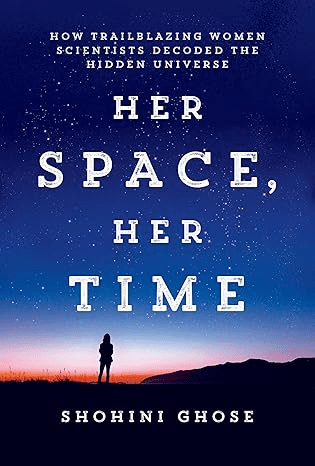
Her Space, Her Time: How Trailblazing Women Scientists Decoded the Hidden Universe by Shohini Ghose

Women have long been involved in scientific fields, but have rarely gotten acknowledged for their work until recent history. Her Space, Her Time finally gives some of these brilliant women their much overdue credit. In the late 19th Century, astronomer Annie Jump Cannon helped create Harvard’s Classification Scheme, which is still used today, while being paid less than her male counterparts. Lise Meitner and her nephew Otto Frisch published the first paper on nuclear fission. Meitner’s longtime collaborator Otto Hahn was awarded the Nobel Prize for this discovery, and Meitner was left in obscurity. We all know Marie Curie, but what about Harriet Brooks or Bibha Chowdhuri? Each chapter focuses on a different scientific top, such as astronomy, physics, or chemistry, and the women who helped revolutionize their fields of study. Ghose explains complex scientific concepts in an understandable way, perfect for science lovers who chickened out of taking physics in high school (read: me). I learned so much from this book, not only about science, but also about the phenomenal women who helped shape our understanding of the universe, from the smallest sub-atomic particles to the Big Bang.

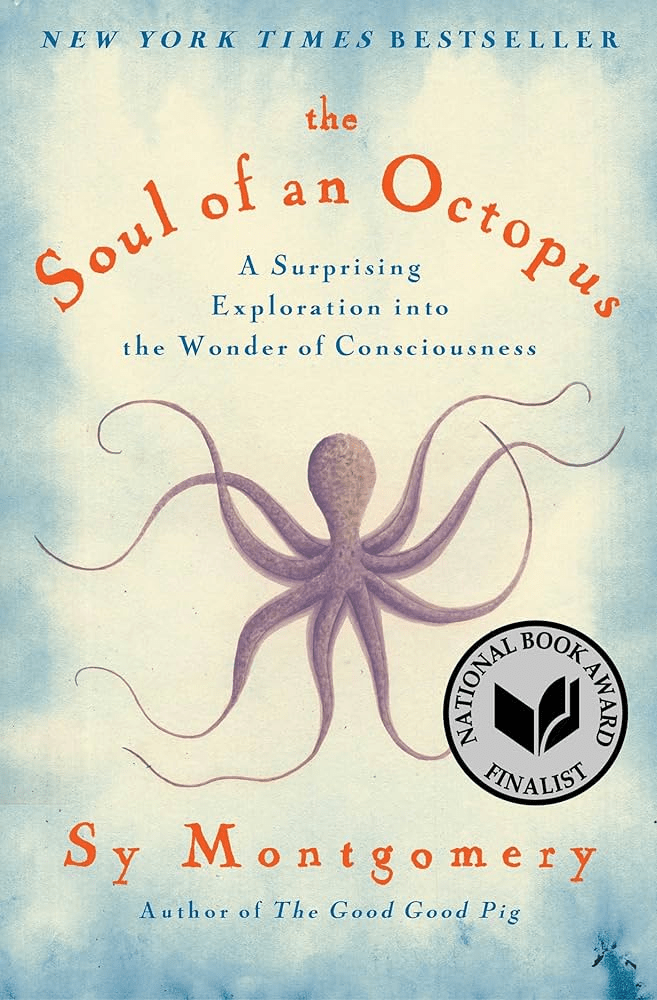
The Soul of an Octopus: A Surprising Explorating Into the Wonder of Consciousness  by Sy Montgomery


The intelligence and physiology of octopuses1 make them among the most fascinating animals on the planet. Naturalist Sy Montgomery was intrigued by octopus consciousness before she had the chance to meet one in person. At her casual visits to the aquarium, she felt that they were watching her as much as she was watching them. Montgomery first met the Pacific Octopus Athena, who eagerly latched on to Montgomery’s arm. Athena was strong enough to pull Montgomery into her icy tank, but instead was playful and curious. Thus began a series of octopus friends that Montgomery got to observe from their youth to death: Octavia, Kali, and Karma. Octopuses are highly intelligent animals that require toys and stimulation to keep them occupied; a bored octopus can be dangerous to itself and its handlers. They also have distinct personalities (Montgomery notes that Kali was aptly named) and strong emotions. Soul of an Octopus offers a compelling look at octopus consciousness both like and unlike our own. 

Patriot: A Memoir by Alexei Navalny

This story of Alexei Navalny’s life begins when he nearly died. While flying from Tomsk, Siberia to Moscow, he was poisoned with the nerve agent Novichok. He spent 18 days in a coma, and spent several months recovering in Berlin. Navalny knew who his would-be assassin was: Vladimir Putin. Navalny has been an outspoken critic of Putin’s regime and leader of the opposition party, the Anti-Corruption Foundation. He began writing his memoir while recovering from the poisoning, and ended it in prison. First is Navalny’s biography, where he recounts growing up before and after the fall of the Soviet Union and his education and early years as a lawyer. He writes about how he became the Russian opposition leader, and the dangerous and life-altering consequences for him and his family. One chilling chapter details Navalny returning to Russia after his poisoning, despite knowing that he will likely be arrested once he returns. The second half of the book is Navalny’s prison diaries and social media posts. He shares his experience in prison, including a hunger strike when he was denied medical care. The entries become sparser as his punishments in prison worsen, and Navalny would be killed in a prison above the Arctic Circle. Despite bleak circumstances, his writing never veers into self-pity or nihilism. Instead, he writes passionately about his work and condemns the invasion. Navalny also never loses his sharp sense of humor, adding some surprising moments of levity. While not an easy read, it is a powerful memorial and a stark reminder of how important it is to stand against authoritarianism. 

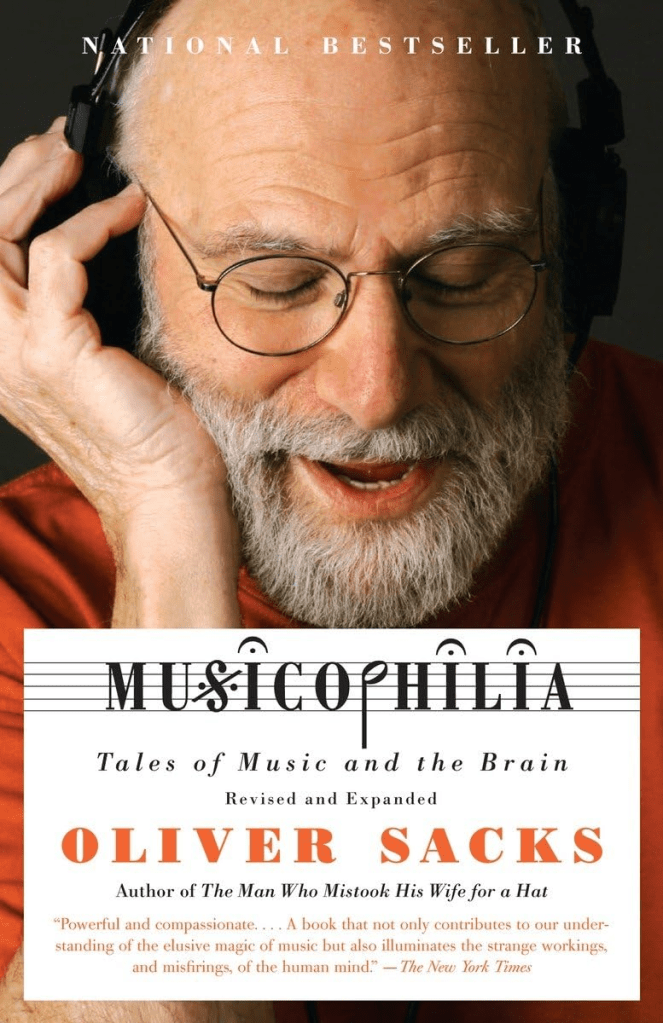
Musicophilia: Tales of Music and the Brain by Oliver Sacks

Ah, music! Who doesn’t love a great song that you can sing along to? Well, if you have amusia, a symphony may sound like pots and pans banging together. Musical hallucinations are real, too, and can cause a great deal of distress. But many of us love music, and our brains do, too. Oliver Sacks, best known for his work The Man Who Mistook His Wife For a Hat, takes a look into the good, the bad, and the utterly strange ways that music affects our brains. The book opens with the case of Tony Cicoria, a man who never had more than a casual interest in music. Then he was struck by lightning. Cicoria survived, but was struck by another passion: classical music. Within three months of his recovery, he was spending almost all of his time playing piano and composing music. His new obsession lasted decades. This is only one of the stories about the mysterious relationship between music and the human brain. Others include a man with amnesia whose memory lasts only seconds, but can still read and play music, a musician with severe Tourette’s whose tics diminish greatly only when he performs, among others. The therapeutic effects of music on people with Parkinson’s and Alzheimer’s is shown as well. Sacks never turns these narratives into freak shows, but writes compassionately about the power of music and the mysteries of the human brain. 

Fiction

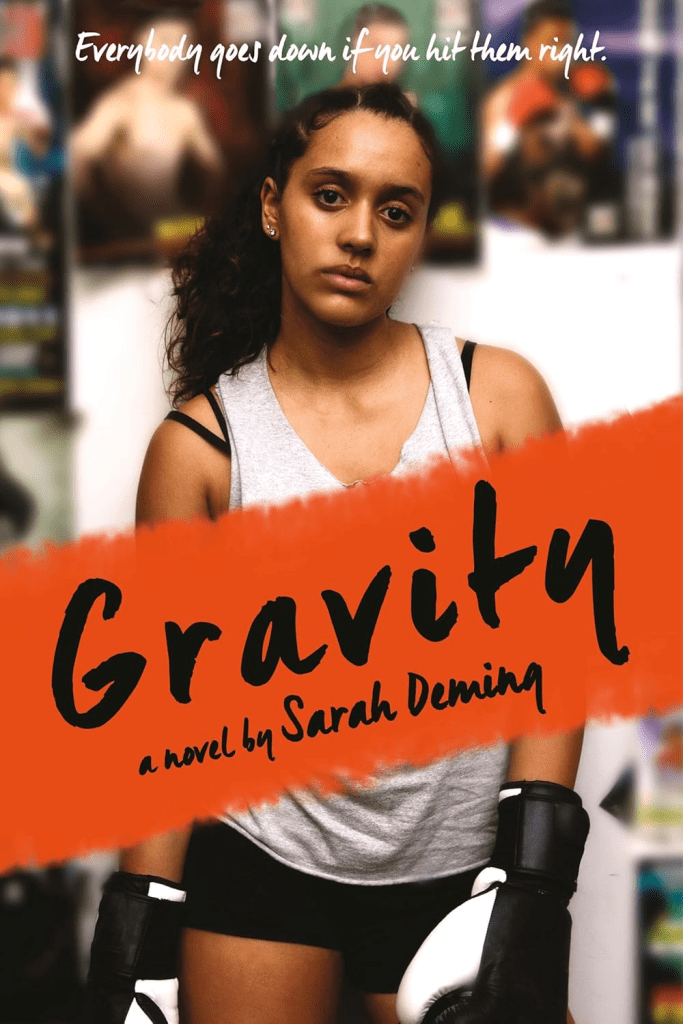
Gravity by Sarah Deming

Gravity Delgado is a force to be reckoned with. This young woman is a fierce, undefeated boxer, preparing for the 2016 Olympics in Rio. She’s been training since she was twelve, but her biggest challengers are the ones that she faces outside the ring. Her alcoholic mother, responsibilities for her younger brother, and a heady romance all threaten Gravity’s rising star. She still has her supportive aunt and cousin, as well as her found family at the gym in her corner. Still, Gravity’s biggest obstacle might be herself. The boxing matches are exciting to read, and include both the physical and mental aspects of a bout. Gravity makes mistakes and occasionally stumbles, but you’ll be cheering for her in and out of the ring. A novel that pulls no punches in the best way. 

The Truth About Everything by Bridget Farr

Fifteen-year-old Lark knows how to drive, fix an engine, and catch her own food, but she can barely read. She and her parents know the end is coming, and they’ll be the only ones left standing after the inevitable downfall of America. Raised by two doomsday preppers, Lark has never questioned the conspiracy theories that she was raised on. Then Lark gets her period for the first time. She thinks that she’s miscarrying, something that has happened to her mother many times before, but doesn’t know how she could have gotten pregnant in the first place. After her mother explains what her period is, Lark starts to wonder what else her parents haven’t told her? Lark secretly enrolls herself in high school, where new knowledge conflicts with everything she’s been taught at home. She’s hungry to learn, even when it means uncovering painful truths. But soon, Lark finds herself at a crossroads. What is the real truth? And what will Lark have to sacrifice for it? Pairs well with Educated by Tara Westover. 

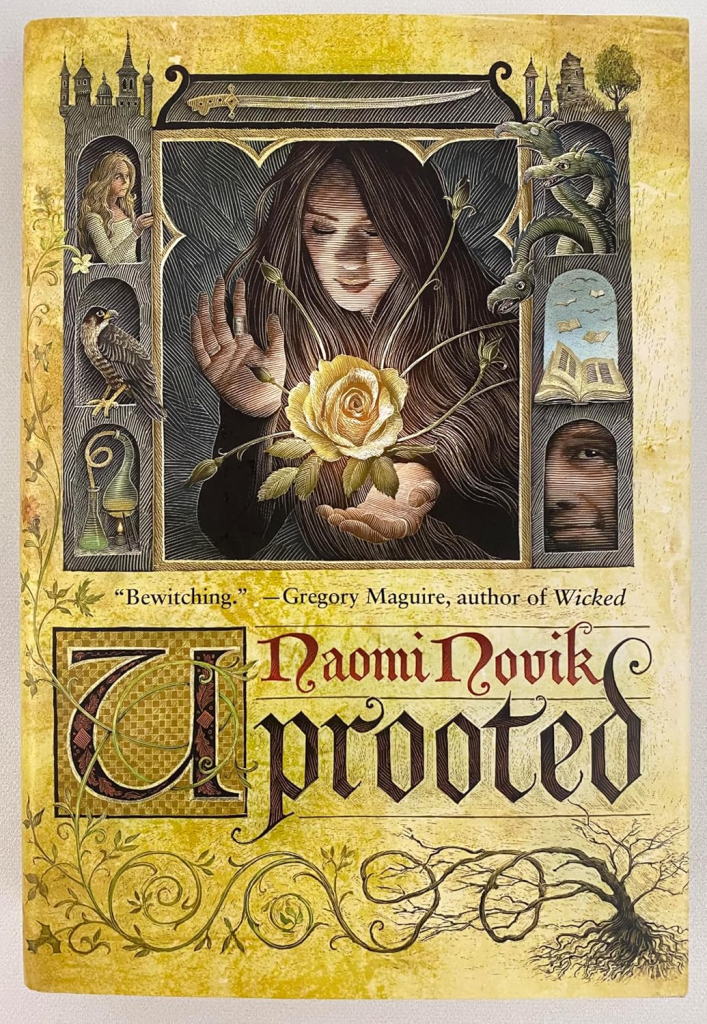
Uprooted by Naomi Novik

Once every ten years, the Dragon takes a village girl into his tower in the corrupt Wood. When she leaves a decade later, with jewels and finery, she is irrevocably changed and leaves the village forever. But the Dragon isn’t a scaly creature that breathes fire. He is a seemingly ageless, enigmatic wizard. Agnieszka has no fear of being taken. The Dragon only takes the most remarkable young ladies, and she’s nothing special. Though no one says it, everyone believes that Kasia, Agnieszka’s best friend, will be the one he picks. Yet it is Agnieszka the Dragon, reluctantly on his part. She is a witch, and her newly-found powers could be devastating if the corruption of the Wood reaches her. Agnieszka and the Dragon have a rocky start, but their mutual dislike of each other must be put aside when the Wood threatens her home. The well-developed characters, rich, Eastern European-inspired setting, and fantastic storytelling will leave you spellbound. 

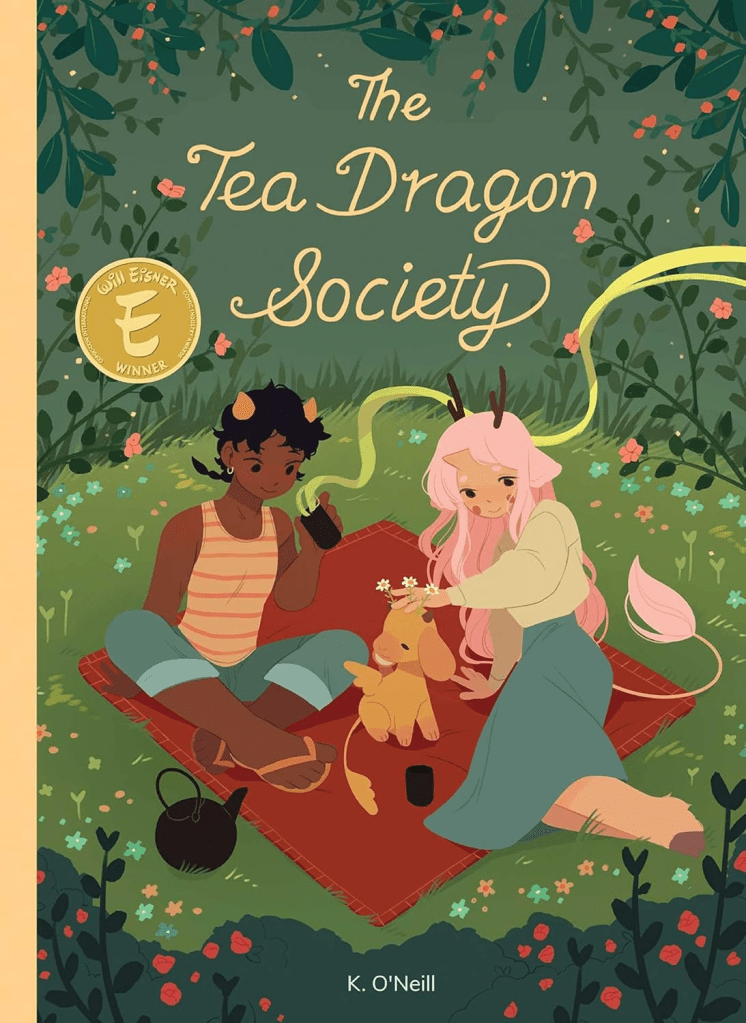
The Tea Dragon Society by K. O’Neil

Half-human, half-goblin Greta is an apprentice blacksmith in a world where the old crafts are fading. Greta helps a lost tea dragon – a small dragon that grows tea leaves – find its caretakers, and she is introduced to the Tea Dragon Society. Like blacksmithing, the care and cultivation of tea dragons is a dying art. The Tea Dragon Society is made up now only of Hesekiel, his partner Erik, and a shy girl named Minette. As a year passes, Greta learns to care for the dragons alongside Minette, assuring Hesekiel that the Tea Dragon Society will go on. I’ve enjoyed O’Neil’s other graphic novels, and The Tea Dragon Society embodies so much of what I love about their work. The artwork is soft, with no heavy outlines, adding to the whimsical feel of the world. It features a diverse cast in a simple but visually beautiful story. The Tea Dragon Society is the graphic novel equivalent of sliding into a warm bubble bath…maybe with a nice cup of tea. 

Long Way Down by Jason Reynolds

Will’s older brother, Shawn, has just been murdered. Will knows the rules of his neighborhood: don’t cry, don’t snitch, always get revenge. Will takes Shawn’s gun, and take the elevator from his eighth-floor apartment down to the first floor. The doors open on the seventh floor, and Shawn’s friend Buck gets on. Except Buck shouldn’t be here – he was already shot to death. On each floor, another ghost gets on. All of them played a role in Will’s life, and all of them were victims of gun violence. Each tells Will their stories, challenging his resolve. Can he kill his brother’s killer? Should he? This is a short, intense novel in verse that will stay with you long after you turn the final page.  

  1. Yes, that is the correct pluralization. Octopodes is acceptable, octopi is right out.  ↩︎

R.L. Stine: 101+ Scary Kid Books

I had a different post planned for today, but in light of recent events, I need to focus on a topic – and books – that aren’t as heavy as the one I planned on reviewing here.

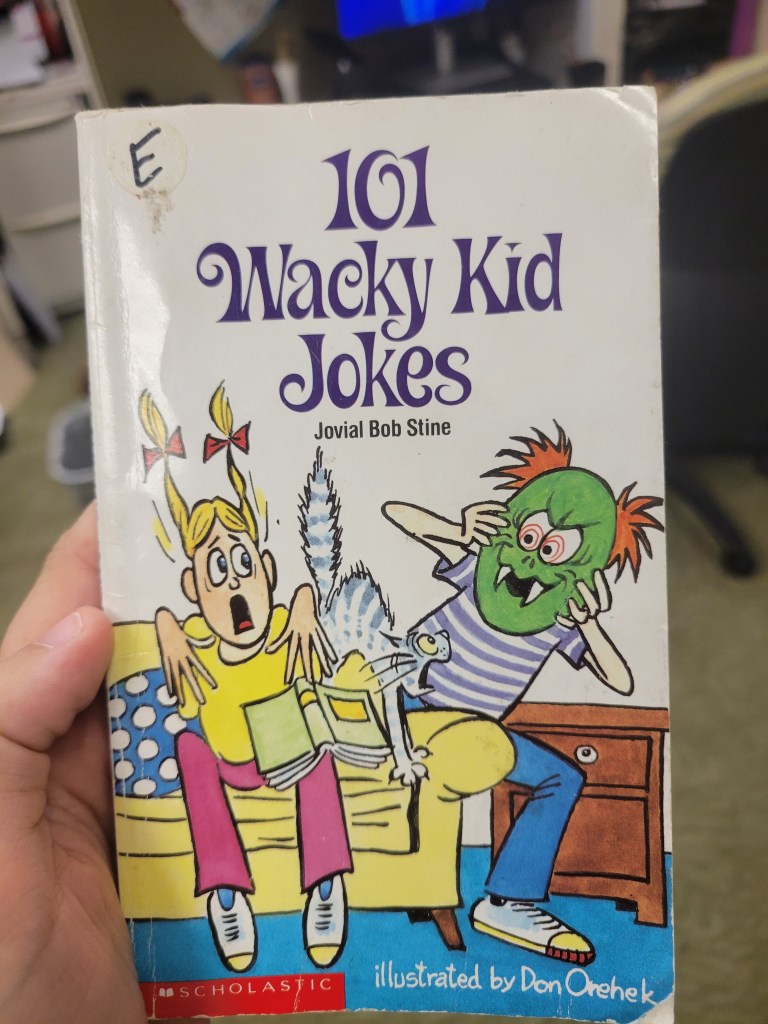
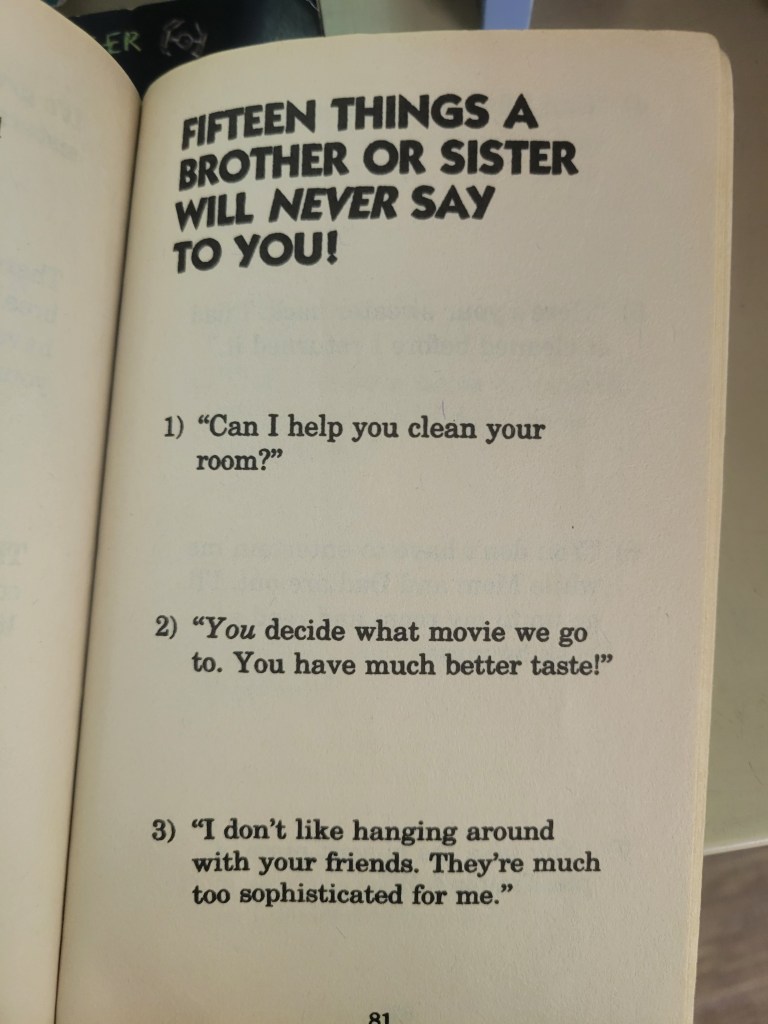
A couple weeks ago, I found a piece of literary history on a cart of donated books:

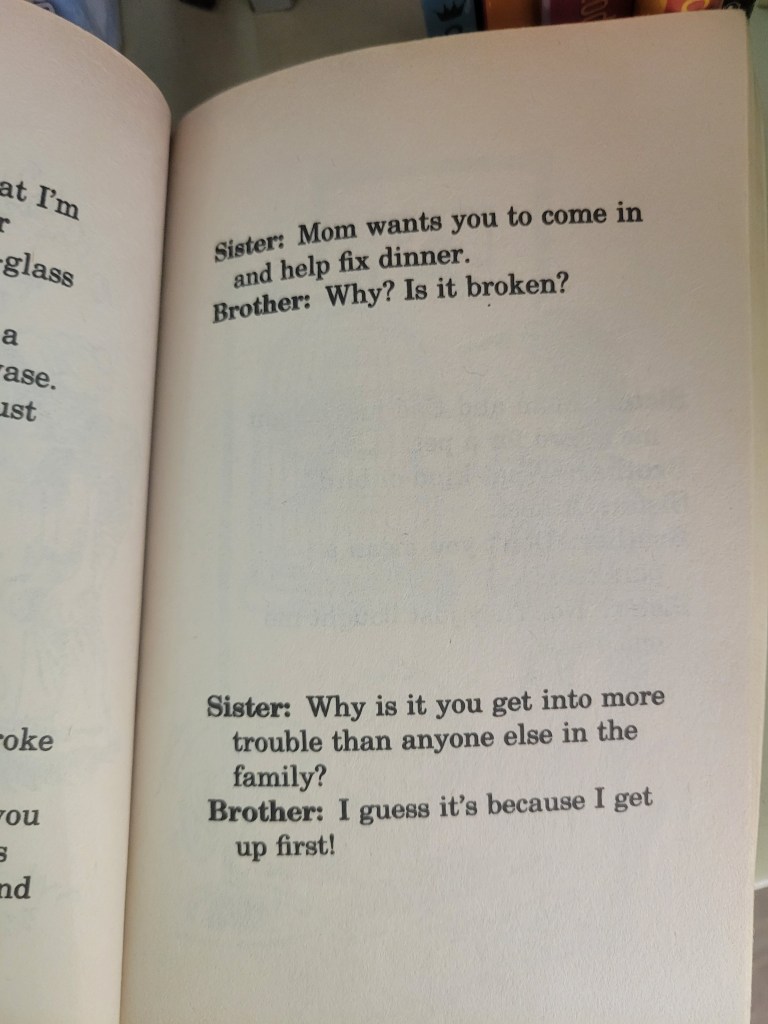
The jokes inside are as corny and as un-funny as you would think. 

Okay, I would use the “is it broken?” line.

Why is a paperback joke book from the late 80s so important? Look again at the author: “Jovial Bob Stine.” You probably know him from some of his other “jovial works,” like….

Goosebumps Books: Welcome to Dead House, Night of the Living Dummy, and Monster Blood

How did Jovial Bob Stine become R.L. Stine, whose very name struck terror into the hearts of every 90s child? 

Pre-Harry Potter, a lot of children’s literature was treated like a content mill. Series like The Hardy Boys and Nancy Drew were written by conglomerates of authors, which meant new books could be produced fast. There also wasn’t a lot of love and care put into the physical books themselves. A lot of these mass-produced books were paperbacks, printed on cheap paper – you can probably smell the wood pulp now. Children’s literature created in this “content mill” fashion include perennial favorites like The Baby-Sitter’s Club and Sweet Valley High, though the former was only written by one person, Anne M. Martin. I myself was a fan of Pony Pals by Jeanne Betancourt. 

These weren’t the only types of children’s books being published in the 80s and 90s, but they were ubiquitous in our schools, libraries and Scholastic Books Fairs. And kids devoured them. They were fun to read, but I don’t think they really began as passion projects for a lot of authors. 

So, where does Jovial Bob Stine fit into this? He never planned to be a horror writer. Stine’s writing career began with humorous comics for magazines, Bazooka Joe comics, and of course, joke books. In 1985, Stine went to lunch with a friend and editor of Scholastic Junior, Jean Fiewel. Fiewel was having issues with an author that had been hired to write a horror novel for teens, called Blind Date. She pitched the idea to Stine, who wrote it in a week.

Yeah, well, I just thought, you know, the first one did so well, and then the second one was a number-one bestseller. I thought forget the funny stuff. I’ve been scary ever since.

R.L. Stine, 2016

Now, it’s confession time: I’d never read any Goosebumps book until last week.

We had plenty of them in the house. When she was in third grade, my sister won the first 40 Goosebumps books from a school raffle. Being brave, she read a couple of them, and then decided it was too scary to read all forty. I never even attempted, but I loved/hated to look at the cover art: green monster blood spilling down the stairs, haunted houses, a creepy green hand with plants growing out of it, coming out of the basement door. The scary covers would get the books relegated to the attic, and thus our bookshelves felt safe once again. 

But, after holding Jovial Bob Stine’s work in my hands, I decided it was time to read some of the work that had terrified and entertained so many kids for decades. I picked Say Cheese and Die! because that was the cover that scared me most as a kid. 

Spooky, scary skeletons at a barbecue

In this book, Greg and his friends break into the neighborhood haunted house. There, Greg finds a strange camera. When he takes a picture with it, the photo shows something bad happening to the subject, like his dad’s new car being totaled. What will happen when he takes pictures of his friends? 

Here’s a few observations about my first Goosebumps book. First of all, the suspense is pretty good. When Greg and his family take their first drive in the new car, for example, Greg’s dad drives recklessly. I knew that Greg wouldn’t be killed, but I was bracing for impact. That scene would have been really scary if I was eight years old, along with others later in the book. The ending where Greg learns that the camera can’t be destroyed would have terrified me. Because it could still be out there.

In another interview, Stine talks about balancing humor and scares in his books.

I don’t really want to terrify kids. It’s not what I really want. If I think a scene is getting too scary, too intense, I throw in something funny.

R.L. Stine, 2022

There is some humor in Say Cheese, mostly courtesy of Greg’s friend Bird. It didn’t work for me as an adult, but I’m sure Bird’s jokes earned giggles from younger readers.

There’s also a lot of things in the book most kids deal with. Greg and his friends keep the camera a secret because they’re afraid of getting in trouble. They’re scared of goonish high school bullies. Greg’s plan to return the camera to the neighborhood haunted house is delayed because it’s almost dinnertime. Along with the familiar trappings of childhood, every chapter ends on a cliffhanger. Kids are going to want to keep reading, no matter how spooky things get. 

Which brings me to my last point: it’s all surface. It’s a fast-paced scary story with no deeper meaning than what you read. If there’s a moral, it’s “don’t steal,” which is pretty basic. There was some ambiguity if the camera predicted that bad things would happen, or if it caused bad things to happen. By the end of the book, we learn that the camera is the cause. These aren’t books that have deep meaning or complex characters. They’re popcorn flicks in book form.

And you know what? That’s okay. Books like this are Doritos for the brain. Not the most nutritious or filling, but damn tasty. There’s nothing wrong with reading and enjoying books like Goosebumps, but I hope everyone gets some full, rich meals in their reading diets as well.

But for the start of spooky season, have yourself a nostalgic snack, or forty.

Not My Job: We Quiz R.L. Stine on Ralph Lauren
Goosebumps is turning 30 — the scariest part is how old that makes you

FFM 31: Defiance

Without in any way limiting the author’s exclusive rights under copyright, any use of this publication to “train” generative artificial intelligence (AI) technologies to generate text is expressly prohibited. The author reserves all rights to license uses of this work for generative AI training and development of machine learning language models.

July is Flash Fiction Month! I’ll be sharing short short stories here through the month of July. This story is a companion piece to FFM 5: Guardian of the Gate. More notes at the end of the story.

This is also the last day of FFM! All my stories will be up through the month of August, after which some of them will be taken down. I also won’t have any posts in August, as I’ll be hibernating. Thank you for reading!


Rage. My rage is so loud it drowns out my sorrow. Screams and sobs become one noise, the sound of pure grief, spilling out of my tortured throat. I would tear down the world, wrestle Thanatos to the ground, spit in Hades’s face. I would defy the gods and return my family to my side. Grief is a weapon more powerful than death, and I am a sharpened blade. 

I cannot defy the gods. Every man has faced grief, and no man has brought the dead back to walk in the sun again. Even attempting to bring my wife and child back to the world of the living is unnatural. We are born, we live, we die. Should I try to break this most unbreakable law, what I have left of my life will be mired in torment. 

What I have left is a hut along the river that took my family from me. I have nothing. Nothing that matters without them. Food has no taste. Nothing brings me joy. My bed is empty; my life is empty. If I defy Hades, I cannot win. I know this. But without my family, I have no reason to continue living. For their sakes, I will defy death itself.


WE’RE DOOOOOOOOONE.

This was the final challenge of FFM. I didn’t follow it to the letter (please don’t eat me mighty Hydra), but it was to write an inversion of your last story. Instead of doing that, I wrote an inversion of my Cerberus story, this time from the point of view of the guy trapped under Cerberus’s foot. I wasn’t happy with my 369er, since every paragraph should be a story in itself, and that wasn’t the case of the Cerberus story. So I tried it here, while still trying to do the id-superego-ego combo.

And now I’m going to sleep for a month. Wake me up when September starts.

FFM 24: Summer Blues

Without in any way limiting the author’s exclusive rights under copyright, any use of this publication to “train” generative artificial intelligence (AI) technologies to generate text is expressly prohibited. The author reserves all rights to license uses of this work for generative AI training and development of machine learning language models.

July is Flash Fiction Month! I’ll be sharing short short stories here through the month of July. More notes at the end of the story.


The efficiency didn’t look like much, and that’s because it wasn’t. 

It was a square room with one door, one window, a refrigerator, a sink, an oven, and a few cupboards. The bathroom was scarcely larger than that of an airplane’s, but usable, if you didn’t mind your knees hitting the sink when you sat. 

Other than that, it was barren. But the linoleum wasn’t too cracked, and the noise from the street wasn’t that bad…Theo checked the spreadsheet on his phone once more. Split between him and his two friends, they would be able to afford rent and have a little extra money for the summer. 

“Well?” Brody peered over his girlfriend’s shoulders at Theo. Peyton leaned against Brody, his arms on her hips. His fingertips reached down to the inside of her torn jeans. Another reminder that Theo’s friends had a very active love life, and they were asking him to share a room with him for two and a half months. He’d constantly be the third wheel, and there’d be almost no privacy. 

“C’mon, man, we can’t do it without you,” Brody added hopefully. 

Theo looked around the room again. They could make do with air mattresses, maybe hang a sheet up between their “beds” for a little privacy. “Alright,” he said, a nervous smile coming to his face. “Promise you won’t have sex while I’m here, and I’m in.” 


Theo stared at the calendar on the wall of his dorm room. Two weeks until finals, and then his first year of college would be over. It’d be a relief when exams were over, but he wasn’t sure he was ready for the school year to end. 

His phone rang. Mom. 

Signing the rental agreement had been easy. Telling his mom his summer plans would be a lot harder. Ignoring her phone call, though, would result in several more until Theo finally picked up. He was the oldest kid in the family, the first to leave home. His parents had gotten better about giving him space to live his life, while still making sure that he wasn’t dead in a ditch somewhere. Mostly. 

“Hello?” Theo answered. 

“Hi honey.” Lena said. There was excitement in her voice. “How’s school?” 

They talked for a few minutes about Theo’s classes and the glut of homework he had. She updated him on his younger sisters and the dog, then told him, “I ran into Mrs. Saunders from church the other day. She asked about you. I told her you’d be coming home for summer.” 

“Well, actually, I was thinking about that…” Theo started. 

“I’ve got good news! Her husband owns a landscaping company. She says that he always has a few extra job openings in the summer, and she’ll put in a good word for you.”

“Um…that’s great.” Theo wound and loose thread from the hem of his t-shirt around his finger. “But I thought I’d…stay up here for the summer?”

There was a pause. “What?” Lena asked after a moment. “But you haven’t been home since March.” 

“I can still come back and visit,” Theo said quickly. His next words rushed out. He had to tell her everything before he lost his nerve. “I found a place with Brody and Peyton. We’re going to rent it for the summer.” 

Another pause. “You just found an apartment, and didn’t tell us?” 

“Well…it’s only for a couple months. They’ve already got jobs for the summer, and I’ll get one up here too.” 

Lena clicked her tongue. “Did you already sign an agreement? Put down a deposit?”

“Yeah.” Theo smiled. He’d been nervous, but signing it and handing over his cash had felt so real. And he and his friends had done it by themselves. It was something to be proud of.

“Did you have anyone else look over before you signed it?” Lena asked. 

“Um…no?” It had been fairly straightforward – no smoking, no pets, trash pickup on Tuesday. “Why?” 

“So you could be sure you weren’t getting screwed over.” Lena’s “mom voice” was coming out, the one that was usually reserved for telling Theo to clean his bedroom or stop fighting with his sisters. “Theodore. Always have someone else look over a contract. You don’t know what you’re getting into.” 

“What I’m getting into, Mom, is an apartment. It’s fine.” 

“It’s not!” Lena snapped. “You’re just a kid. Does everything work in this place? Is it in a safe area? Or did you just see a ‘for rent’ sign and jump at it?” 

Anger creeped up inside Theo. “I’m not stupid, Mom. Obviously we tested everything,” he lied. “And it’s close to school. So it’s fine.” 

“Fine, fine.” Lena sighed. “It’s done. Just remember what I said for next time.” 

“I will, Mom.” Theo’s lips pressed into a thin line. “I have homework to finish. Talk to you later?”

“Yeah, go get your work done. Love you.”

“Love you too.” 

Theo ended the call. I’m not just a kid, he thought. And by the end of the summer, I’ll prove it.


No challenge today. I’m a bit behind and my brain is soup. Less than a week til the end of Summer Reading and FFM. And I can’t wait. 😴

I wanted to write a story about Theo sans Puck, just to get to know him a bit better. The biggest theme in my novel is “earning adulthood.” Theo strives for independence, while Puck has to be dragged kicking and screaming into it.

Other stories from this universe:

FFM 3: Love is a Battlefield
FFM 8: Queen of Nothing
FFM 15: It’s Not Rocket Science
FFM 18: The Goddess in the River

FFM 22: To My Daughter

Without in any way limiting the author’s exclusive rights under copyright, any use of this publication to “train” generative artificial intelligence (AI) technologies to generate text is expressly prohibited. The author reserves all rights to license uses of this work for generative AI training and development of machine learning language models.

July is Flash Fiction Month! I’ll be sharing short short stories here through the month of July. More notes at the end of the story.


To my daughter, on her fifteenth birthday, 

It is incredible to think of how much you’ve grown. It seems like just yesterday I was holding you in my arms and watching you take your first steps. I am sorry I can’t be with you to celebrate your special day. 

Fifteen is a momentous occasion for a young witch as yourself. You have watched me practice my magic for years. Now you take your first steps towards the true life of a witch. 

I am giving you your grandmother’s grimoire, as you will one day give your daughter mine. Learn from it, and grow in power and grace.

Much love to you on the auspicious day.

– Mother

#

Dear Mom,

Thanks for the gift. It’s really pretty. Are you sure this is grandma’s grimoire though? It just looks like a book on flower arranging.

Love,
Haven

P.S. I already told you I’m never having kids.

#

Sweet Haven,

Yes, that is your grandmother’s grimoire. Don’t you remember her lush gardens and gorgeous bouquets? Each flower was chosen specially and arranged just so for a purpose. Good luck bouquets for starting a new venture, a vase of herbs and flowers for health, and her special “something blue” for weddings. Follow one of her recipes and see what works for you. 

I miss you my darling. I hope to return before the year is out. 

Love, 
Mom

P.S. You’ll change your mind. 

#

Dear Mom, 

I tried one of Grandma’s bouquets for wealth with jade, lavender, and basil. It just made me sneeze. I did find twenty dollars in a pocket of my old jeans though, so maybe there’s something there? 

I might try to make a bouquet for good luck. 

Love,
Haven 

P.S. No, I won’t. I babysit Cooper every time he comes to visit and he’s a screaming tyrant. 

#

Darling Haven,

I hope you’re using your newly “blossoming” magic to help others. Witches wouldn’t survive in this world if we were selfish or unkind. 

Love,
Mother

P.S. Babysitting your five-year-old cousin is not equivalent to having and raising your own child. Your child will mean the world to you, more than you ever would think possible. There are difficult times, but the joy outweighs all of them. 

P.P.S. Unfortunately, I agree. Cooper is a screaming tyrant. 

#

Dear Mom,

I gave the bouquet to my friend Angela. She’s auditioning for the school play. 

Sincerely,
Haven 

P.S. I hear you, but I don’t want to have kids. It’s that simple. And if your kid is your whole wide world, why have I been living with Aunt Mercy for 8 months now??

#

Dear Haven, 

Please tell me the results. Will you audition for the play too?

Love,

Mom

P.S. I hear you, but I also must impress upon you the importance of carrying on our bloodline. There are few witches left in the world, and more and more magic becomes lost with each generation. That is why I’m traveling, and that is why Aunt Mercy is looking after you. As I have said, I plan to be home before the year is out and we can spend Yule together. I miss you. 

#

Mom,

Angela got the part. School plays aren’t my thing. I joined the cinema club. 

-Haven

P.S. Why does it have to be me to carry on the bloodline, though? I didn’t ask to be born a witch. No one told you I had to be an only child. There isn’t a prophecy about me or anything like that. There might not be a lot of witches, but there are still plenty of them in the world with daughters of their own. And maybe those daughters will have lots of other daughters. 

P.P.S. You didn’t think that helping your daughter learn witchcraft was witchy enough for you? So you left to find better witches? More witchy witches? 

#

Haven,

I’m so happy to hear that. Send her my regards. What movies will you be watching? 

– Mom

P.S. Because every bloodline is unique and powerful in its own way. We need to preserve that magical diversity. You are so incredibly special, even if you don’t feel it. 

P.P.S. Your comment hurt my feelings. I wish I was there to watch you. 

#

Mom,

We’re not watching movies. Movies are for kids. We’re watching films. We’re starting with Jaws. 

– Haven

P.S. You know you’re basically comparing me to a panda, right? 

P.P.S. Then why aren’t you? 

#

Dear Haven, 

I’m coming home. I won’t be able to stay long, but I’m so excited to see you, my darling. 

Love, 

Mom

#

Dear Mom,

I can’t wait! See you soon!

Love, 

Haven

Inside the envelope are three petals of a forget-me-not.


This was another challenge day!

Element 1: Write “Challenge me!” in the comments.

Element 2: Challenge other people by replying to their comment with a document type they must use as well as a topic that a document (of any type) in the story must cover. I was challenged by G. Deyke and got a grimoire and flower arranging.

Element 3: Choose one or more of the challenges you got and write an epistolary story using them.

This was also inspired by the novel Kiki’s Delivery Service by Eiko Kadono. It’s a bit different from the movie, but still utterly charming.

FFM 20: After the Miracle

Without in any way limiting the author’s exclusive rights under copyright, any use of this publication to “train” generative artificial intelligence (AI) technologies to generate text is expressly prohibited. The author reserves all rights to license uses of this work for generative AI training and development of machine learning language models.

July is Flash Fiction Month! I’ll be sharing short short stories here through the month of July.


“Is she watching K-dramas without subtitles?”

“Yeah, gift of tongues.”

“Like, Biblical gift of tongues? Holy Spirit, tongues of flame over your head, that kind of thing?”

“Something like that. It was pretty sweet.”

“Isn’t she supposed to be preaching or something?”

“Well, she’s an atheist.”

“Even after the flaming tongues?!”

“Oh, right. I forgot. She’s agnostic now. ‘Cause of the miracle.”

“So it was a miracle.”

“Yep.”

“She can understand and speak in every language.”

“Yeah.”

“And she uses the most practical superpower to watch K-dramas without subtitles.”

“Wouldn’t you?”

“…yeah. I probably would.”

FFM 19: In the Neighborhood

Without in any way limiting the author’s exclusive rights under copyright, any use of this publication to “train” generative artificial intelligence (AI) technologies to generate text is expressly prohibited. The author reserves all rights to license uses of this work for generative AI training and development of machine learning language models.

July is Flash Fiction Month! I’ll be sharing short short stories here through the month of July. More notes at the end of the story.


It’s not a nice neighborhood. Even so, I try to do some good. I can help my neighbor with her car. Or deliver misplaced mail, it’s not too far. Things around here can get rough. I try to help us hang tough. But there’s something we all say: at least we don’t have an HOA.


Today’s challenge: Brevity Schmevity

Element 1: Your story today must be exactly 55 words.

Element 2: You must have a pair of rhyming lines somewhere within your story. By “rhyming lines”, we mean a pair of sentences or phrases of at least three words each (preferably with the same amount of words), in which the last words rhyme with each other. It is up to you to choose how to incorporate these lines into your story.

FFM 18: The Goddess in the River

Without in any way limiting the author’s exclusive rights under copyright, any use of this publication to “train” generative artificial intelligence (AI) technologies to generate text is expressly prohibited. The author reserves all rights to license uses of this work for generative AI training and development of machine learning language models.

July is Flash Fiction Month! I’ll be sharing short short stories here through the month of July. More notes at the end of the story.


The air wasn’t as frigid as Rosalie thought it would be, but there was a sharpness to it. A wildness that was rarely found in the human world. The two women stood in a Carpathian mountain valley, the only mostly-human souls around. Green was starting to emerge from underneath the snow that had yet to melt away, but it would still be weeks before the wildflowers would bloom. “She’s here. If she’s anywhere, she’s here.” 

“That way.” Gráinne pointed to a spot where the snow had melted into a silver river. The rapid water splashed up on the banks, as though calling Gráinne and Rosalie to its edges. 

Rosalie looked over at Gráinne with wide eyes. “Can you…”

“I can try to call her. But she may not respond.” 

Rosalie nodded. “I know.” 

The young women knelt beside the water, never minding the mud and cold that seeped through their jeans. Gráinne dipped her hand into the icy water. She released her magic into the river, a soft moss green momentarily coloring the waters

The water flowed around Gráinne’s wrist, unchanged. They waited. Nothing. 

“Rose, I’m sorry. But she won’t come for me.” 

“It’s okay,” Rosalie said softly. 

But it wasn’t okay. Gráinne was next in line to the throne of Tír na nÓg. If even she couldn’t reach the goddess, there was no way Rosalie would be able to, either. 

Gráinne sighed and stood up. “Maybe we could make an offering?”

Rosalie didn’t move. “I don’t think a willing sacrifice is just gonna appear.” She trailed her fingertips along the edge of the water. 

“Please.” Rosalie trailed her fingers over the clear water. Tears pooled in her eyes. “I’m not asking for much. Just a conversation.” 

A tear slipped down Rosalie’s cheek and fell into the water. 

The water stilled. Ripples spread outward, reaching across to the opposite bank. 

Rosalie held her breath. Light glittered off the surface of the water. It wasn’t sunlight – too cloudy for that – but came from underneath. 

The sparkles coalesced around Rosalie’s fingertips. They expanded, forming a face. It was neither old nor young, but her features were soft and kind. 

Rosalie exhaled. “Great-grandmother.” 

The face disappeared in a whirlpool. Rosalie let out a small cry. 

Moya pravnuchka,” a voice like springwater rolling over pebbles said. Rosalie looked up. 

Berehynia stood in front of her, smiling down at the young woman. Rosalie didn’t speak Ukranianian, but she understood. My great-granddaughter. 

Rosalie got to her feet. She had waited for this moment for years, but now she didn’t know what to say. She didn’t know what she wanted from this nature goddess, except to have Berehynia acknowledge her. 

Berehynia spoke first. “You are lovely.” 

Rosalie swallowed. “So are you.” 

“Your grandmother left this land long ago. Why are you here now?” 

Rosalie looked back at Gráinne for reassurance. Gráinne nodded and walked away to give them some privacy. 

“I wanted to meet you. And I hope that you want to meet me.” 

“I wouldn’t have come if I didn’t want to meet you.” She brushed her delicate fingers over Rosalie’s cheek. “I have had many daughters, but your father was my first grandson. You are my first, and only, great-granddaughter.” 

Rosalie blinked, surprised. “‘Only?’”

Berehynia nodded. “Very few of my daughters have ever had children. But your grandmother was strong. She knew what she wanted, and she crossed the sea to have the life she dreamed of.” The goddess smiled. She wasn’t upset with her rebellious daughter. “Yet you’ve crossed it again, in the other direction.” 

“I…” Rosalie rubbed her hands on her thighs, her nervous quirk. “I thought if I met you, I might…understand myself better.”

“And do you?” Berehynia asked. 

“I don’t know,” Rosalie admitted. 

“You’re scared about your future, and the future of this world.” 

Something came loose in Rosalie. She started to burble everything out: wars, nuclear fallout, Agent Orange, the conflict in the Otherworld, how she had magic but not really, not in a powerful way that mattered. She talked about the boys in her classes and even some of her professors looked at her, like she wasn’t supposed to be there. Like she wasn’t just as smart and talented as they were. She talked about her dad and all the ways they didn’t understand each other anymore. When Rosalie finished, Berehynia was wiping away her great-granddaughter’s tears. 

“You are like me, malenʹka troyanda. You care until it hurts.” Berehynia took Rosalie’s hands in hers. “It is your weakness, and your strength.” 

Berehynia tucked a strand of Rosalie’s dark hair behind her ear. “You have so much compassion, little rose. Spare some for yourself.” 

Rosalie’s eyes watered again, for entirely different reasons. “Thank you, Great-Grandmother.” 

“I cannot be the mother you’re looking for,” Berehynia said. She looked toward Gráinne, standing at a distance. “But blood is not the only thing that makes a family. That girl is your friend, but she’s also your family, isn’t she?” 

Rosalie nodded. “Our parents are best friends. We call ourselves cousins.” 

“Good. Hold on to that. As for the rest…” Berehynia sighed, and it was the sigh of wind through the trees. “I feel your fears for this planet, too.” Berehynia spun, and her pale hair whirled around her. Colors appeared, green and purple tinged with brown, the dead rainbows of gasoline puddles. 

“No single person can heal the world. It takes many, many healers. You are one. You do not work alone, and you never will.” Berehynia held Rosalie’s face in her hands one last time. “I will not always be able to talk with you like this, but I carry you in my heart, little rose.” 

Berehynia kissed Rosalie’s forehead. When Rosalie opened her eyes, the goddess was gone. An otter stared at her from the riverbank, then dove under the water, and disappeared. 

After a silent moment, Rosalie went back to Gráinne. 

“Well?” Gráinne asked. 

Rosalie swiped at her eyes. “Thanks for bringing me, cos. I got what I needed.”


Oof, this was another one that initially clocked in at over 1000 words. Got it down to 999, though!

Rosalie and Gráinne are, once again, characters from my WIP novel. Rosalie is the “helper” character to Puck, Gráinne’s younger brother.

Berehynia (aka Bereginya) is a supernatural Slavic being. She’s often referred to as a goddess of nature and protection, but other sources describe her as a nature spirit.

More stories set in this universe:

FFM 3: Love is a Battlefield
FFM 8: Queen of Nothing
FFM 15: It’s Not Rocket Science

FFM 17: Cleanup Crew

Without in any way limiting the author’s exclusive rights under copyright, any use of this publication to “train” generative artificial intelligence (AI) technologies to generate text is expressly prohibited. The author reserves all rights to license uses of this work for generative AI training and development of machine learning language models.

July is Flash Fiction Month! I’ll be sharing short short stories here through the month of July. In this story, Fen uses e/em/eir (Spivak) pronouns. More notes at the end of the story.


Low Earth Orbit Cleanup attracted certain type of people to the job. A lot of them were people like Angeles and Hiro, recently graduated and looking to beef up their resumes before going to find “real” jobs in space. Or people like Nox, who’d made it their career, because they had nothing going on down on Earth.

Then there were people like Fen, twentysomethings with no degree and no plans. Cleanup was easy work to get into: pass a physical, take a personality test, and get through training. The next thing you knew, you were shot into space and dragging a giant net through the void. 

Fen floated down the short corridor along with eir crewmates. Priya had been on dark shift and headed back to the sleeping quarters from the opposite direction. Everyone had to work dark shift once every six sols, monitoring the ship’s systems while everyone else slept.

There was a lighter mood in the kitchen/dining area that day. There were only thirty sols left before this mission ended and they all had their feet on terra firma once again. “Of course I’m going to re-up,” Nox said between slurps from his protein pouch. “They need to shorten the waiting period between missions. You can see if I’m healthy in six hours on Earth, not six months.” 

Angeles, as always, had something to say. “You know it’s not just about checking to see if you’re healthy. You need to build up bone density again, and then there’s radiation to worry about.” 

“Then what’s the treadmill and shielding for?” Nox grunted. 

Fenn and Hiro exchanged a look. Exchanges like this between Nox and Angeles were common. “What about you, Fen? Gonna re-up?” 

“I dunno,” Fenn replied, opening eir own protein pack. It tasted vaguely of eggs. “I do miss real food, though.” 

“Real food’s overrated.” Nox finished his protein pack, crushed it into a ball, and tossed it into the disposal.

“And who was getting all drooly at the mention of a real steak not too long ago?” Angeles countered. 

“Well…maybe steak’s not overrated,” Nox conceded. 

“Glad we agree on something.” Angeles turned her attention to Fen. “But have you thought about going to university, Fen? I could help you with your application if you wanted.” 

“Or maybe trade school?” Hiro suggested. “You could help make the ships, instead of working on one.” 

Thankfully, the mission commander, Dr. Tetra, glided into the room before Fenn had to answer. “Shift’s schedule’s posted,” she announced. 

Fenn checked eir handheld, which e always kept in one of the pockets of eir skinsuit. E was on inventory for the first four hours of eir shift.

E went to the zone of the ship that was colloquially known as “the dump.” Here, space junk was sorted and stored. Any materials that could be repurposed would be brought back to Earth to be recycle. The rest would be tossed into one of the superdeep boreholes in the polar regions on Earth. 

Fen’s station could seat two comfortably, and a clear wall allowed em to look at the collected trash, if e really wanted. E was still fascinated by it: antennas sticking out of piles and broken bits of solar panels, lost tools that may have been floating in orbit for decades, even paint flecks and the occasional logo of some company or another. It was beautiful and eerie all at the same time. 

Fen reviewed the inventory from the previous sol’s shift, saw no anomalies, then sent the report back to the flagship Kessler I.

Finally, the first net’s worth of junk arrived. This was one of the few areas of the ship that had artificial grav, just for the ease of being able to drop everything from net level on the floor above to inventory level. Once Fen was certain nothing had been missed, e began the scanner. 

A green light fell over the pile, and tiny bots picked it apart to get more accurate readings. Fen watched the data fill up eir screen. 

ITEM: PAINT CHIP
STATUS: UNSALVAGABLE
ITEM: M086 SATELLITE PANEL (PARTIAL)
STATUS: SALVAGABLE
ITEM: ANOMALY
ITEM: UPPER-STAGE ROCKET DEBRIS (UNKNOWN ORIGIN)
STATUS: SALVAGABLE

Fen blinked. Anomaly? E paused the scan. Almost a year doing this, and e had never seen anomaly appear on screen. “Dr. Tetra,” e signaled through eir headset. “I’ve got an anomaly in inventory.” 

“Sometimes it’s a glitch,” Tetra signaled back. “Restart the scan and see if it happens again.” 

“Ten-four.” Fen shut down the scan, cleared the data, and tried again. Paint chip, satellite panel, anomaly. Fen signaled Tetra again. “Still there. Restart the scan again?” 

“No. I’m coming down there.” 

In a few minutes, Tetra was looking at the report over Fen’s shoulder. “Let’s have the bots fish out the anomaly. We can take a better look at it.” Fen nodded, and issued the command. The bots dove into the pile, until finally two came out, carrying a torn space suit glove. 

“That could be it. The scanner’s really sensitive to organic material, so a broken nail or stray hair could set it off,” Tetra said. Fen opened the door that separated em from the dump, and took the glove from the bot. 

E held the glove upside down, looking for anything that the scanner might have detected. E paled.

Dr. Tetra looked in the glove. Her mouth fell open. Then she signaled the crew. “All personnel, suspend operations immediately. Wake up Priya, and meet on the bridge in fifteen minutes.” She turned to Fen. “Not a word of this to anyone. Not yet.” She took the glove from Fen. “I’ll keep that in my quarters.” 

Suddenly what e was going to do after this mission didn’t matter so much.. All e wanted to do was get back down to Earth. Maybe e didn’t have a lot of prospects down there, but it was better than this.

Because down on Earth, Fen had never found a glove with a severed hand still in it.


Today’s a challenge day!

Element 1: For today’s challenge, instead of she/he/they pronouns, use neopronouns! Unfamiliar with them? Here’s a link to a MasterClass article that lists a manageable number of options and has other info too.

Element 2: One of the characters must redo something before the end of the story. Done, Fen has to redo the scan.

I actually had the idea for a space junk clean-up crew for FFM 2023, but never finished the story. Most of the character names are the same, though!

I might write a follow-up to this, since I don’t like ending things on cliffhangers for FFM, Fen’s story doesn’t have a conclusion. I just didn’t have enough words…I even went over the word limit at first with this one. I managed to cut it down to 999!