
May Book Recs: Asian-American and Pacific Islander Heritage Month

Without in any way limiting the author’s exclusive rights under copyright, any use of this publication to “train” generative artificial intelligence (AI) technologies to generate text is expressly prohibited. The author reserves all rights to license uses of this work for generative AI training and development of machine learning language models.


May is Asian American and Pacific Island Heritage Month in the U.S.! AAPI Month began as Asian/Pacific Heritage Week in 1978, and was extended to the entire month of May in 1990. In 2009, the obserservance’s name was changed to Asian American and Pacific Islander Heritage Month. Asia and the Pacific island are both huge places with numerous cultures, and a short list like this can’t possibly cover every country. I’ve decided to showcase four books for this month, with one book focusing on Asia, and one on the Pacific Islands for each category. 

As a reminder: I don’t distinguish YA from adult books on these lists. This is a deliberate choice, for several different reasons I might get into on another post. However, if you are dead-set on not reading any books outside your demographic age, here’s a simple guide: if the main character is a teenager, it’s probably a YA book; if the main character is an adult, it’s probably an adult book. This isn’t always the case, and I do try to note when books featuring teen characters would be better suited for older audiences.

Without further ado, here’s some books to celebrate AAPI month!

Nonfiction
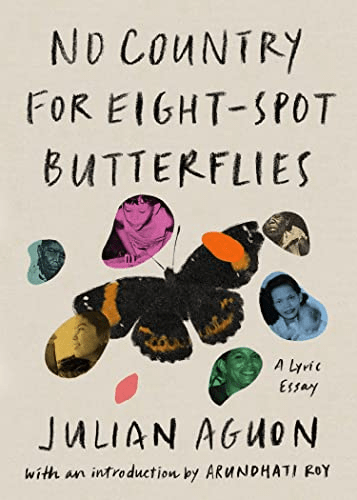
No Country for Eight-Spot Butterflies: A Lyric Essay by Julian Aguon

Julian Aguon is a Chamorro human rights lawyer and the founder of Blue Ocean Law, which specializes in Indigenous rights and environmental justice. He’s also a passionate and talented writer, as exemplified in No Country for Eight-Spot Butterflies. This book is a collection of his essays, speeches, and poems, but it’s also a love letter to the young people of Guam. “The Ocean Within” encourages high school graduates to imagine, dream big, and “get quiet” when they search for their destiny. Other essays discuss threats to the natural world, through climate change and increased militarization of Guam, despite its residents’ protests. Loss and grief are also central themes, shown in deeply personal writing. Though some entries are painful (“Fighting Words” is particularly difficult to read), overall, the book encourages its readers to make changes in the world, even if it’s only in a small way. My favorite essay was “Nikki and Me,” which resonated so strongly with me I had to read it twice. 
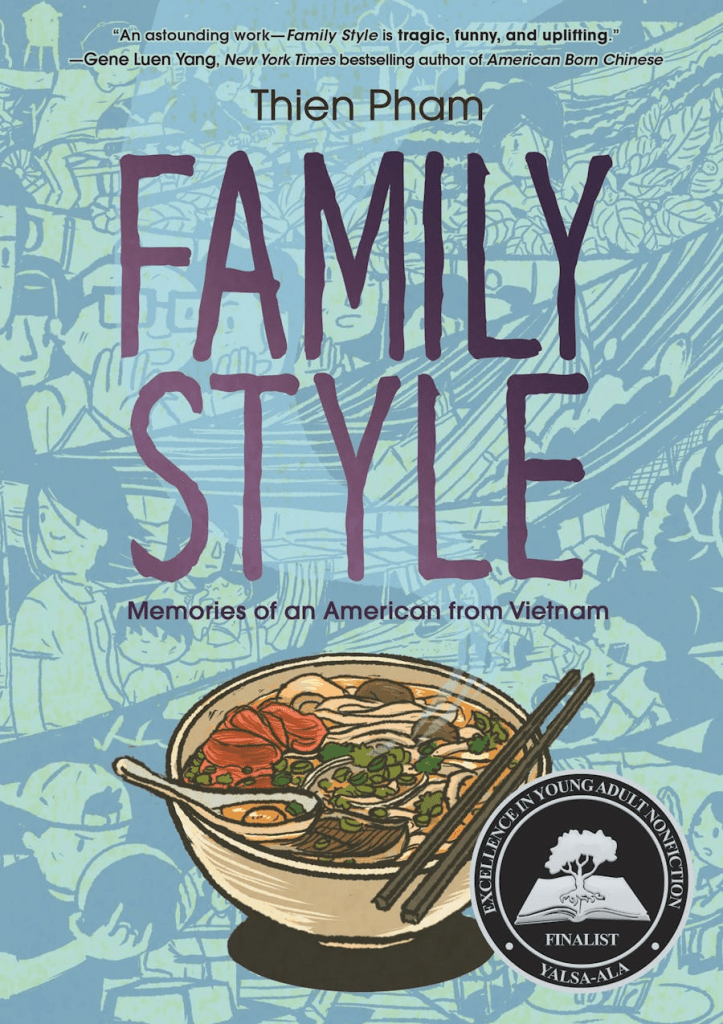
Family Style by Thien Pham

Thien’s first memory is “the saltiness of fish…and the sweetness of rice” when he was a young child on a refugee boat traveling from Vietnam to Thailand. Food is the prominent framing device in this graphic novel memoir, which shows Thien’s life first as a refugee, then as a Vietnamese immigrant, and finally as a U.S. citizen. Each period of his life is marked by an important food, from the bánh cuốn his mother cooked in a refugee camp in Thailand to the ham and cheese croissants that signify the Pham family gaining financial independence in the United States. Thien chronicles his family’s story of starting a new life in America with help from other Vietnamese refugees. Challenges included learning English, financial hardships, and strange cafeteria food. At times Thien questions his cultural identity, trying to understand what it means to be Vietnamese and American. While parts of Thien’s story are harrowing, particularly his journey to Thailand, the graphic novel is well-balanced with humorous and touching memories as well. 

Fiction
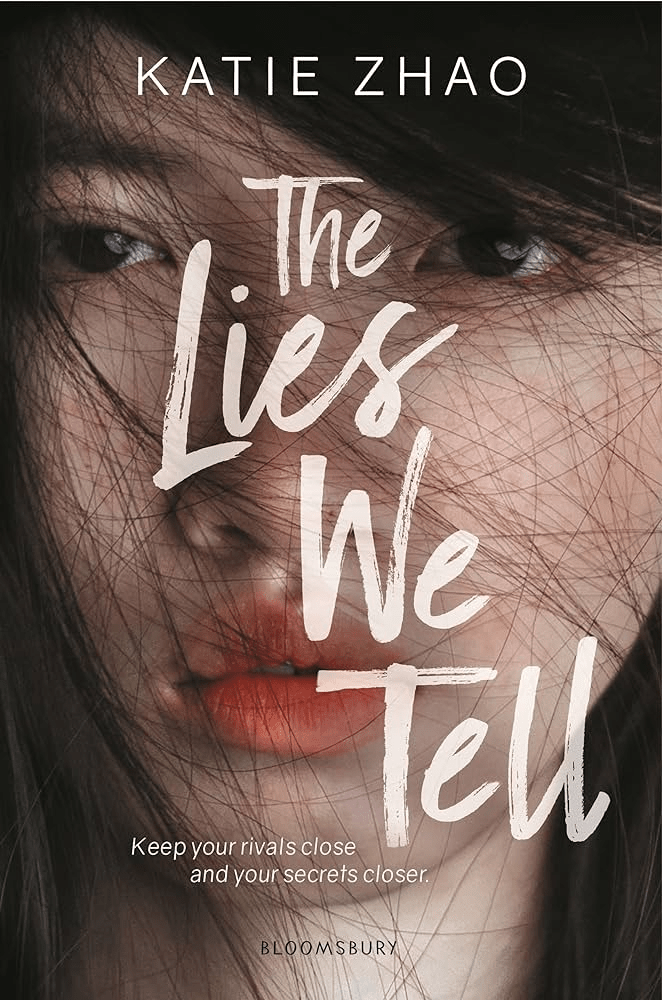
The Lies We Tell by Kate Zhao

When someone asks Anna Xu why she wants to go to Brookings for college, she tells them that it’s a prestigious school, and the in-state tuition will save her a lot of money. What she doesn’t say is that she wants to solve the murder of Melissa Hong, a Brookings student and Anna’s former babysitter. College life isn’t want Anna thought it would be, with a roommate who loves to party, and her old academic rival, Chris Lu, keeps popping up in unexpected places. At least she has Jane on Friend Me, the school’s friend-finding app. Anna’s investigation is derailed when Chris’s family’s bakery is vandalized with a racial slur, and strange things start happening to her and other Asian students on campus. Is Melissa Hong’s killer still out there? Anna needs to find out what happened to Melissa fast…before the same thing happens to her. 

Dragonfruit by Makiia Lucier

In the Nominomi sea, “dragonfruit” – seadragon eggs – are said to be able to undo a person’s greatest sorrow, though at a price. Hanalei knows this is true: after she and Princess Oliana were poisoned, Hanalei’s father stole dragonfruit intended for the princess to save his young daughter. Hanalei survived, though her father did not, and the princess remains in a coma. Hanalei spent the next ten years of her life in exile, but the sight of a pregnant seadragon gives her hope. After an encounter with dangerous dragon hunters, Hanalei arrives back in her home kingdom of Tamarind. There, she reunites with her childhood friend, Prince Samahitamahenele. She and Sam finally have a chance to save Princess Oliana, but they are not the only ones seeking the dragonfruit. Dangers await them across the waves, and even if they reach the dragonfruit first, what price will they pay? Dragonfruit is a lush and imaginative fantasy steeped in Pacific Islander mythology and imagery. 

Asian-American and Pacific Islander Heritage Month – May Book Recs

May is Asian-American and Pacific Islander Heritage Month! Asia and the Pacific Island are both huge areas, encompassing thousands of languages and cultures. Asia is the most populated continent, with around 50 countries (the number changes, depending on who you ask). I’ve also included a couple books from Hawaiian and Maori culture, as well as a memoir of a Syrian refugee family. This is where the “depends on who you ask” kicks in, since I consider the Middle East to be geographically in Asia, though not everyone does. I can’t cover all the aspects of Asian and Pacific Islander literature, but some key writers and illustrators to check out are Linda Sue Park, Grace Lin, Lauren Yep, Naomi Shihab Nye, Minh Le, Dan Santat, Uma Krishnaswami, Bao Phi, Erin Entrada Kelly, Justina Chen, Witi Ihimera, Kiana Davenport, and Kelly Yang.

Non-fiction 

Welcome to the New World by Jake Halpern and Michael Sloan

This graphic novel tells the true story of a Syrian refugee family coming to the United States. Ibrahim Aldabaan, his wife, Adeebah, and their three children fled from war-torn Syria to Jordan. There, they make the hard decision to start a new life in the United States, even if it means leaving siblings and Ibrahim’s mother behind. The family arrives in the U.S. on November 8, 2016 – the day of Donald Trump’s election. His Muslim ban means that the family may never reunite again. Ibrahim and Adeebah have only four months to become self-sufficient, an already difficult task made even harder by a lack of English and Islamophobia. Meanwhile, their children must contend with learning new social customs, bullies, and not fitting in at their school. 

The Fishermen and the Dragon: Fear, Greed, and a Fight for Justice on the Gulf Coast by Kirk Wallace Johnson

Fishermen in 1970s in Galveston Bay were struggling. Droughts, oil spills, and petrochemical plants legally dumping chemical waste into the water were damaging the fishing industry, but White fishermen pinned the blame on Vietnamese refugees who’d broken into the shrimping industry. Racial tensions in the small town of Seadrift reached a breaking point when a Vietnamese fisherman killed a White man in self-defense. In retaliation, the White fishermen burned Vietnamese boats and homes, eventually calling on the Ku Klux Klan to drive the Vietnamese out of the bay. Colonel Nam, the de facto leader of the Vietnamese community in the bay, urged the Vietnamese community to stand their ground and place their faith in the Constitution, ensuring their freedoms. Amongst all the tension, one woman could see the harm that petrochemical plants were doing to the waters and people she loved, and became an renowned environmental activist, going to great lengths to ensure her demands were heard. This is a non-fiction book that reads like a novel, thoroughly researched and suspenseful that it’s hard to put down.

Samurai Rising: The Epic Life of Minamoto Yoshitsune by Pamela S. Turner

In twelfth-century Japan, Yoshitsune’s father went to war with the Taira, a rival samurai family. His father was defeated and killed, his mother was captured, and his only surviving brother was exiled from Kyoto. Only a baby at the time, Yoshitsune was fortunate to survive, spending his early years in a Buddhist temple. He ran away from the temple to train as a samurai, determined to reclaim his family’s honor and glory. Yoshitsune’s story may have ended centuries ago, but his feats of heroism have rendered him immortal. This is a bloody and action packed biography, as deliciously readable as any novel. Who says history has to be boring?

Kapaemahu by Hinaleimoana Wong-Kalu, Dean Hamer, and Joe Wilson. Illustrated by Daniel Sousa.

Kapaemahu is a picture book that depicts the Hawaiian mo’olelo – or traditional story – of the ancient healers who came to Waikiki. The four healers were mahu, people who were neither male nor female, but a mixture of both in mind, spirit, and heart. The mahu taught the Hawaiian people healing arts, and the Hawaiians created a monument of four massive stones to honor them. Over time, changes to Hawaii’s cultural and physical landscape, the sacred stones were lost. Though they have been recovered now, their true story still needs to be told. This is a bilingual book, written in both the Hawaiian dialect ‘Olelo Ni’ihau, and English. The illustrations are done in a gorgeous palette that evokes sunset, and hope for the future.

From a Whisper to a Rallying Cry: The Killing of Vincent Chin and the Trial that Galvanized the Asian American Movement by Paula Yoo

In 1982, the American auto industry was in decline, and anti-Asian sentiment was on the rise. Many American auto workers blamed falling car sales and mass layoffs on imported Japanese cars. In Detroit, the heart of the American auto industry, Chinese-American Vincent Chin was brutally murdered almost a week before his wedding. There was no doubt about who his killers were: Chrysler plant supervisor Ronald Ebens, and his adult stepson Michael Nitz. They plea bargained their charge from second degree murder to manslaughter, and were given a $3,000 fine and three years probation. Incensed at the lenient sentencing, the Asian-American community rallied to seek justice for Vincent Chin and his family. The U.S. had never seen Asian-American activism on this scale before. Hate crimes had not yet been codified into U.S. law, and eventually Ebens and Nitz would be tried again for violating Vincent Chin’s civil rights. United States vs. Ebens would be the first federal civil rights case regarding a crime committed against an Asian American. Exhaustively researched, From a Whisper to a Rallying Cry gives an objective view of the events and people involved in this tragedy. It’s both hard to read and impossible to put down. An afterword (written in 2021) discusses the link between COVID-19 and anti-Asian sentiment, a sobering reminder of why Vincent Chin must never be forgotten. 

Fiction

The Weight of Our Sky by Hanna Alkaf

Malaysian Melati has a djinn who shows her visions of her mother’s gruesome death on repeat. She has developed complex counting and tapping rituals to appease the djinn and keep her mother safe. She doesn’t know that her djinn is actually obsessive compulsive disorder, which was poorly understood in 1969, when the story takes place. Her life is plagued by anxiety, which has only grown worse following the death of her father the previous year. After a general election, violence breaks out between the Malays and Chinese of Kuala Lumpur. Melati is narrowly saved from certain death by a Chinese woman, Auntie Bee. While violence rages outside, Melati takes shelter with Auntie Bee, Uncle Chong, and their sons, Frankie and Vincent. Melati cannot bear to be separated from her mother, and she enlists Vincent’s help to find her. It will take all of her courage to go out into a city under fire and reunite with the person she’s always tried to protect.

The Whale Rider by Witi Ihimaera

Apirana is chief of his Maori tribe, one of a  long, unbroken chain of male leaders. When his first great-grandchild is a girl, he wants nothing to do with her. Young Kahu wants nothing more than his love and tries to learn all she can about Maori culture, despite his firm rejection of her. The book is narrated by her uncle Rawiri, who deepens his understanding of his Maori identity as he travels in Oceania. When dangerous omens wash ashore, Apirana asks: will the Maori culture live, or die? The answer lies in the girl he’s rejected. Beautifully written, this short novel deftly interweaves traditional Maori religion and the Maori language.

The Henna Wars by Adiba Jaigirdar

When Bengali-Irish teen Nishat tries to come out to her parents as a lesbian, their silence speaks volumes. Her parents think that being a lesbian is a choice, and they ask her to make a different one. But Nishat knows who she is, and her growing crush on her Brazilian-Irish classmate Flavia can’t be ignored. When the school announces a business competition, Nishat starts a henna business, excited to connect with her Bangladeshi culture. In a move that smacks of cultural appropriation, Flavia and her cousin Chyna (who happens to be Nishat’s biggest enemy) start a rival henna business. Angry as she is, Nishat can’t ignore her feelings for Flavia. But with her ultra-supportive sister Priti at her side, Nishat is determined to win this battle. 

Temple Alley Summer by Sachiko Kashiwaba. Illustrated by Miho Satake. Translated by Avery Fischer Udagawa 

Fifth-grader Kazu is almost certain he saw a ghost walk out of his house, a girl wearing a white kimono with red baubles in her hair. The next day, he’s shocked to see the ghost in his class, looking alive and well. According to his classmates, Kazu and Akari have been neighbors for years, though Kazu has no memory of her. Stranger still, he learns that his home may have once been the site of the ancient Kimyō Temple. Legends have it that the Kimyō Temple could bring the dead back to life. As he uncovers more about his neighborhood’s history and the temple, he discovers that Akari’s new life is in danger. Featuring a story-within-a-story, Temple Alley Summer is a charming novel about friendship and not-so-scary ghosts.

Front Desk by Kelly Yang

Mia’s family left China and came to the United States looking for a better life. What they found was xenophobia and a daily struggle to get by. They think they’ve hit the jackpot when Mia’s parents are hired to work at the Calivista Motel, but the motel’s unscrupulous owner exploits the family. Mia faces troubles at school with bullying and being one of two Asian kids in her class – the other being the Calivista’s owner’s son. She loves to write, but her mom encourages her to focus on math, believing that Mia will never be able to write in English as well as the American kids. While her parents clean the rooms, Mia makes herself the manager of the Calivista Motel, working at the front desk. She befriends the “weeklies” who live at the motel like herself, and helps hide and support other Chinese immigrants alongside her family. Mia dreams of owning a motel, and helping her family claim a piece of the American pie. Mia is a wonderful character, and the novel has an immensely satisfying ending.