Without in any way limiting the author’s exclusive rights under copyright, any use of this publication to “train” generative artificial intelligence (AI) technologies to generate text is expressly prohibited. The author reserves all rights to license uses of this work for generative AI training and development of machine learning language models.
Welcome back! Thank you to everyone who read, shared, or commented on my most recent post about libraries in the Trump administration. Please take care of yourselves and keep fighting for your loved one, and supporting community organizations like your library.
Just a couple blog updates before we start on this month’s book list. First, there probably won’t be recommendation lists for April, July, August, or December, unless I’m really inspired and suddenly have a surge in free time. I do a lot of reading for these lists, not just the 2-4 recommended books, and it takes up a lot of time. I’ve read a lot of really great stuff and things that I might not have picked up otherwise, but it also makes it harder to find the time to read other things, including books for blog posts. All that said, I am doing much better than I was months ago, and I’m going to once again endeavor to write two posts a month.
February is Black History Month in the U.S.! Though Black History Month was first officially recognized by President Gerald Ford in 1976. However, Black History Month goes back much further than that. It was actually started in 1926 as “Negro History Week” by historian and author Carter G. Woodson. Black History Month honors the contributions and celebrates the triumphs of Black Americans, while acknowledging the hardships and struggles caused by systemic racism.
Coming of Age in Mississippi by Anne Moody
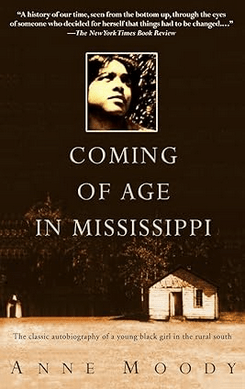
Anne Moody (born Essie Mae) was born to two poor sharecroppers in 1940 in Centerville, Mississippi. An observant and intelligent young woman, Moody would go on to graduate from Tougaloo College and become actively involved in the Civil Rights movement in the 1960s, participating in sit-ins and joining organizations the NAACP, Student Non-Violent Coordinating Committee (SNCC), and the Congress of Racial Equality (CORE). She endured harassment and violence, but her anger and determination kept her fighting against racism and sexism. Published in 1968, Moody’s memoir is broken into four parts. Childhood begins with Moody at a young age and ends with her eighth grade graduation. This section her family’s struggles with poverty and Moody working as a maid for White families, some of which were White supremacists with ties to the Ku Klux Klan. In High School, Moody learns about the murder of Emmet Till, an event that would shape her worldview forever. She is witness to a rash of violence against Black people in her community, including a family burnt to death in their own home. She also travels to New Orleans and works to become financially independent. In College, Moody finds her calling as an activist and community organizer, beginning with a protest against her junior college after one of her classmates finds maggots in the dining hall food. Finally, The Movement chronicles Moody’s involvement in the Civil Rights movement, including being beaten at a sit-in and working for CORE. Given the time period the memoir was written in, some of the language is dated, but Moody’s experiences also feel fresh and immediate. A great choice for anyone looking for a personal account of the Civil Rights movement.
Bonus Book: Whoosh! Lonnie Johnson’s Super-Soaking Stream of Inventions by Chris Barton
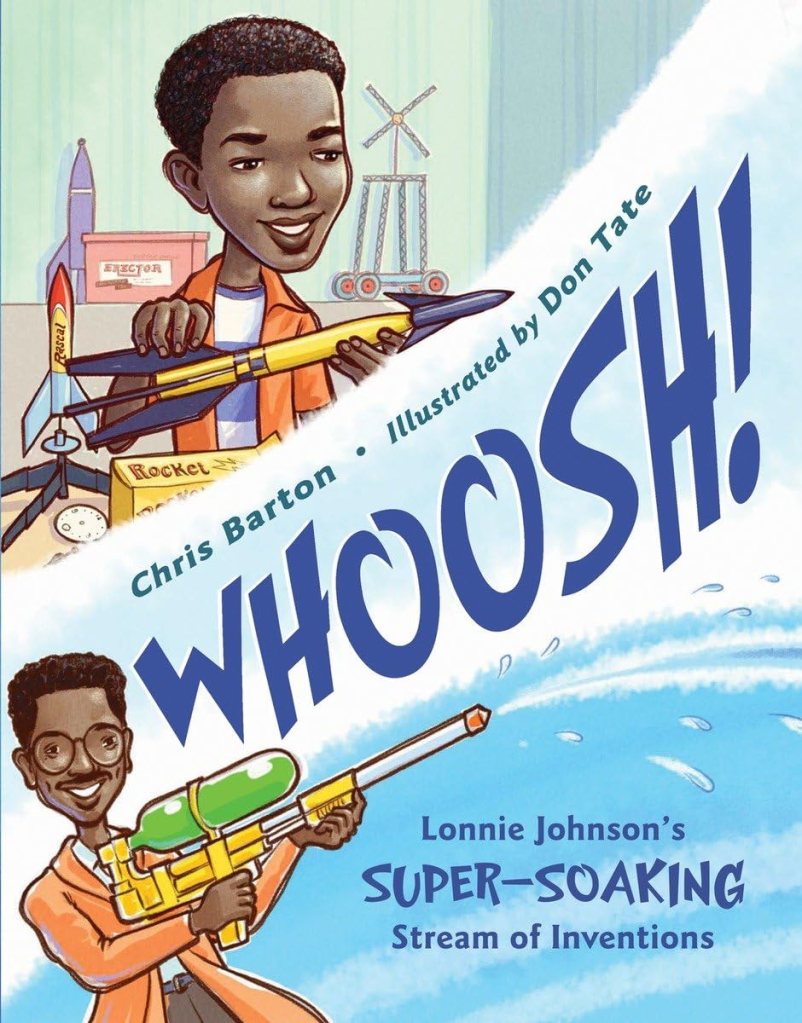
Lonnie Johnson is an inventor and former NASA engineer, but for many kids (and more than a few adults), his greatest invention is the Super-Soaker. This picture book biography tells Lonnie’s story of building a robot, helping the Galileo space probe get to Jupiter, and finding the inspiration to make this summertime staple. An unsung hero of childhood, thank you, Lonnie, for so many great memories.
Fiction
Master of Poisons by Andrea Hairston
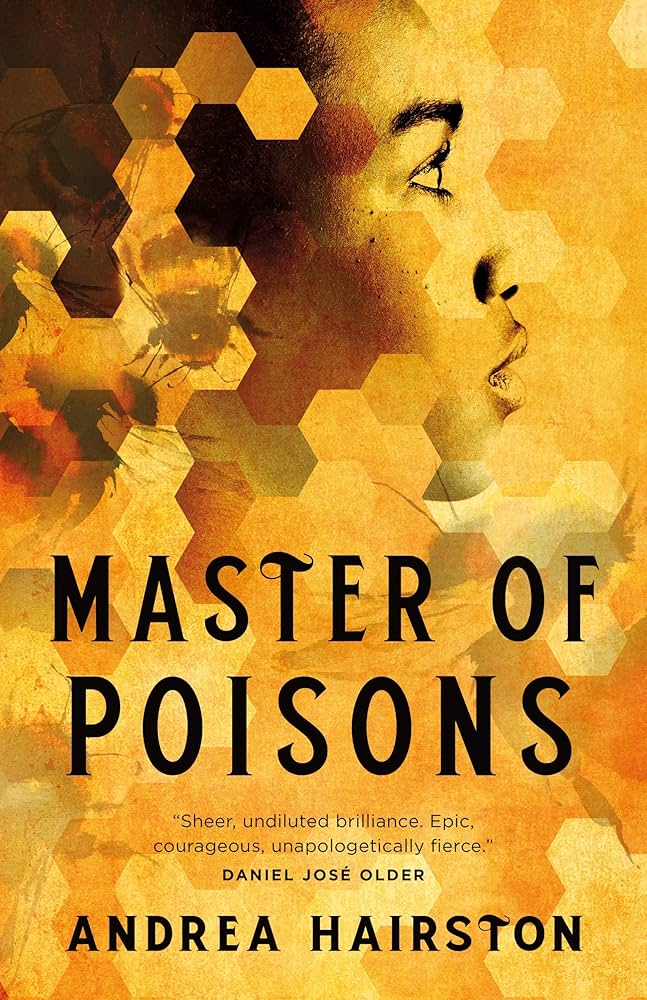
A poison desert stretches across the Arkhysian Empire. Djola, Master of Poisons, has been tasked by the emperor to find a way to halt its spread. He is working to create a “map to the future” and heal the land by mastering the secret and powerful conjure Xhalan Xhala. As the poison desert continues to spread, Djola is exiled from Emperor Azizi’s Council. The only way he can return to his family is to find Xhalan Xhala, and stop the desert once and for all.
Young Awa is able to traverse the Smokelands, an ethereal place of dreams and magic that reflects the physical world. At the age of 12, her father sells her to the Green Masters, a nomadic group of storytellers and warriors who can use powerful conjure. Awa is in training to be a griot (storyteller), and her ability to cross the Smokelands and special connection to bees may make her the next griot of griots like her mentor, Yari.
Hairston creates a vivid African-inspired fantasy world, rich with folklore and African traditions. This complex story is written with lyrical prose that makes the novel utterly captivating. Hairston has three other historical-fantasy books that would also be good fits for Black History Month (Redwood and Wildfire, Will Do Magic for Small Change, and Archangels of Funk), but Master of Poisons sucked me in from the first page.
 Overlooked Books