Without in any way limiting the author’s exclusive rights under copyright, any use of this publication to “train” generative artificial intelligence (AI) technologies to generate text is expressly prohibited. The author reserves all rights to license uses of this work for generative AI training and development of machine learning language models.
November is Native American Heritage Month! Native American Heritage Month was established in 1990 to recognize and celebrate the diverse cultures of Indigenous Americans. There are 574 federally recognized Indigenous nations in the United States. Native Land Digital contains a map which shows the original territories of Indigenous peoples across the globe. I encourage everyone to check it out and learn about the original inhabitants of your area.
Nonfiction
Project 562: Changing the Way We See Native America by Matika Wilbur
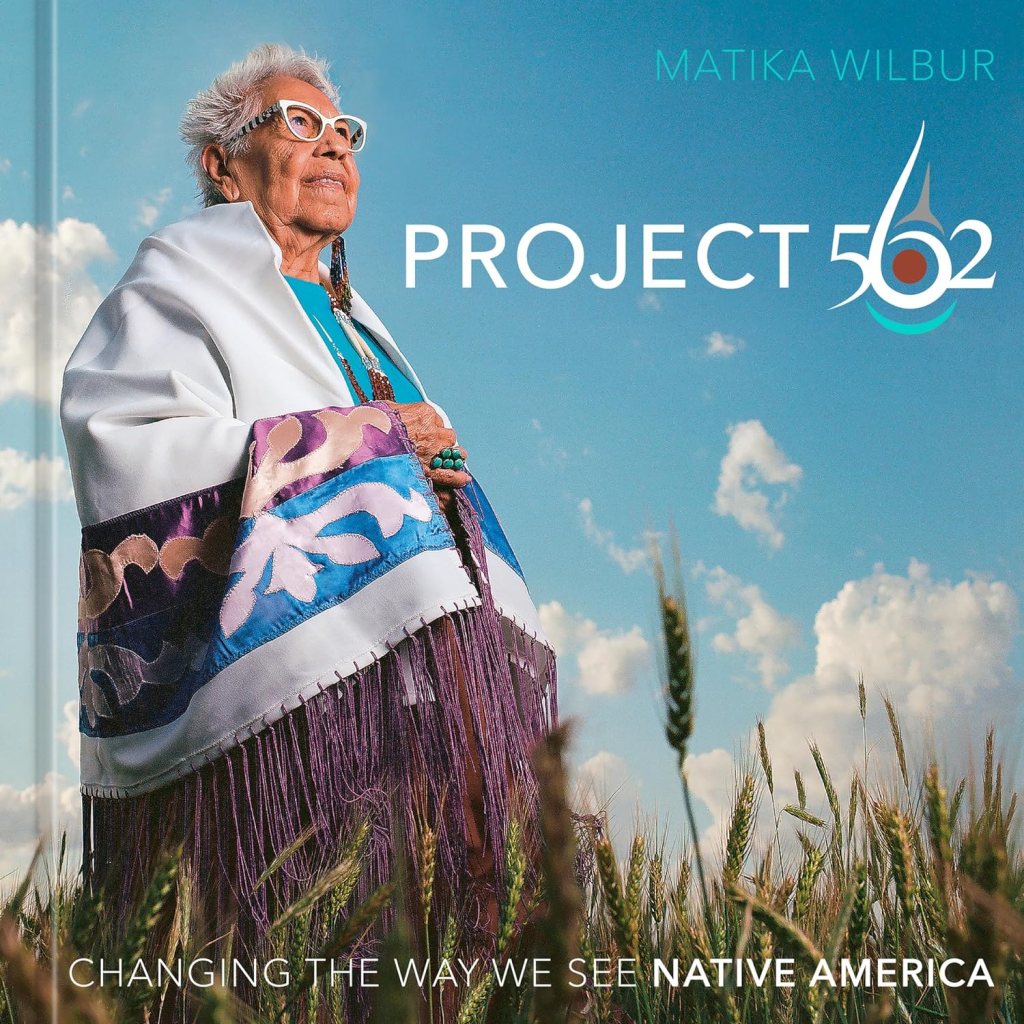
“Representation without us is representation done to us.” With these words, Matika Wilbur introduces Project 562, a photojournalism project that shares the lives of Indigenous People across the United States. Traveling thousands of miles, Wilbur set out to interview and photograph someone from each Indigenous nation. (Note: when the project began in 2012, there were 562 federally recognized Indigenous Nations; there are now 574.) Wilbur’s portrait photography is gorgeous, each accompanied by the subject’s story: an Ojibwe man harvesting wild rice; Two Spirit powwow dancers; a woman recounting how boarding school has shaped her family for generations; the teen beauty queen who entered the pageant because everyone told her she wouldn’t win. This work captures the diversity of contemporary Indigenous people while honoring tradition and heritage. Wilbur’s beautiful work is not to be missed, and serves as a reminder that “Indigenous existence is all around us. It is up to us to listen.”
Fiction
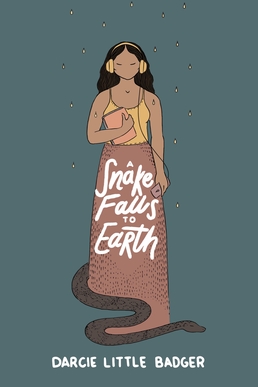
A Snake Falls to Earth by Darcie Little Badger
Nina, a Lipan Apache teen living in Texas, has family mysteries to solve. Specifically, the last story her great-great grandmother Rosita would ever tell her. There’s one big problem: Rosita told the story in Spanish and Lipan Apache, and Nina has no idea what she was trying to say. As she painstakingly works on translating the story, she discovers more mysteries. Did Rosita really see a fish-girl in her seemingly bottomless well? Why does Grandma get sick when she leaves the land that’s been in her family for generations? And are those mysterious people who come to her father’s bookstore really animal-people from the Reflecting World?
Meanwhile, in the Reflecting World, Oli is a timid cottonmouth snake reluctantly forced into adulthood. After a rough start, Oli makes a life for himself. It’s not always easy, though he tries to steer clear of the catfish cultists and bear bounty hunters. When his best friend, a toad named Ami, falls ill, Oli is terrified that Ami’s species is facing extinction – a death sentence for the animal-people in this world. If he can get to the human world, maybe he can find out what’s happening to Ami’s species and fix it. With a pair of rambunctious coyote sisters and a red-tailed hawk at his side, Oli is ready to go to the ends of the earth (or fall to it) to save his friend.
 Overlooked Books