FFM 14: She stays away from Cabin 7

Without in any way limiting the author’s exclusive rights under copyright, any use of this publication to “train” generative artificial intelligence (AI) technologies to generate text is expressly prohibited. The author reserves all rights to license uses of this work for generative AI training and development of machine learning language models.

July is Flash Fiction Month! I’ll be sharing short short stories here through the month of July. More notes at the end of the story.


There’s always a stir when a new camper arrives, and for a long time Annabeth, Thalia, and Luke’s grand entrance to Camp Half-Blood was the most exciting thing to ever happen. Then this Percy Jackson kid showed up. 

New arrivals are always exciting, and there was a lot of speculation about who Percy really was. He settled in the Hermes cabin with the rest of us for a while, but we would gossip about him whenever he was out of sight. 

“Did you see what he did to the bathrooms? He’s probably Posedien’s son,” I said. 

My friend Dani scoffed. “Come on. You know the Big Three can’t have kids anymore.” 

Then, when he, Annabeth, and Grover all went off on their quest for the stolen Master Bolt, I had a hunch they were going in the wrong direction. Hermes was the god of thieves, after all. It would make sense that he had some hand in this. “What if it was someone from our cabin?” I suggested. “I like Luke, but he’s got a chip on his shoulder and he’s crafty enough to do it.” 

“Gods,” Dani sighed. “That’s the dumbest thing I’ve ever heard, Cassandra.”


IYKYK.

For those who don’t know: In Greek mythology, Cassandra was cursed by Apollo to give true prophecies, but no one would believe her. I’ve since been converted to a Percy Jackson fan, and thought it would be funny to have Cassandra as a camper. I thought about doing a vignette for each book in the first series, but it would all be kind of the same: “I bet that at least part of the Great Prophecy is about Luke.”
“Oh my gods, Cassandra, you’re such a liar.”

FFM 8: Queen of Nothing

Without in any way limiting the author’s exclusive rights under copyright, any use of this publication to “train” generative artificial intelligence (AI) technologies to generate text is expressly prohibited. The author reserves all rights to license uses of this work for generative AI training and development of machine learning language models.

July is Flash Fiction Month! I’ll be sharing short short stories here through the month of July. More notes at the end of the story.


You don’t usually get a choice of where to go when you’re exiled. You just leave in a hurry. Maybe I’m lucky in that regard. I could choose Dublin, or Niagara Falls. Two very different places, but both easily within the queens’ reaches, and filled with their allies.

I chose Niagara Falls. It remains a place of power, despite humans’ many attempts to tame it. It wasn’t the magic alone that made me choose it. I wanted to see the place my antín and her human fell in love, touch the wild waters that had saved her life.

Mamó should have let Antín Fiadh and her human stay here. If she had, my mother would be on the throne now, instead of in a grave. 

My first friends were the crows. I would sit by the water and toss them bread, hoping that one of them might be the Morrigan. I had a quixotic dream that the war goddess would find me and bring me home, raining fire and destruction down on the usurpers. She never came, of course. The gods rarely took sides in Otherworld conflicts anymore; one of them coming to the mortal realm was unthinkable. 

Crows possess many admirable traits. They’re intelligent, grateful, and vindictive. That makes for an excellent friendship. They brought me gifts – shiny tin foil, lost toys, even money on occasion. But their greatest gift to me was a path forward. 

It came to me in the shape of a young man, not human, but not Fae, either. The birds didn’t scatter when he approached, but flew to my shoulders and the bench. Staying close to me.

“Hi. I’ve seen you here a lot. I thought I’d introduce myself.” He waved. “I’m Paul.”

I wasn’t afraid, but I was cautious. “You’ve noticed me?” 

“I thought you might be…” he lowered his voice. “One of us?”

His glamour was weak. He looked human enough, but I could see the shimmer of a tufted tail he wasn’t entirely able to hide. I silently debated what I would tell him. If he was one of Antín Fiadh’s spies, he was doing a poor job of it. 

“Who’s ‘us’?” I asked. 

“You know…Gestalts. Us.” 

Gestalts – people with a mix of human and Fae blood. There were few in Tír na nÓg. The only two I knew of were Antín Fiadh’s children. That alone might have made me distrustful of Paul, but my loneliness was stronger than my caution. I hadn’t just lost my family. I’d lost my entire world. 

“You’re right,” I told him. “I am like you.” I didn’t give him my true name. Even in the mortal realm, names have power. Instead, I took inspiration from my avian friends. “Call me Korbyn.” 

We started meeting regularly, and soon Paul introduced me to his other Gestalt friends. “There’s a lot of people like us around. You just have to know where to look,” he told me. 

Things started to get easier. I still wept for my mother, meeting others with Fae blood eased my inner turmoil somewhat. I wasn’t happy, exactly, but I was finding my place, and there was comfort with my new friends. I started thinking that I might be able to make a life for myself in this world. I wouldn’t forget who I was or where I came from, but maybe I could make a future here. 

Until the day I saw them. Princess Gráinne and her younger brother, Alexander, walking through the park with their cousin-by-friendship. They were all laughing. They didn’t even notice me when they walked by. 

I felt the injustice of it all hit like a physical blow. The princess and prince still had their family. They could go between worlds anytime they chose. I had lost all of that because of who my mother was. 

I watched the prince as he passed by, and a realization struck me. I’d always thought that I had not been executed alongside my mother out of mercy. I was still young, and had no hand in her rebellion. But now, I understood the truth. 

The queens had no spare. 

Gráinne would be in line for the throne after her parents, but inheritance was strictly matrilineal. Alexander would never be king in his own right. If something happened to Gráinne…

The crown would fall to me. 

But how? How could I make it happen? 

The answer came to me the next night, when I was at a party with my friends. I was hardly in a festive mood, but I went anyway. As the night went on, Paul and I ended up next to each other on the couch. He’d drank too much, a plastic cup still in his hand. “Korbyn,” He mumbled, and rested his head on my shoulder. “Why do you feel like home?” 

I threaded my fingers through his wheat-colored hair. “Have you ever been to the Otherworld?” 

“You can’t get there from here,” he slurred. “I want to go. Everyone wants to go.” He looked up at me with glassy eyes. “How can you be homesick for a place you’ve never been?”

“I might know a way,” I said. “But it would take work. A lot of work.”

Paul tried to straighten up to show he was serious. “I can do the work.”

A slow smile uncurled across my face. Paul would be my first. There would be many, many others. 


Today’s challenge: bring forth the dice!

Element 1: Write a story centered around royalty.

Element 2: Roll a six-sided die. Can’t roll a physical one due to your location and/or lack of immediate access to one? No need to worry; we have digital dice too. The number you roll determines your protagonist’s station in the royal family as per the following list:

  • 1-2: The ruling monarch (e.g. king or queen)
  • 3-4: The heir to the throne (e.g. crown prince or crown princess)
  • 5-6: The heir next in line for the throne after the above heir (e.g. the lastborn child of the ruling monarch)

I rolled a 6, so the heir next in line after the previous heir. The royalty aspect of the story was easy to figure out, since the novel I’m working on is about a royal family. Yup, Gráinne’s and Alexander’s parents are Fiadh and Mairead! Korbyn (real name withheld for Fae reasons) is Fiadh’s niece and would be next in line for the throne of something terrible happens to Gráinne.

Korbyn would like to be that terrible thing.

FFM 5: Guardian of the Gate

Without in any way limiting the author’s exclusive rights under copyright, any use of this publication to “train” generative artificial intelligence (AI) technologies to generate text is expressly prohibited. The author reserves all rights to license uses of this work for generative AI training and development of machine learning language models.

July is Flash Fiction Month! I’ll be sharing short short stories here through the month of July. More notes at the end of this story.


The left head was already slavering. “Let’s eat the mite,” it growled. It inhaled deeply. The scent of the living was rare at the gates of Hades. The mortal squirming beneath Cereberus’s clawed foot gave off an intoxicating smell. The mortal’s fear and desperation only added to the aromatic bouquet. The left head licked the sobbing human’s leg. “Then we leave the gates, and hunt more! We will feast!” 

“Why would a living mortal wish to enter our domain?” The right head snuffled. “This one is only here to find his wife and child. Yes, he was bold enough to attempt to sneak past us, but he came here in pain. Can we add to his suffering, when he’s suffered so much already? He will come to Hades eventually. Raise our foot, and let him leave for now.” 

The right and left looked to the center head. That was the one who made the final decisions, and would decide whether or not to raise Cerberus’s mighty paw and release the mortal. “No living mortal may enter our domain,” the center head barked.  “But this one may not deserve to be devoured just yet. We will raise our foot and let him leave…but he doesn’t need both legs.” 


Today’s challenge was the dreaded 369er! I went with the Greek myth of Cerberus, obviously…but the evolution comes in the form of Cerberus’s heads. Each head represents one of the Freudian concepts of the id, ego, or superego. Since the ego works to balance the wants of the id and superego, it’s the center head, and has control of Cerberus’s body.

Element 1: Today, we would like your story to have a specific theme: evolution of a (real-life or fictional) myth. Please tell in the story’s description which myth you picked or created!

Element 2: We also want a specific format for today’s story: 369er – in other words, 3 interconnected 69-word stories.

FFM 3: Love is a Battlefield

Without in any way limiting the author’s exclusive rights under copyright, any use of this publication to “train” generative artificial intelligence (AI) technologies to generate text is expressly prohibited. The author reserves all rights to license uses of this work for generative AI training and development of machine learning language models.

July is Flash Fiction Month! I’ll be sharing short short stories here through the month of July.

Name pronunciation:

Fiadh – Fee-uh
Onóra – Oh-nor-uh
Mairead – Mahr-ee-ed
Caoimhe – Kee-vah

More notes on this story are at the end of the post.


“Fiadh, be sensible.” Onóra finished tying her younger sister’s hair into a series of knots and braids. “You might love a human, but you’ll never be allowed to marry one.” She opened Fiadh’s jewelry box to find baubles for her sister’s horns. “Ugh–what’s this?” 

Onóra pinched a long piece of fabric between her thumb and forefinger. It might have been white once, but was stained with sweat and dark splotches of blood. “Mairead made it for me,” Fiadh replied with a smile. “One of my hand wraps. I still prefer bare-knuckle, but she insisted. I was afraid that it would make my punches too soft.” She formed a fist. “It didn’t.”

“Well, those days are over.” Onóra dropped the wrap on the floor and found some bells for Fiadh’s antlers. “You’re next in line for the throne now. If you keep going like this, both you and Mairead are going to get hurt.”

Fiadh glanced at the wrap. “We’ve both already been hurt. I’m not giving her up. Not for anything.” 


The ball was beautiful, as always. Food and wine were plentiful, as were Fiadh’s suitors. Men and women alike had traveled far for the promise of a dance with the eventual queen. Each partner was more tedious than the last. It was like they had all read from the same “How to Woo a Princess” handbook, feeding her the same praise again and again. Every so often someone would add in something about what their clan could offer the crown.

Fiadh knew that fending off so many potential mates would be irritating, but she hadn’t expected it to be so boring. They would give her gems and dote on her, when what she wanted was a woman who made hand wraps and challenged her. 

She stopped mid-dance with a handsome púca. At least, they might have been handsome. It wasn’t easy to tell with shapeshifters. “Pardon me. I must speak with my mother.” 

Fiadh rarely asked Queen Caoimhe permission for anything, and her request shocked her mother. Caoimhe nearly refused, until Fiadh swore that she would be true to her word. Only then did the queen allow Fiadh to make her announcement. 

The music stopped, and Fiadh called for attention. “I know many of you have come seeking my hand. Your words are kind, but they do not easily sway me. I believe in action. I will only marry someone who can defeat me in unarmed combat. No weapons, no befuddling magic, just a good fight.

“Anyone who wishes to challenge me, come to the training yard at dawn.” 


Eight challengers lined up on the edge of the sparring ring. Her first opponent was Aos Sí like her, but a muscled warrior with fists like stones. They would feel like boulders if they hit her. 

So she wouldn’t get hit. 

Fiadh’s opponent had the advantage in size, but she was faster. She dodged his first swings, then threw a jab to his face. He caught her fist in his massive hand, but not the hook that came for his side. Fiadh moved in. Her foe couldn’t adapt quickly enough to avoid the battering that Fiadh was giving him. If he tried to punch, she slipped out of reach and countered with an uppercut. 

He finally surrendered. Fiadh grinned at her audience. “Right, who’s next?” 


By the fifth bout, Fiadh was getting worn down. By the sixth one, she was making mistakes. She’d beaten her opponent again, but she had a bloody nose and bloodier knuckles. 

Fiadh caught her breath and gestured for her next suitor to come forward: the same púca that she’d cut her dance short with. Fiadh licked her lips. Even at full strength, a shapeshifter would be difficult to deal with. Fiadh had barred magic that affected the senses from the matches, but anything that altered the participants’ bodies was fair game. 

“Another dance, Your Highness?” The púca bowed and looked up to give her a coy smile.

“Gladly.” 

The two fighters circled each other for a moment, sizing the other up. Fiadh made the first move, feinting to the left then striking with a jab to the right. The púca responded instantly, slamming a fist into her side. For a minute they exchanged blows with equal fury. An unexpected hit to Fiadh’s jaw sent her sprawling. 

She gasped. No one had ever knocked her down in a fight before. As she got to her knees, she saw that the púca had partially shifted. Their arms and hands were thick as an ape’s, packing more power with each punch than before. 

Fiadh didn’t stand. She put her hands on the ground changed. Her limbs lengthened; dark hair sprouted along her body. Her antlers enlarged and flattened, until she’d taken on another form: the Irish Elk. 

The púca barely had time to react before Fiadh swept them up with her antlers. She tossed the púca to the ground, not quite gently, and rested a massive hoof on their chest. Not enough to hurt, but enough that they would feel its pressure. 

The púca surrendered. 

Fiadh gave a short victory bugle. She snorted and stomped her hoof, awaiting her next opponent.

No one moved. Then a hooded figure stepped forward. The challenger held out a hand, and Fiadh touched her nose to it and inhaled. She stomped her hoof again, indicating she was ready for the final fight. 

The challenger tapped Fiadh on the nose. 

Fiadh wobbled where she stood, then collapsed. Her elk form melted away as she cried out, “I’ve been defeated! I’ve been bested!” 

The crowd gasped, and all eyes went to the stranger. She pulled the hood away from her face. A face that was utterly, utterly human. The woman helped Fiadh to her feet.

Fiadh grabbed the woman’s hand and raised both of theirs in the air. “Meet my betrothed: Lady Mairead!” 

The uproar was instantaneous. Queen Caoimhe’s face was red with rage, while Onóra just looked shocked…and then started applauding. 

Mairead kissed Fiadh’s cheek. “Let’s get you cleaned up. Why didn’t you wear the wraps?” 


They’re baaaaack! Fiadh and Mairead are characters from the novel I’m currently writing. They’re the main character’s parents. They’re both dead by the time the novel starts, but they have such a fun (and long) backstory that I’ve been writing pieces of it for FFM. There were a few stories about Fiadh, Mairead, and their kids last year. I’ve had a lot of fun writing these “bonus stories” that take place before the novel starts, so I’ll probably have a few more of them this year.

This story was also inspired by the Khutulun. Legend says that she was a great wrestler and would only marry a many who could defeat her. Any losers had to give her a horse. According to some stories, she had 50 horses before she had a husband. Good for you, girl.

This is also for today’s challenge: I Cannot Use That.

Element 1: Pick an item you have interacted with today. Its size, function, location or current state of existence do not matter. What matters is that you have interacted with it today and that you include said item in your story. – the hand wraps

Element 2: That said, your protagonist is not allowed to use the item you chose at all in the story. The reason why is up to you.

Element 3: As tempting as it would be to allow for the briefest of “I cannot use that” shenanigans, we are rather hungry for words after a long hibernation. Your story must be at minimum 300 words long. Because it’s day 3 and this is element number 3, you know? – this was the easiest one for me to do!
FFM 1: Spider Whelp

Without in any way limiting the author’s exclusive rights under copyright, any use of this publication to “train” generative artificial intelligence (AI) technologies to generate text is expressly prohibited. The author reserves all rights to license uses of this work for generative AI training and development of machine learning language models.

July is Flash Fiction Month! I’ll be sharing short short stories here through the month of July. More notes are at the end of the story.


“A ring of disguise. I know you have one.” 

“Thought you might be coming here, spider-whelp.” The human woman said. “Your kind never gets far on their own.”

“They are not my kind.”

The human grinned, baring a broken tooth. “I’ve heard differently.” 


Shoved against the wall, knife to his throat. “Let’s see what you’re hiding under here.” Calloused hands tore the hat off his head. Moonlight white hair spilled down to his chin. 

“That’s what I thought.” The point of the high elf’s blade trailed across flesh, to the spider insignia that stained the drow’s flesh. The high elf elicited a hiss. “You’ve been marked.” 


“I know you’re good,” the human continued. “You’ve killed plenty of my guys. But plenty of the other side’s guys, too. Keep going like that, you’ll be dead before the month is out.” 


There was an understanding between the drow and whoever hired him. He would kill no women, and his loyalty after the job was done was malleable. Most thought he was worth the price anyway.


“I have money,” he told the human. 

“I know. You’ve gotten plenty of it from me. I don’t want your money,” she replied.

The drow scoffed. “All anyone wants in this city is money.” 

“The ring has a price, but it’s not measured in gold.” She fished it from her pocket, a copper band with a tiny glass mirror where a stone would be.

 The drow’s red eyes gleamed. “What is it then?”

“You work for me. Exclusively.”


A mass of bodies under the earth, chanting and calling out to their goddess. They were divided, the men and the women, praising their true queen.

Silver webs shone against the dark, and Lolth came to them. Her many eyes swept over the mass of her worshippers. She picked from the women first, Her newest clerics.

Then, the men. Praying, but not daring to hope that the Queen of Darkness would deign to bless them.

She chose him.


He would not raise a hand to a woman, not even to this one, who both deserved it and had what he most wished for in the world.

But the price was too high.

“I work for no one but myself.” He took a step back.

“That’s what I thought you might say.” 

She drew her sword.


The burst of dark energy had slain the high elf before he could draw the drow’s blood. He had slain many others in the same way. 

With each spell, he could only hope that Lolth did not feel him drawing on Her power. Let her forget about him, and the gift she had given him. She had many, many others to do her bidding. Let him disappear into the crowd again. 

He could feel that borrowed power tingling at his fingertips now. He would not use it.

The drow fled. 


FFM #1 Challenge! Write a story with a nonlinear narrative.

I was really stuck on this one at first. Then I remembered I play DnD, and I have a character for an upcoming campaign that needs a backstory. The character in question is a male drow warlock, who came to Waterdeep from the Underdark. He’s really hoping that Lolth will just forget about him and let him figure out how to be a person.

FFM 12: The Blacksmith and the Lover

Without in any way limiting the author’s exclusive rights under copyright, any use of this publication to “train” generative artificial intelligence (AI) technologies to generate text is expressly prohibited. The author reserves all rights to license uses of this work for generative AI training and development of machine learning language models

July is Flash Fiction Month! I’ll be sharing short short stories here through the month of July. More notes can be found at the end of this story.


“You know you are not to come in here.” The blacksmith set his hammer down on his anvil. His dark eyes glowed in the firelight of the forge.

“You humiliated me.” Tears streaked down Aphrodite’s face. Even in a fury, the goddess remained beautiful. It was the beauty of an erupting volcano, spewing vermillion and gold lava and flames in a display that even the gods would envy. Her anger was heart-stopping, breathtaking, and dangerous to all who stood in its path.

“You have humiliated me many times before, my beauty,” Hephaestus replied in his gravelly voice. “I have been faithful to you. All I asked is that you extend me the same courtesy.” 

“Because no one else would have you!” Even Aphrodite’s angry shriek was strangely beautiful, like a high-pitched note sung exactly right. “Your own mother was disgusted by you!” 

The flames erupted around the mismatched pair, turning the air around them molten. Sparks leapt and caught on Aphrodite’s gown, so sheer that Hephaestus could see her unblemished skin. Skin that he so longed to touch, but she never let his coarse, dirty hands near her. That only enraged him more, knowing how freely she gave herself to Ares whenever she wished it. 

Aphrodite batted at the flames. The door to the forge opened again. A small girl, who came up no taller than Hephaestus’s knee, entered. She was pale and pure as fresh snow. She shared her mother’s opalescent eyes, but unlike Aphrodite, there was no cruelty in them. 

Hephaestus closed his hand into a fist, smothering the all the flames in the forge. With some difficulty, he knelt to speak to the girl. “Harmonia, why are you here?” 

“I’m sorry for interrupting your work, my Lord Hephaestus,” she said with a tiny bow. “I came to find my mother. I had a stomachache.” She rubbed her abdomen. 

Hephaestus and Aphrodite’s eyes met. The child had felt their conflict. Yet, just by being here, she had begun to soothe their anger. 

“Aphrodite, there’s a bin on my workbench. Will you bring it to me?”

Without a word, the goddess did so. Hephaestus offered it to Harmonia. “Look what I’ve made for you.” The girl eagerly accepted the wind-up toys and tiny automaton that danced on her hand. 

Painfully, Hephaestus rose. He sank into the chair he kept beside his anvil with a relieved sigh. “She is truly your finest creation.” 

Aphrodite smiled at the girl, who was utterly absorbed with a wind-up crab. “Best not let Eros hear that.” There was no place for her to sit, so she leaned against Hephaestus’s anvil. “You truly are a magnificent craftsman.” 

Hephaestus grunted. “It is all I can give to Olympus. I know had you been given a choice, you would not have taken me.” He looked down at his twisted foot. “Nor would I have blamed you. This will not surprise you, but I would have chosen you every time.” He let out a short, bitter laugh. “As would any god or mortal man.” 

“I cannot go against my nature anymore than you can,” Aphrodite replied. 

“I will never give my approval to your meetings with Ares, but I know asking you to stop would be like asking the wind not to blow. Now that all of Olympus knows, I ask for your discretion.” 

A rosy pink tinted Aphrodite’s cheeks. “You will have it, husband, as long as I have your kindness.” 

“You will, my beauty.” 

“Thank you.” Aphrodite took Hephaestus’s hand.


I’ve always loved Greek mythology, and Hephaestus has become one of my favorite Olympians. It’s not just because of all the cool stuff he’s made (though he’s made like 90% of important mythological artifacts), but also because he’s perpetually the underdog of the 12 Olympians, and, unlike most Greek gods, actually forgave Hera for literally throwing him off Mt. Olympus. Most Greek gods take the “You think you can weave better than me? You’re a spider now” route.

Harmonia is one of the lesser known Greek goddesses, and Ares and Aphrodite’s daughter. She is the goddess of, well, harmony, and smoothing over strife. I’m also ignoring the myth of Harmonia’s cursed necklace/cloak. I figure if all those other Greek myth retellings can mess with the original stories, so can I.

I have one more story featuring Hephaestus and Harmonia coming up sometime this month.

May Book Recs: Asian-American and Pacific Islander Heritage Month

Without in any way limiting the author’s exclusive rights under copyright, any use of this publication to “train” generative artificial intelligence (AI) technologies to generate text is expressly prohibited. The author reserves all rights to license uses of this work for generative AI training and development of machine learning language models.


May is Asian American and Pacific Island Heritage Month in the U.S.! AAPI Month began as Asian/Pacific Heritage Week in 1978, and was extended to the entire month of May in 1990. In 2009, the obserservance’s name was changed to Asian American and Pacific Islander Heritage Month. Asia and the Pacific island are both huge places with numerous cultures, and a short list like this can’t possibly cover every country. I’ve decided to showcase four books for this month, with one book focusing on Asia, and one on the Pacific Islands for each category. 

As a reminder: I don’t distinguish YA from adult books on these lists. This is a deliberate choice, for several different reasons I might get into on another post. However, if you are dead-set on not reading any books outside your demographic age, here’s a simple guide: if the main character is a teenager, it’s probably a YA book; if the main character is an adult, it’s probably an adult book. This isn’t always the case, and I do try to note when books featuring teen characters would be better suited for older audiences.

Without further ado, here’s some books to celebrate AAPI month!

Nonfiction

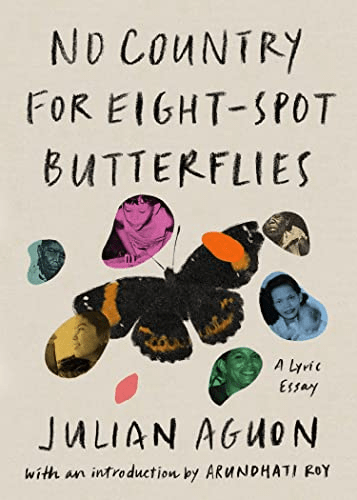
No Country for Eight-Spot Butterflies: A Lyric Essay by Julian Aguon

Julian Aguon is a Chamorro human rights lawyer and the founder of Blue Ocean Law, which specializes in Indigenous rights and environmental justice. He’s also a passionate and talented writer, as exemplified in No Country for Eight-Spot Butterflies. This book is a collection of his essays, speeches, and poems, but it’s also a love letter to the young people of Guam. “The Ocean Within” encourages high school graduates to imagine, dream big, and “get quiet” when they search for their destiny. Other essays discuss threats to the natural world, through climate change and increased militarization of Guam, despite its residents’ protests. Loss and grief are also central themes, shown in deeply personal writing. Though some entries are painful (“Fighting Words” is particularly difficult to read), overall, the book encourages its readers to make changes in the world, even if it’s only in a small way. My favorite essay was “Nikki and Me,” which resonated so strongly with me I had to read it twice. 

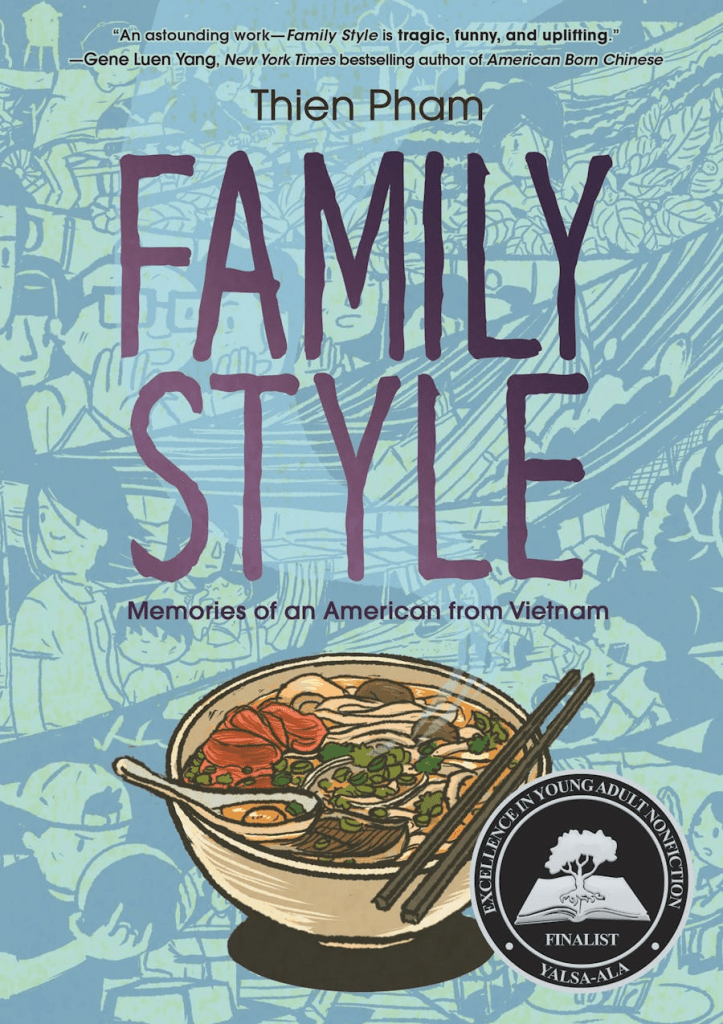
Family Style by Thien Pham

Thien’s first memory is “the saltiness of fish…and the sweetness of rice” when he was a young child on a refugee boat traveling from Vietnam to Thailand. Food is the prominent framing device in this graphic novel memoir, which shows Thien’s life first as a refugee, then as a Vietnamese immigrant, and finally as a U.S. citizen. Each period of his life is marked by an important food, from the bánh cuốn his mother cooked in a refugee camp in Thailand to the ham and cheese croissants that signify the Pham family gaining financial independence in the United States. Thien chronicles his family’s story of starting a new life in America with help from other Vietnamese refugees. Challenges included learning English, financial hardships, and strange cafeteria food. At times Thien questions his cultural identity, trying to understand what it means to be Vietnamese and American. While parts of Thien’s story are harrowing, particularly his journey to Thailand, the graphic novel is well-balanced with humorous and touching memories as well. 

Fiction

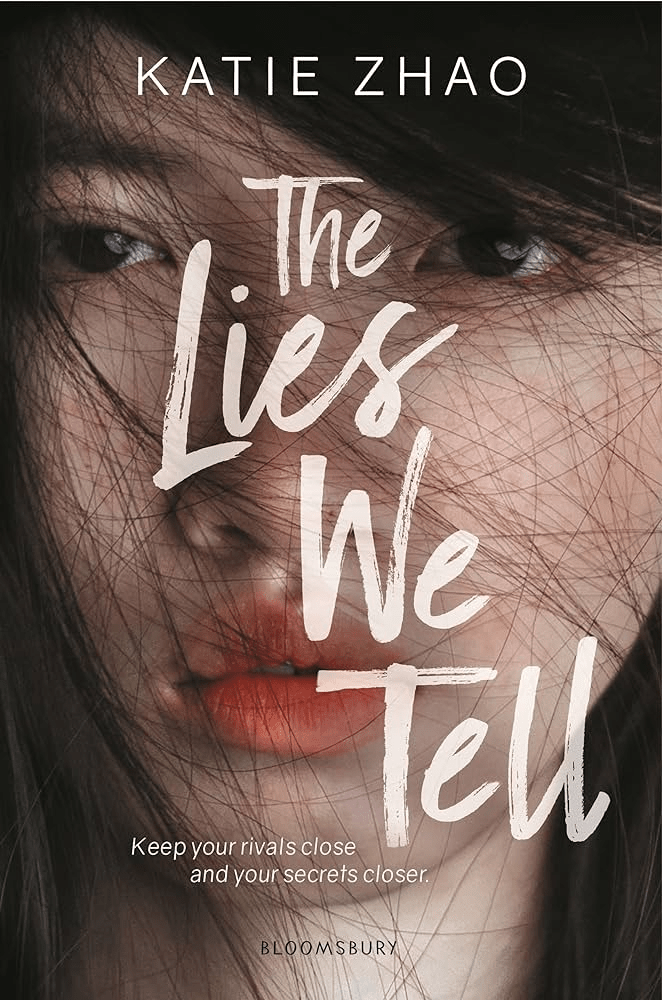
The Lies We Tell by Kate Zhao

When someone asks Anna Xu why she wants to go to Brookings for college, she tells them that it’s a prestigious school, and the in-state tuition will save her a lot of money. What she doesn’t say is that she wants to solve the murder of Melissa Hong, a Brookings student and Anna’s former babysitter. College life isn’t want Anna thought it would be, with a roommate who loves to party, and her old academic rival, Chris Lu, keeps popping up in unexpected places. At least she has Jane on Friend Me, the school’s friend-finding app. Anna’s investigation is derailed when Chris’s family’s bakery is vandalized with a racial slur, and strange things start happening to her and other Asian students on campus. Is Melissa Hong’s killer still out there? Anna needs to find out what happened to Melissa fast…before the same thing happens to her. 

Dragonfruit by Makiia Lucier

In the Nominomi sea, “dragonfruit” – seadragon eggs – are said to be able to undo a person’s greatest sorrow, though at a price. Hanalei knows this is true: after she and Princess Oliana were poisoned, Hanalei’s father stole dragonfruit intended for the princess to save his young daughter. Hanalei survived, though her father did not, and the princess remains in a coma. Hanalei spent the next ten years of her life in exile, but the sight of a pregnant seadragon gives her hope. After an encounter with dangerous dragon hunters, Hanalei arrives back in her home kingdom of Tamarind. There, she reunites with her childhood friend, Prince Samahitamahenele. She and Sam finally have a chance to save Princess Oliana, but they are not the only ones seeking the dragonfruit. Dangers await them across the waves, and even if they reach the dragonfruit first, what price will they pay? Dragonfruit is a lush and imaginative fantasy steeped in Pacific Islander mythology and imagery. 

New Year, New Me! January Book Recommendations

Welcome to my first monthly book list! Each month, I’ll be bringing you a fresh list of books all based on a different theme. If you have an idea for a themed list, please let me know!

Before we get in, there’s a few things you should know. First, I am a youth librarian, which means I’m most familiar with books written for young people. This means you’ll see a lot of YA and juvenile books on these lists. If you’re an adult looking for something good to read, don’t feel bad or embarrassed about reading youth books. Juvenile and YA books deal with themes and ideas that are applicable to all ages, even if the text isn’t as challenging as books written for adults. And there’s no age limit on good stories.

I’ll also be listing non-fiction and fiction, because there’s a lot of great non-fiction out there that needs some love, too.

I also want to remind everyone that not every book will appeal to every reader. You may hate a book that I love, and that’s okay. Not liking a book doesn’t mean that the book is bad, it just means that you don’t like it. I’ll try to appeal to a wide range of interests, but I don’t expect for you to love or even be interested in everything on this list. There’s a reader for every book, and every book has a reader. I’d love to help readers and books find each other!

New Year, New Me

Nonfiction

ADD-Friendly Ways to Organize Your Life by Judith Kolberg and Dr. Kathleen Nadeau

Thanks to the way my brain is wired, I live in a kind of an entropic mess mixed in the occasional bursts of cleaning and organizing, then promising myself “I’ll never let it get that bad again.” It always turns out to be a lie, but I try.

So when I recommend a book on organizing that actually works for me, I mean it actually works. ADD Friendly Ways… teaches you how to work with your ADD, rather than against it, to get organized. This book is written in short, helpful chapters and formatted specifically to help people with ADHD be able to sit and read it. It gives practical tips on organizing your life which are easy to follow, and offers suggestions for how to find more support if needed and to take control of your life. It’s the best organization self-help book I’ve ever used, and the only one I’ve seen that specifically addresses the role that ADHD plays in the struggle of keeping your life together.

The War of Art by Stephen Pressfield

Making stuff is hard. Whether it’s writing, drawing, dancing, or sculpting, no creative endeavor comes easily. Pressfield calls the universal force that acts against our creativity “resistance,” and it can come in many forms. It could be fear, pressure to perform, irritations in your daily life, or the fact that the new Pokemon game just dropped and how can you be expected to write when you can’t get Sprigatito out of your head? Pressfield brilliantly describes resistance, how to overcome it, and the sacred act of creating. Each short chapter is a micro pep talk for anyone experiencing resistance. It’s a small, thin book and shouldn’t take you long to read. I read it cover to cover years about five years ago and still take it off my shelf when I’m feeling stuck.

The Confidence Code/The Confidence Code for Girls and Living the Confidence Code by Clair Shipman and Katty Kay

Self-doubt. Imposter syndrome. Lack of confidence. We’ve all experienced it, especially girls and women who have internalized messages that they will never be enough. The Confidence Code is a best-selling guide to empower women to become self-assured and confident in their lives, using scientific research and proven methods of behavioral research. Following the success of The Confidence Code, the young reader’s edition, The Confidence Code for Girls aims to reach teen and tween girls struggling with inner doubt.

Living the Confidence Code is true stories of girls, ranging from grade school to teenagers, who are changing the world. These inspiring stories show how everyday girls can have a major impact on their homes, the lives of others, and the world. The word “inspiring” gets tossed around a lot, but I really mean it. After reading this book I was ready to start writing letters to the editor and began researching ways to help with period poverty in my area. If these kids can change their hometowns, I can too!

Draw Stronger: Self Care for Cartoonists and Other Visual Artists by Kriota Willberg

Whether you draw, paint, or write, creating art takes a physical toll on your body. Draw Stronger is a comic book that shows how chronic pain and injuries can occur, and provides tips to prevent and treat injuries. Fun and informative, this is a must-read for anyone who spends good chunks of time sitting at a desk drawing, writing, or typing. While this is geared mainly at visual artists, I’ve found it helpful for dealing with a repetitive strain injury caused by a lockdown’s worth of handwriting.

Fiction:

When Women Were Dragons by Kelly Barnhill

Alex is one of the many who was left behind after the Mass Dragoning of 1955, when hundreds of thousands of women transformed into dragons, wrecked a path of fiery destruction, and took to the skies. She is left with questions: did they choose to become dragons? Why did her beloved Aunt Marla change, but not her mother? Propriety forbids Alex from ever asking. Instead, she must deal with her overprotective mother, her distant father, and a younger sister obsessed with dragons. Most troubling of all, there’s the insistence that her aunt never actually existed. In a world where women are forced into small, confined roles, what happens when they (literally) rise up? Kelly Barnhill is already known for some excellent fantasy for youth, but this novel for adults does not disappoint.

A Psalm for the Wild-Built by Becky Chambers

Two hundred years ago on the moon of Panga, all robots gained consciousness. They left human society peacefully, and were given half the moon to do with as they pleased — which was to leave it untouched and observe the natural world around them. Two centuries later, Sibling Dex is a tea monk who travels the roads of Panga, offering tea, a listening ear, and small comforts to anyone who needs it. Feeling restless in their life, Dex seeks a new journey in a remote corner of the human world. Incredibly, they meet Mosscap on their way. Mosscap and Dex share the first human-robot contact in two hundred years. Mosscap comes in peace, but also bearing a question for Dex: what do humans need? Elegantly written, imaginative, and relaxing, this is one of my favorite books I’ve read recently. I want to live in this world. Thankfully, there’s a sequel as well, so you can return to Panga again.

Whistle: A New Gotham City Hero by E. Forester and Manuel Preitano

Willow Zimmerman is busy. She’s a teen activist who spends her weekends protesting at city hall to help her rundown Gotham neighborhood. Her nights are spent working at the local animal shelter to help pay her mother’s medical bills. When E. Nigma, an old friend of her mother’s, shows up in Willow’s life, he makes her a job offer she can’t refuse. Soon Willow is organizing his high-rolling (and not entirely legal) poker games for E. Nigma and his ludicrously wealthy friends. After an encounter with one of Gotham’s many notorious villains, Willow discovers she has superpowers, including telepathy with dogs. She also learns who her employer really is. The high life isn’t all it’s cracked up to be, and Willow must decide where her values truly lie, and the cost of following her convictions. The story is more about Willow growing as a person, rather than her as a superhero, but she’s such a great character you’ll be wanting to read more of her adventures.

Juliet Takes a Breath by Gabby Rivera

Juliet Palante is a self-described “closeted Puerto-Rican baby-dyke from the Bronx.” Even though her coming out didn’t go as planned, she’s still got a lot to look forward to. Juliet

has just landed her dream internship working for Harlowe Brisbane in Portland, Oregon. Harlowe is a feminist lesbian author, and the strong, empowered woman that Juliet wants to be. But life on the West Coast isn’t what Juliet had expected. She’s not sure about the New Age culture that surrounds her, or even if Harlowe’s (who is White) brand of feminism is right for her. This is a coming-of-age story that examines gaps in the mainstream feminist movement and intersectionality, all while Juliet realistically explores her own identity, and maybe even falls in love. In short: a novel to provoke thought and discussions that will ultimately leave you breathless.

Sherwood by Megan Spooner

Robin of Loxley is dead, killed in the Crusades far from the shores of England and his beloved Lady Marian. Robin was not only Marian’s betrothed, but also her best friend and closest confidant. With Robin gone and Guy of Gisbourn aiming to take his place, the poor of Nottingham have no one to speak for them. Despite the deep grief Marian carries with her, she cannot ignore the suffering of the people of Nottingham. When her friends are threatened by the dogged Gisbourn and the Sheriff of Nottingham, she will take up Robin’s mantle and become her own hero. Well-written, this is an action-packed and enjoyable re-imagining of the Robin Hood legend.

#1000BlackGirlBooks: Amber and the Hidden City

For my next pick from the #1000BlackGirl book list, I chose Amber and the Hidden City by Milton J. Davis. After reading some pretty heavy books, I wanted to get something a bit more light-hearted. I also opted for a middle-grade book so I could read it a bit faster than some of the other novels I’ve covered on here.

And I’m really glad I did! I liked the titular Amber right away, and the writing is solid and easy to get into. Perfect for a middle grade book. There’s also not a ton of waiting around for the plot to start, which I like.

Thirteen-year-old Amber is at a crossroads in her life. After summer break, she’ll be going to a new high school that none of her friends are attending. This is especially daunting because her blunt personality makes it hard for her to make new friends. To top it all off, she just used magic for the first time in her life.

Amber visits her grandma, Corliss, during her summer vacation, hoping to figure out all these changes in her life. Corliss finally tells Amber the secret she’s hidden her whole life: she is from Marai, a magical city that has been hidden from the outside world for thousands of years. The leader of Marai, the Sana, is dying, and nobles are vying for power in attempts to become the next Sana. The villainous Bagule is a strong contender for the title, but his rule would likely spell disaster for the city. He wants to open up Marai to the world, something that other nobles strongly advise against.

You’d be forgiven for making comparisons between the book and Black Panther, even though Amber and the Hidden City was published before the Marvel film. Fortunately, other than both works featuring a mysterious African city, the stories are quite different.

Corliss reveals how she and Amber can stop Bagule’s rise to power. Amber is a seer, and her powers are just beginning to wake. They must travel to Marai, whereAmber can use her gift to select the next Sana, someone who will protect the city and help it prosper. They travel from the United States to Paris to Senegal to Dakar, and finally pass through a magical veil that brings them to Marai. Along the way they are pursued (and sometimes aided) by Aisha, a deadly shape shifter. As they travel, Amber learns to use her powers as a seer to see the inner truth of the people she encounters.

One thing I am always conscious of in fiction is how women are treated as characters. Are they shrinking violets? Are they balanced characters? How much “screen time” do they have when compared to male characters? I know that many male (but not all!) authors have difficulty portraying women in ways that female readers would find authentic.

I was absolutely delighted that female characters played a central role in the story. Amber and Corliss have their moments of doubt and fear, but that’s totally normal in the situations they’ve been thrown into. They also display courage and compassion. Amber also acts like a thirteen-year-old girl actually would. For example, when she has to share her bedroom with a boy, Amber’s pretty freaked out about it. She spends too much time in the bathroom to avoid seeing him and texts her best friend, asking what she should do in this situation.

I also really liked Aisha. She’s definitely a “true neutral” character, who puts her survival ahead of everything else. While others in the book have their own goals — Amber wants to get to Marai, Bagule wants to be Sana — Aisha only wants to do what’s best for herself. Even if this means betrayal. That’s a fine villainous trait to have, but she was just so cool that I could never make myself hate her.

That’s not to leave out the male characters, though! Amber’s great-grandfather is a source of wisdom; his apprentice, Bissau, is crucial to bringing Amber and Corliss to Marai; Bagule is appropriately despicable.

There are a couple things that I didn’t love about this book. The first is that there were still several places with grammatical issues, but nothing that some editing wouldn’t be able to fix.

The second is that we’re told over and over again that opening Marai to the rest of the world is a terrible idea. This is Bagule’s plan, and this is why he cannot be made Sana. Somehow, opening the city will bring ruin to Marai and the world.

We never find out why this is, though. Towards the end of the book, Amber’s great-grandfather implies that Marai is a cage for some dark, evil force. However, no one ever mentions it again, or even says what it is that Marai’s protecting the world from. After waiting so long for an explanation, I was a bit miffed when that was all we got. I imagine it will be expanded on more if there’s a sequel.

At this point, there is one thing left to talk about. You guessed it, it’s race!

I’ve just finished a Multicultural Literature course, and one of the first things we learned in it is basic ways to classify multicultural books. The Cooperative Children’s Book Center (CCBC) classifies diverse books in the following ways:

  • By and about – the work is by a member of a specific culture or group, and about someone in that culture or group (ex. Persepolis, by Marjane Satrapi)
  • By and not about – the work is by a member of a specific group or culture, but not about that specific group or culture. (ex. The Snowy Day, by Ezra Jack Keats)
  • About but not by – the work is about members of a specific culture or group, but not by a member of that group (ex. The Immortal Life of Henrietta Lacks, by Rebecca Skloot)

Additionally, books can be classified as “culturally neutral”, “culturally specific”, and “culturally generic”.

I would classify Amber as “by and about” – the same category that I’m trying to read more from. I’d also say that it’s “culturally generic”. It features diverse characters, and the cultures of these characters affect their decisions and reactions to events. Even so, the story is not about African cultures that Amber and Corliss encounter. The story is about their journey to Marai.

One other thing worth noting is that all the characters in the book are Black, even the most minor ones. I thought that was pretty cool. Though I’ve tried to read more diverse books, I’m not sure I’ve ever noted ones that have casts entirely made up of people of color.

When I attended the Society of Children’s Book Writers and Illustrators (SCBWI) Summer Spectacular, one of the interviews I got to watch was a conversation with authors Jason Reynolds and Nic Stone. Along with sharing their writing process, they talked about interacting with kids, Black Lives Matter, and writing diverse books. When talking about doing a reading, Jason Reynolds told this story:

This young kid raised his hand and he said, ‘how come you never write White people in your books?’ …He’s not being sort of provocative, he’s like, ten. This was an earnest question. ‘How come you never write White people in your books?’ And I said, ‘You know, in my world, sometimes I believe it’s okay for Black children to live a life uninterrupted, and that’s fine, you know?’ And then I said, ‘does it bother you?’ And he said, ‘Of course it doesn’t bother me, because they’re not that different from me.’ They’re kids! It’s all the adults who are hung up.

Jason Reynolds, 2020

I’d never thought about it like that, but now that I have, it makes sense. I’m glad I found a book with only Black characters, where they can have their adventure, uninterrupted.

Books I Didn’t Pick: The First Girl Child

Picking out a book for someone else can be a challenging task. Everyone has their personal tastes, and it can be hard to find something that suits that person well. Take me, for example. I love sci-fi, but I couldn’t make it though the sci-fi classic, Dune. Other people love it, but it just wasn’t for me. In this not-so-creatively titled series, “Books I Didn’t Pick”, I’ll be looking at books that were chosen for me, most of which I would probably not pick if left to my own devices. Even so, I try to be open to different writers and genres, hoping to find something new that I enjoy.

For the very first edition of “Books I Didn’t Pick”, we have The First Girl Child by Amy Harmon, which was sent to me as part of a writer’s subscription box.

The First Girl Child was billed as a historical fantasy romance, and I figured that two outta three ain’t bad when it came to genres I was interested in. Reading through it, though, I came to discover that it failed at being any of those things.

Historical fiction isn’t something I got into until I was an adult, but I can appreciate the difficulty of writing it. It needs to feel grounded enough that even if the events and characters never really existed, you believe that they could have happened at some point. As I’m writing this, I recently finished a historical fiction unit for one of my classes, and discovered that I’m very picky about historical fiction that I actually enjoy. It either needs to be from an era I have an interest in, or feature spunky girls going against societal norms. The First Girl Child at least had the former: it’s a story about Vikings!

The First Girl Child takes place on the fictional island of Saylok, home of five fierce Viking tribes. I was here for it: high seas, adventures, shield maidens and fierce warriors. At least, that’s what I wanted to see. I got next to none of that. Viking raids are mentioned in passing, the only female warrior we actually see is almost immediately killed off, and most of the book takes place at the main temple on the island. Instead of seafaring exploits, we get shallow politics that feel like they were lifted from A Song of Ice and Fire without the nuance, or compelling characters to carry it through. Aside from an occasional reference to Odin, there is virtually nothing to separate Saylok’s culture from any other generic Medieval group.

It also bothers me that the author only had the characters pray to Odin or her OC Norse god, Saylok, and completely neglected Freya and the Vanir. The book is centered on the island’s residents being unable to conceive female children, but no one ever has the bright idea to pray to a fertility goddess.

Okay, so the historical fiction element was lacking. Maybe the fantasy aspects would be better? They definitely started out strong. In this world, magic comes from drawing ancient runes, and then activating the runes with blood. In the prologue, Dagmar and his sister Desdemona discover they have “rune blood” after entering a cave with runes carved on the walls. Runes are powerful forms of magic, and Desdemona uses them to curse all of Saylok. She also prophesies that no one but her son will be able to break the curse.

Aside from the set-up, the runes are hardly ever used. Dagmar uses them to pray for protection for Bayr, but they never make a meaningful appearance until the end. Because the runes are underutilized, the resolution felt like a deus ex machina. The book justifies this by saying that rune magic is dangerous, and its secrets are guarded closely. Even so, I’m a bit miffed about the lost potential.

Women were also forbidden from using rune magic. In doing some research for this post, I found that siedh, or a type of Norse magic, was often associated with women rather than men, so there’s another big X in the historical fiction column.

Then last, but not least, comes the romance.

Oh boy, here we go.

I’m not sure how fair it is for me to discuss romance as a genre. I’ve reviewed some romance manga here, but it’s often not something I’ll typically go for. Still, I tried to keep an open mind. Amy Harmon is the author of several romance novels, and she has a following. Thus, I expected the romance between Bayr and Alba to have some of the strongest writing in the book.

The relationship between them just strikes me as rather icky, though. Bayr sees Alba for the first time when she’s an infant and he’s a young child, and immediately says that he loves her. I chose to interpret this as platonic love, because Alba had just been born. It’s not as squicky as, say, Jacob imprinting on Renesmee in Breaking Dawn, but it’s in the same ballpark.

Bayr sees himself as Alba’s protector, and the two have a brother-sister relationship when they’re growing up. Bayr leaves the Temple Mount where they both live when he’s around twelve, and returns years later as and adult man. When he sees Alba again, they are suddenly in love, despite (a) not seeing each other in years and (b) being raised as brother and sister. In fact, Bayr’s lowest point in the book is when he believes Alba to be his biological sister. She isn’t, but it drives the “icky” factor home even more.

Even if I put that aside, I don’t see this as a great romance. There’s no build up; you don’t see them gradually fall in love. They meet, they’re in love, that’s it. Sometimes that’s okay, but we don’t see their relationship grow in any meaningful way. It’s just banal, and what should be the driving force of the book its least interesting aspect.

As far as characters and pacing go…

In my experience, good characters can save a mediocre plot, and vice-versa. I thought the plot itself was fine, though clumsily executed. As far as the characters go…I honestly don’t remember a thing about them. In writing this post, I tried to think of some key traits of each one. Bayr is strong and protective. His uncle, Dagmar, is intelligent and protective. Alba is…demanding of Bayr’s attention? If the only thing I can remember about the heroine of a romance novel is their connection to another character, that’s a problem. Even the antagonist was generically evil in a way that made him neither compelling, nor someone that I loved to hate.

The pacing bugged me. The novel starts with Bayr’s birth, and ends once he (spoiler!) becomes king of Saylok, so it obviously can’t capture every moment of his life in the book’s 400 pages. A lot of Bayr’s life is done in a sort of written montage, with important, specific scenes written out in detail. I think this works well when Bayr’s a kid, but not so much when he’s an adult. Most disappointing for me was when he leaves the Temple Mount where he was raised, and joined his grandfather’s clan. Apart from one scene that depicts his (admittedly badass) initiation into the clan, a lot of his skill and character development during those years is covered in just a few paragraphs. I want to see how he changed from the shy, stammering “Temple Boy” into a leader and warrior, but I never got more than a glance at his journey.

I was obviously pretty disappointed with this book. Even though I have my favorite genres and authors, I like stepping out of my reading comfort zone and trying something new. It can be hit and miss sometimes, and this book was clearly a miss.

I don’t want to end on an entirely negative note, and there were some things I liked about the book. First, despite my complaints, it’s well-written. I may not have cared for the story, but the prose was pretty good. I also think that it started out strong, and the magic system was cool, even if it wasn’t used to its full potential. I also liked the character of Desdemona, despite the fact that she was barely in the story.

In S.R. Ranganathan’s Laws of Library Science, laws 2 and 3 are:

2. Every reader her or his book
3. Every book its reader.

This was not my book, and I was not its reader. But if this sounds like a novel you would enjoy, by all means, check it out! You might be the reader it needs.