Dec. 2025 Book Recs: Just Books I Liked


Without in any way limiting the author’s exclusive rights under copyright, any use of this publication to “train” generative artificial intelligence (AI) technologies to generate text is expressly prohibited.


Quick announcement before we begin: I’ve decided that I will not be doing book recommendation lists in 2026. Making these lists has been a great experience, and I’ve read a lot of excellent books that I might not have picked up otherwise. They’ve really helped me diversify my book shelves and read outside my comfort zone, and I hope they’ve done the same for you too. 

It’s also a lot of work. I don’t just read two books a month – I “sample” several, which usually means reading at least 100 pages. Most of the reading I’ve done for the past two years has been just for these recommendation lists, and it’s time to take a break and read…well, whatever I want. Maybe I’ll finally get around to Sunrise on the Reaping. This doesn’t mean that the blog is finished, though. I’ll still be doing “books I didn’t pick” and “dusty” titles, and hopefully more. I’d really love to do something about literature and theatre, and Shakespeare adaptations. (But have you ever read Shakespeare? It’s hard.) 

Let’s get into the final book recommendation list: Just Stuff I Liked. These are books that are worthy of sharing, but never made it onto a list before. Here are some of my favorite books in the last few years that never made it to the blog.

Nonfiction

Nickel and Dimed: On (Not) Getting by in America by Barbara Ehrenreich
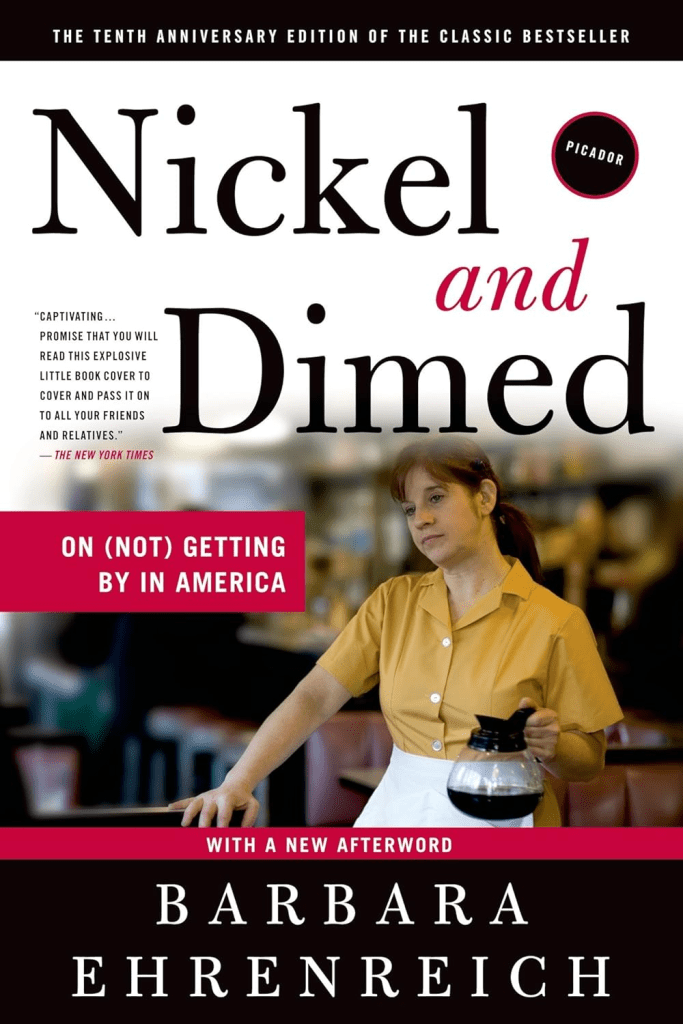
First published in 2001, Nickel and Dimed has remained scarily relevant for over twenty years. Between 1998 and 2000, writer Barbara Ehrenreich voluntarily joined the ranks of the working poor. She worked as a maid, nursing home aid, waitress, and Wal-Mart associate to understand the lived realities of millions of Americans below the poverty line. This book documents her experiences and struggles, such as working through pain and finding housing within her budget. The experiment ended when Ehrenreich faced homelessness, or, as she put it, she could no longer afford to work at Wal-Mart. Along with issues with housing, she also looks at food insecurity, the impact of manual labor on employees’ health, and hiring practices that veer into discriminatory. While the numbers have changed since this book was published, the facts have not. Nickel and Dimed remains a revelatory must-read for Americans today. 

Her Space, Her Time: How Trailblazing Women Scientists Decoded the Hidden Universe by Shohini Ghose
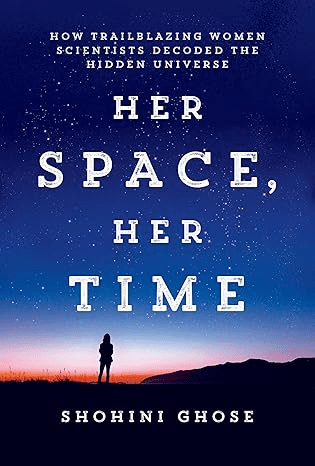
Women have long been involved in scientific fields, but have rarely gotten acknowledged for their work until recent history. Her Space, Her Time finally gives some of these brilliant women their much overdue credit. In the late 19th Century, astronomer Annie Jump Cannon helped create Harvard’s Classification Scheme, which is still used today, while being paid less than her male counterparts. Lise Meitner and her nephew Otto Frisch published the first paper on nuclear fission. Meitner’s longtime collaborator Otto Hahn was awarded the Nobel Prize for this discovery, and Meitner was left in obscurity. We all know Marie Curie, but what about Harriet Brooks or Bibha Chowdhuri? Each chapter focuses on a different scientific top, such as astronomy, physics, or chemistry, and the women who helped revolutionize their fields of study. Ghose explains complex scientific concepts in an understandable way, perfect for science lovers who chickened out of taking physics in high school (read: me). I learned so much from this book, not only about science, but also about the phenomenal women who helped shape our understanding of the universe, from the smallest sub-atomic particles to the Big Bang.

The Soul of an Octopus: A Surprising Explorating Into the Wonder of Consciousness  by Sy Montgomery
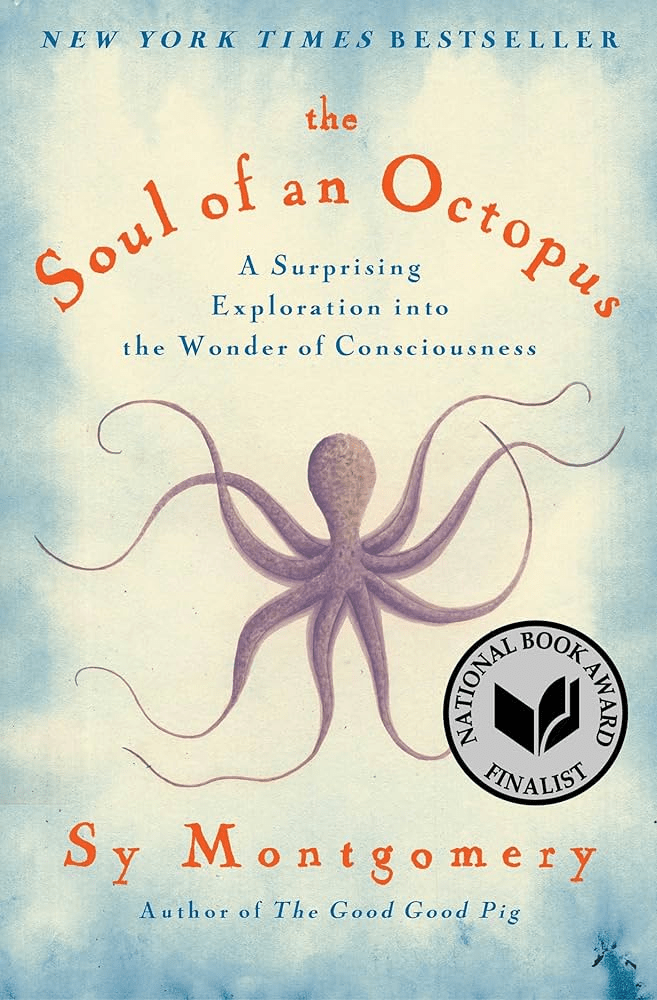

The intelligence and physiology of octopuses1 make them among the most fascinating animals on the planet. Naturalist Sy Montgomery was intrigued by octopus consciousness before she had the chance to meet one in person. At her casual visits to the aquarium, she felt that they were watching her as much as she was watching them. Montgomery first met the Pacific Octopus Athena, who eagerly latched on to Montgomery’s arm. Athena was strong enough to pull Montgomery into her icy tank, but instead was playful and curious. Thus began a series of octopus friends that Montgomery got to observe from their youth to death: Octavia, Kali, and Karma. Octopuses are highly intelligent animals that require toys and stimulation to keep them occupied; a bored octopus can be dangerous to itself and its handlers. They also have distinct personalities (Montgomery notes that Kali was aptly named) and strong emotions. Soul of an Octopus offers a compelling look at octopus consciousness both like and unlike our own. 

Patriot: A Memoir by Alexei Navalny

This story of Alexei Navalny’s life begins when he nearly died. While flying from Tomsk, Siberia to Moscow, he was poisoned with the nerve agent Novichok. He spent 18 days in a coma, and spent several months recovering in Berlin. Navalny knew who his would-be assassin was: Vladimir Putin. Navalny has been an outspoken critic of Putin’s regime and leader of the opposition party, the Anti-Corruption Foundation. He began writing his memoir while recovering from the poisoning, and ended it in prison. First is Navalny’s biography, where he recounts growing up before and after the fall of the Soviet Union and his education and early years as a lawyer. He writes about how he became the Russian opposition leader, and the dangerous and life-altering consequences for him and his family. One chilling chapter details Navalny returning to Russia after his poisoning, despite knowing that he will likely be arrested once he returns. The second half of the book is Navalny’s prison diaries and social media posts. He shares his experience in prison, including a hunger strike when he was denied medical care. The entries become sparser as his punishments in prison worsen, and Navalny would be killed in a prison above the Arctic Circle. Despite bleak circumstances, his writing never veers into self-pity or nihilism. Instead, he writes passionately about his work and condemns the invasion. Navalny also never loses his sharp sense of humor, adding some surprising moments of levity. While not an easy read, it is a powerful memorial and a stark reminder of how important it is to stand against authoritarianism. 

Musicophilia: Tales of Music and the Brain by Oliver Sacks
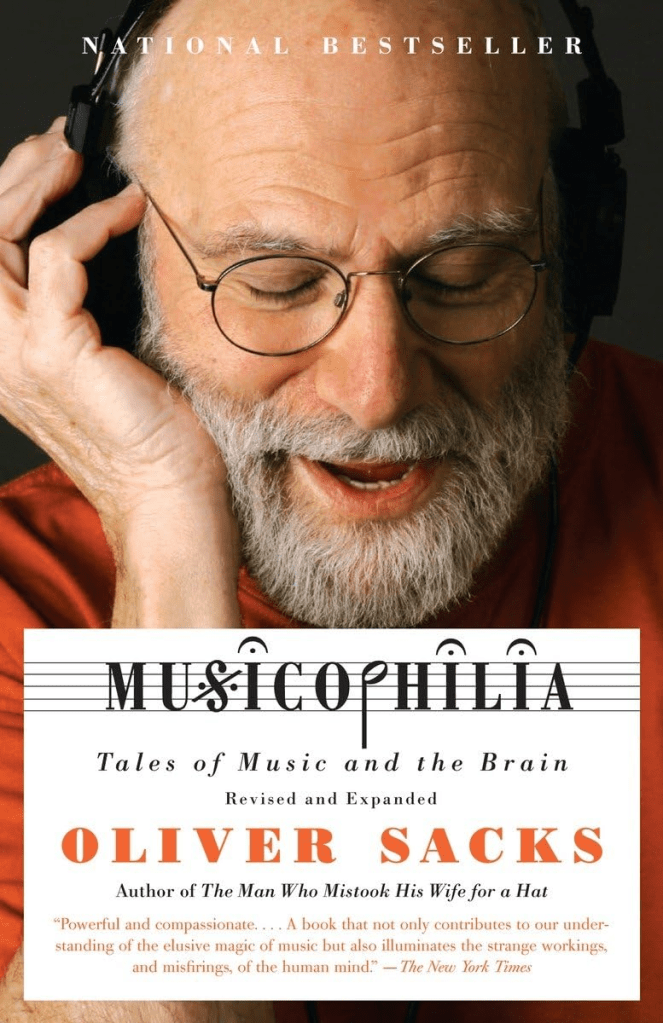
Ah, music! Who doesn’t love a great song that you can sing along to? Well, if you have amusia, a symphony may sound like pots and pans banging together. Musical hallucinations are real, too, and can cause a great deal of distress. But many of us love music, and our brains do, too. Oliver Sacks, best known for his work The Man Who Mistook His Wife For a Hat, takes a look into the good, the bad, and the utterly strange ways that music affects our brains. The book opens with the case of Tony Cicoria, a man who never had more than a casual interest in music. Then he was struck by lightning. Cicoria survived, but was struck by another passion: classical music. Within three months of his recovery, he was spending almost all of his time playing piano and composing music. His new obsession lasted decades. This is only one of the stories about the mysterious relationship between music and the human brain. Others include a man with amnesia whose memory lasts only seconds, but can still read and play music, a musician with severe Tourette’s whose tics diminish greatly only when he performs, among others. The therapeutic effects of music on people with Parkinson’s and Alzheimer’s is shown as well. Sacks never turns these narratives into freak shows, but writes compassionately about the power of music and the mysteries of the human brain. 

Fiction

Gravity by Sarah Deming
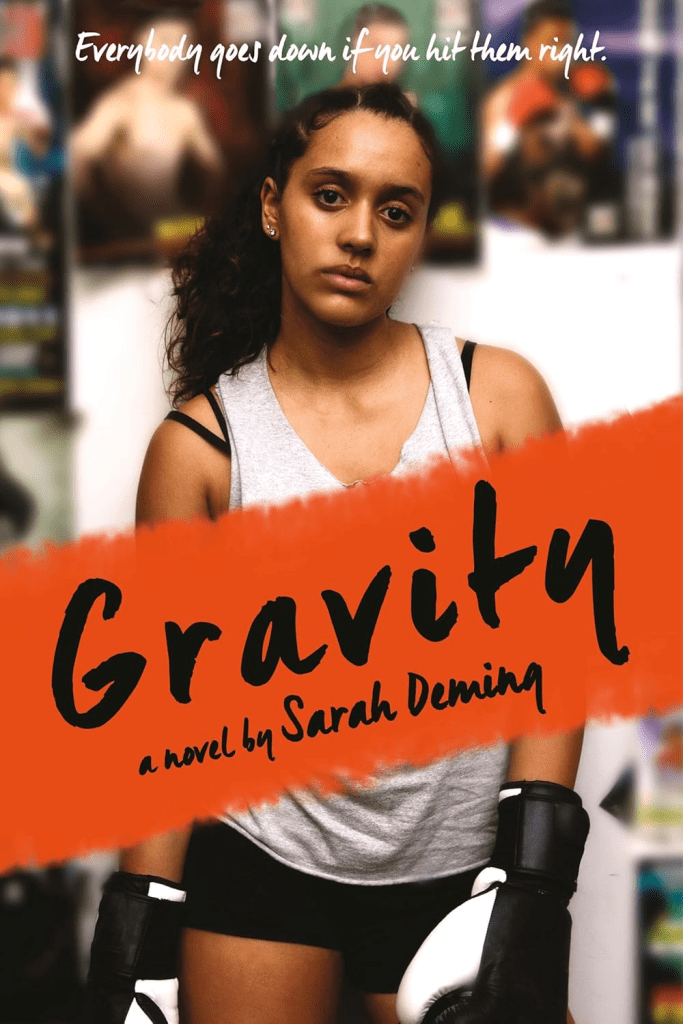
Gravity Delgado is a force to be reckoned with. This young woman is a fierce, undefeated boxer, preparing for the 2016 Olympics in Rio. She’s been training since she was twelve, but her biggest challengers are the ones that she faces outside the ring. Her alcoholic mother, responsibilities for her younger brother, and a heady romance all threaten Gravity’s rising star. She still has her supportive aunt and cousin, as well as her found family at the gym in her corner. Still, Gravity’s biggest obstacle might be herself. The boxing matches are exciting to read, and include both the physical and mental aspects of a bout. Gravity makes mistakes and occasionally stumbles, but you’ll be cheering for her in and out of the ring. A novel that pulls no punches in the best way. 

The Truth About Everything by Bridget Farr

Fifteen-year-old Lark knows how to drive, fix an engine, and catch her own food, but she can barely read. She and her parents know the end is coming, and they’ll be the only ones left standing after the inevitable downfall of America. Raised by two doomsday preppers, Lark has never questioned the conspiracy theories that she was raised on. Then Lark gets her period for the first time. She thinks that she’s miscarrying, something that has happened to her mother many times before, but doesn’t know how she could have gotten pregnant in the first place. After her mother explains what her period is, Lark starts to wonder what else her parents haven’t told her? Lark secretly enrolls herself in high school, where new knowledge conflicts with everything she’s been taught at home. She’s hungry to learn, even when it means uncovering painful truths. But soon, Lark finds herself at a crossroads. What is the real truth? And what will Lark have to sacrifice for it? Pairs well with Educated by Tara Westover. 

Uprooted by Naomi Novik
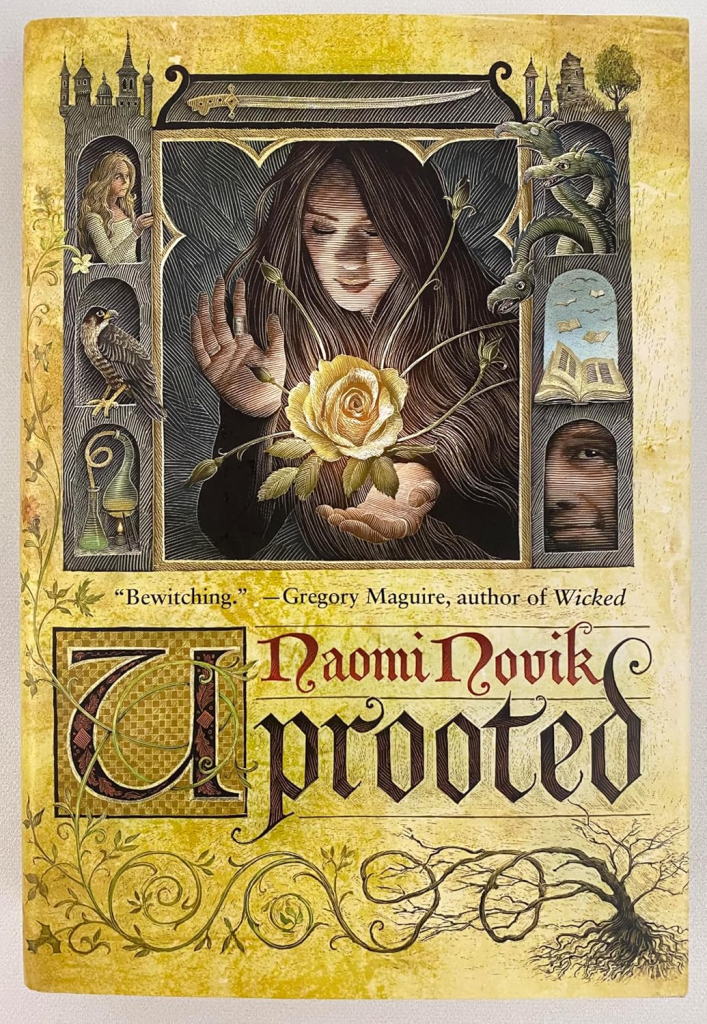
Once every ten years, the Dragon takes a village girl into his tower in the corrupt Wood. When she leaves a decade later, with jewels and finery, she is irrevocably changed and leaves the village forever. But the Dragon isn’t a scaly creature that breathes fire. He is a seemingly ageless, enigmatic wizard. Agnieszka has no fear of being taken. The Dragon only takes the most remarkable young ladies, and she’s nothing special. Though no one says it, everyone believes that Kasia, Agnieszka’s best friend, will be the one he picks. Yet it is Agnieszka the Dragon, reluctantly on his part. She is a witch, and her newly-found powers could be devastating if the corruption of the Wood reaches her. Agnieszka and the Dragon have a rocky start, but their mutual dislike of each other must be put aside when the Wood threatens her home. The well-developed characters, rich, Eastern European-inspired setting, and fantastic storytelling will leave you spellbound. 

The Tea Dragon Society by K. O’Neil
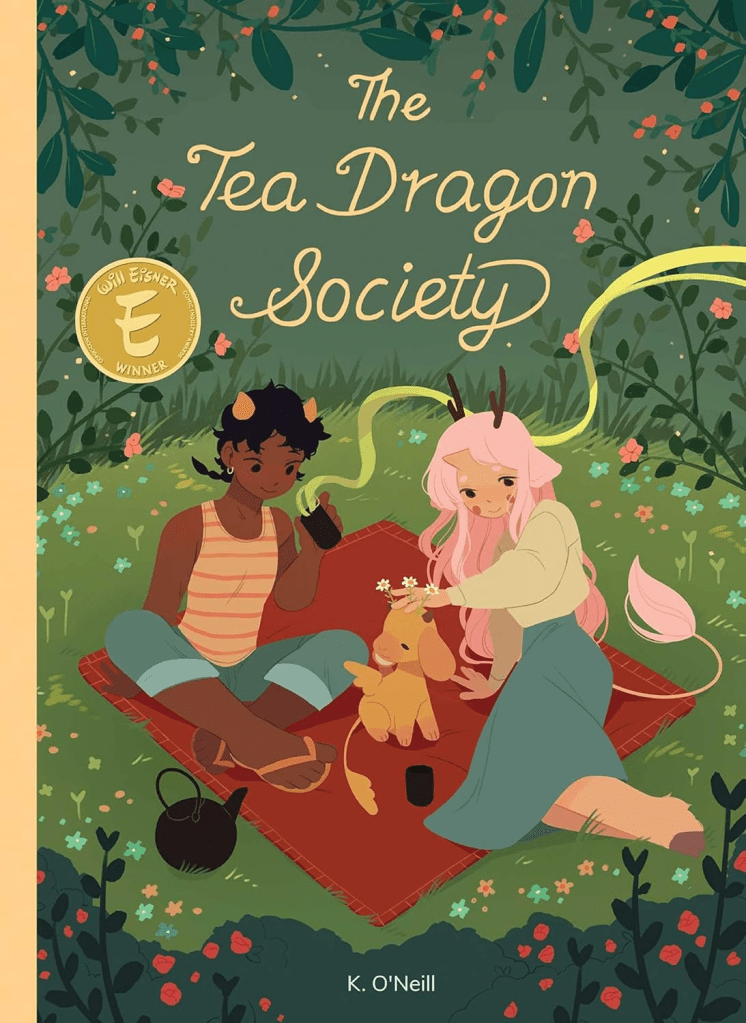
Half-human, half-goblin Greta is an apprentice blacksmith in a world where the old crafts are fading. Greta helps a lost tea dragon – a small dragon that grows tea leaves – find its caretakers, and she is introduced to the Tea Dragon Society. Like blacksmithing, the care and cultivation of tea dragons is a dying art. The Tea Dragon Society is made up now only of Hesekiel, his partner Erik, and a shy girl named Minette. As a year passes, Greta learns to care for the dragons alongside Minette, assuring Hesekiel that the Tea Dragon Society will go on. I’ve enjoyed O’Neil’s other graphic novels, and The Tea Dragon Society embodies so much of what I love about their work. The artwork is soft, with no heavy outlines, adding to the whimsical feel of the world. It features a diverse cast in a simple but visually beautiful story. The Tea Dragon Society is the graphic novel equivalent of sliding into a warm bubble bath…maybe with a nice cup of tea. 

Long Way Down by Jason Reynolds

Will’s older brother, Shawn, has just been murdered. Will knows the rules of his neighborhood: don’t cry, don’t snitch, always get revenge. Will takes Shawn’s gun, and take the elevator from his eighth-floor apartment down to the first floor. The doors open on the seventh floor, and Shawn’s friend Buck gets on. Except Buck shouldn’t be here – he was already shot to death. On each floor, another ghost gets on. All of them played a role in Will’s life, and all of them were victims of gun violence. Each tells Will their stories, challenging his resolve. Can he kill his brother’s killer? Should he? This is a short, intense novel in verse that will stay with you long after you turn the final page.  

  1. Yes, that is the correct pluralization. Octopodes is acceptable, octopi is right out.  ↩︎

Oct. 2025 Recs: Tasty Tales


Without in any way limiting the author’s exclusive rights under copyright, any use of this publication to “train” generative artificial intelligence (AI) technologies to generate text is expressly prohibited. The author reserves all rights to license uses of this work for generative AI training and development of machine learning language models.


Little blog update: there won’t be a book list in November, since I’m traveling for most of this month. 

Welcome to October! 

 I’d originally planned to make a list featuring some more scary stories, but after several tough weeks, I decided to focus on something lighter and tastier: food! Have you ever thought about how the things we eat affect our lives? Wondered about how it got on your plate? Did you know you’ve probably only eaten a single banana species your entire life? Or maybe you’re more interested in trying new foods, or expressing yourself through the culinary arts. Food is an important part of everyone’s lives, and that’s what this book list is all about. Get your favorite fall treats and dive into some delicious reads. 

Nonfiction

Eating to Extinction: The World’s Rarest Foods and Why We Need to Save Them by Dan Saladino

This is one of my favorite books that I’ve read in the last couple years. Saladino travels the globe to find and taste the rarest foods in the world: wild honey in Tanzania, the hardy Scottish grain bere, the rare black Korean chicken Yeonsan Oyge (literally all black, including its bones), and many others. Each chapter focuses on a different rare food while also offering deep dives on food and agricultural history. It looks at how scientific processes like selective breeding and gene editing have helped create our diets today, and shows the efforts to preserve diverse and traditional foods today. Throughout the book, Saladino expresses the need for more genetic diversity in our current food systems. For example, the Cavendish banana, which is probably the only type of banana you’ve ever eaten, is incredibly vulnerable to disease because it can only be produced by cloning. Eating to Extinction weaves history, science, culture, and economics together to create an utterly fascinating book. I was totally hooked by the first chapter, which shows how the loss of wild honey affects not only the Hadza people who rely on it as a major part of their diets, but the honeyguide as well, a bird that leads humans to bee colonies. I highly recommend this one to anyone who eats food.

Fiction

Celestial Banquet by Roselle Lim

Once in a generation, the Major Gods announce the Celestial Banquet. In this delicious and deadly competition, cooks from across the Continent come to serve the gods sumptuous dishes made with fantastical ingredients. The winning team will receive peaches of immortality, which can extend one’s life or be sold for riches beyond their wildest dreams. Headstrong Cai is a noodle chef, and certain she has what it takes to win the peaches. After proving her worth to the raggedy Minor God Kama, she heads to the capitol with him, her crush Seon, and taciturn protector Tala. Once there, Cai is in for the challenge of her life, gathering dangerous ingredients and cooking for the capricious gods Luck, Temperance, and Indulgence. The novel draws from Southeast Asian folklore and cuisine, and includes some drool-worthy descriptions of fantasy dishes. It hits on familiar YA tropes with varied success (the romance sub-plot feels very flat), but the adventure and competition is a lot of fun to read.

May 2025 Book Recommendations: AAPI Heritage Month

May is Asian-American and Pacific Islander (AAPI) Heritage Month! Asian American Heritage Month began in 1979 as Asian/Pacific American Week. In 1992, May was permanently recognized as Asian/Pacific American Month. May is a significant month in Asian-American history, as the first Japanese immigrants arrived in the U.S. on May 7, 1843. On May 10, 1869, the first transcontinental railroad was finally completed, which was constructed in part by over 10,000 Chinese workers who faced dangerous conditions, low pay, and discrimination. AAPI month recognizes the contributions of Asian-Americans and Pacific Islanders while celebrating a myriad of rich cultures. 

This month, you get extra books! Asia and the Pacific Islands are huge areas with many diverse cultures, and there’s no way I can cover everything with just a few books. This year, there are two nonfiction books focusing on Asia, as well as one for the Pacific Islands. Normally I would only have one book for Asia in either category, but Banned Book Club feels so pertinent to the time we’re living in now that I had to include it. As it’s part of Korean history and takes place entirely in Korea, I wanted to highlight a book about the Asian-American experience as well. 

A quick note on the authors’ names: in many Asian countries, the family name comes before the personal name. Additionally, Asian immigrants may choose Western names for themselves after moving to a Western country. For this list, I’m using the names the authors were published under. 

Nonfiction

Almost American Girl by Robin Ha

This graphic novel memoir explores identity, adolescence, and the ups and downs of being an immigrant in America. Robin and her mom don’t always see eye-to-eye. Even so, they’re a team with an unbreakable bond. Robin doesn’t know why her mom wants to take them on a vacation to Alabama in the United States, but their trips together are so much fun, Robin trusts her. There, Robin meets Mr. Kim and his family, all Korean-American immigrants. Then Robin’s mom startles her when she announces they’re not going back to Korea. She and Mr. Kim are getting married and staying in America. Robin is suddenly separated from her home, her friends, and her beloved comic books without warning. Her mother insists that they will have a better life in America, away from the stigma of being a single parent, but Robin – doesn’t believe her. Robin enrolls in an American high school where he struggles with fitting in, learning English, and bullying from racist classmates and a manipulative cousin. Difficulties in her mother’s marriage, especially conflicts with her in-laws, add an extra layer of stress in Robin’s new home. As Robin finds her place in America, her strong bond with her mother carries both of them through their new lives as Korean-Americans. 

Banned Book Club by Kim Hyun Sook and Ko Hyung-Ju. Illustrated by Ryan Estrada. 

Hyun Sook’s first day of college in 1983 didn’t go like she expected. Her college campus is disrupted by student protests against South Korea’s Fifth Republic, a military regime with a history of censorship, torture, and murder. Hyun tries to keep her focus on her studies and the masked dance club, but things take an unexpected turn when she gets invited to a book club. Hyun thinks that she and other students will be discussing Western classics like Shakespeare or The Scarlet Letter, but is shocked to learn that it’s actually a club dedicated to reading books banned by the regime. The banned book club does much more than that to stand up to the government, like organizing protests and publishing illegal newspapers. As Hyun learns the truth about the world around her, she becomes more and more involved with the Banned Book Club and their activities. However, fighting back puts her and her family in danger. Banned Book Club is a graphic novel memoir with a unique illustration style. I wanted to highlight this one because it explicitly talks about how disinformation and censorship are tools used to create and aid unchecked power and violence. 

Poūkahangatus by Tayi Tibble

In Poūkahangatus (incisively pronounced “Pocohontas”), New Zealand poet Tayi Tibble explores what it means to be Māori, a woman, and a Millennial/Gen Z. Written in free verse and prose poetry, the collection tackles bigotry, sexism, and Indigenous representation in media. There’s also warmth and nostalgia as Tibble writes about her mother and childhood. My favorite poems were “Cowboys and Indians” a sly condemnation of the White Savior Complex, and “Vampires versus Werewolves.” At first glance it’s a poem about being a teenager at the height of Twilight’s popularity, but unfurls into something much deeper and more complex (“It’s the boy who cried wolf,/but in reverse you cry sheep and/nobody believes your bleating”). Poūkahangatus is a fantastic North American debut, and Tibble as a poet to watch.

Bonus Book: 

Paper Son: The Inspiring Story of Tyrus Wong, Immigrant and Artist by Julie Leung. Illustrated by Chris Sasaki.

Tyrus Wong (born Wong Gen Yao) immigrated to the United States from China in 1919 as a paper son, pretending to be the child of another Chinese person who had received U.S. residency. At age 9, he was temporarily separated from his father and detained at Angel Island Immigration Station before being allowed to enter the country. Tyrus and his father faced discrimination, but nothing dampened his love of art. Tyrus would become an artist for Disney, and eventually the lead artist for Bambi. He combined Eastern and Western art styles to create the film’s gorgeous backgrounds, but was fired soon after, and never got full credit for his work until recent years. This picture book biography is told with beautiful, impressionist illustrations.

Fiction

Ninetails: Nine Tales by Sally Wen Mao

Foxes populate folklore throughout the world. In Chinese mythology, hulijing, or fox spirits, can take on different forms, both benevolent and antagonistic. Ninetails is a collection of nine stories inspired by fox spirit lore. A cursed boy attempts to befriend his ostracized hulijing classmate; a vixen takes revenge on an abuser; a woman shrinks to be the size of wasps while an imposter takes over her life. My favorite was “Lotus Stench” in which a fox and a ghost become roommates. Another story runs through the book at interludes: “The Haunting of Angel Island.” Each part tells the story of a paper daughter detained at Angel Island while waiting for her interrogation to be let into the United States. These interludes are utterly absorbing and were some of my favorite parts of the book. A collection of surreal and engaging stories and historical fantasy.

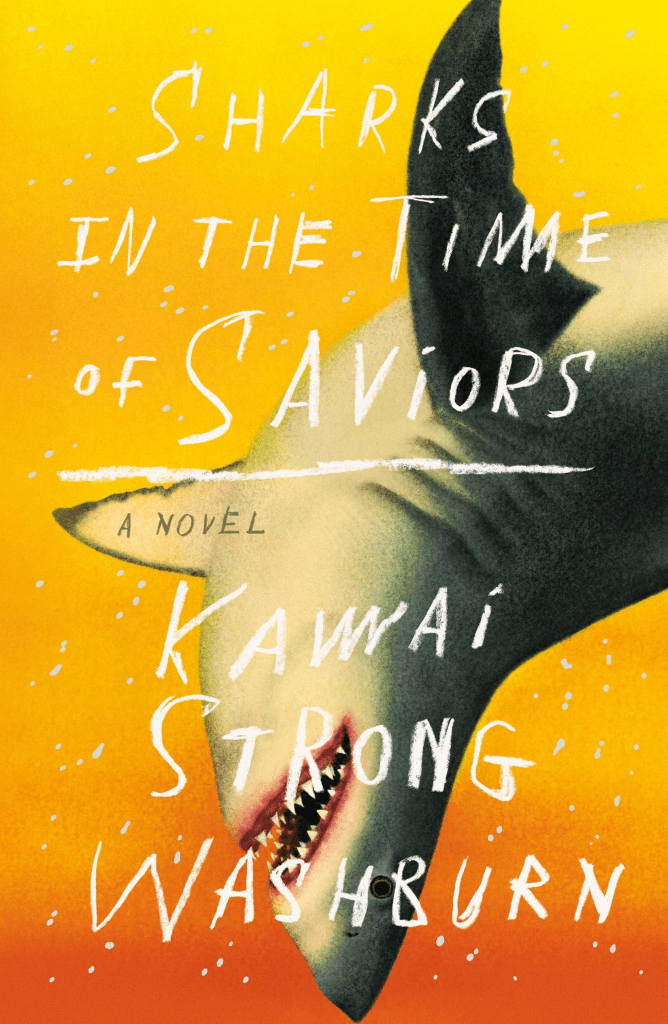
Sharks in the Time of Saviors by Kawai Strong Washburn

When he was seven years old, Nainoa fell overboard a glass-bottomed boat and into the ocean. He was returned to the boat gently, in the jaws of a shark, holding him as gently as a baby. Since then, Noa has been regarded as a miracle, and everyone in Kalihi knows it. Behind closed doors, Noa struggles with the expectations thrust upon him, while his siblings ache to be seen as something more than Noa’s brother and sister. As time passes, all three are drawn away from the Hawaiian Islands. Eldest brother Dean attends college in Spokane on a basketball scholarship with dreams of fame; Noa’s younger sister hurls herself into rigorous academics and increasingly bigger risks in San Diego. Nainoa works as an EMT in Portland as he tries to understand his abilities, and what he should be doing with his gift. Through all of this, their mother, Malia, believes that Noa has been chosen by the gods to do something great. Tragedy draws the family back together, where they must reconcile their complicated bonds and failures. Sharks in the Time of Saviors is a lyrical family saga with Indigenous Hawaiian religion and mysticism woven throughout. 

Bonus Book

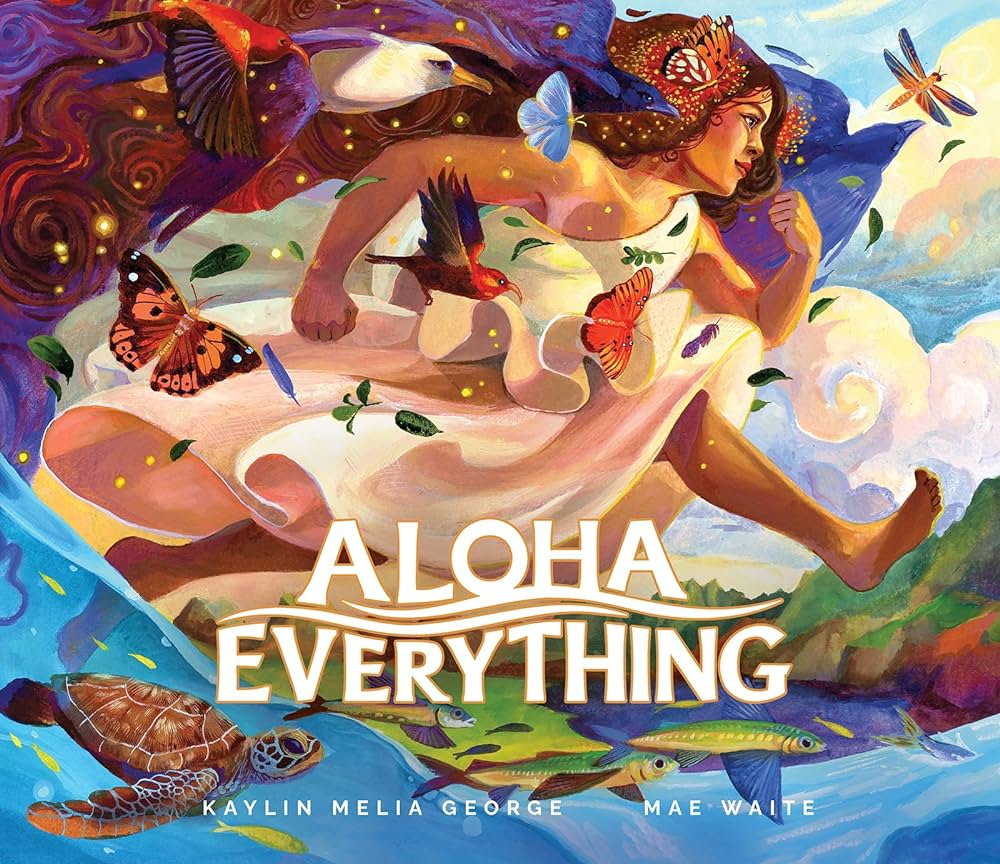
Aloha Everything by Kaylin Melia George. Illustrated by Mae Waite.

A baby nestled under the branches of a koa tree grows to become a proud and strong Hawaiian woman in this vibrant picture book. Through breathtaking illustrations and verse with Hawaiian words sprinkled throughout, the reader watches the girl grow and learn. The book is a celebration of hula, nature, and Hawaiian history and culture. A glossary and pronunciation guide of Hawaiian words is included. What did hula teach her?  What did hula teach you? 

March 2025 Book Recs: Women’s History Month

Without in any way limiting the author’s exclusive rights under copyright, any use of this publication to “train” generative artificial intelligence (AI) technologies to generate text is expressly prohibited. The author reserves all rights to license uses of this work for generative AI training and development of machine learning language models


March is Women’s History Month in the U.S.! Women’s History Month began in California in 1978 as “Women’s History Week.” It was kicked off the week of March 8, International Women’s Day. In 1987, Congress designated March as Women’s History Month. It’s kind of crazy to me that Women’s History Month isn’t even 40 years old yet! 

Women’s History Month is a time to celebrate the achievements and contributions of women that have often been left out of history books. It’s also a time to celebrate the women and girls leading us into the future. 

Quick note: There won’t be a book list for April, but you’ll be getting extra for May.

Nonfiction

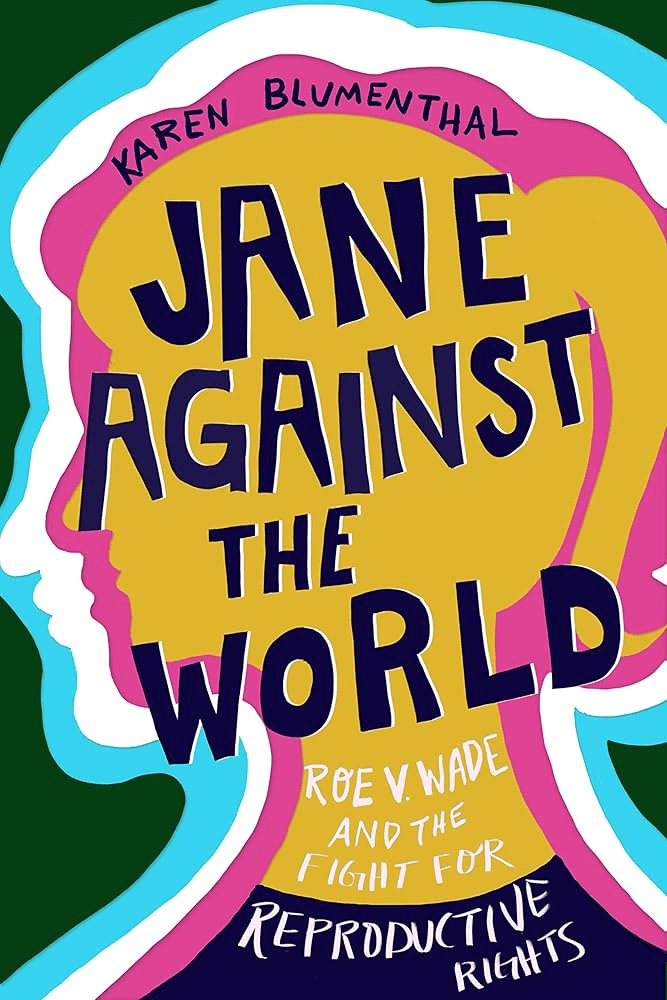
Jane Against the World: Roe v. Wade and the Fight for Reproductive Rights by Karen Blumenthal 

I can think of no topic that’s as controversial or ignites as many passionate debates than abortion. But how did we get here? How did women get abortions and reproductive care before Roe vs. Wade? And what comes after it? Jane Against the World looks at the history of abortion and birth control in the United States, reform and repeals, and Roe vs. Wade. The book is broken into four parts. Restrictions is dedicated to the history of abortion and abortion providers in the United States from the 1800s to the 1960s, and highlights the Comstock Act of 1873, about which much debate has arisen following the Dobbs vs. Jackson Women’s Health Organization in 2022. Reform covers reform of abortion laws, legal gray areas of performing abortions, and the beginnings of the pro-life movement, and the road to Roe v. Wade. In part 3, Roe v. Wade, Blumenthal breaks down the complex case in a way that every reader can understand, and goes into detail on court memos, opinions, especially Justice Harry Blackmum’s contribution to the Court’s decision. After Roe chronicles the pushback against Roe v. Wade, including violence against abortion providers and laws that restrict abortion at the state level. Written in 2019 and published in 2020, this book does not include the Dobbs decision that overturned Roe in 2022. While abortion is not an easy topic to read about or discuss, it’s very important to understand how we got to where we are today. 

Fiction

When the Mapou Sings by Nadine Pinede


This novel in verse begins in 1936, two years after the United States ended its occupation of Haiti. While things are still dangerous for those who would speak up against the government, Lucille and her best friend Fifina have big plans of their own. Hungry for knowledge, they dream of opening up a school for girls. Lucille’s world crashes down around her when Fifina’s father is imprisoned, Fifina disappears, and Lucille’s beloved Mapou tree is cut down by the section chief. After receiving a dream from the Mapou, Lucille confronts the section chief, hoping to find Fifina. This act of defiance puts her and her family in danger, and Lucille is forced to leave her home. She works first as a maid for a wealthy Haitian woman, and then for an American woman in Haiti for research. Lucille doesn’t know quite what to make of Mamzelle Hurston, but the two develop a special bond during their time together. Working for Mamzelle Hurston opens up new doors for Lucille, even though it may lead her into danger and hard decisions. This is a fictionalized account of the real servant of Zora Neale Hurston during the time Hurston lived in Haiti, working on Their Eyes Were Watching God. Fictionalizing real people can be a touchy subject, but the setting and themes are thought-provoking. While I thought the ending tied things up just a little too neatly, I wanted to highlight this book because it takes place during a unique time in history which gets very little attention.

December Book Recs: Right Stuff, Wrong Sex


Without in any way limiting the author’s exclusive rights under copyright, any use of this publication to “train” generative artificial intelligence (AI) technologies to generate text is expressly prohibited. The author reserves all rights to license uses of this work for generative AI training and development of machine learning language models.


Credit where it’s due: the title for this post was “borrowed” from the book Right Stuff, Wrong Sex by Margaret A. Weitekamp. 

We’ve made it through another year, and what a year it’s been. I’ll have a short post for January. For the rest of 2025, my goal is to start posting twice a month again. Until then, here’s the last book recommendation list for 2024.

Also, hi, Yvette, the lady I met during OT this week. Thanks for your encouragement! 

The book sommelier is back! For December, here’s two books that pair together nicely for a stellar reading experience. 

Nonfiction

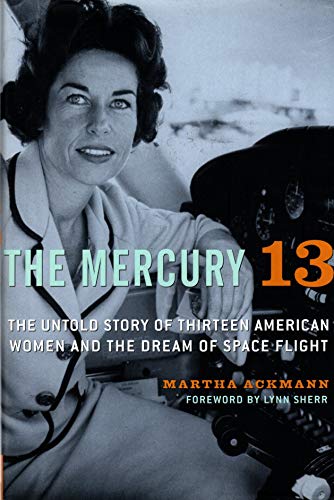
The Mercury 13: The Untold Story of Thirteen American Women and the Dream of Space Flight by Martha Ackmann

Before there was Sally Ride, there was Jerrie Cobb. All eyes were on the Project Mercury astronauts, Air Force test pilots who were all deemed to have “the right stuff” to go into space. Dr. William Randolph Lovelace II wanted to cast a broader net than just the men that the government thought were worthy of going to space. There were many accomplished women pilots in the country, but as women were barred from flying in the military, they were automatically disqualified as astronaut candidates. Dr. Lovelace theorized that women might make better astronauts than men, and pushed for “lady astronauts.” Jerrie Cobb, a woman with an impressive list of aviation achievements, eagerly trained, hoping to be one of the first women in space. When she proved that she could pass the same tests that the prospective male pilots did, more women joined this secret project. Thirteen women passed the arduous tests which proved women were space-worthy, but societal customs and political maneuverings meant that none of the Mercury 13 would ever leave Earth. The Mercury 13 tells the largely unknown story of the women who dared to reach for the stars. Detailed biographies of Jerrie Cobb, Dr. Lovelace, and celebrated pilot Jackie Cochran are woven in with the narrative. Interviews with the women who underwent the Lovelace tests offer personal insight into their experiences. Inspiring and disheartening all at once, Ackmann finally brings to light the story of these brave and tenacious women who were willing to give everything they had for a moonshot of their own.

Note: This book has two different subtitles: The Untold Story of Thirteen American Women and the Dream of Space Flight, and The True Story of Thirteen Women and the Dream of Space Flight. I used the “Untold” version since that’s the copy of the book I have. The actual text of the book is the same in either one.

Fiction

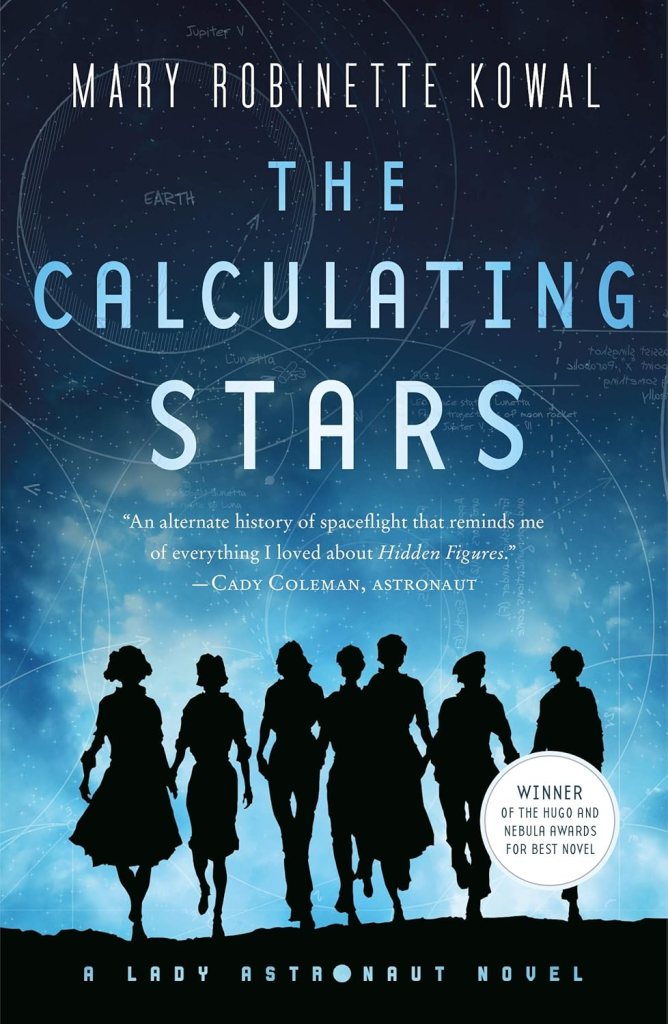
The Calculating Stars by Mary Robinette Kowall

In 1952, Elma York and her husband, Nathaniel, are lucky to be alive after a devastating meteorite strike obliterates much of the eastern coast of the U.S. Elma, a physicist, mathematician, and pilot, is eager to do something, anything, to help survivors and rebuild the country, but her talents are overlooked in favor of men. That is, until she calculates what the long-term effects of the meteorite strike will be. A climate disaster will make Earth unsuitable for habitation, and colonizing space becomes humanity’s only chance for survival. Elma joins the fledgling international space agency, IAC, as a computer, performing calculations that will put a man into orbit. But with so many qualified women pilots and scientists working alongside her, Alma starts to wonder: why can’t women be astronauts? When Elma makes headlines during an all-women airshow, she finally has a chance to advocate for her cause. Sexism and her crippling anxiety would have her stay on the ground, but Elma’s determined – for herself, and for all the brilliant women whose skills have gone unnoticed. One thing I liked was the inclusion of women of color in Elma’s crusade. Elma does have her prejudices and blind spots, but she learns from her mistakes. The real-life Project Mercury astronauts and Mercury 13 were all White, and I was glad to see diversity being added to the space race. The Calculating Stars is great for fans of alt-history and realistic sci-fi. 

See you next year!

October 2024 Recs: Spooky Season

It’s spooky season! While I am not a huge fan of horror, I can appreciate how the genre can work on multiple levels. Scary stories are excellent ways to examine human nature and society…and perfect for keeping you up on dark and stormy nights. 

Nonfiction

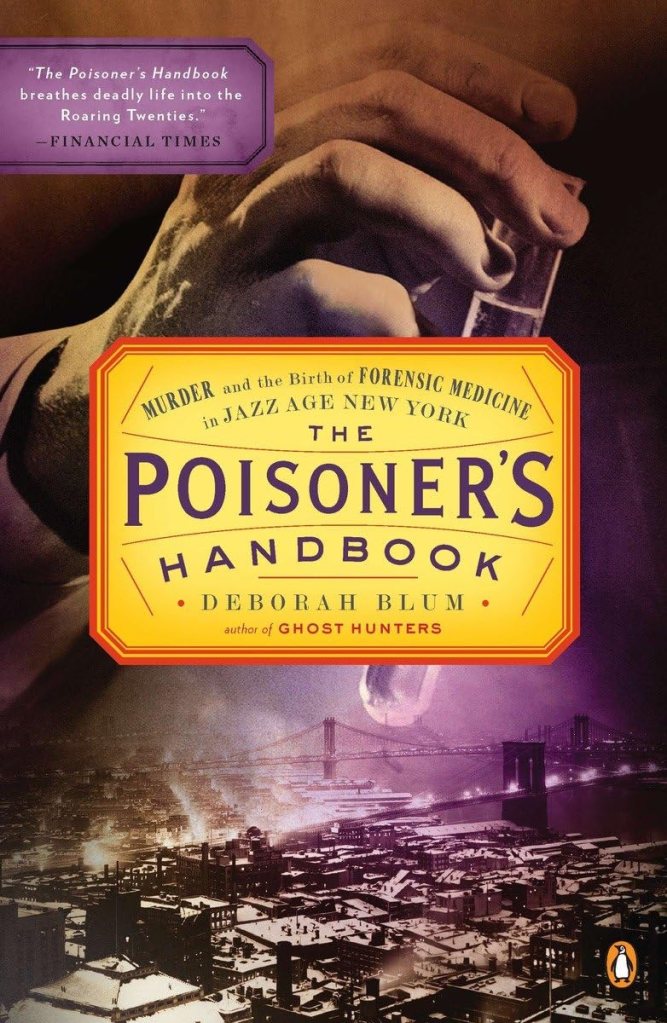
The Poisoner’s Handbook:  Murder and the Birth of Forensic Medicine in Jazz Age New York by Deborah Blum

Prohibition-era New York City was a hotbed of political corruption, organized crime, and poison. Poison was a deadly fact of life, found in the bootlegged liquor of speakeasies, beauty tonics, and in the hands of impatient heirs and jealous spouses. New York City’s chief medical examiner, Charles Norris, set out to change things. With his assistant Alexander Gettler, the NYC medical examiner’s office became the birthplace of forensic medicine. Working long hours, they examined corpses, exhumed bodies, and invented groundbreaking new tests to identify poisons, and put poisoners behind bars. Each chapter is centered on a different poison: chloroform and cyanide to kill, methyl alcohol served in speakeasies, industrial poisons such as tetraethyl lead and radium, and more. The Poisoner’s Handbook is a perfect for lovers of true crime and science history, though there are moments where a strong stomach is helpful.

Lakewood by Megan Giddings

After the death of her grandmother, college student Lena Johnson takes over the role of head of household. Her mother, Deziree, suffers from a mysterious serious illness (or possibly illnesses)  which has racked up more medical debt than the Johnson family can afford. Sometimes, it’s a choice between paying for water or paying for medicine. When Lena gets invited to take part in a research study that pays beyond well and offers amazing health insurance for Deziree, she thinks she’s found her way out. Lena moves to the sleepy town of Lakewood to become a test subject in a secretive government research project. She knows that what she’s doing is risky, but she is willing to endure everything for her mother’s sake. When will the risks become too big, and what will the consequences be when they do? Drawing from the historical medical exploitation of BIPOC individuals (Lena is Black; the experimenters are all White), Lakewood is a slow burn horror that will get under your skin…in more ways than one.

June Book Recs: Read with Pride

A little blog update: I am still dealing with personal issues which has impacted my writing. I’ll be posting (hopefully) posting Flash Fiction Month stories here daily throughout July, and then will be taking a break from the blog until September. My brain needs it.


June is Pride Month! Pride celebrates LGBTQIA+ history, culture, and. well…pride! Pride began with the Stonewall riots in June and July of 1969, and June was officially recognized as “Gay and Lesbian Pride Month” in 1999. LGBTQIA+ rights have come a long way, but there’s still a lot of progress to be made, especially as the trans community is increasingly under attack.

LGBTQIA+ covers a huge range of identities, and two books certainly can’t cover all of them. The two books I have here were stand-out options for Pride.

Nonfiction

Real Queer America: LGBT Stories from Red States by Samantha Allen

Samantha Allen, a trans woman, loves the places that queer people are supposed to fear. She and her friend Billy, a trans man, embark on a road trip across red states in the United States, to tell the stories of queer people who live, or have chosen to stay, in places that are often thought to be unwelcoming or even unsafe for queer individuals. They start in Provo, Utah, where Samantha had attended Brigham Young University pre-transition, and finds a sanctuary that she would have thought would never exist. Texas is outrageously fun despite the state’s anti-trans laws, then it’s on to Indiana, where Samantha met her wife. They stop in Tennessee, Mississippi, and finally, return to Samantha’s home with her wife in Florida. Samantha and Billy’s journey is one of surprising compassion as they find queer spaces and people who welcome them unquestionably, and bright spots of love and acceptance in whatever state they’re in. The author also includes her personal history, and reflects on anti-trans policies in the era of the Trump administration. Most of all, this is a story about connecting that reminds the readers the queer Americans are everywhere, carving out loving spaces for themselves, and road-trippers who happen to come their way.

On a Sunbeam by Tillie Walden

On a Sunbeam is a space opera graphic novel that follows a young woman in two different times of her life. Mia isn’t the best student at her high-end boarding school, Cleary’s School for Girls. Her only real interest is the school sport Lux, her passion for which gets her in trouble. While waiting outside the principal’s office, Mia meets Grace. Grace seems to have a secret – and magic powers? – but the two girls soon fall for one another. Five years later, newly graduated, Mia gets a job on aboard the spaceship Aktis. The crew consists of Char, her wife Alma, Alma’s niece Jules, and Elliot, who is non-binary and non-verbal. Mia joins the crew in restoring old buildings in space, and chronicles the things they discover. Char, Alma, and Elliot all have histories they’d rather Mia not know, and Mia has some unfinished business of her own. I don’t want to say too much about the plot without giving it away, but this is an epic and imaginative story of queer love, found family, forgiveness, and of course, space.

April Book Recs: Let There (Not) Be Light

At a restaurant, a sommelier might recommend the perfect red wine to go with your steak. I aspire to be a book sommelier who finds nonfiction and fiction that complement each other, bringing out the best flavors in each text to enhance your reading experience. For April, I would like to offer two books that pair well together for a little bit of “light” reading.

Nonfiction

The End of Night: Searching for Natural Darkness in the Age of Artificial Light by Paul Bogard

Have you ever seen the Milky Way with your naked eye? When was the last time you saw a truly starry sky? Earth is brighter than ever, but does that mean that it’s better for its residents? Starting with the brightest light on the planet – The Luxor Sky Beam in Las Vegas –  and ending with the darkest skies in the United States, Bogard examines the multitude of ways that widespread artificial lighting has changed our world. He interviews engineers, astronomers, ecologists, third-shift workers, and even clergy members about what the loss of darkness means for humans and the natural world. Starlight is not the only thing we risk losing when dark skies disappear: Bogard also investigates the health and safety risks associated with artificial lighting, and the disconnect between ourselves and nature. This is a thought-provoking book that will make you see your world – both in day and night – a little differently. 

Fiction

The City of Ember by Jeanne DuPrau

Twelve-year-olds Lina and Doon have lived in the city of Ember their entire lives, where nothing is more important than light. Without the electric lights, the city would be in complete darkness all the time. With no known way to make portable light, blackouts are frightening for all the city’s residents. When Assignment Day arrives, Lina is disappointed that she’s been assigned to be a laborer at the Pipeworks. Much to her surprise, Doon trades assignments with her. Now Lina can spend her days running through Ember as a messenger, while Doon descends into the bowels of the city. With blackouts increasing at an alarming rate, Doon knows that something is wrong in Ember. If he can get close to the generator that powers the city, maybe he can learn why the blackouts are happening. Meanwhile, Lina discovers a two-hundred-year-old message from the founders of the city. Parts of it have been destroyed, but whatever it contains could be the key to saving Ember. She and Doon must work together to discover the forgotten secrets of Ember, and maybe even bring its citizens into the light. 

March Book Recs: The Troubles

March is Women’s History Month, and it’s also Irish Heritage Month! I’ve decided to combine both of those things for this list. Media often show stereotypical depictions of the Irish, flattening an entire culture into a few jokes about alcoholism and leprechauns. Like millions of Americans, I have Irish heritage, and these depictions have always irked me. 

One part of Irish history that has long been close to my heart is The Troubles. The Troubles were 30 year period of political and sectarian violence between Unionists and loyalists (mostly Ulster Protestants) who wanted Northern Ireland to remain part of the U.K., and Irish nationalists and republicans (mostly Irish Catholic) who wanted Northern Ireland to join the Republic of Ireland. The Troubles officially came to an end with the 1998 Good Friday Agreement, which ended much of the violence in Northern Ireland. But my personal connection with The Troubles isn’t just from my Irish-Catholic heritage or watching the show Derry Girls. In the early 2000s, my family hosted a girl from Derry for three summers. Those were the best summer vacations I’d ever have. My mom described them as “a six-week sleepover.” While our guest did talk about some of the violence she and her family experienced, my memories of her and our summers together are full of laughter, dares, and the filthiest jokes I’d ever heard. 

For the March recommendation list, I’ve chosen two books where The Troubles play a central role in the lives of women. These are both great as audiobooks. Other than the readers’ lovely Irish accents, you’ll also be able to hear the correct pronunciation of Irish words.

Nonfiction

Thin Places: A Natural History of Healing and Home by Kerri ní Dochartaigh

Kerri ní Dochartaigh was born in Derry halfway through The Troubles to a Protestant father and Catholic mother. She lost two homes in the span of one year, once due to a petrol bomb, and once due to harassment. To escape the violence in Derry, she found solace in the natural world, in her cement-filled backyard and “thin places” where the Veil between this world and the spiritual one is thin. ní Dochartaigh’s memoir is one of great sadness as she writes about the emotional scars that have shaped her entire life. Yet there is great beauty to be found in it as well, as she tenderly writes about her beloved thin places, the endangered Irish language, the resiliency of moths, and what it means to be an Irish woman. She also discusses violence in Northern Ireland following Brexit, and what she fears and hopes for Derry, the city she loves and hates. Often heartbreaking, Thin Places is a gorgeously written meditation on loss, trauma, and healing. 

Fiction

Factory Girls by Michelle Gallen

It’s 1994, and smart-mouthed Maeve cannot wait to get out of her small town in Northern Ireland and start studying journalism in London. She and her friends Caroline and Aoife must first get their exam results to confirm their places in their chosen universities. To save up for their futures, the three young women get jobs in the local shirt factory for the summer. The job brings new challenges Maeve has never faced before: ironing 100 shirts a day, working alongside Protestants for the first time, and avoiding the advances of the factory’s lecherous English owner, Andy Strawbridge. Tensions rise between the Catholic and Protestant workers whenever there’s a bombing or murder, which occurs all too frequently. As the summer goes on, Maeve starts to realize that there is something going on behind the scenes at the factory, but standing up for herself and her friends could cost her dearly. Flashbacks show Maeve’s experiences growing up during The Troubles, including the death of her elder sister and bombings that were called “lucky” because everyone survived. As a slice-of-life novel, the plot can feel thin at times. However, Maeve’s narration and snappy dialogue is laugh-out-loud funny, and watching her and her friends find their path to adulthood is satisfying. Though the main characters are teenagers, frequent sexual references make this a book better suited to an adult audience.

Feb. 2024 Book Recs.: Black History Month

And we’re back with two book recommendations for Februrary!

February is Black History Month in the United States! Black History Month was first conceptualized as Negro History Week in 1925, by historian Carter G. Woodson and the Association for the Study of Negro Life and History. Since then, Black History Month has evolved to be a celebration of the achievements of Black Americans, as well as a time to learn about and remember America’s troubled racial history.

Fiction 

All You Have to Do by Autumn Allan

It’s 1995, and high school senior Gibran is in trouble. Again. After (literally) pulling the plug on a racist talent show act at the beginning of the school year, he’s one stunt away from getting expelled from Lakeside, his mostly White prep school. His mom wants him to keep his head down for the rest of the year and graduate, but Gibran’s not so sure he can do that. Especially after the school refuses to honor his and other Black students’ requests to honor the upcoming Million Man March.  Soon, Gibran finds himself leading the charge against the daily injustices he and other Black students face at Lakeside, but his activism may put his future at risk. 

It’s 1968, and Columbia University student Kevin is outraged at his school. Columbia University is attempting to expand its reach into Harlem by building a new gym on public land, which would displace Harlem’s Black and Puerto Rican residents. Kevin tutors young Black men in Harlem, but he wants to do something more. After Columbia’s disappointing response to the death of Martin Luther King, Jr., Kevin joins the student resistance. The student protests evolve into the real-life campus takeover, with a shocking response. All You Have To Do is a character-driven novel that looks at Black activism and how it affects the characters’ lives, both positively and negatively. While Gibran and Kevin both feel called to action, they also come to see how their work can hurt their relationships – especially with Dawn, Kevin’s sister, and Gibran’s mother. The novel includes debates about whether radical action is the “right” way to protest, as well as discussions of the roles Black women play in activism. 

Nonfiction

Unequal: A Story of America by Michael Eric Dyson and Marc Favreau


Black history in the United States is too often flattened to just a few eras or movements: enslavement and the Civil War, the Civil Rights movement in the 1960s, and more recently, the Black Lives Matter movement. The history of race and racism in the U.S. is far more complicated, and not neatly divided into historical periods. Unequal is partially a collection of biographies of Black activists, starting with Mary Church Terrell in the 1890s, and concluding with the Black Lives Matter movement and Nikole Hannah-Jones. Some activists, like Martin Luther King, Jr. or Malcolm X are well-known. Less well-known activists like Ossian Sweet and Yusuf Salaam are a welcome inclusion. Interwoven with each biography is information about the time period, which describes the legal discrimination and cultural norms that made segregation and inequality acceptable. Each chapter also ties into the effects of racism today, including discrimination in housing, health care, and environmental racism. The book addresses how American history has been Whitewashed, and the importance of learning and remembering history. The afterword states that the historical events in the book are still reflected in the modern day, and calls on readers to understand the past. This is a great choice for teens and adults who want to learn more about Black history, and how systemic racism permeates American culture today.