Dec. 2025 Book Recs: Just Books I Liked


Without in any way limiting the author’s exclusive rights under copyright, any use of this publication to “train” generative artificial intelligence (AI) technologies to generate text is expressly prohibited.


Quick announcement before we begin: I’ve decided that I will not be doing book recommendation lists in 2026. Making these lists has been a great experience, and I’ve read a lot of excellent books that I might not have picked up otherwise. They’ve really helped me diversify my book shelves and read outside my comfort zone, and I hope they’ve done the same for you too. 

It’s also a lot of work. I don’t just read two books a month – I “sample” several, which usually means reading at least 100 pages. Most of the reading I’ve done for the past two years has been just for these recommendation lists, and it’s time to take a break and read…well, whatever I want. Maybe I’ll finally get around to Sunrise on the Reaping. This doesn’t mean that the blog is finished, though. I’ll still be doing “books I didn’t pick” and “dusty” titles, and hopefully more. I’d really love to do something about literature and theatre, and Shakespeare adaptations. (But have you ever read Shakespeare? It’s hard.) 

Let’s get into the final book recommendation list: Just Stuff I Liked. These are books that are worthy of sharing, but never made it onto a list before. Here are some of my favorite books in the last few years that never made it to the blog.

Nonfiction

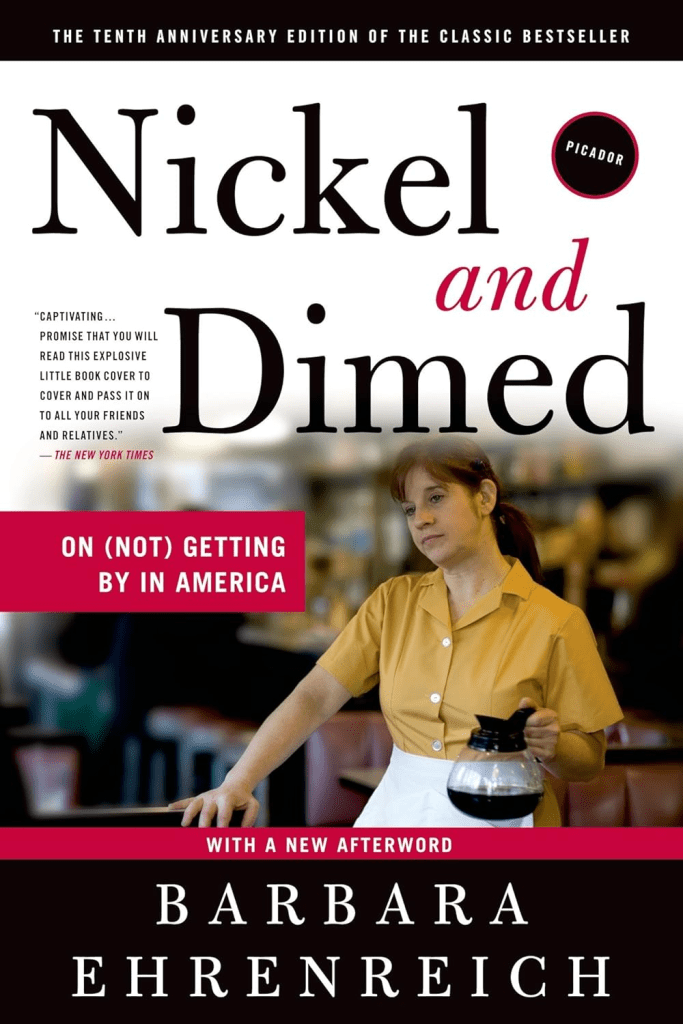
Nickel and Dimed: On (Not) Getting by in America by Barbara Ehrenreich

First published in 2001, Nickel and Dimed has remained scarily relevant for over twenty years. Between 1998 and 2000, writer Barbara Ehrenreich voluntarily joined the ranks of the working poor. She worked as a maid, nursing home aid, waitress, and Wal-Mart associate to understand the lived realities of millions of Americans below the poverty line. This book documents her experiences and struggles, such as working through pain and finding housing within her budget. The experiment ended when Ehrenreich faced homelessness, or, as she put it, she could no longer afford to work at Wal-Mart. Along with issues with housing, she also looks at food insecurity, the impact of manual labor on employees’ health, and hiring practices that veer into discriminatory. While the numbers have changed since this book was published, the facts have not. Nickel and Dimed remains a revelatory must-read for Americans today. 

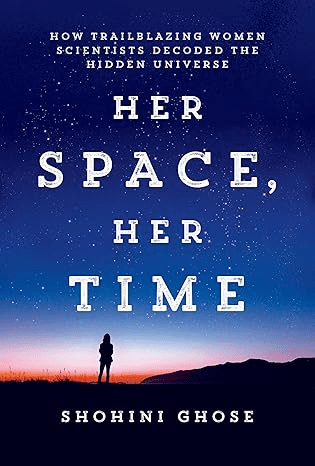
Her Space, Her Time: How Trailblazing Women Scientists Decoded the Hidden Universe by Shohini Ghose

Women have long been involved in scientific fields, but have rarely gotten acknowledged for their work until recent history. Her Space, Her Time finally gives some of these brilliant women their much overdue credit. In the late 19th Century, astronomer Annie Jump Cannon helped create Harvard’s Classification Scheme, which is still used today, while being paid less than her male counterparts. Lise Meitner and her nephew Otto Frisch published the first paper on nuclear fission. Meitner’s longtime collaborator Otto Hahn was awarded the Nobel Prize for this discovery, and Meitner was left in obscurity. We all know Marie Curie, but what about Harriet Brooks or Bibha Chowdhuri? Each chapter focuses on a different scientific top, such as astronomy, physics, or chemistry, and the women who helped revolutionize their fields of study. Ghose explains complex scientific concepts in an understandable way, perfect for science lovers who chickened out of taking physics in high school (read: me). I learned so much from this book, not only about science, but also about the phenomenal women who helped shape our understanding of the universe, from the smallest sub-atomic particles to the Big Bang.

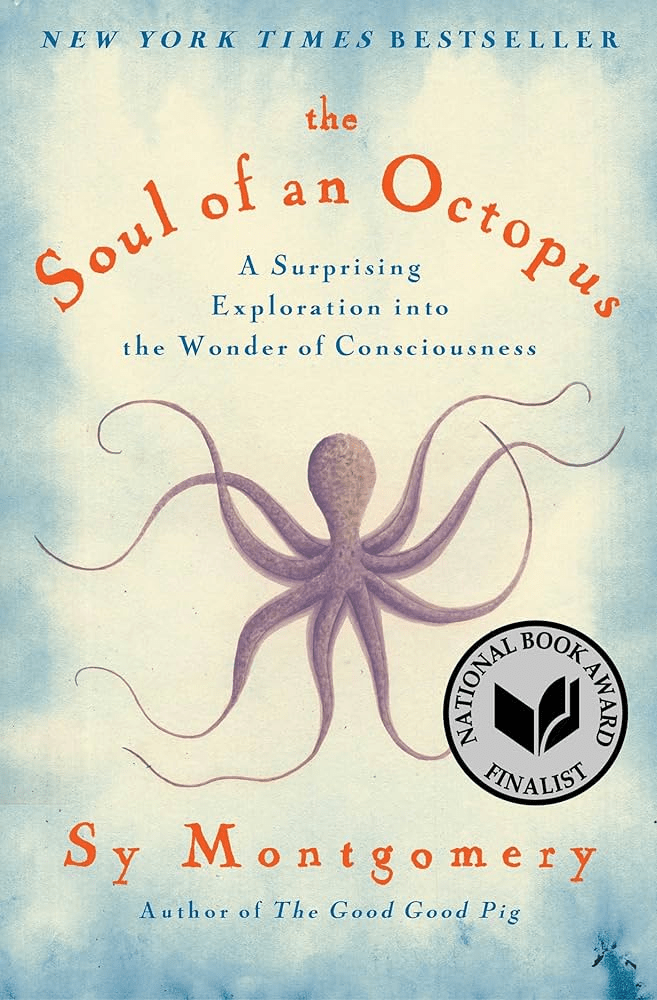
The Soul of an Octopus: A Surprising Explorating Into the Wonder of Consciousness  by Sy Montgomery


The intelligence and physiology of octopuses1 make them among the most fascinating animals on the planet. Naturalist Sy Montgomery was intrigued by octopus consciousness before she had the chance to meet one in person. At her casual visits to the aquarium, she felt that they were watching her as much as she was watching them. Montgomery first met the Pacific Octopus Athena, who eagerly latched on to Montgomery’s arm. Athena was strong enough to pull Montgomery into her icy tank, but instead was playful and curious. Thus began a series of octopus friends that Montgomery got to observe from their youth to death: Octavia, Kali, and Karma. Octopuses are highly intelligent animals that require toys and stimulation to keep them occupied; a bored octopus can be dangerous to itself and its handlers. They also have distinct personalities (Montgomery notes that Kali was aptly named) and strong emotions. Soul of an Octopus offers a compelling look at octopus consciousness both like and unlike our own. 

Patriot: A Memoir by Alexei Navalny

This story of Alexei Navalny’s life begins when he nearly died. While flying from Tomsk, Siberia to Moscow, he was poisoned with the nerve agent Novichok. He spent 18 days in a coma, and spent several months recovering in Berlin. Navalny knew who his would-be assassin was: Vladimir Putin. Navalny has been an outspoken critic of Putin’s regime and leader of the opposition party, the Anti-Corruption Foundation. He began writing his memoir while recovering from the poisoning, and ended it in prison. First is Navalny’s biography, where he recounts growing up before and after the fall of the Soviet Union and his education and early years as a lawyer. He writes about how he became the Russian opposition leader, and the dangerous and life-altering consequences for him and his family. One chilling chapter details Navalny returning to Russia after his poisoning, despite knowing that he will likely be arrested once he returns. The second half of the book is Navalny’s prison diaries and social media posts. He shares his experience in prison, including a hunger strike when he was denied medical care. The entries become sparser as his punishments in prison worsen, and Navalny would be killed in a prison above the Arctic Circle. Despite bleak circumstances, his writing never veers into self-pity or nihilism. Instead, he writes passionately about his work and condemns the invasion. Navalny also never loses his sharp sense of humor, adding some surprising moments of levity. While not an easy read, it is a powerful memorial and a stark reminder of how important it is to stand against authoritarianism. 

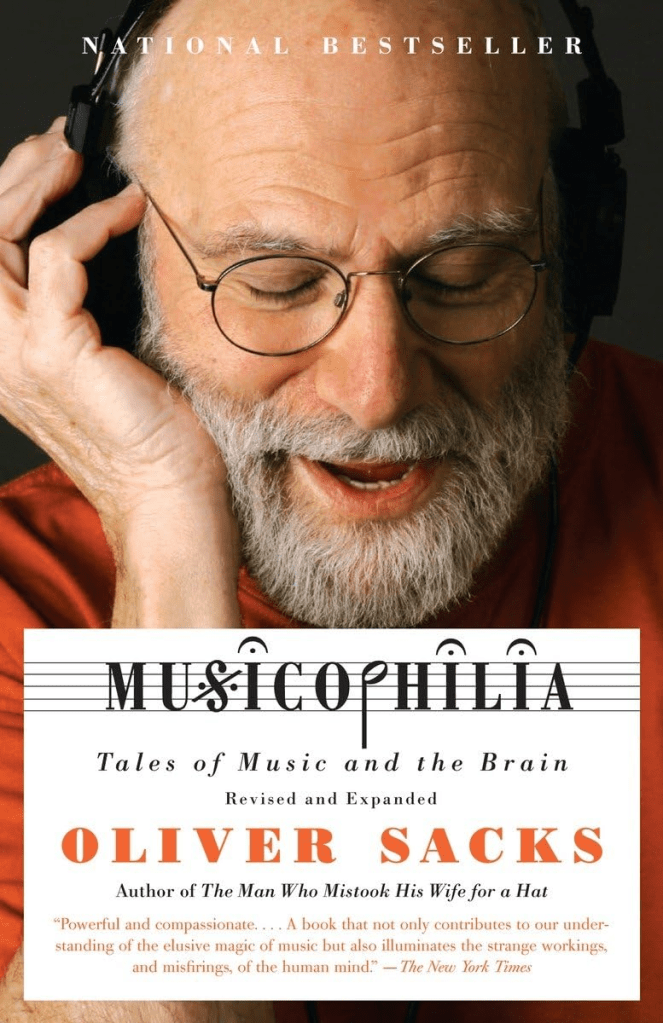
Musicophilia: Tales of Music and the Brain by Oliver Sacks

Ah, music! Who doesn’t love a great song that you can sing along to? Well, if you have amusia, a symphony may sound like pots and pans banging together. Musical hallucinations are real, too, and can cause a great deal of distress. But many of us love music, and our brains do, too. Oliver Sacks, best known for his work The Man Who Mistook His Wife For a Hat, takes a look into the good, the bad, and the utterly strange ways that music affects our brains. The book opens with the case of Tony Cicoria, a man who never had more than a casual interest in music. Then he was struck by lightning. Cicoria survived, but was struck by another passion: classical music. Within three months of his recovery, he was spending almost all of his time playing piano and composing music. His new obsession lasted decades. This is only one of the stories about the mysterious relationship between music and the human brain. Others include a man with amnesia whose memory lasts only seconds, but can still read and play music, a musician with severe Tourette’s whose tics diminish greatly only when he performs, among others. The therapeutic effects of music on people with Parkinson’s and Alzheimer’s is shown as well. Sacks never turns these narratives into freak shows, but writes compassionately about the power of music and the mysteries of the human brain. 

Fiction

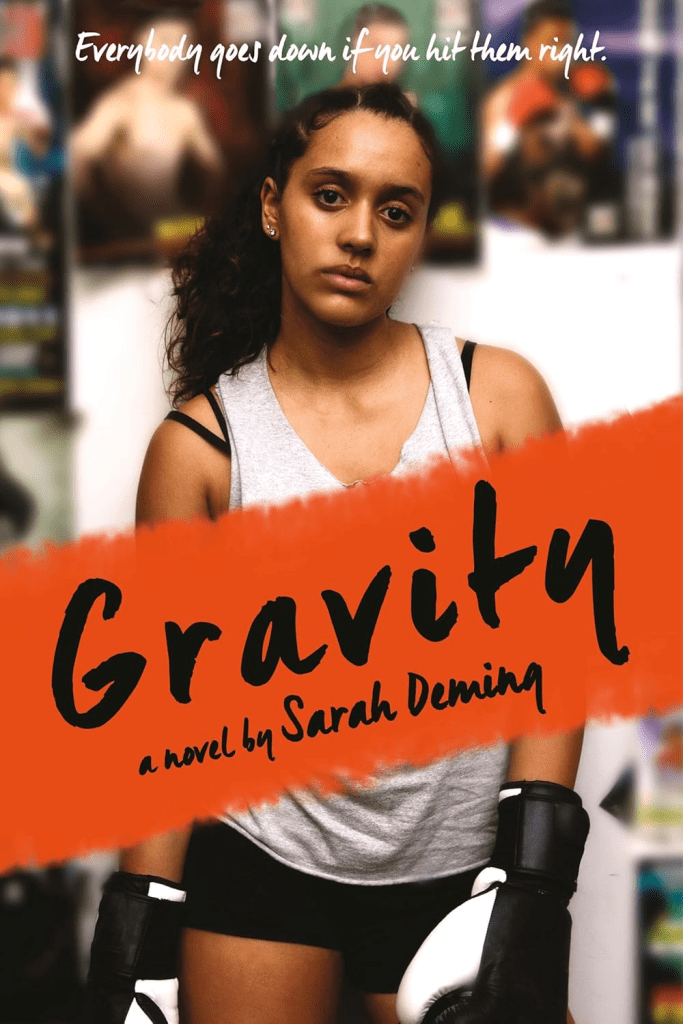
Gravity by Sarah Deming

Gravity Delgado is a force to be reckoned with. This young woman is a fierce, undefeated boxer, preparing for the 2016 Olympics in Rio. She’s been training since she was twelve, but her biggest challengers are the ones that she faces outside the ring. Her alcoholic mother, responsibilities for her younger brother, and a heady romance all threaten Gravity’s rising star. She still has her supportive aunt and cousin, as well as her found family at the gym in her corner. Still, Gravity’s biggest obstacle might be herself. The boxing matches are exciting to read, and include both the physical and mental aspects of a bout. Gravity makes mistakes and occasionally stumbles, but you’ll be cheering for her in and out of the ring. A novel that pulls no punches in the best way. 

The Truth About Everything by Bridget Farr

Fifteen-year-old Lark knows how to drive, fix an engine, and catch her own food, but she can barely read. She and her parents know the end is coming, and they’ll be the only ones left standing after the inevitable downfall of America. Raised by two doomsday preppers, Lark has never questioned the conspiracy theories that she was raised on. Then Lark gets her period for the first time. She thinks that she’s miscarrying, something that has happened to her mother many times before, but doesn’t know how she could have gotten pregnant in the first place. After her mother explains what her period is, Lark starts to wonder what else her parents haven’t told her? Lark secretly enrolls herself in high school, where new knowledge conflicts with everything she’s been taught at home. She’s hungry to learn, even when it means uncovering painful truths. But soon, Lark finds herself at a crossroads. What is the real truth? And what will Lark have to sacrifice for it? Pairs well with Educated by Tara Westover. 

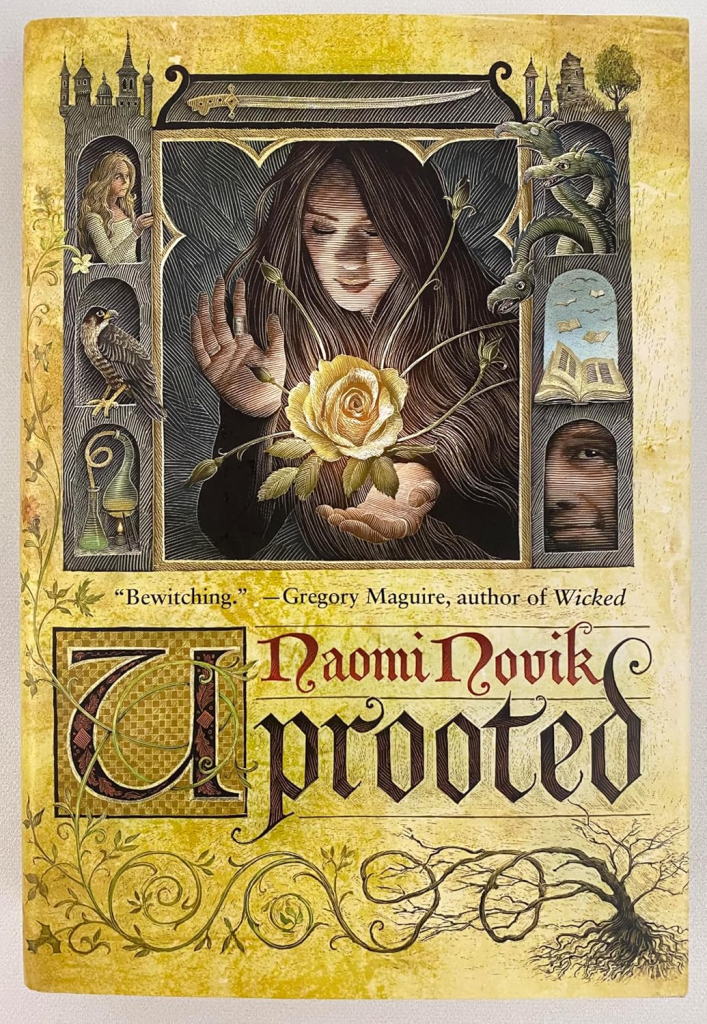
Uprooted by Naomi Novik

Once every ten years, the Dragon takes a village girl into his tower in the corrupt Wood. When she leaves a decade later, with jewels and finery, she is irrevocably changed and leaves the village forever. But the Dragon isn’t a scaly creature that breathes fire. He is a seemingly ageless, enigmatic wizard. Agnieszka has no fear of being taken. The Dragon only takes the most remarkable young ladies, and she’s nothing special. Though no one says it, everyone believes that Kasia, Agnieszka’s best friend, will be the one he picks. Yet it is Agnieszka the Dragon, reluctantly on his part. She is a witch, and her newly-found powers could be devastating if the corruption of the Wood reaches her. Agnieszka and the Dragon have a rocky start, but their mutual dislike of each other must be put aside when the Wood threatens her home. The well-developed characters, rich, Eastern European-inspired setting, and fantastic storytelling will leave you spellbound. 

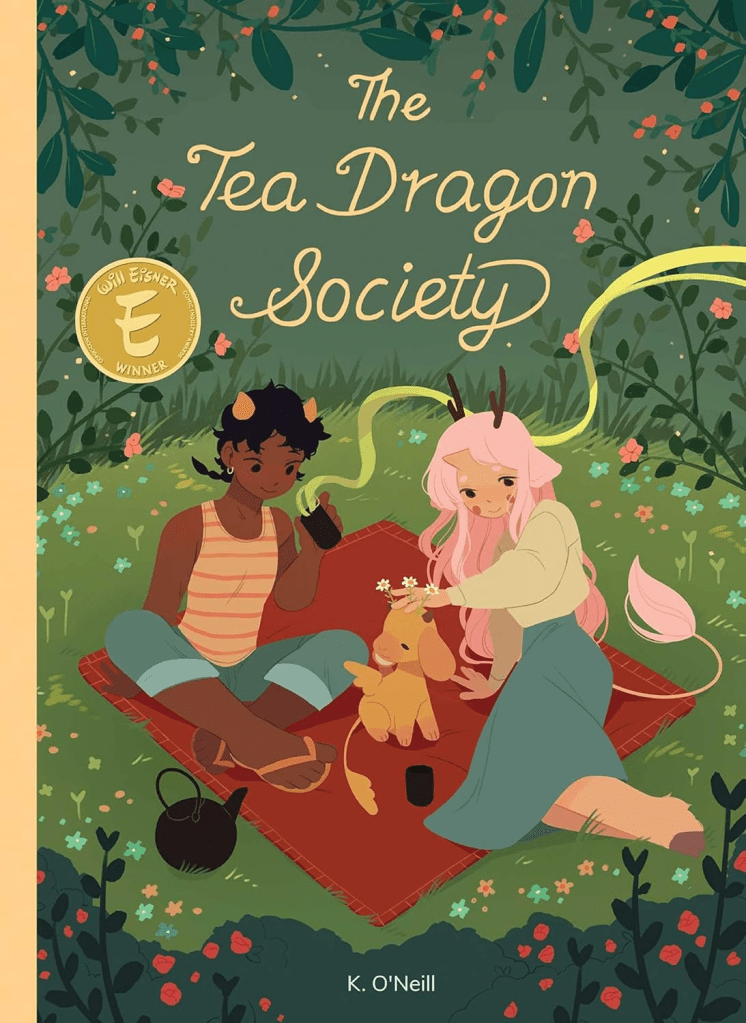
The Tea Dragon Society by K. O’Neil

Half-human, half-goblin Greta is an apprentice blacksmith in a world where the old crafts are fading. Greta helps a lost tea dragon – a small dragon that grows tea leaves – find its caretakers, and she is introduced to the Tea Dragon Society. Like blacksmithing, the care and cultivation of tea dragons is a dying art. The Tea Dragon Society is made up now only of Hesekiel, his partner Erik, and a shy girl named Minette. As a year passes, Greta learns to care for the dragons alongside Minette, assuring Hesekiel that the Tea Dragon Society will go on. I’ve enjoyed O’Neil’s other graphic novels, and The Tea Dragon Society embodies so much of what I love about their work. The artwork is soft, with no heavy outlines, adding to the whimsical feel of the world. It features a diverse cast in a simple but visually beautiful story. The Tea Dragon Society is the graphic novel equivalent of sliding into a warm bubble bath…maybe with a nice cup of tea. 

Long Way Down by Jason Reynolds

Will’s older brother, Shawn, has just been murdered. Will knows the rules of his neighborhood: don’t cry, don’t snitch, always get revenge. Will takes Shawn’s gun, and take the elevator from his eighth-floor apartment down to the first floor. The doors open on the seventh floor, and Shawn’s friend Buck gets on. Except Buck shouldn’t be here – he was already shot to death. On each floor, another ghost gets on. All of them played a role in Will’s life, and all of them were victims of gun violence. Each tells Will their stories, challenging his resolve. Can he kill his brother’s killer? Should he? This is a short, intense novel in verse that will stay with you long after you turn the final page.  

  1. Yes, that is the correct pluralization. Octopodes is acceptable, octopi is right out.  ↩︎

FFM 31: Defiance

Without in any way limiting the author’s exclusive rights under copyright, any use of this publication to “train” generative artificial intelligence (AI) technologies to generate text is expressly prohibited. The author reserves all rights to license uses of this work for generative AI training and development of machine learning language models.

July is Flash Fiction Month! I’ll be sharing short short stories here through the month of July. This story is a companion piece to FFM 5: Guardian of the Gate. More notes at the end of the story.

This is also the last day of FFM! All my stories will be up through the month of August, after which some of them will be taken down. I also won’t have any posts in August, as I’ll be hibernating. Thank you for reading!


Rage. My rage is so loud it drowns out my sorrow. Screams and sobs become one noise, the sound of pure grief, spilling out of my tortured throat. I would tear down the world, wrestle Thanatos to the ground, spit in Hades’s face. I would defy the gods and return my family to my side. Grief is a weapon more powerful than death, and I am a sharpened blade. 

I cannot defy the gods. Every man has faced grief, and no man has brought the dead back to walk in the sun again. Even attempting to bring my wife and child back to the world of the living is unnatural. We are born, we live, we die. Should I try to break this most unbreakable law, what I have left of my life will be mired in torment. 

What I have left is a hut along the river that took my family from me. I have nothing. Nothing that matters without them. Food has no taste. Nothing brings me joy. My bed is empty; my life is empty. If I defy Hades, I cannot win. I know this. But without my family, I have no reason to continue living. For their sakes, I will defy death itself.


WE’RE DOOOOOOOOONE.

This was the final challenge of FFM. I didn’t follow it to the letter (please don’t eat me mighty Hydra), but it was to write an inversion of your last story. Instead of doing that, I wrote an inversion of my Cerberus story, this time from the point of view of the guy trapped under Cerberus’s foot. I wasn’t happy with my 369er, since every paragraph should be a story in itself, and that wasn’t the case of the Cerberus story. So I tried it here, while still trying to do the id-superego-ego combo.

And now I’m going to sleep for a month. Wake me up when September starts.

FFM 30: Keyboard Gremlins and Drunk Snails

“Annnnd done!” I posted my final story for the month, copy-pasted links on the appropriate pages, and let out a happy sigh. I started to close my laptop, but a keyboard gremlin crawled out from between the keys. 

“Wait, wait! You can’t be done yet!” He tapped his clawed foot and crossed his spindly arms, annoyed. 

“But I am done. Thirty-one days, thirty-one stories, and now I need a nap and a cookie. Lots of cookies,” I told him. 

“But you haven’t bared your soul through fiction!” He protested. He reached down into the crevasse between H and J and pulled out a chart. “July 2022: first year of Flash Fiction, started because your cat died and you were having a hard time writing anything.” 

“Hey…why’d you have to bring that up?” I frowned. 

“July 2023,” the gremlin continued. “Flash fiction month became an important distraction as you learned to deal with a recently diagnosed medical condition.” 

“Dude…” I hid my face in my hands. “I’m fine now.”

“And finally, July 2024, with some newly minted PT–“

“Don’t say it,” I snapped. 

“Learning how to write again after the world exploded. You really put a lot on the page there. So, what’s going on for this year?” He flipped to the next page on the chart. “Two young, healthy cats, your own health is pretty good, and your mental health is way, way, way better than it was this time last year.” 

I stared at him, utterly confused. “So what’s the problem?” 

He flicked his tail in annoyance. “The problem is that you haven’t bled nearly enough onto the page. Your stories are normal and aren’t about meltdowns or your most personal fears. Where’s the edge?” 

“Did it ever occur to you that since I’m doing well right now…that this is just for fun?” 

The gremlin’s mouth dropped open. 

I put my finger on his head, between his curly horns, and pushed him back into the keyboard. 

A snail sitting on my shoulder hiccuped. “Why’d you keep that guy around?”

“He eats the crumbs that get between the keys,” I told her. “Want to do margs and karaoke, Progress?” 

A slow smile came across her slimy face. “Always.”


This one’s a bit personal. At the end of FFM, I like to write a little reflection about how the month has gone for me. And since I’ve started doing FFM, it’s always seemed to come with some big life problem. But this year has been just…normal. I’m a million times better than I was at this time last year. Progress isn’t measurable in the way that a lot of things are. But comparing this FFM to last year’s, I can see how far I’ve come. It’s a good feeling.

I’m not 100% fixed. I may never be. But I’m doing really well. As some of you may remember from last year: Progress is a drunk snail. It moves slowly, and never in a straight line.

It’s okay to not be okay.

But you know what?

It’s okay to be okay too. 💜

FFM 29: The Shadow and the Shield

Without in any way limiting the author’s exclusive rights under copyright, any use of this publication to “train” generative artificial intelligence (AI) technologies to generate text is expressly prohibited. The author reserves all rights to license uses of this work for generative AI training and development of machine learning language models.

July is Flash Fiction Month! I’ll be sharing short short stories here through the month of July. This is the direct sequel to FFM 27: Sleepless in Tír na nÓg. More notes at the end of the story.


Gráinne ran at her trainer, thrusting forward with her rapier. He easily parried the blow. “You’re being too obvious, Your Highness.”

She glowered and took a step back. “Fair.”

Scurry, her trainer was a svelte man with a busy red tail and fingers with an extra knuckle, lowered his sword. “You can’t let your emotions rule you on the battlefield, Ma’am.”

“I know.” She shook out her arm and resumed her stance. “Again.” 

He tipped his head one way, then the other. “No, I don’t think this will help you today. I think you need to hit something.” 

“I am hitting something,” Gráinne said through gritted teeth. 

Scurry’s tail waved playfully. “You haven’t managed to land a single hit on me yet. You’re a pixie in a tankard of ale.”

The comparison was not a flattering one. She was flailing with no real purpose, and couldn’t manage to get herself out of what she’d fallen into. But, unlike a pixie, Gráinne actually wanted to get out. 

“Again,” she demanded. 

“Very well,” Scurry said with a sigh. 

They sparred for two minutes more, until Scurry disarmed Gráinne and knocked her on her arse. He chittered, disappointed, then offered the princess a hand. “Let’s take a break. Then we’ll work on something new.”

“Fine.” Gráinne sheathed her sword and went to the wooden benches that ringed the practice yard. Unsurprisingly, Alex was sitting next to her gear “What are you doing here?” She snapped. 

“Waiting for you,” he told her. 

“And you couldn’t wait in the castle?” Gráinne took several gulps from her waterskin. “Find something to do with Uncle Lex.” 

Alex shook his head. “He had to help in the medical wing.” 

That explained it. Alex had never liked the medical wing, a dislike that had turned to dread since the war began. Uncle Lex, who’d been trained in both magical and mundane healing, was often called there on his visits to the castle. With their parents gone at the moment, Alex had few options for someone to tail. 

“Will you please stop following me?” Gráinne turned her back to him. 

“But Gráina…” He tugged on the hem of her tunic. 

She spun around and slapped him. “I said go away! How hard is it for you to just go away?”

This time, Alex listened. He ran back to the castle, holding his stinging cheek while tears ran down his face. 


Uncle Lex was called in for negotiations. The agreed upon course of action was bed with no supper for Gráinne, and a talk with Alex about “alone time,” for both Gráinne and himself. 

“We all need to be by ourselves sometimes,” Uncle Lex told the prince, while silently giving thanks that he didn’t have children. “I know you like to be with people, and I know that things are scary right now. It’s okay to be scared. But when your sister tells you she needs some space, you need to listen. Do you think you can do that for me?”

Alex looked down at his feet. “Okay.”

“Good.” Uncle Lex smiled at his nephew, and namesake. “I need to visit the library. Do you want to go with me, or go to your room for a little bit?” 

It was a hard decision: a room with nothing but books, or being left alone? After a minute, Puck said, “Can you find me another book about electricity?” 

“Can do.” 


“And read Caps for Sale and do funny voices?” 

Uncle Lex smiled. “Of course.” 

Later, when Alex was totally absorbed in a book about circuits, Uncle Lex went to check on his niece. She had flung herself on her bed and was crying. 

“Gráinne, I brought you supper.” Uncle Lex sat at the foot of her bed with a plate of battered fish and mashed potatoes. 

Gráinne sat up slowly. She wiped her cheeks and sniffed. “I thought I wasn’t supposed to have supper.” 

“You’re a growing girl. But no dessert.” 

Gráinne accepted the plate and silverware from her uncle. “Thanks.” She didn’t eat right away, but stared sullenly at her food. “I didn’t mean to hurt him.” 

“I’m sure you didn’t.” Uncle Lex put his hand on top of her head. “But it happened. Do you know why?” 

Tears swam in Gráinne’s eyes again. “Why can’t he learn to fight? Why do I have to?” 

“You don’t have to. You like to. Your brother doesn’t like it, and he’s not very good at it, so he doesn’t have to,” Uncle Lex said. 

“But if he could fight then maybe–” she hiccuped. “Maybe I wouldn’t have to protect him and…” 

Realization dawned over Uncle Lex. “And maybe he wouldn’t have fallen?” 

Gráinne nodded, tears falling from her chin. “I couldn’t protect him, and…and…”

Uncle Lex put his arm around his niece’s shoulders. “You did the best you could.” 

“But it wasn’t enough and we were only at the ruins ‘cause I wanted to go and…” She threw herself down on the bed, hiding her face in her pillow.

“Shh…shhh. It’s okay.” Uncle Lex rubbed her back. “You saved him, and you’re both safe. That’s the most important thing.” He gave Gráinne another minute to cry. When she finally raised her head and caught her breath, he said, “He feels safe with you. That’s why he follows you around so much.” 

Gráinne tipped her head to get a better look at her uncle. “You think so?”

“I know so.” 

Night fell, and with it came Alex’s nightmares. 

But when he woke up gasping, Gráinne was there, with a wooden sword in hand. She didn’t have the right words like her parents always seemed to, but she held up her sword so he could see it in the pale crystal light. “Go back to sleep,” she said. “I’ll keep all your nightmares away.”


Another challenge day!

CHALLENGE: IDIOMATIC

Element 1: Your story must contain an idiom or idiomatic expression; by which we mean an expression that is used non-literally. Confused? You’ll probably recognize some examples here.

Element 2: Your expression must be entirely made up.

A pixie in a tankard of ale = flailing, but not trying to hard to get out of the current situation. Fantasy lends itself very well to new idioms.

Other FFM stories from this universe:

FFM 3: Love is a Battlefield
FFM 8: Queen of Nothing
FFM 15: It’s Not Rocket Science
FFM 18: The Goddess in the River
FFM 24: Summer Blues

FFM 28: Unclaimed Territory

Without in any way limiting the author’s exclusive rights under copyright, any use of this publication to “train” generative artificial intelligence (AI) technologies to generate text is expressly prohibited. The author reserves all rights to license uses of this work for generative AI training and development of machine learning language models.

July is Flash Fiction Month! I’ll be sharing short short stories here through the month of July. More notes at the end of the story.


“Eight years.” Carver rubbed the bridge of her nose. “We’ve been in space for eight years, and now you’re telling me we can’t land?”

“The problem is we’re not near our claim, Captain,” Beacon, one of the company’s solicitors, told her. “Our claim is specifically for Territory Zeta-Ogden-Five, which this is most certainly not.” 

“As far as we know, our claim is uninhabitable,” Carver protested. In the years since launch and finally reaching Port 895-b, colloquially known as “That Ugly Planet,” unethical spacers had used the land reserved for colonists as dumping grounds. Specifically, dumping parts of their nuclear engines, potentially poisoning the land, air, and ground water for generations to come. Spacing hazardous waste was protocol. This reeked of bad actors, and Carver was having no part of this. “And our supplies won’t hold out for another trip back. We land here, or we starve in orbit.”

Beacon fidgeted with his handheld computer. “This area hasn’t been claimed by anyone. That means you won’t be under the jurisdiction of any government. Any emergency signals won’t be answered, off-world supplies won’t be delivered, you’ll have no additional funding…” 

Carver looked down through the wide windows to the planet below – yellow and gray and everything they had been seeking. The most viable landing spot was half a world away from their legal claim. Safe from radiation, but maybe not much else. She didn’t know what awaited them outside of the territory that had already been mapped out for the colonists. No one did. 

“We don’t have much choice,” she said. Maybe they could ration enough of their supplies to survive a trip back to Earth, or scavenge along the way. It wouldn’t be easy, but they might make it back. “It’s not all up to me. Four hundred souls on this vessel, and I’m not turning back or landing without their say-so. Let’s take a vote.” 

Carver stood in front of the would-be colonists and explained the situation: the good, the bad, and That Ugly Planet’s unknown risks. “If we land, the Allied Western States will not help us. We’d essentially be declaring ourselves independent. It means that we would owe them nothing, but we’d be taking on a big risk. Maybe bigger than some of us signed up for. If we turn around now, we might make it home. If we land, we might survive, we might not. But I can’t be the only one to decide.” 

After a few minutes of murmuring, a woman named Remember stood up. “I signed up for a one-way trip. I vote we land.” 

Many others, if not all, agreed with her. Eventually, the votes were counted, and the ship finally set its landing gear on terra firma for the first time in nearly a decade. 

Carver called the colonists together before they stepped on land. “The minute we set foot out there, we are independent. And before we do, I think it’s best that we establish our own agreed-upon code legal.”

That Ugly Planet’s first code legal was simple, but it was upheld throughout the planet’s history as one of its fundamental documents: 

Don’t be a dick.
Don’t be a coward.
Don’t be a hero.
Be excellent to each other, and survive on. 


This was one of the prompts I got for the Day 22 challenge, where participants challenged each other with types of documents to include and write a story about. Holly gave me The Mayflower Compact, which was such a cool idea. However, I couldn’t seem to make it work for an epistolary story, which was also part of the challenge.

The name Carver comes from John Carver, one of the signers of the Mayflower Compact. Remember is the name of the main character in Dear America: Journey to the New World, a book I loved as a kid. And the other big reference…well, you should know that.

FFM 27: Sleepless in Tír na nÓg

Without in any way limiting the author’s exclusive rights under copyright, any use of this publication to “train” generative artificial intelligence (AI) technologies to generate text is expressly prohibited. The author reserves all rights to license uses of this work for generative AI training and development of machine learning language models.

July is Flash Fiction Month! I’ll be sharing short short stories here through the month of July. More notes at the end of the story.


The queens hadn’t had a good night’s sleep in over a month. No queen ever slept easy when their country was at war, but Fiadh and Mairead had another problem keeping them awake. A small, squirmy blond problem named Alexander. 

He’d always been a happy child, with a ready smile and a musical laugh. But then he’d fallen, and that cheerful, confident boy disappeared. It wasn’t surprising. He’d witnessed something that no child should see, trapped and alone. 

After that, Alex refused to be left alone for even a few minutes. When his mothers couldn’t spend time with him, he trailed behind his sister, Grainne. And if she couldn’t be with him, he’d go to the kitchens or follow the pages as they did their duties. 

Every night, Alex drank soporific tea to help him sleep. He would fall asleep peacefully in his own bed, then wake up screaming. The only way he could fall asleep again was snuggled between his parents, safe. 

It was getting to be a problem. 

Alex kicked in his sleep. He rolled. He slept sideways. 

And he still had nightmares. 

There was a tea for dreamless sleep, but it was a powerful blend, too stong for a child. If Alex drank too much, there was a chance that he’d be asleep for days. Fiadh had remarked that she and Mairead should down a few cups and actually get some rest. 

Then there was the matter of Grainne. She’s always been a serious girl, but she’d become sullen. She trained from dawn til dusk with any weapon she could get her hands on. She threw herself into magic practice, especially geomancy, which she’d always struggled with. 

As much as Fiadh and Mairead had tried to shield Alex and Gráinne from the war, it had found its way to them. And its touch had changed their children irrevocably. 

Things came to a head at breakfast one morning. “Mam and I need to leave for a few days,” Mairead announced. Alex and Gráinne looked up sharply. 

“We’re meeting with some potential allies,” Fiadh told them. 

“You can’t do that here?” Gráinne frowned. 

“This group hasn’t exactly been friendly with us in the past. It’s better to meet them on neutral ground,” Fiadh replied, then stabbed her sausage with such force that her fork scraped the bottom of her plate. 

“Better to have strange bedfellows than no bedfellows,” Mairead said. “Especially now. Uncle Lex is going to come stay with you for a few days.” 

Normally, they would have loved this. Uncle Lex spoiled the kids rotten and was something of a mischief-enabler for Alex. But at this announcement, Gráinne shoved her chair away from the table. “I’m going to the practice yard.” 

“Sit for a minute. Let’s talk about this,” Mairead started, but the princess was already gone. 

“I’ll grab her,” Fiadh offered, then started after Gráinne. 

Mairead looked across the table at Alex. He’d been voracious before, but now he stared at the food on his plate as if it were made of stone. “You know you’re safe here, right? Nothing will ever hurt you here. And Uncle Lex will keep you both safe.” She reached across the table and squeezed his hand. 

“Do you really hafta go?” Alex asked, still staring at his meal. 

“I can’t let Mam go alone. But I will miss you and your sister terribly, even if it’s only for a few days.” 

“Then don’t go.” 

Mairead let out a small, sad sigh. “I’m not worried, mo stór. And do you know why?”

Alex finally looked up. “Why?”

“Because I know you and your sister will look after each other.” She smiled. “Whatever happens.” 

“But I can’t fight like she does.” 

“Taking care of someone isn’t just about fighting. It’s about being there.” She scruffed Alex’s yellow hair. “Do you think you can do that for her?”

Alex nodded. “I think so.” 

“Good.” Mairead stood up and kissed Alex’s brow. “You didn’t finish your breakfast…but I think there’s a bit of apple tart left over from last night. Should we share it with Mam and Gráinne?”

Alex shook his head. There was a mischievous glint in his eye that had been absent for too long. “They can have cold breakfast.”


Yep, another one. But, hey, I’m caught up now! Poor young Puck (Alex) had a bit of a traumatizing incident with far-reaching consequences when he was young. There were a couple images in my head of him trying to sleep after, and the first one is in here. The second one will be in the next part. I don’t love dividing my stories for FFM into multiple parts, but at 600+ words I didn’t think I’d be able to give the final scene the room it deserved.

Also, it’s around this time in his life that Alex started to be called Puck. He’s not quite there yet, though.

Other FFM stories from this universe:

FFM 3: Love is a Battlefield
FFM 8: Queen of Nothing
FFM 15: It’s Not Rocket Science
FFM 18: The Goddess in the River
FFM 24: Summer Blues

FFM 26: Brain Power

Without in any way limiting the author’s exclusive rights under copyright, any use of this publication to “train” generative artificial intelligence (AI) technologies to generate text is expressly prohibited. The author reserves all rights to license uses of this work for generative AI training and development of machine learning language models.

July is Flash Fiction Month! I’ll be sharing short short stories here through the month of July. More notes at the end of the story.


It was kind of mind-blowing when I realized I fell into the category of “neurodivergent.” Yeah, there were signs, like sensory issues when it came to pencils or getting overwhelmed in crowded places. But for years I was just “quirky.” 

But now I’m neurodivergent, and the new label takes some getting used to. I’m still the same person. I still prefer round pencils and quiet spaces, I still eat my pizza backward, I can still turn your bones into liquid with my brain. 

I have friends, a good job, a pretty normal life. I’m pretty happy with the way things turned out. I learned how to manage my “sensory processing issues” pretty well now, and it’s been years since I accidentally turned anybody’s bones to liquid. 

“Neurodivergent” is a really broad category and I’m sure the label has been great for a lot of people. I still don’t know how I feel about being “neurodivergent,” but it’s more positive than “guy who can turn your bones to liquid,” so I’ll take it. 


A couple years ago I realized that I fell under the umbrella category of “neurodivergent.” This was so mind-blowing that I had to get up and pace and talk to myself. I generally find “neurodiverse” and “neurodivergent” a useful if imperfect label in the general sense, but my feelings about the term as it applies to me are complicated. I wanted to explore that a bit, but feelings are scary so I leaned on humor instead.

FFM 25: As the World Falls Down

Without in any way limiting the author’s exclusive rights under copyright, any use of this publication to “train” generative artificial intelligence (AI) technologies to generate text is expressly prohibited. The author reserves all rights to license uses of this work for generative AI training and development of machine learning language models.

July is Flash Fiction Month! I’ll be sharing short short stories here through the month of July. More notes at the end of the story.


It was the summer of Titanic

I wasn’t allowed to watch the movie (PG-13 rating), but everyone knew about Jack and Rose. We cut out pictures of Leonard DiCaprio from magazines and found pictures of Titanic in the encyclopedia. Some of us even read the articles. 

We played Titanic, like we were playing Barbies or House. Abby, my best friend, and I would stand on her pool deck, clinging to each other. We called each other Rose and Jack, and repeated lines we knew from the movie. We said that we would rather die together than live apart, and jumped into the pool together, giggling. We did the dead man’s float until one of us had to come up for air, then we’d run back up to the deck and do it all again. 

Summer meant staying up until ten o’clock, playing street hockey in the morning and swimming at Abby’s in the afternoon. Or it meant pooling change with the other kids to buy candy at 7/11, buying a sugary smorgasbord with quarters and times. It meant riding bikes down by the river, coming back with muddy tires and muddier shoes. 

In summer, the world was ours, and I never wanted it to end. 

But somehow, August came. 

I called Abby to ask if I could come over. “I can’t,” she said in an annoyed voice. “My mom’s making me try on uniforms.” 

My heart sank. It wasn’t just an unwelcome reminder that summer was coming to an end. If Abby was getting uniforms, then the worst thing was really happening. She was going to a different school. We had both pretended like it wasn’t happening, but we couldn’t ignore the evidence anymore: a plaid skirt and white polo shirt. 

“Awww,” I whined. “That stinks. Can you come over tonight?”

“Um…maybe. I’ll ask my mom. MOOOOOOOM! Vanessa asked if I can come over later.”

Abby came over for dinner. We had pizza and soda and I showed her what movie my mom had finally let me rent. 

“No way!” She squealed. We ran to the living room without even cleaning up our dishes and popped the first VHS tape into our VCR. I turned off the lights, and we shrieked with excitement while the opening credits rolled over sepia footage and slow, melancholy music. 

We were captivated. We sighed at Jack and Rose’s kiss on the bow, gasped when we saw Rose’s hand against the foggy car window (they weren’t married!) and cried when we saw Leo sink beneath the icy waters. 

The credits rolled, and Celine Dion’s voice soared over us. “Do you think it was a dream, or do you think she died at the end?” Abby asked.

“I think it was a dream,” I said. I didn’t want Rose to be dead, even if she was old. 

“I think she died.”

I wiped my eyes. “Maybe.” Abby’s eyes were equally wet. When I looked at her, I knew that we would never play Titanic again.

“But then she could be with Jack forever,” Abby said, and smiled through her tears. 

“Yeah.” I paused. “We’re always going to be friends, right?”

“Yeah. Best friends.” She hugged me, and then we belted together:

You are safe in my heart
And my heart will go on and on


It’s my favorite challenge of FFM, the David Bowie challenge! At first I wasn’t sure what to do…then I remembered what might be the most 90s song ever, “My Heart Will Go On” by Celine Dion. Then nostalgia did the rest of the work for me.

Element 1: Choose one of the decades of David Bowie’s career. Your story must be set in your chosen decade. It must be made clear in your story, in some way, that it is set in this decade. (You aren’t allowed to switch up the century; no 1860’s here, sorry.)

Element 2: You must include a song from the decade that you chose in your story. It does not have to be a David Bowie song, but we’ve included some examples for you below. The song must appear in the story as an actual song (i.e.; played or sung), not just referenced or used as a prompt.

HARDCORE MODE: Use the name of the example Bowie song for your decade in your story, word for word, or as the title of your story. I almost went with “Changes” but that seemed too easy.

You can take Bowie’s glitter, but you can never take his sparkle.

FFM 24: Summer Blues

Without in any way limiting the author’s exclusive rights under copyright, any use of this publication to “train” generative artificial intelligence (AI) technologies to generate text is expressly prohibited. The author reserves all rights to license uses of this work for generative AI training and development of machine learning language models.

July is Flash Fiction Month! I’ll be sharing short short stories here through the month of July. More notes at the end of the story.


The efficiency didn’t look like much, and that’s because it wasn’t. 

It was a square room with one door, one window, a refrigerator, a sink, an oven, and a few cupboards. The bathroom was scarcely larger than that of an airplane’s, but usable, if you didn’t mind your knees hitting the sink when you sat. 

Other than that, it was barren. But the linoleum wasn’t too cracked, and the noise from the street wasn’t that bad…Theo checked the spreadsheet on his phone once more. Split between him and his two friends, they would be able to afford rent and have a little extra money for the summer. 

“Well?” Brody peered over his girlfriend’s shoulders at Theo. Peyton leaned against Brody, his arms on her hips. His fingertips reached down to the inside of her torn jeans. Another reminder that Theo’s friends had a very active love life, and they were asking him to share a room with him for two and a half months. He’d constantly be the third wheel, and there’d be almost no privacy. 

“C’mon, man, we can’t do it without you,” Brody added hopefully. 

Theo looked around the room again. They could make do with air mattresses, maybe hang a sheet up between their “beds” for a little privacy. “Alright,” he said, a nervous smile coming to his face. “Promise you won’t have sex while I’m here, and I’m in.” 


Theo stared at the calendar on the wall of his dorm room. Two weeks until finals, and then his first year of college would be over. It’d be a relief when exams were over, but he wasn’t sure he was ready for the school year to end. 

His phone rang. Mom. 

Signing the rental agreement had been easy. Telling his mom his summer plans would be a lot harder. Ignoring her phone call, though, would result in several more until Theo finally picked up. He was the oldest kid in the family, the first to leave home. His parents had gotten better about giving him space to live his life, while still making sure that he wasn’t dead in a ditch somewhere. Mostly. 

“Hello?” Theo answered. 

“Hi honey.” Lena said. There was excitement in her voice. “How’s school?” 

They talked for a few minutes about Theo’s classes and the glut of homework he had. She updated him on his younger sisters and the dog, then told him, “I ran into Mrs. Saunders from church the other day. She asked about you. I told her you’d be coming home for summer.” 

“Well, actually, I was thinking about that…” Theo started. 

“I’ve got good news! Her husband owns a landscaping company. She says that he always has a few extra job openings in the summer, and she’ll put in a good word for you.”

“Um…that’s great.” Theo wound and loose thread from the hem of his t-shirt around his finger. “But I thought I’d…stay up here for the summer?”

There was a pause. “What?” Lena asked after a moment. “But you haven’t been home since March.” 

“I can still come back and visit,” Theo said quickly. His next words rushed out. He had to tell her everything before he lost his nerve. “I found a place with Brody and Peyton. We’re going to rent it for the summer.” 

Another pause. “You just found an apartment, and didn’t tell us?” 

“Well…it’s only for a couple months. They’ve already got jobs for the summer, and I’ll get one up here too.” 

Lena clicked her tongue. “Did you already sign an agreement? Put down a deposit?”

“Yeah.” Theo smiled. He’d been nervous, but signing it and handing over his cash had felt so real. And he and his friends had done it by themselves. It was something to be proud of.

“Did you have anyone else look over before you signed it?” Lena asked. 

“Um…no?” It had been fairly straightforward – no smoking, no pets, trash pickup on Tuesday. “Why?” 

“So you could be sure you weren’t getting screwed over.” Lena’s “mom voice” was coming out, the one that was usually reserved for telling Theo to clean his bedroom or stop fighting with his sisters. “Theodore. Always have someone else look over a contract. You don’t know what you’re getting into.” 

“What I’m getting into, Mom, is an apartment. It’s fine.” 

“It’s not!” Lena snapped. “You’re just a kid. Does everything work in this place? Is it in a safe area? Or did you just see a ‘for rent’ sign and jump at it?” 

Anger creeped up inside Theo. “I’m not stupid, Mom. Obviously we tested everything,” he lied. “And it’s close to school. So it’s fine.” 

“Fine, fine.” Lena sighed. “It’s done. Just remember what I said for next time.” 

“I will, Mom.” Theo’s lips pressed into a thin line. “I have homework to finish. Talk to you later?”

“Yeah, go get your work done. Love you.”

“Love you too.” 

Theo ended the call. I’m not just a kid, he thought. And by the end of the summer, I’ll prove it.


No challenge today. I’m a bit behind and my brain is soup. Less than a week til the end of Summer Reading and FFM. And I can’t wait. 😴

I wanted to write a story about Theo sans Puck, just to get to know him a bit better. The biggest theme in my novel is “earning adulthood.” Theo strives for independence, while Puck has to be dragged kicking and screaming into it.

Other stories from this universe:

FFM 3: Love is a Battlefield
FFM 8: Queen of Nothing
FFM 15: It’s Not Rocket Science
FFM 18: The Goddess in the River

FFM 23: Your Librarian Believes in You!

Without in any way limiting the author’s exclusive rights under copyright, any use of this publication to “train” generative artificial intelligence (AI) technologies to generate text is expressly prohibited. The author reserves all rights to license uses of this work for generative AI training and development of machine learning language models.

July is Flash Fiction Month! I’ll be sharing short short stories here through the month of July. More notes at the end of the story.


Your librarian believes in you!

She believes that you can read all five books for the summer reading challenge. Really, you can! You might even find a new favorite!

Your librarian knows that you can go to storytime without crying, not even once. He knows how brave you are!

Your librarian knows that you’ll be a great volunteer. They think you ask good questions and pay attention to your tasks. Thank you so much for all your hard work!

Your librarian believes that you can use the library catalog. She’ll even show you how if you have questions. And she really trusts that you’ll be able to use it to look up every. Single. Book. on your school reading list, so she doesn’t have to. 

Your librarian is excited that you’re excited to use the computers. He would also like to let you know that you are so much smarter than that scary game on Roblox, and maybe there’s an even more fun game on the computer for you to play. 

Your librarian knows how enthusiastic you are about volunteering here. They really appreciate how you try very hard. They really think that you can do all your tasks correctly and follow simple instructions, even after you’ve proven them wrong. Keep trying!

Your librarian believes…that she needs a nap.


I had a different story planned, but it’s been a hectic day. Eight days until the end of the summer reading program. I’m exhausted.

Your librarian believes that you can Show Up for Libraries! (ALA) The Institute of Library and Museum Services is in danger of losing funding or being dismantled entirely. If you have just 5 minutes, call your representative and tell them to support IMLS and libraries! Read more about Executive Order 14238, which targets IMLS and other agencies.

“When a library is open, no matter its size or shape, democracy is open, too.”

― Bill Moyers