Any use of this publication to “train” generative artificial intelligence (AI) technologies to generate text is expressly prohibited. I do not consent to this work being summarized or fed to generative AI, and anyone who does so is a big dweeb.
July is Flash Fiction Month! I’ll be sharing short short stories here through the month of July. This is more of a companion piece to the mess that was FFM Day 3: Once There Were, but you don’t need to read it to understand it. In fact, I insist that you don’t. Hoping to get the second part of Gráinne and Raghnall’s story up tomorrow.
Samasita failed. You are allowed to be angry at her for that.
But do not forget how she tried.
She befriended Copper and Brass when unicorns were beginning to shy away from humans. We did not know it then, but they felt the magic that sustained them fading away. They were right to mistrust us. We didn’t hunt unicorns, we never meant to harm them. But we kept shaping the world to what we wanted, and couldn’t see how these primal beings could be hurt by that.
All the magic that was draining away fed the great beast. It was a creature of absence, sustaining itself from magic leaking in the gaps in the world.
Samasita saw what the rest of us did not. She saw a world-devourer, and she saw Copper and Brass suffering. Copper and Brass took her deep below the crust of the earth, and allowed her to reach into the mantle, and bring the world’s glow back to the surface. Only this could banish the great beast. She placed it in her lantern, then she and Copper and Brass rode towards the great beast.
But Copper and Brass were getting smaller. The closer they got to the great beast, the more they shrank. Samasita asked them to turn around. She pleaded. She begged. Each time, they refused.
By the time Samasita reached the maw of the great beast, Copper and Brass were only to her knees. But Samasita did not cower, nor did her friends. Lantern-keeper and unicorns ran into the beast’s maw.
The great beast did not melt away. It did not disperse back to the cracks and gaps of the world. It devoured Samasita, Copper, and Brass.
But it did not devour the lantern, and the golden treasure kept within.
The great beast stopped growing after that, and we have the lantern still to hold it at bay.
I am sorry, too, that unicorns are now found only in dew drops and motes floating in sunbeams. I am angry, too, how we still live in fear of darkness.
But Samasita was the only one among us who was brave enough to face the great beast, and we are still here because of her.
Any use of this publication to “train” generative artificial intelligence (AI) technologies to generate text is expressly prohibited. I do not consent to this work being summarized or fed to generative AI, and anyone who does so is a big dweeb.
July is Flash Fiction Month! I’ll be sharing short short stories here through the month of July. I had to miss a few days due to real-life stuff, but I’m hoping to catch up! Gráinne and Raghnall are both characters in the novel I’m writing. She’s made a few appearances in last year’s FFM. I had intended for this story to be a bit more action-focused, but I enjoyed exploring more of the world and the politics of it. So it’s a two-parter now.
I was inspired to write about my selkie character after reading AmehanaRainStarDrago’s story about her selkie character on deviantArt! Read it here: Interrupted Sleep
When Gráinne had been at sea, Marcaíocht Conán was the only pirate ship she couldn’t capture. After becoming queen, she had done the only thing she could to neutralize the ship and its selkie captain. In a blow to both her pride and her obstinacny, Captain Raghnall and his crew became privateers. Politically, it was a wise move. While the selkies fell under the purview of Gráinne’s crown, they had always held their own shores and culture apart from the rest of Tír na nÓg. The selkies were a nation within a nation, with Raghnall now serving as seal lord.
Personally, Gráinne thought that Raghnall had made it his life’s mission to vex her. And it was working.
It was difficult enough to find a neutral meeting ground for them. The castle put Gráinne at an advantage, and Raghnall refused to meet her there. The sea was Raghnall’s domain, and Gráinne refused to meet him there. Their compromise was a naval ship docked in one of the permanent harbors.
Raghnall, as usual, came to the meeting naked. He left his seal skin with his first mate, and refused to don humanoid clothing. Gráinne knew that he was hoping to prey on the prudishness of her human side. That tactic had never worked, and she was, frankly, tired of it.
Her brother’s suggestion that she go to the meeting naked to turn the tables on Raghnall had been soundly ignored.
The queen and seal lord sat in the captain’s quarters. “You’re not chilly?” Gráinne asked after the proper greetings had been exchanged.
“No.”
“There’s evidence to suggest otherwise.”
Raghnall remained nonplussed. “The bipedal body is hardly perfect. I’m sure you understand that well. To what do I owe the honor of this meeting?”
“I need to speak first to Captain Raghnall, then the seal lord.” Gráinne unrolled the most recent sea charts the navy had provided her. “The vortices in the northeast. You’ve gotten closer to them than any other ship has dared.”
“Better,” Raghnall said with a cocky tilt of his head. “I’ve swum among them.”
Despite his often infuriating nature, it was moments like this that assured Gráinne she had made the correct choice in making Raghnall a privateer. Any sailor with his audacity was a valuable asset, especially now. “And?”
He nodded once, saying the words that so many others were afraid to speak. “Hy-Brasil is returning. Not immediately, we both know that these things take time. But we have years. Maybe a decade; I doubt two.”
Gráinne realized she was clenching her fists. She forced herself to uncurl her fingers. Even among Fae, Hy-Brasil was legendary. It appeared and disappeared with seemingly no rhyme or reason, but it was well known that the island’s reappearance signaled great change, often for both the magical and mortal realms. “We have years to prepare, but prepare for what?” She said under her breath.
“If you figure it out, let me know,” Raghnall said. “Anything else for the captain?”
“What supplies do you need? Other than trousers.”
Raghnall’s thin mustache twitched with a smile. She wasn’t asking just about restocking food or repairing weapons. After news like this, the queen was letting Raghnall name his reward.
“There’s a very lovely figurehead on this ship. I believe it allows the ship to camouflage?” When Gráinne confirmed this, Raghnall nodded. “Something like that. It doesn’t need to be an octopus, though.”
“Octopus, squid, or cuttlefish are your choices,” Gráinne said, marking his request down. “It will take a few months to make.”
Raghnall considered his options for a moment. “Fine, cuttlefish.”
“And now, the seal lord.”
Raghnall bowed at the shoulders. “At your service, my queen.”
Gráinne rolled up her sea charts and crossed her arms, frowning. “Explain why there were four sightings of selkies in the Irish Sea last month.”
Raghnall rolled shoulders easily. “You know pups. Sometimes they cross the barrier unknowingly.”
“Pups do, yes, and I’ve always granted them leniency. I’m talking about adult selkies, fully in control of themselves and aware of the law.” Gráinne pressed her lips together tightly.
“Drink?” Raghnall suggested mildly. “We enjoy shore leave, same as you.”
“Shore leave that fuels the black market? Whenever selkies are spotted in the mortal realm, suddenly human goods are readily available.” Gráinne narrowed her eyes. “You know how much damage that kind of smuggling has brought here. End it.”
Raghnall’s nose twitched — a hint of irritation. “Are you responsible for the actions of all your people?”
“I am responsible for keeping them safe.” She jabbed her finger down hard on the table. “End it.”
Raghnall leaned forward, lips curling upward to reveal inhumanly sharp teeth. “The selkies are not subject to your barrier laws, gestalt.”
She struck him with the back of her hand. The word was not an insult, only a reminder of Gráinne’s mixed heritage. She would not have it used against her. “The selkies are subject to Tír na nÓg, and I speak for Tír na nÓg. You may not like it, but you know it’s true. End it.”
A low growl rose in Raghnall’s throat. He held a slightly webbed hand to his cheek where he had been struck. “As my queen—” he stopped mid-sentence, liquid dark eyes growing wider. “Someone’s on board. Someone who’s not supposed to be.”
Any use of this publication to “train” generative artificial intelligence (AI) technologies to generate text is expressly prohibited. I do not consent to this work being summarized or fed to generative AI, and anyone who does so is a big dweeb.
July is Flash Fiction Month! I’ll be sharing short short stories here through the month of July. More notes at the end of sthe story.
Olive leaned back in the divan, fanning herself. “I hate this time of year.”
Her consort, Septimus, wiped his glistening face with a cloth and glanced over to his axehandle hound that was panting in the shade. “So does Tort.” At the sound of his name, the dog whined and wagged its stubby tail. “It helps to think of summer as a time of plenty.”
Olive shaded her eyes with a hand and glared at the sun for a second, just long enough for it to blind her. “It doesn’t look any closer than it does in winter. Why is it so beastly hot?”
“It’s not the sun, my light. Scholars no longer believe that the sun moves across the sky, but is, in fact, fixed in place.” Septimus had no fear of reprisal from Olive for correcting her. One of the benefits of being her consort was that she paid his consortia fees. Women were not allowed to attend consortia, and she eagerly drank up any knowledge that he had to share. The arrangement worked for both of them.
“Truly?” Olive’s thin eyebrows met in a point. “But we see it move every day.”
“Yes, but it does not go nearer or farther. It keeps a steady distance.”
“Not far enough,” Olive replied, and resumed fanning herself. “If the sun does not move closer to us, then why are summer and winter so terrible?”
“The current theory is phoenixes,” Septimus informed her.
“Phoenixes,” Olive repeated.
“Yes, hatching in spring, at their full power in summer, wilting in autumn and becoming ash in winter. The heat given off by a mature, healthy phoenix is incredible.”
Olive frowned. “Phoenixes don’t have such short lifespans. And they often shelter their eggs in deep caves, where the elements cannot disturb them. Their hatching cycle wouldn’t have anything to do with spring.”
“Actually, my sweet, it’s been found that most phoenixes prefer to lay their eggs at the roots of trees,” Septimus told her. “That they lay their eggs in caves is a common myth-conception.”
Another challenge day! Element 1: Write “Challenge me!” in the comments.
Element 2: Challenge other people by replying to their comment with a misconception they must feature in their story. This misconception can be fictional or a real-life misconception (if you challenge with a real-life one, including a source for why it’s a misconception would be appreciated).
Element 3: Choose one or more of the misconceptions you got and write a story using them.
I used Damon L. Wake’s misconception: Seasons are caused by Earth moving closer to and farther from the Sun.
I was a little disappointed to learn that magpies don’t steal shiny things, though. 😦
Any use of this publication to “train” generative artificial intelligence (AI) technologies to generate text is expressly prohibited. I do not consent to this work being summarized or fed to generative AI, and anyone who does so is a big dweeb.
July is Flash Fiction Month! I’ll be sharing short short stories here through the month of July. Leif is another DnD character of mine, though this is more like a potential epilogue to his story than anything in our game right now. There’s a strong possibility of more Leif stories this month.
Four heavy steps on the tavern floor above him told Leif it was time to emerge from the cellar. Tabbie, the brusque human cleric, couldn’t be bothered to go down the stairs to get him. This was how she let him know someone was here to see the druid.
Leif put down his pruning shears with a sigh. It was a bright, sunny afternoon — too early in the day for him to be bothered. Five years in Waterdeep made the drow change his trance schedule, but he still disliked the sun. The plants in the narrow window were the same way. They preferred low light, and the window let in only a scant amount of sunlight for a few hours a day.
A small clink came from behind him, the sound of a short sword shifting in its sheath. Leif recognized it as an inquisitive sound. “Not yet, Bloodless,” he said, and went upstairs.
Tabbie was behind the bar, counting out the previous night’s profit. “There he is.”
The half-elf sitting at the bar rose from her stool, looked over to Leif, opened her mouth to introduce herself…but what came out was, “you’re the druid?” She shifted back a half-step, then glanced over to Tabbie.
Tabbie nodded once, and went back to the coins.
Leif had stopped bothering to try to hide what he was some time ago. No hoods or floppy hats, just a pact-scarred man who had found another path. “If you’re looking for help with something fungal, better to wait until my friend Verdi gets back tomorrow. I’m best with plants and flying creatures. I don’t do anything with spiders.” He kept his voice flat and even.
“Do you know the rainbow wood tree in the North Ward? Its bark is losing color and flaking off,” the half-elf said.
“Root mites, likely,” Leif replied with a huff of annoyance. “I think one of the caravans brought them in accidentally. We’ll be fighting the infestation for years. Show me.”
The half-elf’s shoulders visibly relaxed at Leif’s speedy diagnosis. He really was the druid.
It always happened the same way. No matter the urgency — a horse with a broken leg, blight spreading through crops, a stampede of poisonous frogs — there was always the pause, then the question.
“You’re the druid?”
The answer was usually, “not if it’s spiders,” followed by “show me.”
Leif did what he was asked. Not out of fear or obedience, as he always had done to survive in the Underdark. Because he chose to. Because he cared for Waterdeep and its strange inhabitants. Because he loved plants.
For so many reasons, he became the druid.
Then one day, as the sun was setting and Leif was scolding a pair of rats for fighting, a halfling child ran up to him in the courtyard. His pudgy face lit up. “You’re the druid!”
Leif gave the rats a stern warning glance, then nodded at the child.
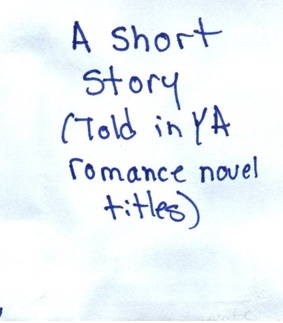
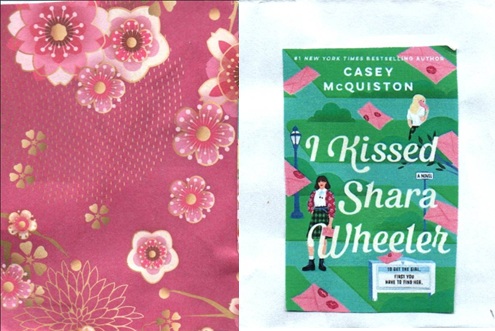
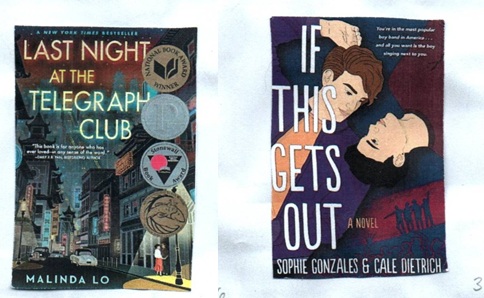
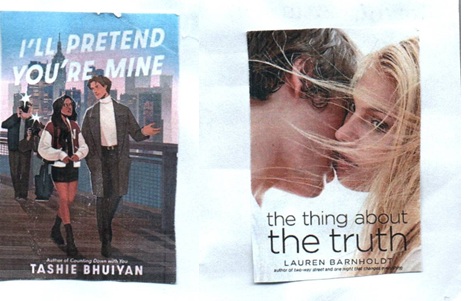
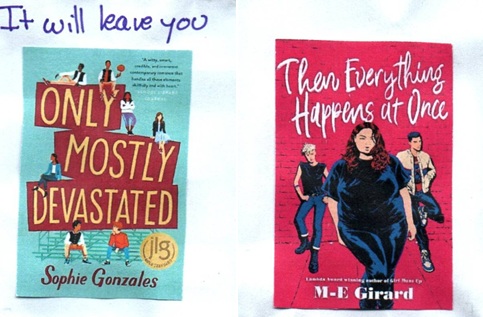
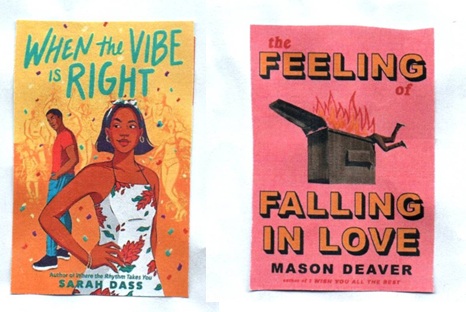
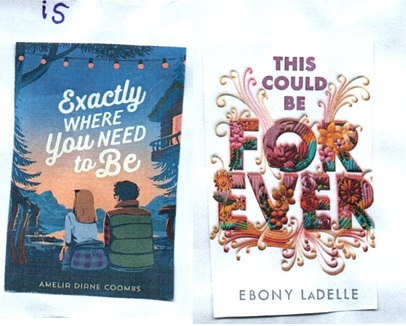
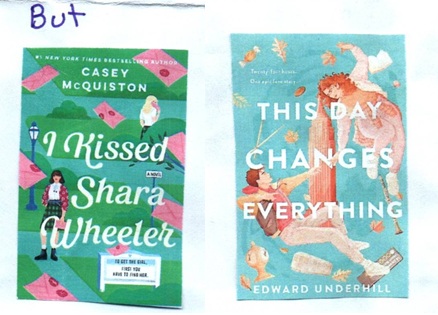
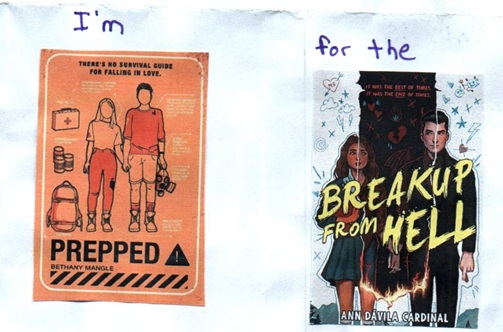
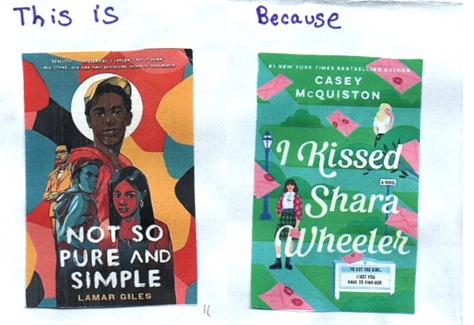
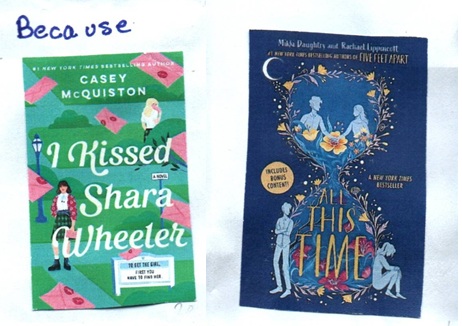
July is Flash Fiction Month! I’ll be sharing short short stories here through the month of July. Unlike the other stories I’ve written this month, this one is told in zine format.
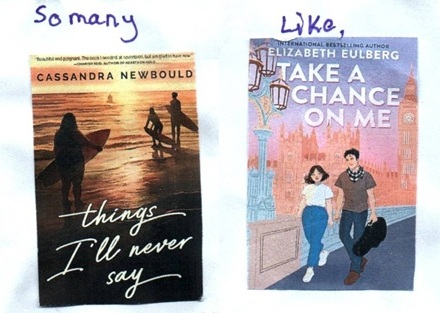
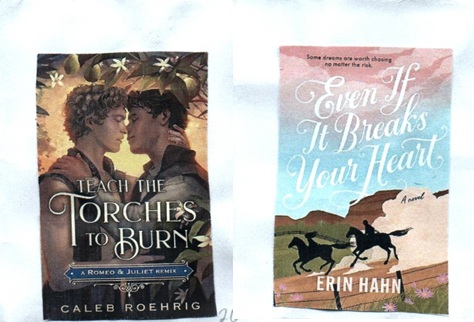
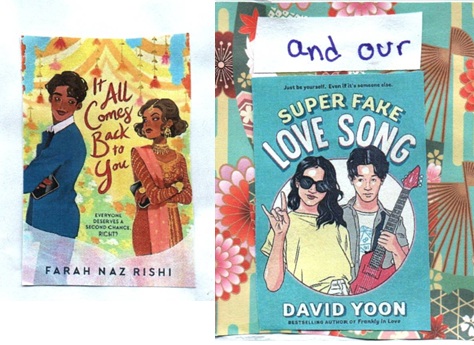
This is a real zine! I made it on physical paper with tiny cut-outs of book covers. I plan on uploading the PDF on my itch.io at some point so you can download and print to your heart’s content. I spent a lot of time on this one and I’m really pleased with it, but also really happy it’s over.
Any use of this publication to “train” generative artificial intelligence (AI) technologies to generate text is expressly prohibited. I do not consent to this work being summarized or fed to generative AI, and anyone who does so is a big dweeb.
July is Flash Fiction Month! I’ll be sharing short short stories here through the month of July. More notes at the end of the story.
“If you’d told me that we’d lose all the music in the world tonight, I would’ve pushed you under a car.” Andre waved his fingers, indicating for the panda to give him another cigarette. Xue never had a shortage of them. Andre didn’t know where she kept them. She wore no clothes, and didn’t have a pouch to hide them in.
Xue handed him a cigarette and lit another one for herself with surprisingly dexterous paws. “I tried to warn you, that this would make you blue. But you needed those pictures, you stupid mister. All because you said Green Lantern wouldn’t work.”
Andre’s eye twitched. “They were vintage Spider-Man comics. And you were a vintage lamp. You sure there’s no way I can revert you back to that?”
Xue breathed out a long puff of smoke. “No way, Andre. The spellbook’s broke, and that’s your fault. I hated being stuck in clay. Then you messed with the occult. You just had to hear that piano make noise.”
“You were the one who told me about the piano in the first place.” Andre took a drag, and crossed his arms. “‘Right over there, next to the haunted Playboys and sanctified Hummels. Can’t miss it,’ you said. “‘Immortality,’ you said. ‘All you need to do is play the right song.'”
Xue shrugged a shoulder. “Only you could master it. You knew the song in a tick. You have a musician’s heart and hands, you’re the best pianist in the land! But I did fucking warn you, bro.”
“You said I’d lose something I loved. I thought you meant my comic collection. Seemed like a small price to pay for immortality.” The cigarette had burned down to Andre’s fingertips. He let it. What use were his long fingers and perfect hands now?
Xue ground her own cigarette under a calloused paw and lit a new one. “Immortality costs the world. When you played, everything curled. You lost music for every boy and every girl. You’ve thrown your whole livelihood away, so what is left for you, for all of us?”
“Music is gone,” Andre said to himself. “Forever.”
“Don’t have a panic attack, it can come back. It won’t be easy, it won’t be short. And it will probably hurt. All you have to do is die.”
Andre stared at Xue. She blinked slowly.
Rain hissed on the road as cars drove past them. No songs on the radio. No one singing along. “So if I threw myself in front of one of these cars, would it…?”
Xue blew out another cloud of blue smoke, and didn’t say a word.
Today’s challenge was a three-parter, leading to a bizarre tale.
Element 1: Go look through our generators either via the Prompt Generators page or our itch.io profile (and please excuse the lack of cover images; we have yet to decide on a design for them). If you come across any issues, please let us know here or on the page of the troubled generator.
Element 2: Pick at minimum three (3) generators other than the yearly prompt generators (2009-2025 and 2026), David Bowie Song Randomiser or 2675 Things Mr. Welch Can No Longer Do During An RPG Generator. Grab one (1) prompt from each of your chosen generators. Bonus points if you pick the first prompt you generate from them.
Element 3: Use each prompt you got in today’s story. You may combine them with prompts from excluded generators if you wish to use them as well. Make sure to tell which generators you got which prompts from!
I did not do this properly and chose sections of prompts from various generators.
From the adventure generator:
MacGuffin: Mystical piano that’s said to grant whoever can play the right song immortality. Nobody has succeeded. – by bookcrusher
Character mashup generator:
Character 1: A chain-smoking panda who speaks only in limericks but doesn’t know how rhymes work.
Character 2: An internationally acclaimed concert pianist who wants pictures! Pictures of Spiderman!
– by DamonWakes
And a generator which shall not be named because I can’t remember which one it was:
Opening line: If you’d told me that we’d lose all the music in the world tonight, I would’ve pushed you under a car.
Any use of this publication to “train” generative artificial intelligence (AI) technologies to generate text is expressly prohibited. I do not consent to this work being summarized or fed to generative AI, and anyone who does so is a big dweeb.
July is Flash Fiction Month! I’ll be sharing short short stories here through the month of July. More notes at the end of the story.
Once, there were unicorns.
Well, I say “once,” but that implies that unicorns are no longer around. But that’s not entirely accurate. They didn’t get hunted to extinction or go to another plane of existence. They’re still here. They’ve just gotten smaller. You might see them sometimes, in dew drops and in the dust that floats in sunbeams. But that’s just the way these kinds of stories begin.
Once, there were full-sized unicorns of every variety you could imagine. Unicorns that were shy, unicorns that were bold, unicorns that brought sunlight wherever they stepped and unicorns with fiery manes and even fierier tempers.
That’s why they became small, you know. Each came into being with their own talents, their own way to shape the world. They couldn’t help who they were. They didn’t want to change. But more and more, humans demanded that they change. Not out loud, of course. No, everyone loved the unicorns. No one wanted them to disappear.
One of the humans when there were full-sized unicorns was an inventor. She loved to work with copper and brass.
I know what you’re thinking. The unicorns must have hated her. Fae creatures hate metal. But that wasn’t true, either. There were unicorns of copper and brass who loved her dearly, and helped her with her work. She loved them back.
Her copper and brass friends let her ride on their backs and took her to the foundaries of the earth, where molten rock and iron glowed. With their protection, the inventor scooped the golden mantle into her bare hands, and they rode back up to the surface.
I know you’re looking up the melting points of copper and brass now. Probably Google’s crappy AI is telling you that copper and brass would melt even in the upper mantle. Stop using AI. I can give you misinformation, and I’m beautiful.
Back on the surface, the inventor did not use that golden bit of mantle to create. Instead, she kept it in a lantern, to forever warm and light the way.
Incidentally, did you know that if you type “-ai” after your Google search, you’re less likely to see AI results? Not always, though, because Google is a beast that devours the world.
And in the time of unicorns, there was another beast that threatened to devour the world.
Wait. The time of unicorns is technically still now. But you know what I’m getting at.
This is why the inventor and her friends made the lantern. The beast could not withstand the light from the pulsing heart of the Earth. They rode forward, pushing back the dark, chasing the beast back to its holes. But the unicorns were getting smaller.
Not as small as they are now, mind. And it wasn’t just brass and copper, it was all of them. But this isn’t a story about the unicorns getting smaller. It was just something that was happening at the same time.
Where was I? Yes. The inventor was chasing the beast. She held her lantern aloft. But she had to navigate through a changing world, one that was changing away from what the unicorns needed.
Okay, I know I’m rambling. You’ve known me all your life, you know I go on tangents. This is just the way I tell stories. And if I’m telling a story about something as ancient as unicorns, there’s going to be a few tangents. Don’t you give me that look. You asked about the lantern, now you’re getting the answer.
Yes, I know, you’re on an epic quest. Yes, I know you have a time limit. But if you don’t have the patience to hear the whole story, then you’re not getting the whole story. So you don’t get to know how our family got the lantern. Nope. I’m outtie. See ya.
When I’m feeling stuck as a writer, it helps to go back to my writing roots. However, when I’m feeling stuck and sleep-deprived, the narrator just quits. I think I want to tell the “real” version of this story later this month, but for now, this is what you get.
Any use of this publication to “train” generative artificial intelligence (AI) technologies to generate text is expressly prohibited. I do not consent to this work being summarized or fed to generative AI, and anyone who does so is a big dweeb.
July is Flash Fiction Month! I’ll be sharing short short stories here through the month of July. More notes (and translations) at the end of the story
Two heads were worse than one, because only one head could look at the idiom dictionary at a time.
Alexei (the American “Alex” had yet to stick) flipped to the index and searched for “C.” “You told Derek we got Judith concert tickets for her birthday, and you wanted to tell him not to give away the secret.”
Alexei’s partner, Kolya, nodded. “Right. I told him, ‘don’t skin the cat out of the bag.’ And he just tried not to laugh.”
“Hm…” Alexei ran his finger down the index. “Kot…kot…”
The idiom dictionary had been one of the best gifts Kolya had given Alexei. Whenever Alexei thumbed through its pages, he looked like a man solving a mystery. His eyes were bright, and there was a small, satisfied smile on his lips when he finally cracked it open.
Kolya liked seeing him like this. Alexei’s first love had been words. Like most children, Alexei and Nikolai had grown up reading fairytales and Soviet propaganda. But soon, they were sharing samizdat works—illegal poetry, dissident pamphlets, the entirety of The Gulag Archipelago painstakingly typed on onionskin paper.
The trouble with Alexei was that he could never bring himself to burn the novels once he was done with them. He hid them in a hollow behind his bathroom mirror, but the secret police had found them anyway. Alexei had been arrested on the spot; Nikolai was already in questioning.
A chill ran over Kolya as the memories came back to him. The beatings, the imprisonment, however temporary…but he tightened his jaw and turned his focus back to Alexei.
“It’s ‘let the cat out of the bag’ and ‘skin the cat.’ ‘Let the cat out of the bag’ is to tell a secret. And ‘skin the cat’ is…zhdat’…”
“Why is this language so mean to cats?” Kolya asked.
Alexei chuckled. “English is a beast. Vot gde sabaka zaryta.”
“I izhu panyatna,” Nikolai replied with a nod.
“P’erviy bl’in vsigda komam.” Alexei shrugged and went back to the book.
What had happened to Kolya was nothing compared with what Alexei had been through. When they were finally reunited after two long, bitter years apart, the man Kolya had fallen in love with had nearly disappeared. He was broken in mind and body, half-dead when they finally, finally escaped to America.
Healing took time. Alexei was not fully himself again. Kolya knew he probably never would be. But on their first anniversary of coming to the United States, Alexei had started writing again. Nothing important at first, just lists of words to help him practice English.
But he kept writing, and kept writing. English was a labyrinth that Alexei explored with fascination. But there were no minotaurs at its center, only truth. Only words.
“Ah! ‘Skin the cat’ is to take off clothes, or ‘there’s more than one way to skin a cat’ means there’s many ways to do something.” Alexei snapped the dictionary shut, a satisfied smile on his face.
“English is cruel.”
“In many ways, yes. But remember Gogol’s overcoat? Lined with cat.”
Of course Alexei would remember such a small detail from the famous story. Seeing his partner smiling, talking about literature, Kolya saw the person he’d fallen in love with, the one who remained beyond the pain, beyond the nightmares, beyond all the bad days he’d survived.
“You came out from under Gogol’s overcoat,” Nikolai remarked, and reached for Alexei’s hand.
Alexei pressed a kiss to Kolya’s forehead. “Only because I had you to help pull me out.”
Let’s gooooo! First FFM Challenge: Malaphor Madness.
Use at least one malaphor (a combination of two idioms; also known as an idiom blend) in your story!
Mine is “don’t skin the cat out of the bag.”
A little background on these two: I started writing about Alexei and Nikolai/Kolya a couple years ago, when my PTSD symptoms were really bad. At first it was just a lot of painful stories, but as things got better, I started seeing that there might be something in that glut of writing that might be worth working on and even sharing. I didn’t plan on using these characters for FFM, since they come from such a tender place in me (with both meanings of the word), but I thought two English language learners were perfect for this challenge. And then I threw in some Russian idioms just for fun. I don’t know enough about the language to to a malaphor with them, but even a hedgehog understands that’s where the dog is buried.
Alexei references the famous short story, “The Overcoat” by Nikolai Gogol. Kolya references the quote attributed to Fyodor Dostoevsky, “We all came out of Gogol’s ‘Overcoat.” which speaks to how Gogol’s work influenced some of Russia’s most famous writers.
Kot – cat Samizdat – literally “self-publishing,” the practice of making and distributing censored literature in the U.S.S.R. Zhdat’ – wait Vot gde sabaka zaryta. – literally “that’s where the dog is buried”; to get to the root of a problem I izhu panyatna – literally “even a hedgehog understands”; something is easy to understand P’erviy bl’in vsigda komam – literally “The first pancake [blini] is always a blob”; practice makes perfect
Any use of this publication to “train” generative artificial intelligence (AI) technologies to generate text is expressly prohibited. I do not consent to this work being summarized or fed to generative AI, and anyone who does so is a big dweeb.
The mist rolls in over the hills. It would be so serene if you didn’t know what it brings.
You wanted serenity, peace. Calm, after the whirlwind that has consumed your life. Yes, I know it hurts now, you told yourself. But it will all be for the best. You’ll see.
You try to believe yourself.
But when the empty house became too much to bear, you took yourself here: to the hills that you used to love. As you follow the curved road upward, all the memories of your time spent here come flooding back to you.
You stand at the lookout point and remember: watching the sunset with your parents. Kissing boys where your parents couldn’t find you. Watching the birds circle, rising on invisible air currents, indifferent to the small, wingless beings below.
You think that maybe you can let this go. Maybe you will always carry these hills in your heart, even if you never set foot on them again.
Then, the mist.
Those coming changes – so painful, so needed – had filled every corner of your mind and heart. You’d forgotten about the mist.
Somewhere in the distance, the Hydra emerges from its slumber.
The Hydra does not care if you are exhausted, sad, or prepared. Soon, you will hear its many maws snapping, with a blood-chilling “Viva!”
Flash Fiction Month is upon us.
July is Flash Fiction Month! I’ll be sharing short short stories here through the month of July. Today’s prompt comes from Teresa “Amehana” Garcia – The mist rolls in over the hills. It would be so serene if you didn’t know what it brings.
I’m very tired. I don’t know how I’m going to manage this month.
I like reading novels that have been translated into English. It’s a good way to see different perspectives, and the stories don’t always follow the same narrative conventions that I’m used to.
Unfortunately, not everyone feels the same way. Which meant that Grim by Sara B. Elfgren, and translated by Judith Kiros has been sitting on library shelves for too long without being checked out. It ended up on the dreaded Dusty list: a list of books that haven’t been checked out within the last 1-2 years. That made Grim a prime target to be discarded.
But the problem was that I still wanted to read the book. So, instead of discarding it, I checked it out.
Grim by Sara B. Elfgren is a Swedish death metal horror novel, and if you don’t like any of those words, we shouldn’t hang out.
Our story starts with Kasper getting a job at the amusement park Gröna Lund. Kasper is a nineteen-year-old who’s coming out of a deep depression, but quickly finds friends among the staff at the House of Demons, the haunted house he works at. He first connects with Iris over her favorite death metal band, Dark Cruelty. Dark Cruelty was one of the first Swedish death metal bands, and is still legendary in metal circles. But Kasper’s love for Dark Cruelty goes beyond fandom: his dad, Håkan, was the founder and bassist for Dark Cruelty. Dark Cruelty broke up after the unexplained death of the lead vocalist, Grim. Though Grim died before Kasper was born, there’s a strange connection between them. It can’t be coincidence that Kasper keeps having vivid dreams about Grim. Something powerful is pulling them together, and Kasper is desperate to understand what it is.
The book alternates between Kasper in the modern day, and Håkan in the 80s, at the start of the Swedish death metal scene. Håkan’s chapters show us the rise and fall of Dark Cruelty, starting with the band’s founding. When Grim joins, he changes everything.
I had a hard time classifying this book as any one particular genre. I described it to others as a horror or mystery, and it has elements of both. I think a modern Gothic describes it best.
There are several elements that make Gothic novels, well, Gothic. These elements might change based on who you’re asking, but there’s a few that are generally agreed upon: a spooky setting, like a castle or mansion; supernatural occurrences; passionate relationships; a Byronic hero; and an overall pervading atmosphere of gloom. I want to break these elements down here, because they’re what made the book feel so fresh for me and scarily personal.
Architecture is a notable feature of Gothic novels, like gloomy castles and spooky mansions. There are no castles or mansions in Grim, but Kasper works in a labyrinthine haunted house where several frightening incidents occur, including the book’s climax. In the 80s timeline, Dark Cruelty uses a dilapidated building as the setting for their album’s photoshoot. Grim is also an urban explorer, and takes Håkan to abandoned train tunnels and a subterranean lake. These settings a major role in the story, and continue to haunt Håkan in the present day.
Another hallmark of Gothic writing is supernatural elements. Most of the supernatural events in Grim take place in the present-day timeline. Kasper has strange, vivid dreams about Grim, an eerie injury that won’t heal, and witnesses…something in the haunted house. Kasper’s connection to the late singer keeps getting stronger, and it’s threatening to undo him.
There are some supernatural elements in the 80s timeline as well. Grim and Malte, Dark Cruelty’s guitar player, attempt magic rituals to summon demons or gain powers. Skeptical Håkan wants nothing to do with them, but he still takes part in one to please Grim.
Then, we have a Byronic hero. The Byronic hero is proud, troubled, secretly sensitive, mysterious, and passionate. But our Byronic hero isn’t Kasper, or even Håkan. It’s Grim.
By the time Kasper is born, Grim has become a legend in death metal circles. A talented vocalist who died young (or maybe he was murdered?) under mysterious circumstances. The truth of who the real Grim was is known only to his inner circle. Even Håkan admits that most of Grim’s life before the band is unknown to him. And Grim has passion for so many things: magick, death metal, and especially the band. Dark Cruelty is more than a band to Grim. Even though he wasn’t a founding member, Dark Cruelty is his life’s work. His passion is what draws people to him.
But he’s troubled as well. Grim is plagued by his own mental health. He could be read as having bipolar disorder or depression, or may just be a victim of a toxic relationship.
Another characteristic of Gothic fiction is passionate relationships. Typically, this would be between our handsome, brooding hero and a pale, beautiful woman. But in Grim, these relationships aren’t romantic. They’re friendships and rivalries, and this was one of the elements of the book that resonated with me so strongly. Håkan’s found a kindred spirit in Grim. They’re best friends, and even though Håkan doesn’t believe in demons and magick the way Grim does, he likes the way Grim sees the world. But as time goes on, their relationship starts to deteriorate. This coincides with Malte joining the band, whose dark presence will loom over Kasper. Grim begins to spend more time with Malte, a toxic friendship that leads to Grim’s downward spiral.
What resonated so strongly with me was Håkan’s reaction to Grim and Malte’s friendship. He’s jealous. Jealous that Grim is spending so much time with Malte, and jealous that they’re forming something that just the two of them belong to. There’s no room for Håkan in the world of magick that Grim and Malte are building.
I’m in my thirties. I don’t do high school drama anymore. But two years ago, this was something I felt so keenly, as a grown adult. I felt foolish and immature. How old was I, to be jealous of a friend paying less attention to me? But it still hurt. It turns out age doesn’t matter when it comes to things like that.
The good thing about being in my thirties was that I had the insight to talk to my friend about my feelings, and we repaired the friendship. (I’ll just state for the record – this was not all her fault. I had to step back and work on myself too.)
But Håkan and Grim aren’t adults. They’re teenagers. Håkan wants to reach Grim when he sees his friend spiraling into depression, but he doesn’t know how. It’s painful to read, especially if you’ve ever seen someone you care about going through something similar.
This aspect of the novel really stands out to me. While there are some YA novels about friendship, you’re far more likely to see a romantic relationship take center stage. Most of those YAs about friendship usually star girls as well. Of those few friendship-based novels about boys, I don’t think I’ve ever read one which covered jealousy like this.
The last thing a Gothic novel needs is a pervasive gloomy atmosphere. Which Grim did, but not in the way that you might expect. There’s a spectre hanging over Kasper, and it’s not just Grim. It’s depression.
When the book starts, Kasper is coming out of a deep and dangerous depression. Starting a job at the haunted house and making new friends is a huge leap forward for him. But every time he feels happy and comfortable, he starts doubting himself. He tells himself he doesn’t deserve this and fears losing everything. His depression lies, saying things like he only got his job because of his step-brother. His friend Iris only likes him because she’s a Dark Cruelty fan. His dad helped start Sweden’s death metal scene when he was younger than Kasper is now – and what has Kasper done with his life?
It wasn’t just that I felt for Kasper in these moments. I’ve been Kasper. So many of us have been Kasper. And it just makes me ache. I wish I could reach through the pages of the book and hug him (and spoil the ending, to save him a lot of trouble).
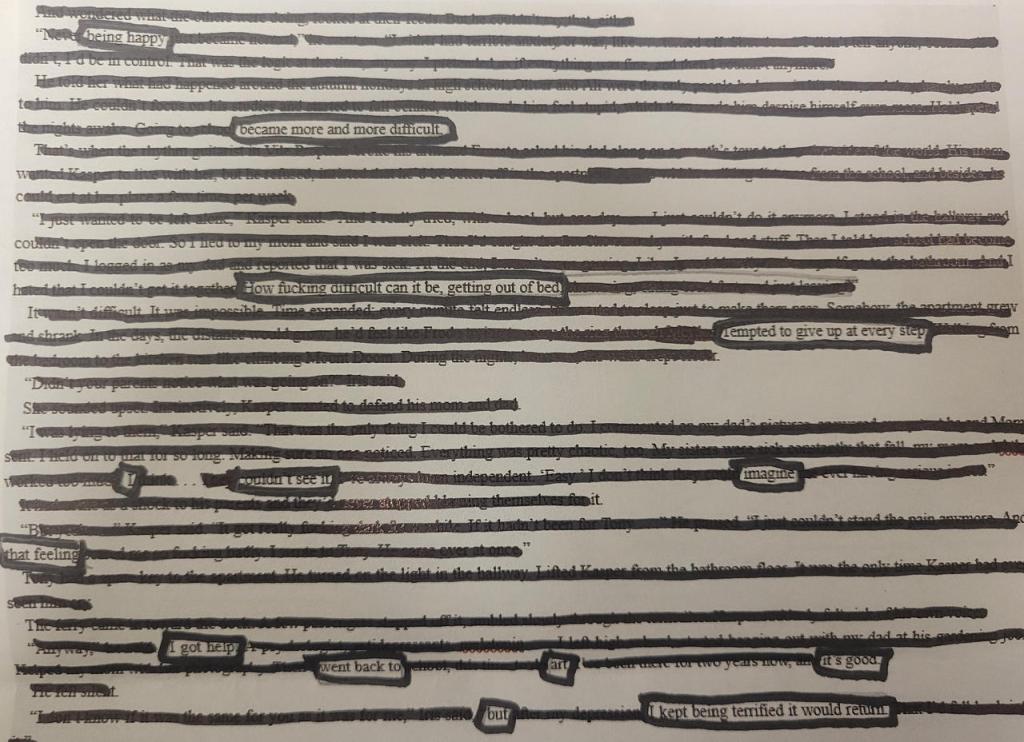
In one scene, Kasper opens up to Iris about his mental health struggles, and Iris shares her own with him. For me, this was the most powerful scene in the book. It really stayed with me. I even printed out a page from the ebook and made blackout poetry from it.
There are plenty of creepy moments that add to the gloomy atmosphere – a party that Kasper is definitely not supposed to be at is a stand-out – but for me, the shadow of depression lingering over him is the most haunting part of the book.
I’m really glad that I picked Grim off the shelf. I can’t think of another book I’ve read that’s quite like this. Atmospheric horror and supernatural elements combined to make something so real and haunting. If this Gothic sounds interesting to you, check it out.
And let me know if you do, because I need to talk to someone about that ending.