Unknown's avatar

Posts by booksoverlookedblog

Part time writer, full time bad-ass

FFM 6: Ringside

Without in any way limiting the author’s exclusive rights under copyright, any use of this publication to “train” generative artificial intelligence (AI) technologies to generate text is expressly prohibited. The author reserves all rights to license uses of this work for generative AI training and development of machine learning language models.

July is Flash Fiction Month! I’ll be sharing short short stories here through the month of July. This is not the story I thought I’d be writing today, but it came to me on my commute and made me laugh, so I had to share.


“I dunno.” Amy propped a hand on her hip. “You look a little out of my weight class.” 

“C’mon.” Jay gave her his obnoxious half-smirk. “Boxing with me is like sex with me. Sweaty, intense, and you’re gonna be seeing stars.” 

Amy snorted. “Does it only last three minutes, too?” 

“Depends on who I’m sparring with. You think you’ve got the stamina to keep up?” 

Amy arched her brows. “Let’s glove up.” 

FFM 5: Guardian of the Gate

Without in any way limiting the author’s exclusive rights under copyright, any use of this publication to “train” generative artificial intelligence (AI) technologies to generate text is expressly prohibited. The author reserves all rights to license uses of this work for generative AI training and development of machine learning language models.

July is Flash Fiction Month! I’ll be sharing short short stories here through the month of July. More notes at the end of this story.


The left head was already slavering. “Let’s eat the mite,” it growled. It inhaled deeply. The scent of the living was rare at the gates of Hades. The mortal squirming beneath Cereberus’s clawed foot gave off an intoxicating smell. The mortal’s fear and desperation only added to the aromatic bouquet. The left head licked the sobbing human’s leg. “Then we leave the gates, and hunt more! We will feast!” 

“Why would a living mortal wish to enter our domain?” The right head snuffled. “This one is only here to find his wife and child. Yes, he was bold enough to attempt to sneak past us, but he came here in pain. Can we add to his suffering, when he’s suffered so much already? He will come to Hades eventually. Raise our foot, and let him leave for now.” 

The right and left looked to the center head. That was the one who made the final decisions, and would decide whether or not to raise Cerberus’s mighty paw and release the mortal. “No living mortal may enter our domain,” the center head barked.  “But this one may not deserve to be devoured just yet. We will raise our foot and let him leave…but he doesn’t need both legs.” 


Today’s challenge was the dreaded 369er! I went with the Greek myth of Cerberus, obviously…but the evolution comes in the form of Cerberus’s heads. Each head represents one of the Freudian concepts of the id, ego, or superego. Since the ego works to balance the wants of the id and superego, it’s the center head, and has control of Cerberus’s body.

Element 1: Today, we would like your story to have a specific theme: evolution of a (real-life or fictional) myth. Please tell in the story’s description which myth you picked or created!

Element 2: We also want a specific format for today’s story: 369er – in other words, 3 interconnected 69-word stories.

FFM 4: Easier to Remain Silent

Without in any way limiting the author’s exclusive rights under copyright, any use of this publication to “train” generative artificial intelligence (AI) technologies to generate text is expressly prohibited. The author reserves all rights to license uses of this work for generative AI training and development of machine learning language models.

July is Flash Fiction Month! I’ll be sharing short short stories here through the month of July. More notes at the end of this story.


“The book is called Two Boys Kissing. Do you really think that’s appropriate for a school library?” This mom was one of a dozen, standing in front of me with a written complaint for the school librarian. “And this one.” Her next book surprised me. I Know Why the Caged Bird Sings by Maya Angelou. “And this one. Why do you allow pornography in our schools?”

“That’s actually a part of our curriculum. We use it in the seniors’ history class and–”

The mom threw the book down on my desk. “Disgusting. Disgusting.

It was only two books. We had plenty of romance novels in the school library already, and the history department had loaner copies of Angelou’s biography. 


“Mom, you’re not thinking. If you look at the statistics, immigrants are actually less likely to commit crimes than–”

She cut me off with a glare. “They committed crimes when they snuck into this country.” 

“That’s really not how–”

“I worked my hands to the bone to give you a better life, and I’ll be damned if someone steals everything that we earned.” 

There was no arguing with her. I let it drop. 


The call came hours before school started. “Mrs. Harris was arrested.” 

“What?” I asked, trying to take in the news. 

“For distributing pornography to minors.” My principal rattled off a series of book titles: Drama, Melissa, It’s Not the Stork. More than I could remember. “This is serious. She might have to register as a sex offender.”


“By the way,” Mom told me. “Could you look into finding someone else to do the yardwork?”

“Someone else? What happened to Diego?” 

Mom looked down at her lap. “ICE.” 

“What the hell? He has a green card!”

“I know.”  She sighed. “He has two kids. I wish I could have done something.”


What can I do? I’m not a lawyer who could defend Mrs. Harris or get Diego out of detention. I’m just one person, one small person with no real power. Maybe if I had fought harder to keep those books, or tried to talk sense into people like mom, or…

Maybe nothing would have changed. 

But I could have fought, and made it a little harder for those big, sweeping powers to do harm. 

I don’t remember when I learned to swallow my own voice, but I know I’m tired of the aftertaste. 


I used the prompt “I don’t remember when I learned to swallow my own voice, but I know I’m tired of the aftertaste.” by Erica, from this year.

Stay safe. Keep fighting.

Project 2025 and Its Threat to Free Expression, Part 1 (PEN America)
Project 2025 and Its Threat to Free Expression, Part 2 (PEN America)
Project 2025 and Its Consequences for Libraries (EveryLibrary Institute, PDF)
Undocumented Immigrant Offending Rate Lower Than U.S.-Born Citizen Rate (National Institute of Justice [pdf])
Is There a Connection Between Undocumented Immigrants and Crime? (The Marshall Project)
Ask PolitiFact: What evidence does the government need to deport green card, visa holders? (PoltiFact)

FFM 3: Love is a Battlefield

Without in any way limiting the author’s exclusive rights under copyright, any use of this publication to “train” generative artificial intelligence (AI) technologies to generate text is expressly prohibited. The author reserves all rights to license uses of this work for generative AI training and development of machine learning language models.

July is Flash Fiction Month! I’ll be sharing short short stories here through the month of July.

Name pronunciation:

Fiadh – Fee-uh
Onóra – Oh-nor-uh
Mairead – Mahr-ee-ed
Caoimhe – Kee-vah

More notes on this story are at the end of the post.


“Fiadh, be sensible.” Onóra finished tying her younger sister’s hair into a series of knots and braids. “You might love a human, but you’ll never be allowed to marry one.” She opened Fiadh’s jewelry box to find baubles for her sister’s horns. “Ugh–what’s this?” 

Onóra pinched a long piece of fabric between her thumb and forefinger. It might have been white once, but was stained with sweat and dark splotches of blood. “Mairead made it for me,” Fiadh replied with a smile. “One of my hand wraps. I still prefer bare-knuckle, but she insisted. I was afraid that it would make my punches too soft.” She formed a fist. “It didn’t.”

“Well, those days are over.” Onóra dropped the wrap on the floor and found some bells for Fiadh’s antlers. “You’re next in line for the throne now. If you keep going like this, both you and Mairead are going to get hurt.”

Fiadh glanced at the wrap. “We’ve both already been hurt. I’m not giving her up. Not for anything.” 


The ball was beautiful, as always. Food and wine were plentiful, as were Fiadh’s suitors. Men and women alike had traveled far for the promise of a dance with the eventual queen. Each partner was more tedious than the last. It was like they had all read from the same “How to Woo a Princess” handbook, feeding her the same praise again and again. Every so often someone would add in something about what their clan could offer the crown.

Fiadh knew that fending off so many potential mates would be irritating, but she hadn’t expected it to be so boring. They would give her gems and dote on her, when what she wanted was a woman who made hand wraps and challenged her. 

She stopped mid-dance with a handsome púca. At least, they might have been handsome. It wasn’t easy to tell with shapeshifters. “Pardon me. I must speak with my mother.” 

Fiadh rarely asked Queen Caoimhe permission for anything, and her request shocked her mother. Caoimhe nearly refused, until Fiadh swore that she would be true to her word. Only then did the queen allow Fiadh to make her announcement. 

The music stopped, and Fiadh called for attention. “I know many of you have come seeking my hand. Your words are kind, but they do not easily sway me. I believe in action. I will only marry someone who can defeat me in unarmed combat. No weapons, no befuddling magic, just a good fight.

“Anyone who wishes to challenge me, come to the training yard at dawn.” 


Eight challengers lined up on the edge of the sparring ring. Her first opponent was Aos Sí like her, but a muscled warrior with fists like stones. They would feel like boulders if they hit her. 

So she wouldn’t get hit. 

Fiadh’s opponent had the advantage in size, but she was faster. She dodged his first swings, then threw a jab to his face. He caught her fist in his massive hand, but not the hook that came for his side. Fiadh moved in. Her foe couldn’t adapt quickly enough to avoid the battering that Fiadh was giving him. If he tried to punch, she slipped out of reach and countered with an uppercut. 

He finally surrendered. Fiadh grinned at her audience. “Right, who’s next?” 


By the fifth bout, Fiadh was getting worn down. By the sixth one, she was making mistakes. She’d beaten her opponent again, but she had a bloody nose and bloodier knuckles. 

Fiadh caught her breath and gestured for her next suitor to come forward: the same púca that she’d cut her dance short with. Fiadh licked her lips. Even at full strength, a shapeshifter would be difficult to deal with. Fiadh had barred magic that affected the senses from the matches, but anything that altered the participants’ bodies was fair game. 

“Another dance, Your Highness?” The púca bowed and looked up to give her a coy smile.

“Gladly.” 

The two fighters circled each other for a moment, sizing the other up. Fiadh made the first move, feinting to the left then striking with a jab to the right. The púca responded instantly, slamming a fist into her side. For a minute they exchanged blows with equal fury. An unexpected hit to Fiadh’s jaw sent her sprawling. 

She gasped. No one had ever knocked her down in a fight before. As she got to her knees, she saw that the púca had partially shifted. Their arms and hands were thick as an ape’s, packing more power with each punch than before. 

Fiadh didn’t stand. She put her hands on the ground changed. Her limbs lengthened; dark hair sprouted along her body. Her antlers enlarged and flattened, until she’d taken on another form: the Irish Elk. 

The púca barely had time to react before Fiadh swept them up with her antlers. She tossed the púca to the ground, not quite gently, and rested a massive hoof on their chest. Not enough to hurt, but enough that they would feel its pressure. 

The púca surrendered. 

Fiadh gave a short victory bugle. She snorted and stomped her hoof, awaiting her next opponent.

No one moved. Then a hooded figure stepped forward. The challenger held out a hand, and Fiadh touched her nose to it and inhaled. She stomped her hoof again, indicating she was ready for the final fight. 

The challenger tapped Fiadh on the nose. 

Fiadh wobbled where she stood, then collapsed. Her elk form melted away as she cried out, “I’ve been defeated! I’ve been bested!” 

The crowd gasped, and all eyes went to the stranger. She pulled the hood away from her face. A face that was utterly, utterly human. The woman helped Fiadh to her feet.

Fiadh grabbed the woman’s hand and raised both of theirs in the air. “Meet my betrothed: Lady Mairead!” 

The uproar was instantaneous. Queen Caoimhe’s face was red with rage, while Onóra just looked shocked…and then started applauding. 

Mairead kissed Fiadh’s cheek. “Let’s get you cleaned up. Why didn’t you wear the wraps?” 


They’re baaaaack! Fiadh and Mairead are characters from the novel I’m currently writing. They’re the main character’s parents. They’re both dead by the time the novel starts, but they have such a fun (and long) backstory that I’ve been writing pieces of it for FFM. There were a few stories about Fiadh, Mairead, and their kids last year. I’ve had a lot of fun writing these “bonus stories” that take place before the novel starts, so I’ll probably have a few more of them this year.

This story was also inspired by the Khutulun. Legend says that she was a great wrestler and would only marry a many who could defeat her. Any losers had to give her a horse. According to some stories, she had 50 horses before she had a husband. Good for you, girl.

This is also for today’s challenge: I Cannot Use That.

Element 1: Pick an item you have interacted with today. Its size, function, location or current state of existence do not matter. What matters is that you have interacted with it today and that you include said item in your story. – the hand wraps

Element 2: That said, your protagonist is not allowed to use the item you chose at all in the story. The reason why is up to you.

Element 3: As tempting as it would be to allow for the briefest of “I cannot use that” shenanigans, we are rather hungry for words after a long hibernation. Your story must be at minimum 300 words long. Because it’s day 3 and this is element number 3, you know? – this was the easiest one for me to do!

FFM 2: A Tail’s Tale

Without in any way limiting the author’s exclusive rights under copyright, any use of this publication to “train” generative artificial intelligence (AI) technologies to generate text is expressly prohibited. The author reserves all rights to license uses of this work for generative AI training and development of machine learning language models.

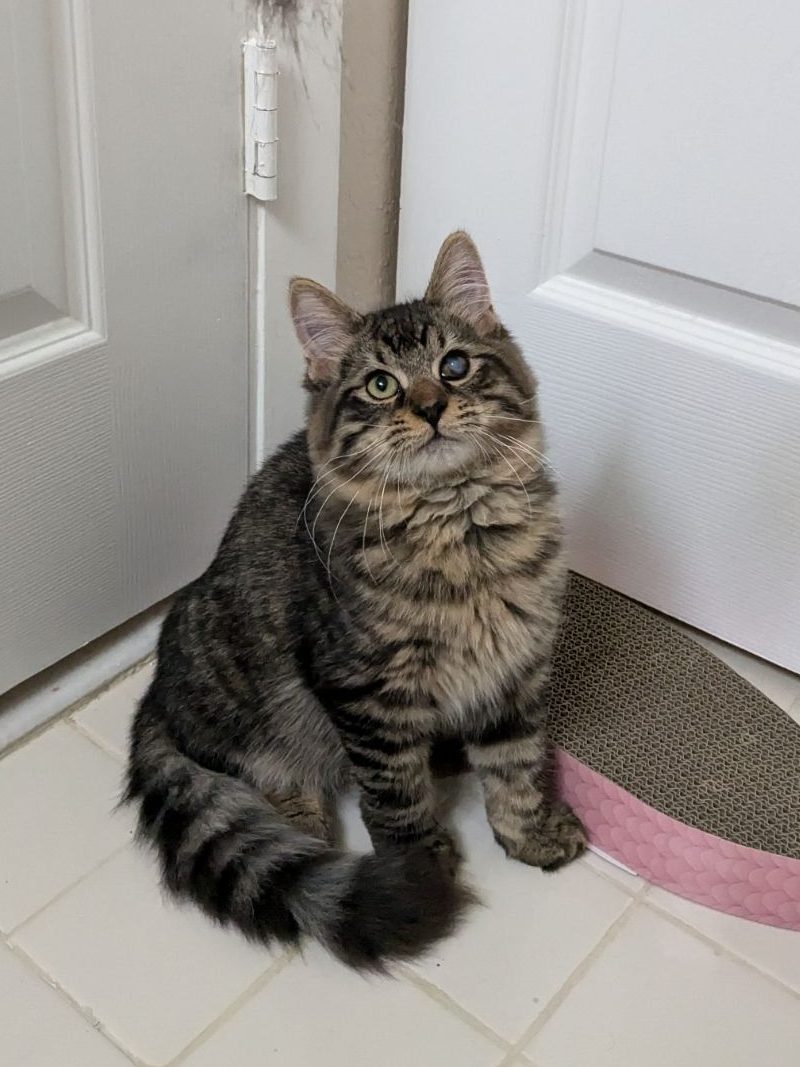
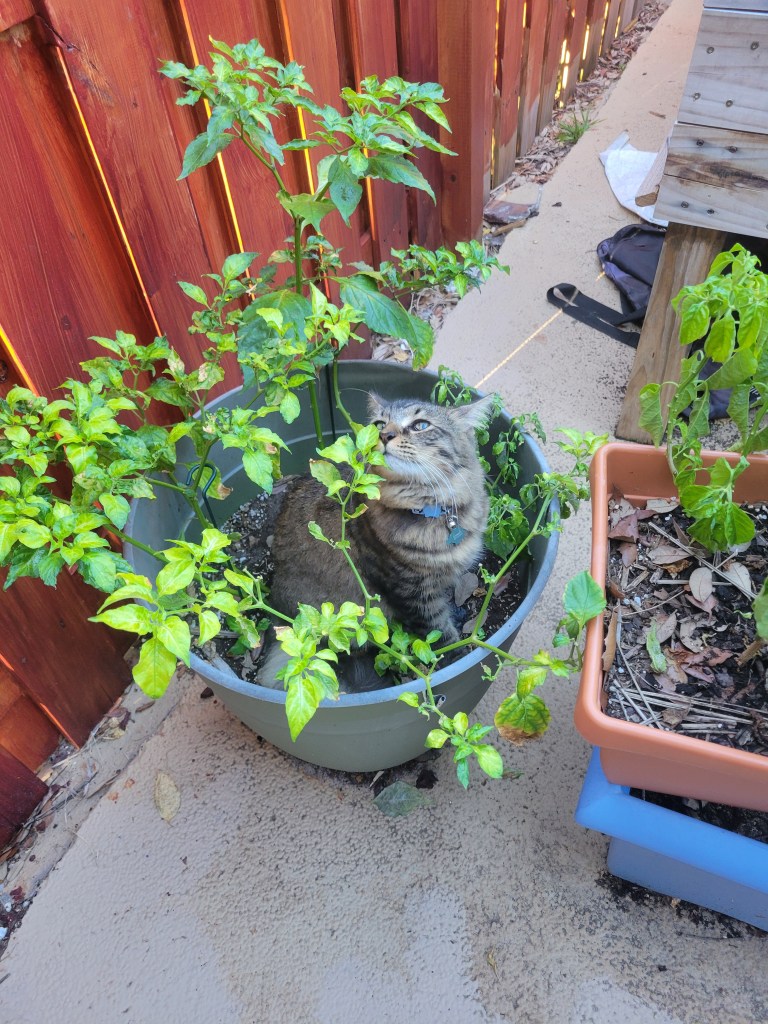
July is Flash Fiction Month! I’ll be sharing short short stories here through the month of July. Last year, my cat Nimbus got her own story: The Adventures of Nimbus, by Nimbus. This year, Nimbus got a little brother named Storm. Stormy loves to go outside, but when he comes in I have to pick dirt and leaves off him, especially his tail. I decided I needed to write a picture book about him. There’s a picture of my muse at the end of the story.


Stormy was a cat with a fluffy, fluffy tail. All kinds of things got stuck in his tail when he went out to play.

On Monday, Stormy went out to play. When he came home, he had one ladybug stuck in his tail.

On Tuesday, Stormy went out to play. When he came home, he had two butterflies and one ladybug stuck in his tail.

On Wednesday, Stormy went out to play. When he came home, he had three lizards, two butterflies, and one ladybug stuck in his tail.

On Thursday, Stormy went out to play. When he came home, he had four birds, three lizards, two butterflies, and one ladybug stuck in his tail.

On Friday, Stormy went out to play. When he came home, he had five bunnies, four birds, three lizards, two butterflies, and one ladybug stuck in his tail. 

On Saturday, Stormy got brushed. His owner brushed out five bunnies, four birds, three lizards, two butterflies, and one ladybug that were stuck in his tail. 

On Sunday, Stormy went out to play. He came home with friends in his tail. His friends were…five bunnies, four birds, three lizards, two butterflies, and one ladybug! 


Stormy Odinsson, my little dirt boy.

FFM 1: Spider Whelp

Without in any way limiting the author’s exclusive rights under copyright, any use of this publication to “train” generative artificial intelligence (AI) technologies to generate text is expressly prohibited. The author reserves all rights to license uses of this work for generative AI training and development of machine learning language models.

July is Flash Fiction Month! I’ll be sharing short short stories here through the month of July. More notes are at the end of the story.


“A ring of disguise. I know you have one.” 

“Thought you might be coming here, spider-whelp.” The human woman said. “Your kind never gets far on their own.”

“They are not my kind.”

The human grinned, baring a broken tooth. “I’ve heard differently.” 


Shoved against the wall, knife to his throat. “Let’s see what you’re hiding under here.” Calloused hands tore the hat off his head. Moonlight white hair spilled down to his chin. 

“That’s what I thought.” The point of the high elf’s blade trailed across flesh, to the spider insignia that stained the drow’s flesh. The high elf elicited a hiss. “You’ve been marked.” 


“I know you’re good,” the human continued. “You’ve killed plenty of my guys. But plenty of the other side’s guys, too. Keep going like that, you’ll be dead before the month is out.” 


There was an understanding between the drow and whoever hired him. He would kill no women, and his loyalty after the job was done was malleable. Most thought he was worth the price anyway.


“I have money,” he told the human. 

“I know. You’ve gotten plenty of it from me. I don’t want your money,” she replied.

The drow scoffed. “All anyone wants in this city is money.” 

“The ring has a price, but it’s not measured in gold.” She fished it from her pocket, a copper band with a tiny glass mirror where a stone would be.

 The drow’s red eyes gleamed. “What is it then?”

“You work for me. Exclusively.”


A mass of bodies under the earth, chanting and calling out to their goddess. They were divided, the men and the women, praising their true queen.

Silver webs shone against the dark, and Lolth came to them. Her many eyes swept over the mass of her worshippers. She picked from the women first, Her newest clerics.

Then, the men. Praying, but not daring to hope that the Queen of Darkness would deign to bless them.

She chose him.


He would not raise a hand to a woman, not even to this one, who both deserved it and had what he most wished for in the world.

But the price was too high.

“I work for no one but myself.” He took a step back.

“That’s what I thought you might say.” 

She drew her sword.


The burst of dark energy had slain the high elf before he could draw the drow’s blood. He had slain many others in the same way. 

With each spell, he could only hope that Lolth did not feel him drawing on Her power. Let her forget about him, and the gift she had given him. She had many, many others to do her bidding. Let him disappear into the crowd again. 

He could feel that borrowed power tingling at his fingertips now. He would not use it.

The drow fled. 


FFM #1 Challenge! Write a story with a nonlinear narrative.

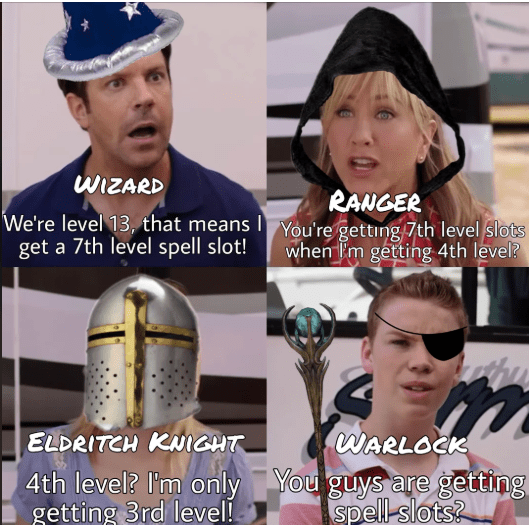
I was really stuck on this one at first. Then I remembered I play DnD, and I have a character for an upcoming campaign that needs a backstory. The character in question is a male drow warlock, who came to Waterdeep from the Underdark. He’s really hoping that Lolth will just forget about him and let him figure out how to be a person.

June 2025 Book Recs: Read with Pride

Without in any way limiting the author’s exclusive rights under copyright, any use of this publication to “train” generative artificial intelligence (AI) technologies to generate text is expressly prohibited. The author reserves all rights to license uses of this work for generative AI training and development of machine learning language models.


Before we begin, just a couple updates for summer. I’m trying to get back to two posts a month, but I’ve been really busy this spring. July is Flash Fiction Month, so I’ll be posting some short fiction here every day (hopefully). Summer is the busiest time of the year for me, so August is going to be a rest month. 

June is Pride Month! Pride celebrates LGBTQIA+ history, culture, and. well…pride! Pride began with the Stonewall riots in June and July of 1969, and June was officially recognized as “Gay and Lesbian Pride Month” in 1999. LGBTQIA+ rights have come a long way, but there’s still a lot of progress to be made, especially as the trans community is increasingly under attack. PFLAG has a really useful Executive Order Explainer that tracks anti-LGBTQIA+, anti-DEI, anti-immigration, anti-reproductive health, and anti-voting rights executive orders. It also includes links to resources like the Trans Legal Survival Guide from Advocates for Trans Equality, along with resources for mental health, advocacy, and legal help. 

LGBTQIA+ covers a huge range of identities, and two books can’t cover all of them. May was also an incredibly busy month for me, so I wasn’t able to do as much reading as I would like. I still hope this small selection of books enhances your Pride month!

Non-fiction

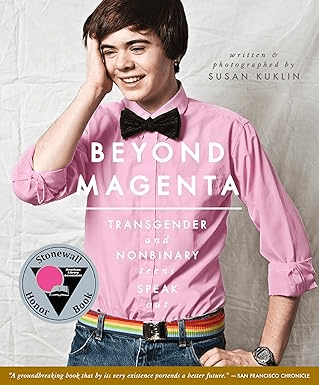
Beyond Magenta: Transgender Teens Speak Out by Susan Kuklin

Six teens and young adults – two trans girls, two trans boys, two nonbinary individuals (one of whom is intersex) – share their stories. With honesty and courage, these young people tell their stories about their early lives, their families, discovering their gender identities, and eventual transitions. They come from a range of backgrounds and experiences, like Luke who has a supportive family and realized he was trans with the help of his queer theatre group, or Mariah, who lived in poverty and has experienced violence due to her gender identity. (Note: Mariah’s chapter includes disturbing content, including sexual abuse.) She began to transition openly during her senior year at an all-boy Catholic school, in the face of bullying, an unsupportive mother, and punishments from the school. Many teens talk about the spectrum of gender and gender as a social construct. Most importantly, each chapter shows the subjects as whole, complex individuals, who are more than just their gender identity. 

Trans issues are a hot topic right now, and there is a lot of discourse and misinformation about gender identity, sexuality, and youth. It’s important for young trans and nonbinary people to have a seat at the table and tell their own stories. 

Fiction

The Gentleman’s Guide to Vice and Virtue by Mackenzie Lee

There is only one thing that Henry “Monty” Montague is looking forward to, probably for the rest of his life: his Tour of the European Continent. The Tour is something of a rite of passage for wealthy noblemen in the eighteenth century: a year of gambling, drinking, and debauchery before he returns to England to work alongside his father.  What he’s most interested in, however, is spending a year with his best friend, Percy. Monty has been secretly in love with Percy for years, and the Tour might be the last chance Monty has for something to happen with him. At the end of the Tour, Percy will be attending law school in Amsterdam, leaving Monty alone. Traveling with them is Monty’s intelligent but taciturn younger sister, Felicity, who struggles to understand Monty’s bisexuality. After a visit to Versailles ends in disaster worthy of being disinherited over, Monty, Percy, and Felicity find themselves being hunted down by bandits, catching rides on pirate ships, and – most terrifying of all – growing as people. This novel is a fun romp around Europe, full of adventure, romance, a bit of magic, and a few steamy scenes. The Montague siblings’ adventures continue in two sequels. 

May 2025 Book Recommendations: AAPI Heritage Month

May is Asian-American and Pacific Islander (AAPI) Heritage Month! Asian American Heritage Month began in 1979 as Asian/Pacific American Week. In 1992, May was permanently recognized as Asian/Pacific American Month. May is a significant month in Asian-American history, as the first Japanese immigrants arrived in the U.S. on May 7, 1843. On May 10, 1869, the first transcontinental railroad was finally completed, which was constructed in part by over 10,000 Chinese workers who faced dangerous conditions, low pay, and discrimination. AAPI month recognizes the contributions of Asian-Americans and Pacific Islanders while celebrating a myriad of rich cultures. 

This month, you get extra books! Asia and the Pacific Islands are huge areas with many diverse cultures, and there’s no way I can cover everything with just a few books. This year, there are two nonfiction books focusing on Asia, as well as one for the Pacific Islands. Normally I would only have one book for Asia in either category, but Banned Book Club feels so pertinent to the time we’re living in now that I had to include it. As it’s part of Korean history and takes place entirely in Korea, I wanted to highlight a book about the Asian-American experience as well. 

A quick note on the authors’ names: in many Asian countries, the family name comes before the personal name. Additionally, Asian immigrants may choose Western names for themselves after moving to a Western country. For this list, I’m using the names the authors were published under. 

Nonfiction

Almost American Girl by Robin Ha

This graphic novel memoir explores identity, adolescence, and the ups and downs of being an immigrant in America. Robin and her mom don’t always see eye-to-eye. Even so, they’re a team with an unbreakable bond. Robin doesn’t know why her mom wants to take them on a vacation to Alabama in the United States, but their trips together are so much fun, Robin trusts her. There, Robin meets Mr. Kim and his family, all Korean-American immigrants. Then Robin’s mom startles her when she announces they’re not going back to Korea. She and Mr. Kim are getting married and staying in America. Robin is suddenly separated from her home, her friends, and her beloved comic books without warning. Her mother insists that they will have a better life in America, away from the stigma of being a single parent, but Robin – doesn’t believe her. Robin enrolls in an American high school where he struggles with fitting in, learning English, and bullying from racist classmates and a manipulative cousin. Difficulties in her mother’s marriage, especially conflicts with her in-laws, add an extra layer of stress in Robin’s new home. As Robin finds her place in America, her strong bond with her mother carries both of them through their new lives as Korean-Americans. 

Banned Book Club by Kim Hyun Sook and Ko Hyung-Ju. Illustrated by Ryan Estrada. 

Hyun Sook’s first day of college in 1983 didn’t go like she expected. Her college campus is disrupted by student protests against South Korea’s Fifth Republic, a military regime with a history of censorship, torture, and murder. Hyun tries to keep her focus on her studies and the masked dance club, but things take an unexpected turn when she gets invited to a book club. Hyun thinks that she and other students will be discussing Western classics like Shakespeare or The Scarlet Letter, but is shocked to learn that it’s actually a club dedicated to reading books banned by the regime. The banned book club does much more than that to stand up to the government, like organizing protests and publishing illegal newspapers. As Hyun learns the truth about the world around her, she becomes more and more involved with the Banned Book Club and their activities. However, fighting back puts her and her family in danger. Banned Book Club is a graphic novel memoir with a unique illustration style. I wanted to highlight this one because it explicitly talks about how disinformation and censorship are tools used to create and aid unchecked power and violence. 

Poūkahangatus by Tayi Tibble

In Poūkahangatus (incisively pronounced “Pocohontas”), New Zealand poet Tayi Tibble explores what it means to be Māori, a woman, and a Millennial/Gen Z. Written in free verse and prose poetry, the collection tackles bigotry, sexism, and Indigenous representation in media. There’s also warmth and nostalgia as Tibble writes about her mother and childhood. My favorite poems were “Cowboys and Indians” a sly condemnation of the White Savior Complex, and “Vampires versus Werewolves.” At first glance it’s a poem about being a teenager at the height of Twilight’s popularity, but unfurls into something much deeper and more complex (“It’s the boy who cried wolf,/but in reverse you cry sheep and/nobody believes your bleating”). Poūkahangatus is a fantastic North American debut, and Tibble as a poet to watch.

Bonus Book: 

Paper Son: The Inspiring Story of Tyrus Wong, Immigrant and Artist by Julie Leung. Illustrated by Chris Sasaki.

Tyrus Wong (born Wong Gen Yao) immigrated to the United States from China in 1919 as a paper son, pretending to be the child of another Chinese person who had received U.S. residency. At age 9, he was temporarily separated from his father and detained at Angel Island Immigration Station before being allowed to enter the country. Tyrus and his father faced discrimination, but nothing dampened his love of art. Tyrus would become an artist for Disney, and eventually the lead artist for Bambi. He combined Eastern and Western art styles to create the film’s gorgeous backgrounds, but was fired soon after, and never got full credit for his work until recent years. This picture book biography is told with beautiful, impressionist illustrations.

Fiction

Ninetails: Nine Tales by Sally Wen Mao

Foxes populate folklore throughout the world. In Chinese mythology, hulijing, or fox spirits, can take on different forms, both benevolent and antagonistic. Ninetails is a collection of nine stories inspired by fox spirit lore. A cursed boy attempts to befriend his ostracized hulijing classmate; a vixen takes revenge on an abuser; a woman shrinks to be the size of wasps while an imposter takes over her life. My favorite was “Lotus Stench” in which a fox and a ghost become roommates. Another story runs through the book at interludes: “The Haunting of Angel Island.” Each part tells the story of a paper daughter detained at Angel Island while waiting for her interrogation to be let into the United States. These interludes are utterly absorbing and were some of my favorite parts of the book. A collection of surreal and engaging stories and historical fantasy.

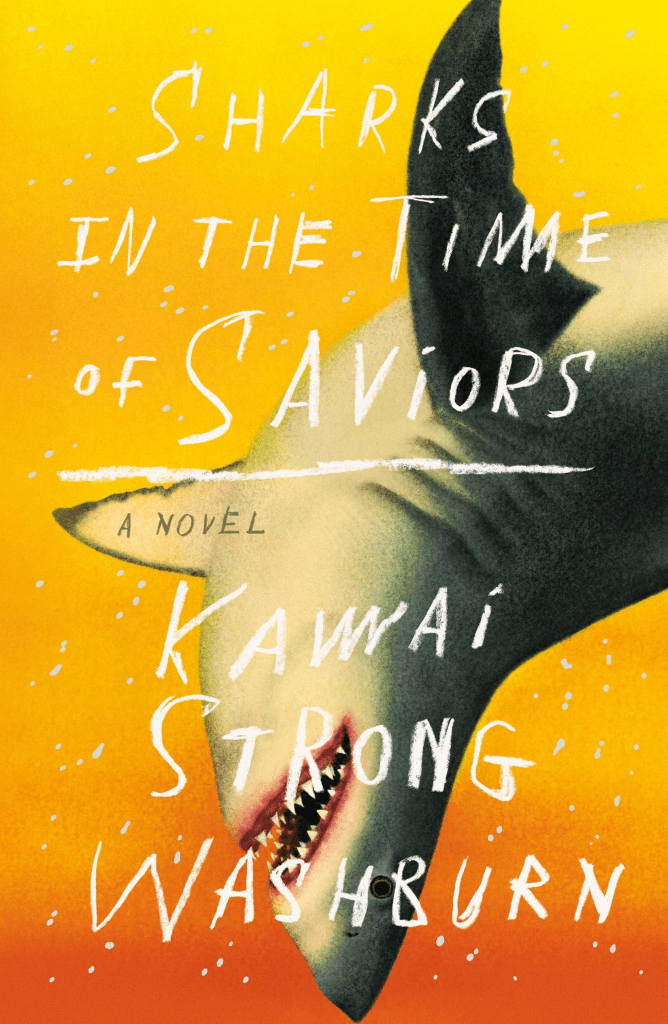
Sharks in the Time of Saviors by Kawai Strong Washburn

When he was seven years old, Nainoa fell overboard a glass-bottomed boat and into the ocean. He was returned to the boat gently, in the jaws of a shark, holding him as gently as a baby. Since then, Noa has been regarded as a miracle, and everyone in Kalihi knows it. Behind closed doors, Noa struggles with the expectations thrust upon him, while his siblings ache to be seen as something more than Noa’s brother and sister. As time passes, all three are drawn away from the Hawaiian Islands. Eldest brother Dean attends college in Spokane on a basketball scholarship with dreams of fame; Noa’s younger sister hurls herself into rigorous academics and increasingly bigger risks in San Diego. Nainoa works as an EMT in Portland as he tries to understand his abilities, and what he should be doing with his gift. Through all of this, their mother, Malia, believes that Noa has been chosen by the gods to do something great. Tragedy draws the family back together, where they must reconcile their complicated bonds and failures. Sharks in the Time of Saviors is a lyrical family saga with Indigenous Hawaiian religion and mysticism woven throughout. 

Bonus Book

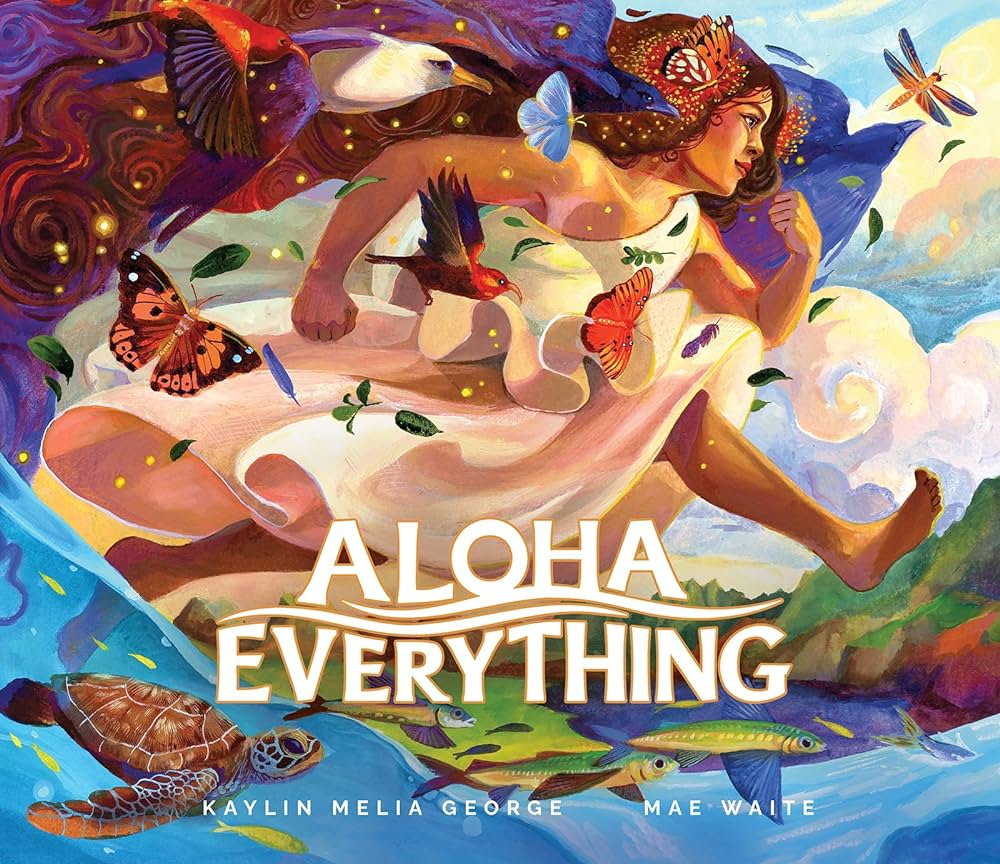
Aloha Everything by Kaylin Melia George. Illustrated by Mae Waite.

A baby nestled under the branches of a koa tree grows to become a proud and strong Hawaiian woman in this vibrant picture book. Through breathtaking illustrations and verse with Hawaiian words sprinkled throughout, the reader watches the girl grow and learn. The book is a celebration of hula, nature, and Hawaiian history and culture. A glossary and pronunciation guide of Hawaiian words is included. What did hula teach her?  What did hula teach you? 

Interview with an Audio Describer

Today’s post is all about writing. I’ve touched on my own creative writing here and shared some of my poems and flash fiction. Today I want to talk about a unique kind of writing: audio description (AD). My friend Chanelle, Certified Cool Person, works as an audio describer for live theatre performances and also writes AD for films. Instead of a regular book review, I virtually sat down with Chanelle for an interview on her work.

What is audio description?

Audio Description is often described (ha) as “The visual made verbal.” To put it simply, it is taking the visual elements of any piece of media– from television and film, to live theatre, to artwork in a museum– and putting them into words. I often like to explain it by likening myself to the narrator of an audio book, in that I’m filling in the details of the world and action around the dialogue for a show or performance.

How did you get started doing AD work?

I honestly stumbled into Audio Description completely by accident! In a pre-shift meeting at the performing arts center I work at, my managers at the time asked if anyone was interested in learning how to become a Describer and get training for it. At the time, I was very interested in pursuing voice acting, and since I’ve always loved creative writing, I thought that it would be a perfect opportunity. A few months later, I was sent to the American Council for the Blind’s annual convention, and underwent a certification class with Joel Snyder, the creator of the Audio Description Project. And, it’s been a whirlwind ever since!

What are some skills you’ve learned or developed doing AD?

I’ve definitely learned how to think on my feet, and hilariously, I’ve become very good at reading people’s body language from doing AD! When you have to stare at people’s physicality and faces to interpret their emotions for hours on end, and then translate that into words without explicitly saying “he’s sad” or “she’s wanting to kill him,” it ends up just filtering into everyday life! In general too, it’s also helped improve my own writing.

What are some differences between working on films or TV shows and live performances?

The biggest difference between working on digital media and live media is having access to a pause button, for one! In all seriousness though, they are two drastically different forms of entertainment, each with their own conventions and quirks that have to be followed and accommodated for. With providing AD for film or TV, many distribution studios (or sometimes even the production studios) have explicit guidelines of what you can and cannot say, including not using film jargon such as actually describing the makeup of a shot (saying the view is tilted/at a Dutch Angle, zooming in on an actor’s face, etc.), because it’s thought to break immersion for the listener; with live theatre, I have significant more artistic freedom, but I also don’t have the luxury of being able to take my time and really examine a scene, because I have to be active and engaged with the show as it’s actively going on. With TV and Film, I can take my time and script things out, while with live Theatre, it is entirely improv!

What’s the biggest challenge of AD work?

The biggest challenge I face while doing AD, regardless of the media, is figuring out how to best translate what I’m seeing in a way that both makes sense and still delivers the impact of the scene, while still managing to fit everything in a pause in the music or dialogue. As much as I’d love to wax poetic about the scenery or action, sometimes I just don’t have the time, so I have to focus on the core pieces of any given scene in order to make sure the intention is fully conveyed to the best of my ability. Sometimes, unfortunately that means some things fall through the cracks, but it’s also why it normally takes me about 2 hours to write a script for 15 minutes of screentime, or why I can’t describe the full choreography or staging for a fast-paced musical like “Hamilton” or “Moulin Rouge” without stepping on the dialogue or lyrics.

What’s your favorite part of doing AD?

My favorite part of doing AD is honestly just being able to give people the chance to experience media that they might not otherwise have access to– especially for shows that are almost entirely visual like Cirque du Soleil’s performances! Plus, being able to see some really cool shows and being paid to experience them doesn’t hurt either. ;P

Do you have a favorite project you’ve done?

Unfortunately I’m under a few different NDAs, so while I can’t get into specifics of a lot of the projects I’ve worked on for digital media (and unfortunately, due to the nature of a lot of these projects, I’m also not credited on them either, so I try to leave little “hints” within a particular script to show that it’s my work. So, if you hear several instances of alliteration within a piece of audio description… 😉 ), for live theatre my favorite shows that I’ve worked on were “Hadestown,” as well as Cirque du Soleil’s “Michael Jackson One”! The staging and costumes for both shows are absolutely incredible, and the shows themselves are so very dynamic that I have a lot to work with!

Is there anything else about AD that you’d like to share? 

Audio Description isn’t just for the blind! If you’re wanting to enjoy a TV show but you can’t actively sit down and watch it, see if it has an AD track– it’ll be listed underneath the language options on the program. That way, you can still follow what’s happening if you’re doing chores instead of listening to a podcast or something.


I’ll add one more thing: Talking Books is a Library of Congress program which provides free audiobooks and Braille books to the people with visual impairments and reading disabilities in the United States. It’s a fantastic program and I can’t recommend it more highly. I’m always thankful for Talking Books for providing my grandma with entertainment during the COVID-19 lockdown, during which she read every cat mystery on the market.

BIDP: Magic Lessons by Alice Hoffman

Without in any way limiting the author’s exclusive rights under copyright, any use of this publication to “train” generative artificial intelligence (AI) technologies to generate text is expressly prohibited. The author reserves all rights to license uses of this work for generative AI training and development of machine learning language models.


It’s time for another round of Books I Didn’t Pick, and we’ll be taking a step into a world of witchcraft with Magic Lessons by Alice Hoffman. Watching the movie Practical Magic has become a Halloween tradition for my sister and me. It’s a really fun movie, and we both like the strong bond between the two main characters, who are also sisters. My own sister gifted me Magic Lessons, the first book chronologically (but not the first written) in the Practical Magic series. 

I think I need to add a disclaimer here: I haven’t read the other books in the series, so my interpretation of things may not be accurate to the series as a whole. But as long as you’re not looking for deep lore analysis, pour yourself a cup of Courage Tea and get comfy.

Magic Lessons is the story of Maria Owens, powerful witch and matriarch of the Owens family. Centuries ago, Maria was scorned by a man, and cast a powerful curse: any man that loved an Owens woman was doomed to die. But who was Maria Owens outside of her curse? Who was the man who spurned Maria? And what happened to Maria after she was nearly hanged as a witch? 

The writing is beautiful. It goes into great depths to describe the details of life in the 1600s, and at times it feels downright cozy. Hoffman has done an incredible amount of research on the time period, and it shows. However, that research at times also gets in the way of the storytelling. The pages are full of history lessons, some relevant to the story, some not. Too much of this history is also given to the reader divorced from the story itself. For example, in the first chapter, the omniscient narrator tells the reader that 90% of women in Maria’s time were illiterate. The book gives us this actual percentage, rather than weaving it into the rest of the narrative. Several chapters start with the history of an area, but don’t add much to the story otherwise. The only “research dump” like this that was really relevant to the story was information about the Salem witch trials, though the characters had left Salem years ago by that point.

While the writing is lovely, the book can be achingly slow. This was because, in part, I had very few characters to cheer for. I liked Maria’s foster mother, Hannah, and Maria’s love interest, Samuel. However, Maria was a hard sell for me. Maria starts  as a perfect, precocious child who becomes a talented and powerful witch. The first three chapters dedicate a lot of time telling the re about how cool and special Maria is. I understood why, as Hoffman needs to establish Maria’s talents and skills, but it got tiresome quickly. I reached my breaking point in chapter three after Maria helps two of her friends deal with abusive husbands. Both of her friends go on to name their first daughters Maria “so that they said that name a hundred times a day with love and devotion.” 

The novel also uses real historical figures as characters, most notably John Hathorne, a magistrate of the Massachusetts Bay Colony and prominent judge in the Salem Witch Trials. In real life, Hathorne would ultimately sentence 19 innocent people to death for the crime of witchcraft. Presenting fictionalized versions of real people can be a delicate thing. Hathorne is given nuance, especially when he and Maria first meet early in the book. I liked that he was shown to be repressed by Puritan society. At that point in time, we typically think of women being repressed, not men. I appreciated seeing how such a strict religious society affected men as well. 

If you were looking for subtlety in the characters, you’ll be disappointed. The omniscient narrator tells you every aspect of their outer and inner lives, without leaving room for interpretation. While Maria and Hathorne have layers, they’re not gradually peeled back as the story progresses. Too often, we learn the characters’ thoughts and feelings through the narration, rather than their words and actions. When this happens, I feel like I’m reading a detailed outline of a story, but not really experiencing it alongside the characters. And, because I could rarely connect with the characters, Magic Lessons committed the greatest sin that any novel can commit.

I was bored. 

Since I didn’t feel invested in the characters, I needed a strong plot to make the book more interesting to read. As I mentioned before, though, the plot is very slow-paced. It was kind of like going fishing: the scenery was pretty, nothing would happen for a long time, and then you’d get a few minutes of frantic action. After the halfway mark, the plot became circular, with the main conflicts repeating themselves twice over. The climax was fantastic, but for the most part, getting there was a slog.

The novel suffers from prequelitis as well. Maria lays her curse because she has to, since it’s an important part of the books in the rest of the series. But the timing of it was terrible, because she fell in love just before the curse was laid. Towards the end of the book, Maria buys a house and sets up a trust so it will always remain in the family. That would be nice, except she buys the house in Salem. The place where she was scorned, nearly killed,  and full of people who want to kill her loved ones. So why does she want to buy a house in Salem? Because the other books in the series take place in Salem.1 Things happen because they have to, not because they make sense for the characters or the plot.

Obviously this wasn’t a great book for me. So it might surprise you to read that I’ve actually recommended it to a few other people. Well, to people who loved Where the Crawdads Sing. Much like Crawdads, the beautiful writing is what makes Magic Lessons shine. 

I’ve seen mostly positive reviews for Magic Lessons, which often cite the prose, the mother-daughter relationship, and Hoffman’s depiction of women as some of the strongest points in the book. I honestly don’t think that Magic Lessons is a bad book, so much as it is a bad book for me. It’s “no thoughts, just vibes,” and that’s not really the kind of story I go for. If that’s something you enjoy, and you like historical fiction (especially with a touch of magic), check this one out. I recommend reading on a rainy Sunday afternoon with a cup of tea.

Because I enjoy doing this, I have my chapter-by-chapter review below. I tried to not get too spoilery in the main review, but everything in the chapter breakdown is a big spoiler party.


  • Chapter 1: I like Hannah and the last scene was very good, but so much of this chapter feels like a research dump.
  • Chapter 2: I don’t really like omniscient narrators, but it’s not driving me crazy, even if it means there’s not a lot of dialogue.
  • Chapter 3: The book has started getting better, since it’s no longer all about how special Maria is.
  • Chapter 4: I’m really curious how the book will handle Hathorne going forward. I think it’s interesting that the author depicts Hathorne as repressed by Puritan society, not just repressed women.
  • Chapter 5: Faith continues the Owens tradition of “precocious child wise beyond her years.”
  • Chapter 6: Shit finally got real. Also, why are all but two men in the book utter scum? Martha’s husband could have been kind and died, and it wouldn’t quell her desire for a daughter of her own.
  • Chapter 7: This is a problem with prequels: Maria lays the curse because she has to, because it’s dealt with in the later books. But she lays the curse after she realizes she’s in love with Sam, so now the whole chapter is about how she can’t be with him, and it’s frustrating as all hell.
  • Chapter 8: The first two pages of this chapter are just history lessons that have nothing to do with Faith. Faith is a lot like her mom, which goes back to her being the “perfect child” trope. Also, Hathorne – real guy who sent real innocent people to their real deaths – has been given much more sympathy than the fictional Martha.
  • Chapter 9: Another frustrating chapter of Sam wanting to be with Maria, and her telling him no, then they sleep together anyway.
  • Chapter 10: Maria’s story is just more of the same; Faith’s the one I’m invested in now.
  • Chapter 11: …is Hoffman implying that Katherine Parr was not only a witch, but an evil one? Curious to see where the story will go now, as the biggest plot line so far has been wrapped up and there’s still 100 pages left.
  • Chapter 12: So much of this book has been about Maria looking for Faith, but we barely see them together once they’re reunited. Talk about a lot of buildup with little emotional payoff.
  • Chapter 13: I don’t like Faith, but I am 100% here for her seeking revenge on Hathorne. However, this circular plot is getting even more circular. We’ve had the will they-won’t they with Sam and Maria three times now, and now Faith and her mother are separated again.
  • Chapter 14: This is fine. At least the plot’s moving forward, and of course Maria is just the best writer ever. The Fall Out of Love Tea is a bit manipulative, though, if you ask me.
  • Chapter 15: Of course it’s Faith that ensures Hathorne will be remembered as a bad man, not just society in general thinking that killing innocent people is bad.
  • Chapter 16: Maria’s house is perfect, just like Maria. The epilogue still doesn’t tell us why Maria chose to settle in Salem, but it tells us every herb in her pantry and the outfit she wore when she sat for a portrait. Why. 
  1. The Salem thing bugged me so much I had to stop reading for a couple days. No, it’s never explained why Maria settled in Salem.  ↩︎