Dec. 2025 Book Recs: Just Books I Liked


Without in any way limiting the author’s exclusive rights under copyright, any use of this publication to “train” generative artificial intelligence (AI) technologies to generate text is expressly prohibited.


Quick announcement before we begin: I’ve decided that I will not be doing book recommendation lists in 2026. Making these lists has been a great experience, and I’ve read a lot of excellent books that I might not have picked up otherwise. They’ve really helped me diversify my book shelves and read outside my comfort zone, and I hope they’ve done the same for you too. 

It’s also a lot of work. I don’t just read two books a month – I “sample” several, which usually means reading at least 100 pages. Most of the reading I’ve done for the past two years has been just for these recommendation lists, and it’s time to take a break and read…well, whatever I want. Maybe I’ll finally get around to Sunrise on the Reaping. This doesn’t mean that the blog is finished, though. I’ll still be doing “books I didn’t pick” and “dusty” titles, and hopefully more. I’d really love to do something about literature and theatre, and Shakespeare adaptations. (But have you ever read Shakespeare? It’s hard.) 

Let’s get into the final book recommendation list: Just Stuff I Liked. These are books that are worthy of sharing, but never made it onto a list before. Here are some of my favorite books in the last few years that never made it to the blog.

Nonfiction

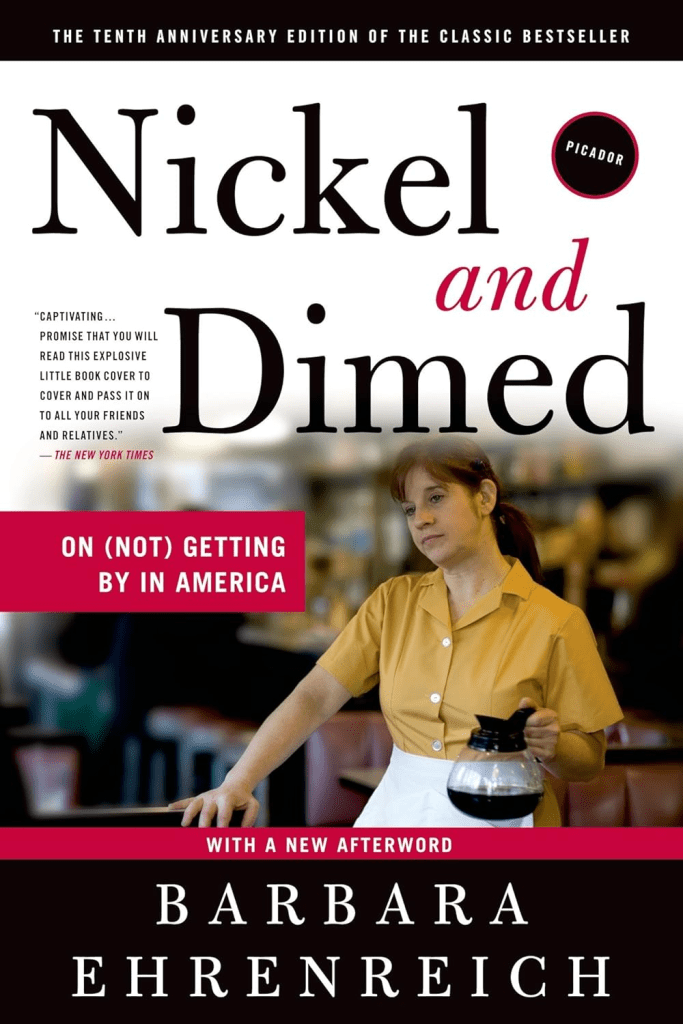
Nickel and Dimed: On (Not) Getting by in America by Barbara Ehrenreich

First published in 2001, Nickel and Dimed has remained scarily relevant for over twenty years. Between 1998 and 2000, writer Barbara Ehrenreich voluntarily joined the ranks of the working poor. She worked as a maid, nursing home aid, waitress, and Wal-Mart associate to understand the lived realities of millions of Americans below the poverty line. This book documents her experiences and struggles, such as working through pain and finding housing within her budget. The experiment ended when Ehrenreich faced homelessness, or, as she put it, she could no longer afford to work at Wal-Mart. Along with issues with housing, she also looks at food insecurity, the impact of manual labor on employees’ health, and hiring practices that veer into discriminatory. While the numbers have changed since this book was published, the facts have not. Nickel and Dimed remains a revelatory must-read for Americans today. 

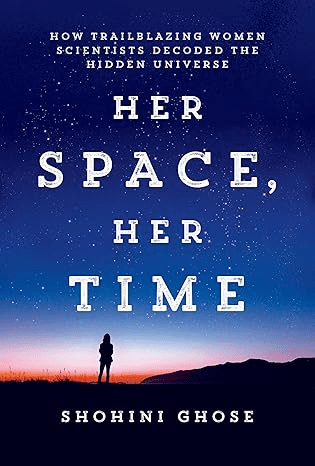
Her Space, Her Time: How Trailblazing Women Scientists Decoded the Hidden Universe by Shohini Ghose

Women have long been involved in scientific fields, but have rarely gotten acknowledged for their work until recent history. Her Space, Her Time finally gives some of these brilliant women their much overdue credit. In the late 19th Century, astronomer Annie Jump Cannon helped create Harvard’s Classification Scheme, which is still used today, while being paid less than her male counterparts. Lise Meitner and her nephew Otto Frisch published the first paper on nuclear fission. Meitner’s longtime collaborator Otto Hahn was awarded the Nobel Prize for this discovery, and Meitner was left in obscurity. We all know Marie Curie, but what about Harriet Brooks or Bibha Chowdhuri? Each chapter focuses on a different scientific top, such as astronomy, physics, or chemistry, and the women who helped revolutionize their fields of study. Ghose explains complex scientific concepts in an understandable way, perfect for science lovers who chickened out of taking physics in high school (read: me). I learned so much from this book, not only about science, but also about the phenomenal women who helped shape our understanding of the universe, from the smallest sub-atomic particles to the Big Bang.

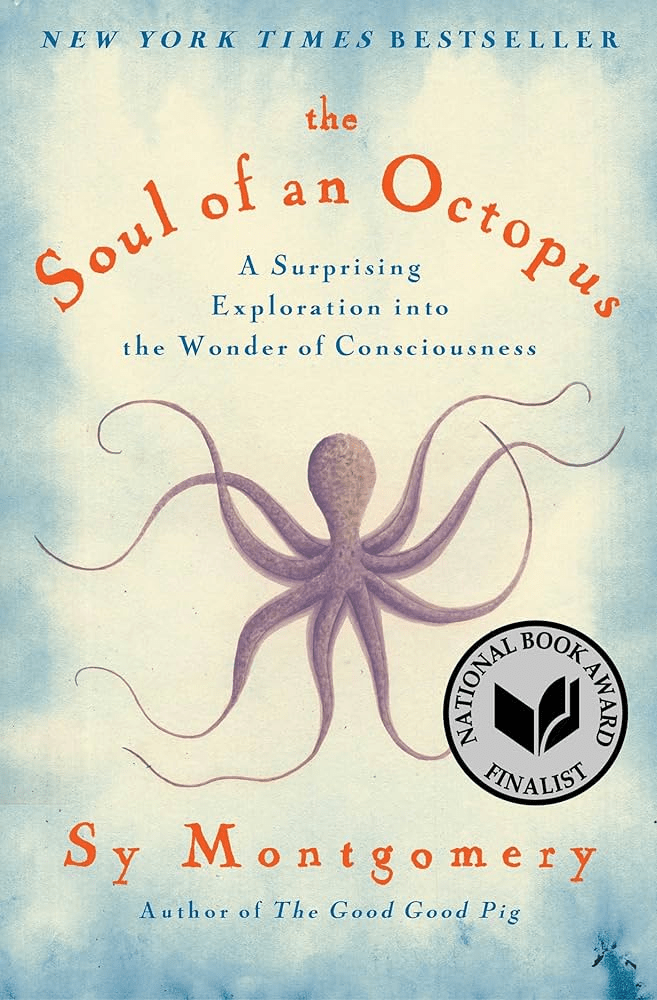
The Soul of an Octopus: A Surprising Explorating Into the Wonder of Consciousness  by Sy Montgomery


The intelligence and physiology of octopuses1 make them among the most fascinating animals on the planet. Naturalist Sy Montgomery was intrigued by octopus consciousness before she had the chance to meet one in person. At her casual visits to the aquarium, she felt that they were watching her as much as she was watching them. Montgomery first met the Pacific Octopus Athena, who eagerly latched on to Montgomery’s arm. Athena was strong enough to pull Montgomery into her icy tank, but instead was playful and curious. Thus began a series of octopus friends that Montgomery got to observe from their youth to death: Octavia, Kali, and Karma. Octopuses are highly intelligent animals that require toys and stimulation to keep them occupied; a bored octopus can be dangerous to itself and its handlers. They also have distinct personalities (Montgomery notes that Kali was aptly named) and strong emotions. Soul of an Octopus offers a compelling look at octopus consciousness both like and unlike our own. 

Patriot: A Memoir by Alexei Navalny

This story of Alexei Navalny’s life begins when he nearly died. While flying from Tomsk, Siberia to Moscow, he was poisoned with the nerve agent Novichok. He spent 18 days in a coma, and spent several months recovering in Berlin. Navalny knew who his would-be assassin was: Vladimir Putin. Navalny has been an outspoken critic of Putin’s regime and leader of the opposition party, the Anti-Corruption Foundation. He began writing his memoir while recovering from the poisoning, and ended it in prison. First is Navalny’s biography, where he recounts growing up before and after the fall of the Soviet Union and his education and early years as a lawyer. He writes about how he became the Russian opposition leader, and the dangerous and life-altering consequences for him and his family. One chilling chapter details Navalny returning to Russia after his poisoning, despite knowing that he will likely be arrested once he returns. The second half of the book is Navalny’s prison diaries and social media posts. He shares his experience in prison, including a hunger strike when he was denied medical care. The entries become sparser as his punishments in prison worsen, and Navalny would be killed in a prison above the Arctic Circle. Despite bleak circumstances, his writing never veers into self-pity or nihilism. Instead, he writes passionately about his work and condemns the invasion. Navalny also never loses his sharp sense of humor, adding some surprising moments of levity. While not an easy read, it is a powerful memorial and a stark reminder of how important it is to stand against authoritarianism. 

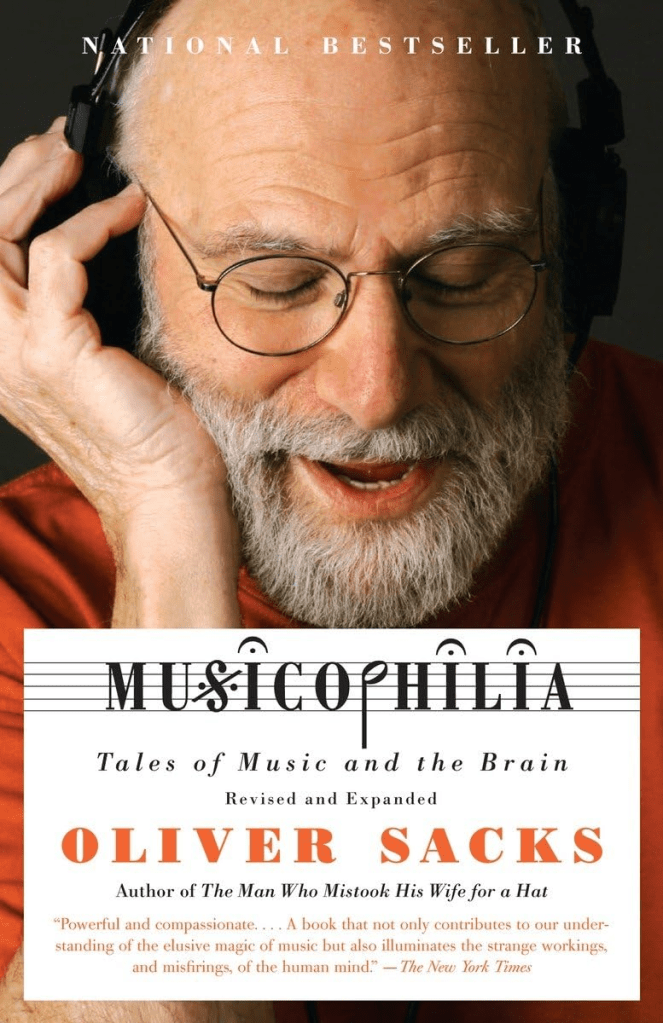
Musicophilia: Tales of Music and the Brain by Oliver Sacks

Ah, music! Who doesn’t love a great song that you can sing along to? Well, if you have amusia, a symphony may sound like pots and pans banging together. Musical hallucinations are real, too, and can cause a great deal of distress. But many of us love music, and our brains do, too. Oliver Sacks, best known for his work The Man Who Mistook His Wife For a Hat, takes a look into the good, the bad, and the utterly strange ways that music affects our brains. The book opens with the case of Tony Cicoria, a man who never had more than a casual interest in music. Then he was struck by lightning. Cicoria survived, but was struck by another passion: classical music. Within three months of his recovery, he was spending almost all of his time playing piano and composing music. His new obsession lasted decades. This is only one of the stories about the mysterious relationship between music and the human brain. Others include a man with amnesia whose memory lasts only seconds, but can still read and play music, a musician with severe Tourette’s whose tics diminish greatly only when he performs, among others. The therapeutic effects of music on people with Parkinson’s and Alzheimer’s is shown as well. Sacks never turns these narratives into freak shows, but writes compassionately about the power of music and the mysteries of the human brain. 

Fiction

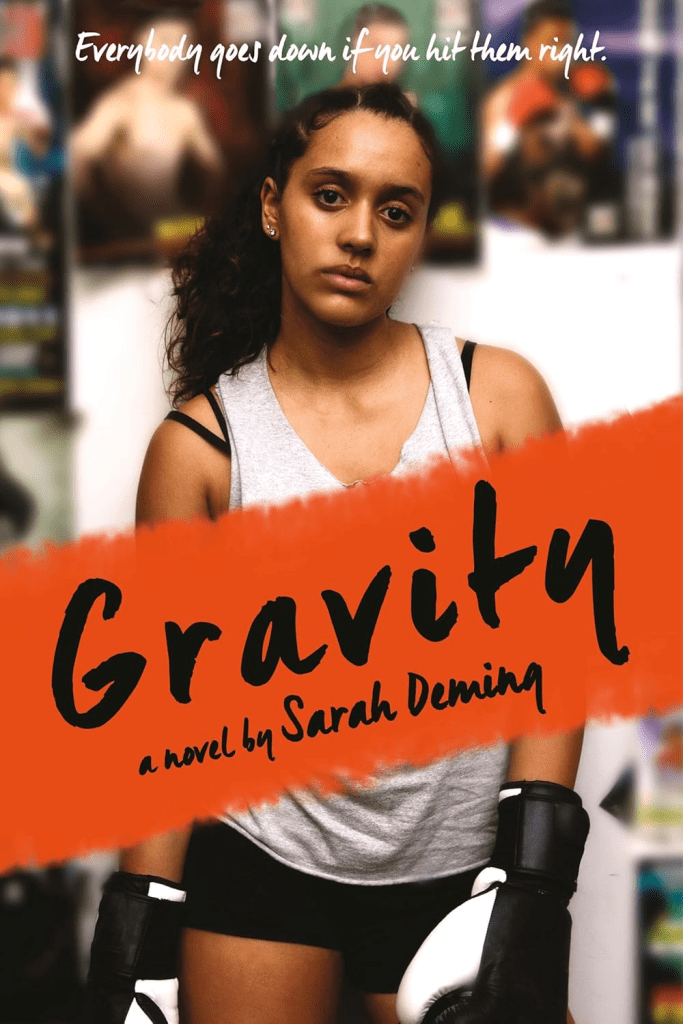
Gravity by Sarah Deming

Gravity Delgado is a force to be reckoned with. This young woman is a fierce, undefeated boxer, preparing for the 2016 Olympics in Rio. She’s been training since she was twelve, but her biggest challengers are the ones that she faces outside the ring. Her alcoholic mother, responsibilities for her younger brother, and a heady romance all threaten Gravity’s rising star. She still has her supportive aunt and cousin, as well as her found family at the gym in her corner. Still, Gravity’s biggest obstacle might be herself. The boxing matches are exciting to read, and include both the physical and mental aspects of a bout. Gravity makes mistakes and occasionally stumbles, but you’ll be cheering for her in and out of the ring. A novel that pulls no punches in the best way. 

The Truth About Everything by Bridget Farr

Fifteen-year-old Lark knows how to drive, fix an engine, and catch her own food, but she can barely read. She and her parents know the end is coming, and they’ll be the only ones left standing after the inevitable downfall of America. Raised by two doomsday preppers, Lark has never questioned the conspiracy theories that she was raised on. Then Lark gets her period for the first time. She thinks that she’s miscarrying, something that has happened to her mother many times before, but doesn’t know how she could have gotten pregnant in the first place. After her mother explains what her period is, Lark starts to wonder what else her parents haven’t told her? Lark secretly enrolls herself in high school, where new knowledge conflicts with everything she’s been taught at home. She’s hungry to learn, even when it means uncovering painful truths. But soon, Lark finds herself at a crossroads. What is the real truth? And what will Lark have to sacrifice for it? Pairs well with Educated by Tara Westover. 

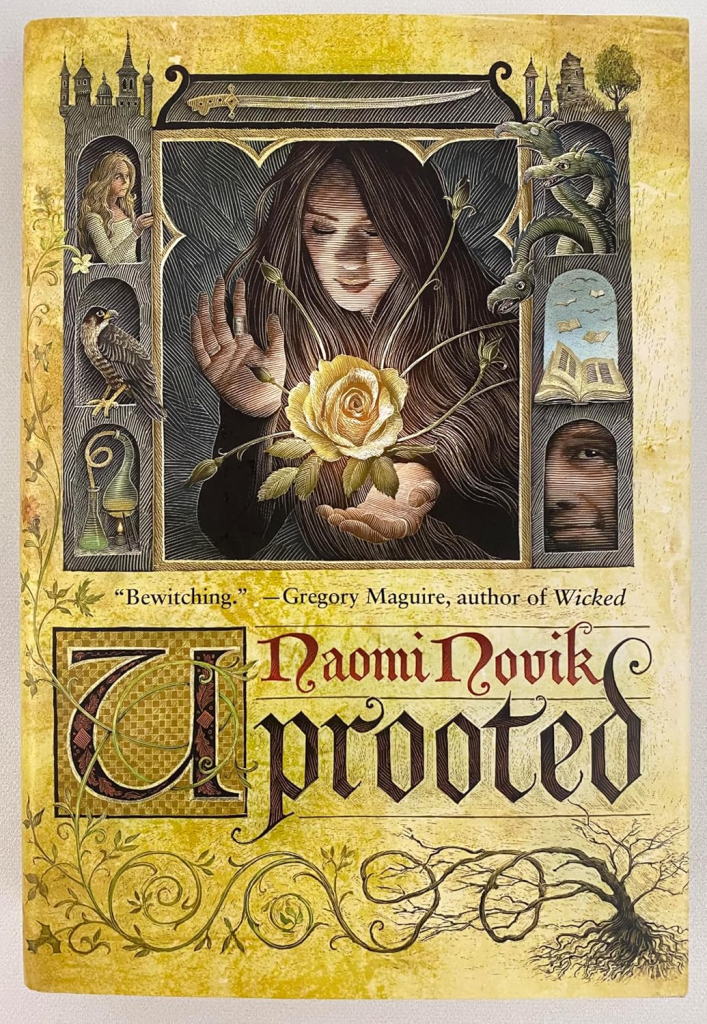
Uprooted by Naomi Novik

Once every ten years, the Dragon takes a village girl into his tower in the corrupt Wood. When she leaves a decade later, with jewels and finery, she is irrevocably changed and leaves the village forever. But the Dragon isn’t a scaly creature that breathes fire. He is a seemingly ageless, enigmatic wizard. Agnieszka has no fear of being taken. The Dragon only takes the most remarkable young ladies, and she’s nothing special. Though no one says it, everyone believes that Kasia, Agnieszka’s best friend, will be the one he picks. Yet it is Agnieszka the Dragon, reluctantly on his part. She is a witch, and her newly-found powers could be devastating if the corruption of the Wood reaches her. Agnieszka and the Dragon have a rocky start, but their mutual dislike of each other must be put aside when the Wood threatens her home. The well-developed characters, rich, Eastern European-inspired setting, and fantastic storytelling will leave you spellbound. 

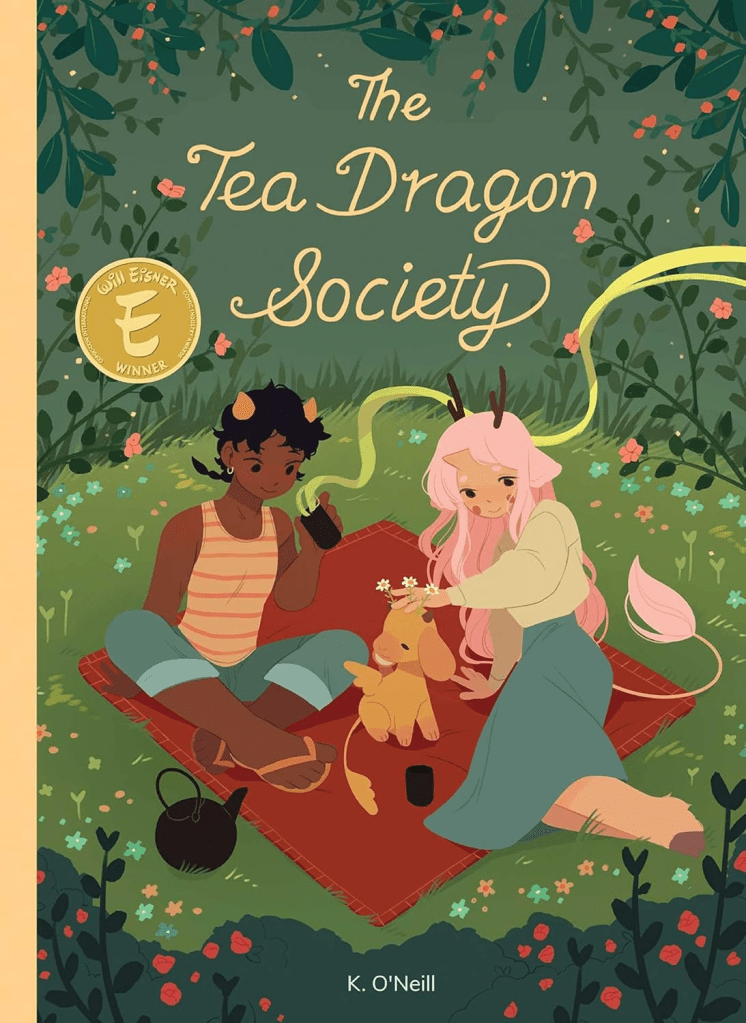
The Tea Dragon Society by K. O’Neil

Half-human, half-goblin Greta is an apprentice blacksmith in a world where the old crafts are fading. Greta helps a lost tea dragon – a small dragon that grows tea leaves – find its caretakers, and she is introduced to the Tea Dragon Society. Like blacksmithing, the care and cultivation of tea dragons is a dying art. The Tea Dragon Society is made up now only of Hesekiel, his partner Erik, and a shy girl named Minette. As a year passes, Greta learns to care for the dragons alongside Minette, assuring Hesekiel that the Tea Dragon Society will go on. I’ve enjoyed O’Neil’s other graphic novels, and The Tea Dragon Society embodies so much of what I love about their work. The artwork is soft, with no heavy outlines, adding to the whimsical feel of the world. It features a diverse cast in a simple but visually beautiful story. The Tea Dragon Society is the graphic novel equivalent of sliding into a warm bubble bath…maybe with a nice cup of tea. 

Long Way Down by Jason Reynolds

Will’s older brother, Shawn, has just been murdered. Will knows the rules of his neighborhood: don’t cry, don’t snitch, always get revenge. Will takes Shawn’s gun, and take the elevator from his eighth-floor apartment down to the first floor. The doors open on the seventh floor, and Shawn’s friend Buck gets on. Except Buck shouldn’t be here – he was already shot to death. On each floor, another ghost gets on. All of them played a role in Will’s life, and all of them were victims of gun violence. Each tells Will their stories, challenging his resolve. Can he kill his brother’s killer? Should he? This is a short, intense novel in verse that will stay with you long after you turn the final page.  

  1. Yes, that is the correct pluralization. Octopodes is acceptable, octopi is right out.  ↩︎

FFM 23: Your Librarian Believes in You!

Without in any way limiting the author’s exclusive rights under copyright, any use of this publication to “train” generative artificial intelligence (AI) technologies to generate text is expressly prohibited. The author reserves all rights to license uses of this work for generative AI training and development of machine learning language models.

July is Flash Fiction Month! I’ll be sharing short short stories here through the month of July. More notes at the end of the story.


Your librarian believes in you!

She believes that you can read all five books for the summer reading challenge. Really, you can! You might even find a new favorite!

Your librarian knows that you can go to storytime without crying, not even once. He knows how brave you are!

Your librarian knows that you’ll be a great volunteer. They think you ask good questions and pay attention to your tasks. Thank you so much for all your hard work!

Your librarian believes that you can use the library catalog. She’ll even show you how if you have questions. And she really trusts that you’ll be able to use it to look up every. Single. Book. on your school reading list, so she doesn’t have to. 

Your librarian is excited that you’re excited to use the computers. He would also like to let you know that you are so much smarter than that scary game on Roblox, and maybe there’s an even more fun game on the computer for you to play. 

Your librarian knows how enthusiastic you are about volunteering here. They really appreciate how you try very hard. They really think that you can do all your tasks correctly and follow simple instructions, even after you’ve proven them wrong. Keep trying!

Your librarian believes…that she needs a nap.


I had a different story planned, but it’s been a hectic day. Eight days until the end of the summer reading program. I’m exhausted.

Your librarian believes that you can Show Up for Libraries! (ALA) The Institute of Library and Museum Services is in danger of losing funding or being dismantled entirely. If you have just 5 minutes, call your representative and tell them to support IMLS and libraries! Read more about Executive Order 14238, which targets IMLS and other agencies.

“When a library is open, no matter its size or shape, democracy is open, too.”

― Bill Moyers

FFM 14: She stays away from Cabin 7

Without in any way limiting the author’s exclusive rights under copyright, any use of this publication to “train” generative artificial intelligence (AI) technologies to generate text is expressly prohibited. The author reserves all rights to license uses of this work for generative AI training and development of machine learning language models.

July is Flash Fiction Month! I’ll be sharing short short stories here through the month of July. More notes at the end of the story.


There’s always a stir when a new camper arrives, and for a long time Annabeth, Thalia, and Luke’s grand entrance to Camp Half-Blood was the most exciting thing to ever happen. Then this Percy Jackson kid showed up. 

New arrivals are always exciting, and there was a lot of speculation about who Percy really was. He settled in the Hermes cabin with the rest of us for a while, but we would gossip about him whenever he was out of sight. 

“Did you see what he did to the bathrooms? He’s probably Posedien’s son,” I said. 

My friend Dani scoffed. “Come on. You know the Big Three can’t have kids anymore.” 

Then, when he, Annabeth, and Grover all went off on their quest for the stolen Master Bolt, I had a hunch they were going in the wrong direction. Hermes was the god of thieves, after all. It would make sense that he had some hand in this. “What if it was someone from our cabin?” I suggested. “I like Luke, but he’s got a chip on his shoulder and he’s crafty enough to do it.” 

“Gods,” Dani sighed. “That’s the dumbest thing I’ve ever heard, Cassandra.”


IYKYK.

For those who don’t know: In Greek mythology, Cassandra was cursed by Apollo to give true prophecies, but no one would believe her. I’ve since been converted to a Percy Jackson fan, and thought it would be funny to have Cassandra as a camper. I thought about doing a vignette for each book in the first series, but it would all be kind of the same: “I bet that at least part of the Great Prophecy is about Luke.”
“Oh my gods, Cassandra, you’re such a liar.”

June 2025 Book Recs: Read with Pride

Without in any way limiting the author’s exclusive rights under copyright, any use of this publication to “train” generative artificial intelligence (AI) technologies to generate text is expressly prohibited. The author reserves all rights to license uses of this work for generative AI training and development of machine learning language models.


Before we begin, just a couple updates for summer. I’m trying to get back to two posts a month, but I’ve been really busy this spring. July is Flash Fiction Month, so I’ll be posting some short fiction here every day (hopefully). Summer is the busiest time of the year for me, so August is going to be a rest month. 

June is Pride Month! Pride celebrates LGBTQIA+ history, culture, and. well…pride! Pride began with the Stonewall riots in June and July of 1969, and June was officially recognized as “Gay and Lesbian Pride Month” in 1999. LGBTQIA+ rights have come a long way, but there’s still a lot of progress to be made, especially as the trans community is increasingly under attack. PFLAG has a really useful Executive Order Explainer that tracks anti-LGBTQIA+, anti-DEI, anti-immigration, anti-reproductive health, and anti-voting rights executive orders. It also includes links to resources like the Trans Legal Survival Guide from Advocates for Trans Equality, along with resources for mental health, advocacy, and legal help. 

LGBTQIA+ covers a huge range of identities, and two books can’t cover all of them. May was also an incredibly busy month for me, so I wasn’t able to do as much reading as I would like. I still hope this small selection of books enhances your Pride month!

Non-fiction

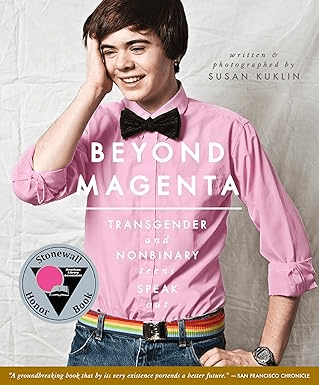
Beyond Magenta: Transgender Teens Speak Out by Susan Kuklin

Six teens and young adults – two trans girls, two trans boys, two nonbinary individuals (one of whom is intersex) – share their stories. With honesty and courage, these young people tell their stories about their early lives, their families, discovering their gender identities, and eventual transitions. They come from a range of backgrounds and experiences, like Luke who has a supportive family and realized he was trans with the help of his queer theatre group, or Mariah, who lived in poverty and has experienced violence due to her gender identity. (Note: Mariah’s chapter includes disturbing content, including sexual abuse.) She began to transition openly during her senior year at an all-boy Catholic school, in the face of bullying, an unsupportive mother, and punishments from the school. Many teens talk about the spectrum of gender and gender as a social construct. Most importantly, each chapter shows the subjects as whole, complex individuals, who are more than just their gender identity. 

Trans issues are a hot topic right now, and there is a lot of discourse and misinformation about gender identity, sexuality, and youth. It’s important for young trans and nonbinary people to have a seat at the table and tell their own stories. 

Fiction

The Gentleman’s Guide to Vice and Virtue by Mackenzie Lee

There is only one thing that Henry “Monty” Montague is looking forward to, probably for the rest of his life: his Tour of the European Continent. The Tour is something of a rite of passage for wealthy noblemen in the eighteenth century: a year of gambling, drinking, and debauchery before he returns to England to work alongside his father.  What he’s most interested in, however, is spending a year with his best friend, Percy. Monty has been secretly in love with Percy for years, and the Tour might be the last chance Monty has for something to happen with him. At the end of the Tour, Percy will be attending law school in Amsterdam, leaving Monty alone. Traveling with them is Monty’s intelligent but taciturn younger sister, Felicity, who struggles to understand Monty’s bisexuality. After a visit to Versailles ends in disaster worthy of being disinherited over, Monty, Percy, and Felicity find themselves being hunted down by bandits, catching rides on pirate ships, and – most terrifying of all – growing as people. This novel is a fun romp around Europe, full of adventure, romance, a bit of magic, and a few steamy scenes. The Montague siblings’ adventures continue in two sequels. 

May 2025 Book Recommendations: AAPI Heritage Month

May is Asian-American and Pacific Islander (AAPI) Heritage Month! Asian American Heritage Month began in 1979 as Asian/Pacific American Week. In 1992, May was permanently recognized as Asian/Pacific American Month. May is a significant month in Asian-American history, as the first Japanese immigrants arrived in the U.S. on May 7, 1843. On May 10, 1869, the first transcontinental railroad was finally completed, which was constructed in part by over 10,000 Chinese workers who faced dangerous conditions, low pay, and discrimination. AAPI month recognizes the contributions of Asian-Americans and Pacific Islanders while celebrating a myriad of rich cultures. 

This month, you get extra books! Asia and the Pacific Islands are huge areas with many diverse cultures, and there’s no way I can cover everything with just a few books. This year, there are two nonfiction books focusing on Asia, as well as one for the Pacific Islands. Normally I would only have one book for Asia in either category, but Banned Book Club feels so pertinent to the time we’re living in now that I had to include it. As it’s part of Korean history and takes place entirely in Korea, I wanted to highlight a book about the Asian-American experience as well. 

A quick note on the authors’ names: in many Asian countries, the family name comes before the personal name. Additionally, Asian immigrants may choose Western names for themselves after moving to a Western country. For this list, I’m using the names the authors were published under. 

Nonfiction

Almost American Girl by Robin Ha

This graphic novel memoir explores identity, adolescence, and the ups and downs of being an immigrant in America. Robin and her mom don’t always see eye-to-eye. Even so, they’re a team with an unbreakable bond. Robin doesn’t know why her mom wants to take them on a vacation to Alabama in the United States, but their trips together are so much fun, Robin trusts her. There, Robin meets Mr. Kim and his family, all Korean-American immigrants. Then Robin’s mom startles her when she announces they’re not going back to Korea. She and Mr. Kim are getting married and staying in America. Robin is suddenly separated from her home, her friends, and her beloved comic books without warning. Her mother insists that they will have a better life in America, away from the stigma of being a single parent, but Robin – doesn’t believe her. Robin enrolls in an American high school where he struggles with fitting in, learning English, and bullying from racist classmates and a manipulative cousin. Difficulties in her mother’s marriage, especially conflicts with her in-laws, add an extra layer of stress in Robin’s new home. As Robin finds her place in America, her strong bond with her mother carries both of them through their new lives as Korean-Americans. 

Banned Book Club by Kim Hyun Sook and Ko Hyung-Ju. Illustrated by Ryan Estrada. 

Hyun Sook’s first day of college in 1983 didn’t go like she expected. Her college campus is disrupted by student protests against South Korea’s Fifth Republic, a military regime with a history of censorship, torture, and murder. Hyun tries to keep her focus on her studies and the masked dance club, but things take an unexpected turn when she gets invited to a book club. Hyun thinks that she and other students will be discussing Western classics like Shakespeare or The Scarlet Letter, but is shocked to learn that it’s actually a club dedicated to reading books banned by the regime. The banned book club does much more than that to stand up to the government, like organizing protests and publishing illegal newspapers. As Hyun learns the truth about the world around her, she becomes more and more involved with the Banned Book Club and their activities. However, fighting back puts her and her family in danger. Banned Book Club is a graphic novel memoir with a unique illustration style. I wanted to highlight this one because it explicitly talks about how disinformation and censorship are tools used to create and aid unchecked power and violence. 

Poūkahangatus by Tayi Tibble

In Poūkahangatus (incisively pronounced “Pocohontas”), New Zealand poet Tayi Tibble explores what it means to be Māori, a woman, and a Millennial/Gen Z. Written in free verse and prose poetry, the collection tackles bigotry, sexism, and Indigenous representation in media. There’s also warmth and nostalgia as Tibble writes about her mother and childhood. My favorite poems were “Cowboys and Indians” a sly condemnation of the White Savior Complex, and “Vampires versus Werewolves.” At first glance it’s a poem about being a teenager at the height of Twilight’s popularity, but unfurls into something much deeper and more complex (“It’s the boy who cried wolf,/but in reverse you cry sheep and/nobody believes your bleating”). Poūkahangatus is a fantastic North American debut, and Tibble as a poet to watch.

Bonus Book: 

Paper Son: The Inspiring Story of Tyrus Wong, Immigrant and Artist by Julie Leung. Illustrated by Chris Sasaki.

Tyrus Wong (born Wong Gen Yao) immigrated to the United States from China in 1919 as a paper son, pretending to be the child of another Chinese person who had received U.S. residency. At age 9, he was temporarily separated from his father and detained at Angel Island Immigration Station before being allowed to enter the country. Tyrus and his father faced discrimination, but nothing dampened his love of art. Tyrus would become an artist for Disney, and eventually the lead artist for Bambi. He combined Eastern and Western art styles to create the film’s gorgeous backgrounds, but was fired soon after, and never got full credit for his work until recent years. This picture book biography is told with beautiful, impressionist illustrations.

Fiction

Ninetails: Nine Tales by Sally Wen Mao

Foxes populate folklore throughout the world. In Chinese mythology, hulijing, or fox spirits, can take on different forms, both benevolent and antagonistic. Ninetails is a collection of nine stories inspired by fox spirit lore. A cursed boy attempts to befriend his ostracized hulijing classmate; a vixen takes revenge on an abuser; a woman shrinks to be the size of wasps while an imposter takes over her life. My favorite was “Lotus Stench” in which a fox and a ghost become roommates. Another story runs through the book at interludes: “The Haunting of Angel Island.” Each part tells the story of a paper daughter detained at Angel Island while waiting for her interrogation to be let into the United States. These interludes are utterly absorbing and were some of my favorite parts of the book. A collection of surreal and engaging stories and historical fantasy.

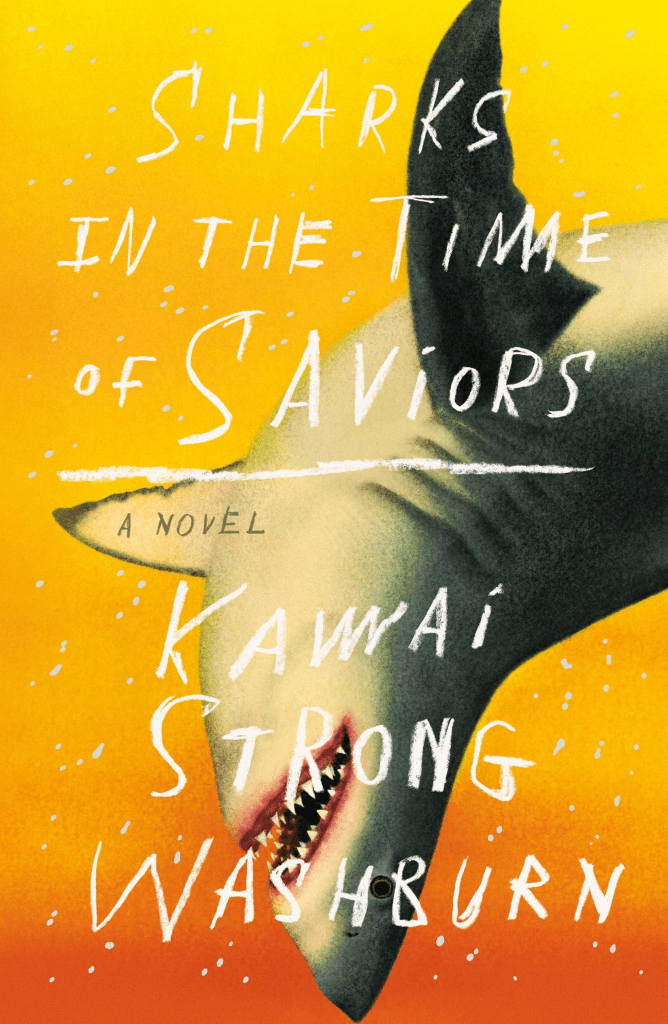
Sharks in the Time of Saviors by Kawai Strong Washburn

When he was seven years old, Nainoa fell overboard a glass-bottomed boat and into the ocean. He was returned to the boat gently, in the jaws of a shark, holding him as gently as a baby. Since then, Noa has been regarded as a miracle, and everyone in Kalihi knows it. Behind closed doors, Noa struggles with the expectations thrust upon him, while his siblings ache to be seen as something more than Noa’s brother and sister. As time passes, all three are drawn away from the Hawaiian Islands. Eldest brother Dean attends college in Spokane on a basketball scholarship with dreams of fame; Noa’s younger sister hurls herself into rigorous academics and increasingly bigger risks in San Diego. Nainoa works as an EMT in Portland as he tries to understand his abilities, and what he should be doing with his gift. Through all of this, their mother, Malia, believes that Noa has been chosen by the gods to do something great. Tragedy draws the family back together, where they must reconcile their complicated bonds and failures. Sharks in the Time of Saviors is a lyrical family saga with Indigenous Hawaiian religion and mysticism woven throughout. 

Bonus Book

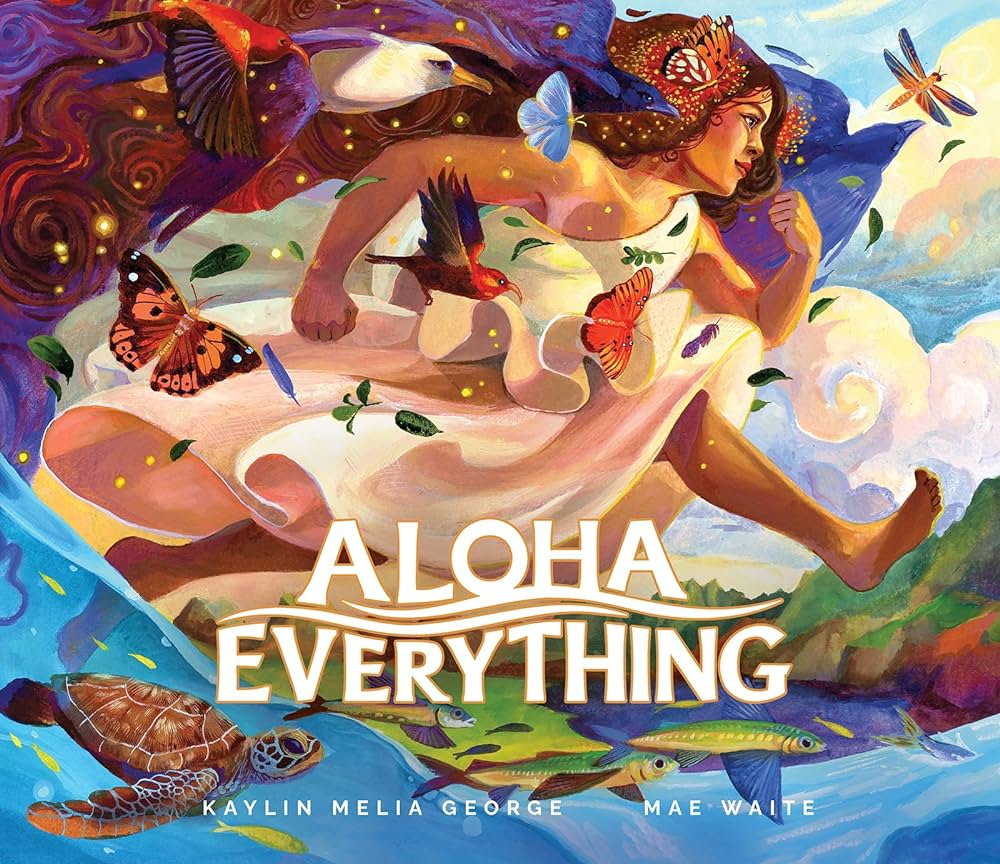
Aloha Everything by Kaylin Melia George. Illustrated by Mae Waite.

A baby nestled under the branches of a koa tree grows to become a proud and strong Hawaiian woman in this vibrant picture book. Through breathtaking illustrations and verse with Hawaiian words sprinkled throughout, the reader watches the girl grow and learn. The book is a celebration of hula, nature, and Hawaiian history and culture. A glossary and pronunciation guide of Hawaiian words is included. What did hula teach her?  What did hula teach you? 

Your library will always be there for you. Please be there for your library.

Without in any way limiting the author’s exclusive rights under copyright, any use of this publication to “train” generative artificial intelligence (AI) technologies to generate text is expressly prohibited. The author reserves all rights to license uses of this work for generative AI training and development of machine learning language models.


I’m writing this introduction on Saturday, January 18, on my lunch break. I don’t usually work Saturdays, but today I have a Teen Advisory Board meeting. In a few hours, a group of teenagers will come into the library and tell me what kinds of things they would like to see the library provide for them. I’ll distribute scholarship information for three local colleges, tell them about a student employee position that’s just opened up, and give them advice on how to apply and what the library looks for in a job interview. After, we’ll make cards for troops stationed abroad. Elsewhere in the library, adults and kids will be using computers to access the internet, do homework, apply for jobs, or catch up on YouTube. People who don’t have internet access at home can check out hotspots. Maybe they’ll use it to access live virtual tutoring, or Ancestry.com, or Consumer Reports – all free with their library card. And, of course, there will be books. All kinds of books: novels, picture books, biographies, travel guides, comic books, board books, cookbooks, books for beginning readers and books that read to you. 

Later this month, kids will practice reading to a licensed therapy dog. People struggling with food insecurity will receive assistance in applying for SNAP benefits. Toddlers and pre-schoolers will learn pre-literacy skills at storytime (including a bilingual storytime). Free tax assistance will be available. Senior citizens will take a class to learn basic computer skills English language learners will meet to practice casual conversations. I’ll also be running my favorite activity, a tabletop roleplaying game for teens, which has become a haven for a small group of queer teens. All of this for the low, low price of free. 

Libraries are one of the few places left where you don’t have to pay anything to be there, you don’t even necessarily need to be a member. Just come in, and we’ll try to help you. 

Libraries are magical. They are also in danger. 

For many of us in the United States, the next four years are going to be a scary and difficult time. There is so much I could talk about when we discuss the second Trump administration, but I want to focus on something that this blog has always focused on: books. Well, books, literacy, and access to information. As I have said in a previous post, access to information is recognized as a basic human right by the United Nations. In an age of rampant misinformation and censorship, this is a right that needs to be safeguarded more than ever. Public libraries are on the forefront of the battle for intellectual freedom, a battle which is only going to intensify in the coming years. 

As I’ve written about before, public and school libraries are facing intense scrutiny over the materials they have on their shelves. Book bans are on the rise, and libraries and library staff are facing threats of violence, lawsuits, and even jail time. And things are going to get much, much worse. 

The Trump administration’s plans are detailed in Project 2025. This is not a document of hypotheticals; this is a road map. And this road map leads to, among other things, a direct attack on every Americans’ intellectual freedom. 

Project 2025 aims to dismantle the Department of Education, cancel funding for public services,  support censorship, and, potentially, jail teachers, librarians, and booksellers. 

That’s not hyperbole. Project 2025 classifies any LGBTQIA+ material as pornography, including picture books like the innocent And Tango Makes Three or non-fiction books intended for education, like This Book is Gay. If that wasn’t bad enough, librarians and others who distribute “pornography” to children may be required to register as sex offenders. 

Yes, you read that right. No, this is not me being melodramatic. Conflating LGBTQIA+ media with pornography is a tried and true tactic when it comes to censoring, challenging, and banning books. 

Nor am I exaggerating the potential legal consequences for librarians. So far, Indiana, Oklahoma, Tennessee, and Montana have passed laws that say school staff, public librarians, and museum employees could be jailed and/or fined thousands of dollars for distributing “obscene” material to children. 

Book challenges and bans are only going to become more frequent. Moms For Liberty, right-wing group dedicated to banning books, is strongly supported by the Heritage Foundation [PDF] (the organization behind Project 2025), by providing them with financial and even legal support.

The final thing I want to talk about regarding Project 2025 and libraries is not nearly as dramatic as everything else, but it is no less crucial. Federal funding for public services is going to be greatly reduced, up to and including eliminating the Institute of Museum and Library Services (IMLS). Most libraries already operate on string shoe budgets, and librarians and library staff are notoriously underpaid. Cutting federal funding is going to hurt the services that libraries offer, especially in rural and low-income areas. 

There is a big disconnect between politicians and their constituents in the perception of public libraries. They are valued community spaces with something for everyone – be it Talking Books for the blind, someone to walk you through an online job application, even just a safe place to exist. There’s a lot of love for libraries. In fact, there’s more public libraries than there are McDonald’s in the U.S.

To borrow some words from The Memeing Librarian: The library will always be here for you. So please be there for your library. 

I know that libraries are not going to be on the forefront of your mind as we go into this next big challenge together. However, there are simple, everyday things that you can do to support your library, free speech, and freedom of information. 

First, VOTE! Not just in big national elections, but state and local elections as well. Local elections determine so many things in your community, like commissioners, judgeships, school boards, and funding for public services like the library. 

Get a library card if you don’t already have one, and check out books. I know this seems obvious, but it’s really important. One of the things that determines funding for libraries is the number of members a library has, as well as circulation for books, DVDs, and other library materials. Some libraries even have “library of things” where you can borrow items like tools or cake pans, or seed libraries if you want to start your own garden. My library system also lends hotspots and backpacks with educational materials based on certain topics.

Attend library programs. Like I mentioned above, statistics are everything when it comes to securing funding. Library programs aren’t just for kids, either. There’s lots of stuff for adults and teenagers. Some popular recurring programs we have for adults are film discussions, “craft and chat” events, and English language learning events. Attendance is also a good way to show the library what you’re interested in seeing for future events. Many libraries also have teen advisory boards, where teens can give their input into library programs and earn community service hours. 

Volunteer. There is always something that needs to be done, whether it’s organizing books, preparing crafts for storytime, tutoring, or corralling kids during a craft-a-palooza. You could also join a Friends organization. Many libraries also have a Friends organization, which raises money for the library. Our Friends organization has helped pay for activities and guest presenters, like theatre performances and historical impersonators. 

Donate if you are able. Financial donations are obviously the most direct way you can give, but there are other things you can donate as well. Lightly used books that someone else might want to read (please don’t give us your old copy of Windows 95 for Dummies) may be added to the library’s collection or sold in a book sale to raise money. It doesn’t have to be just books, either. Last year, someone donated a huge box of Pokemon cards, which meant that every kid who attended a Pokemon program I ran got 2 cards to take home, and a holographic card if they registered for the Summer Reading Program. 

Give the library your feedback (but be nice about it). If you liked a program, if you hate the new signage, if we absolutely need to get this book or that movie. Most libraries also have online surveys and book order requests on their websites.

Tell your librarian what you love about the library. I love my job, but it’s not as easy as it looks, and there are times when I’ve fantasized about just walking out and never coming back. It’s the little wins, like helping a patron find the perfect book or a parent giving a compliment that helps us get through the day and reminding us why we do this. 

When you take a book off the shelf and decide you don’t want it, don’t put it back on the shelf. Don’t put it at the end of the shelf. Don’t leave it next to the self check-out. Please stop reshelving the books. Please. I’m begging you.

These next four years are going to be tough. Take care of yourself, take care of your loved ones, and take care of your library. 

Some sources and further reading: 

Project 2025 and Its Threat to Free Expression, Part 1 (PEN America)
Project 2025 and Its Threat to Free Expression, Part 2 (PEN America)
Project 2025 and Its Consequences for Libraries (EveryLibrary Institute, PDF)
Red states threaten libraries with prison — as blue states work to protect them (Washington Post)
Unite Against Book Bans (American Library Association)
Banned & Challenged Books (ALA)
Trans Rights Readathon
We Need Diverse Books


December Book Recs: Right Stuff, Wrong Sex


Without in any way limiting the author’s exclusive rights under copyright, any use of this publication to “train” generative artificial intelligence (AI) technologies to generate text is expressly prohibited. The author reserves all rights to license uses of this work for generative AI training and development of machine learning language models.


Credit where it’s due: the title for this post was “borrowed” from the book Right Stuff, Wrong Sex by Margaret A. Weitekamp. 

We’ve made it through another year, and what a year it’s been. I’ll have a short post for January. For the rest of 2025, my goal is to start posting twice a month again. Until then, here’s the last book recommendation list for 2024.

Also, hi, Yvette, the lady I met during OT this week. Thanks for your encouragement! 

The book sommelier is back! For December, here’s two books that pair together nicely for a stellar reading experience. 

Nonfiction

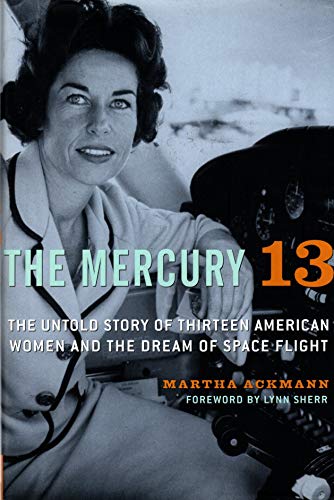
The Mercury 13: The Untold Story of Thirteen American Women and the Dream of Space Flight by Martha Ackmann

Before there was Sally Ride, there was Jerrie Cobb. All eyes were on the Project Mercury astronauts, Air Force test pilots who were all deemed to have “the right stuff” to go into space. Dr. William Randolph Lovelace II wanted to cast a broader net than just the men that the government thought were worthy of going to space. There were many accomplished women pilots in the country, but as women were barred from flying in the military, they were automatically disqualified as astronaut candidates. Dr. Lovelace theorized that women might make better astronauts than men, and pushed for “lady astronauts.” Jerrie Cobb, a woman with an impressive list of aviation achievements, eagerly trained, hoping to be one of the first women in space. When she proved that she could pass the same tests that the prospective male pilots did, more women joined this secret project. Thirteen women passed the arduous tests which proved women were space-worthy, but societal customs and political maneuverings meant that none of the Mercury 13 would ever leave Earth. The Mercury 13 tells the largely unknown story of the women who dared to reach for the stars. Detailed biographies of Jerrie Cobb, Dr. Lovelace, and celebrated pilot Jackie Cochran are woven in with the narrative. Interviews with the women who underwent the Lovelace tests offer personal insight into their experiences. Inspiring and disheartening all at once, Ackmann finally brings to light the story of these brave and tenacious women who were willing to give everything they had for a moonshot of their own.

Note: This book has two different subtitles: The Untold Story of Thirteen American Women and the Dream of Space Flight, and The True Story of Thirteen Women and the Dream of Space Flight. I used the “Untold” version since that’s the copy of the book I have. The actual text of the book is the same in either one.

Fiction

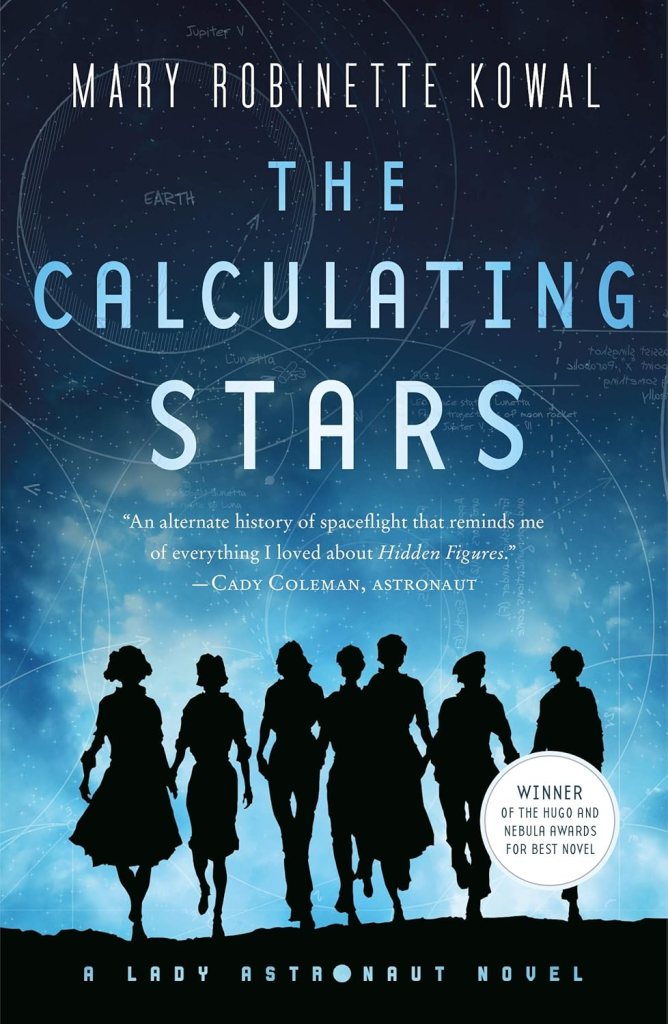
The Calculating Stars by Mary Robinette Kowall

In 1952, Elma York and her husband, Nathaniel, are lucky to be alive after a devastating meteorite strike obliterates much of the eastern coast of the U.S. Elma, a physicist, mathematician, and pilot, is eager to do something, anything, to help survivors and rebuild the country, but her talents are overlooked in favor of men. That is, until she calculates what the long-term effects of the meteorite strike will be. A climate disaster will make Earth unsuitable for habitation, and colonizing space becomes humanity’s only chance for survival. Elma joins the fledgling international space agency, IAC, as a computer, performing calculations that will put a man into orbit. But with so many qualified women pilots and scientists working alongside her, Alma starts to wonder: why can’t women be astronauts? When Elma makes headlines during an all-women airshow, she finally has a chance to advocate for her cause. Sexism and her crippling anxiety would have her stay on the ground, but Elma’s determined – for herself, and for all the brilliant women whose skills have gone unnoticed. One thing I liked was the inclusion of women of color in Elma’s crusade. Elma does have her prejudices and blind spots, but she learns from her mistakes. The real-life Project Mercury astronauts and Mercury 13 were all White, and I was glad to see diversity being added to the space race. The Calculating Stars is great for fans of alt-history and realistic sci-fi. 

See you next year!

Nov. 2024 Recs: Native American Heritage Month

Without in any way limiting the author’s exclusive rights under copyright, any use of this publication to “train” generative artificial intelligence (AI) technologies to generate text is expressly prohibited. The author reserves all rights to license uses of this work for generative AI training and development of machine learning language models.


November is Native American Heritage Month! Native American Heritage Month was established in 1990 to recognize and celebrate the diverse cultures of Indigenous Americans. There are 574 federally recognized Indigenous nations in the United States. Native Land Digital contains a map which shows the original territories of Indigenous peoples across the globe. I encourage everyone to check it out and learn about the original inhabitants of your area. 

Nonfiction

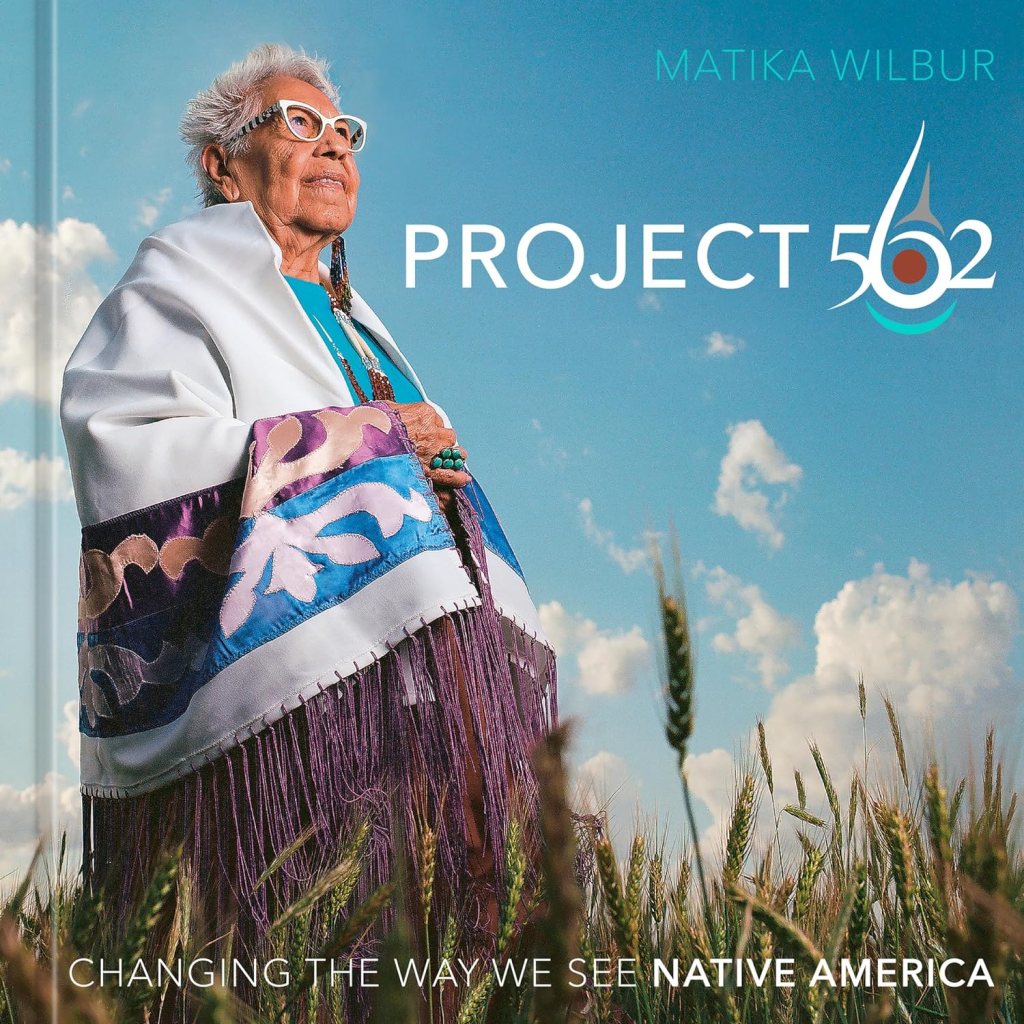
Project 562: Changing the Way We See Native America by Matika Wilbur

“Representation without us is representation done to us.” With these words, Matika Wilbur introduces Project 562, a photojournalism project that shares the lives of Indigenous People across the United States. Traveling thousands of miles, Wilbur set out to interview and photograph someone from each Indigenous nation. (Note: when the project began in 2012, there were 562 federally recognized Indigenous Nations; there are now 574.) Wilbur’s portrait photography is gorgeous, each accompanied by the subject’s story: an Ojibwe man harvesting wild rice; Two Spirit powwow dancers; a woman recounting how boarding school has shaped her family for generations; the teen beauty queen who entered the pageant because everyone told her she wouldn’t win. This work captures the diversity of contemporary Indigenous people while honoring tradition and heritage. Wilbur’s beautiful work is not to be missed, and serves as a reminder that  “Indigenous existence is all around us. It is up to us to listen.”

Fiction

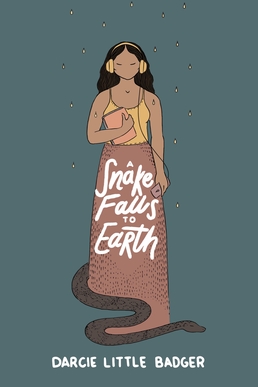
A Snake Falls to Earth by Darcie Little Badger

Nina, a Lipan Apache teen living in Texas, has family mysteries to solve. Specifically, the last story her great-great grandmother Rosita would ever tell her. There’s one big problem: Rosita told the story in Spanish and Lipan Apache, and Nina has no idea what she was trying to say. As she painstakingly works on translating the story, she discovers more mysteries. Did Rosita really see a fish-girl in her seemingly bottomless well? Why does Grandma get sick when she leaves the land that’s been in her family for generations? And are those mysterious people who come to her father’s bookstore really animal-people from the Reflecting World? 

Meanwhile, in the Reflecting World, Oli is a timid cottonmouth snake reluctantly forced into adulthood. After a rough start, Oli makes a life for himself. It’s not always easy, though he tries to steer clear of the catfish cultists and bear bounty hunters. When his best friend, a toad named Ami, falls ill, Oli is terrified that Ami’s species is facing extinction – a death sentence for the animal-people in this world. If he can get to the human world, maybe he can find out what’s happening to Ami’s species and fix it. With a pair of rambunctious coyote sisters and a red-tailed hawk at his side, Oli is ready to go to the ends of the earth (or fall to it) to save his friend. 

October 2024 Recs: Spooky Season

It’s spooky season! While I am not a huge fan of horror, I can appreciate how the genre can work on multiple levels. Scary stories are excellent ways to examine human nature and society…and perfect for keeping you up on dark and stormy nights. 

Nonfiction

The Poisoner’s Handbook:  Murder and the Birth of Forensic Medicine in Jazz Age New York by Deborah Blum

Prohibition-era New York City was a hotbed of political corruption, organized crime, and poison. Poison was a deadly fact of life, found in the bootlegged liquor of speakeasies, beauty tonics, and in the hands of impatient heirs and jealous spouses. New York City’s chief medical examiner, Charles Norris, set out to change things. With his assistant Alexander Gettler, the NYC medical examiner’s office became the birthplace of forensic medicine. Working long hours, they examined corpses, exhumed bodies, and invented groundbreaking new tests to identify poisons, and put poisoners behind bars. Each chapter is centered on a different poison: chloroform and cyanide to kill, methyl alcohol served in speakeasies, industrial poisons such as tetraethyl lead and radium, and more. The Poisoner’s Handbook is a perfect for lovers of true crime and science history, though there are moments where a strong stomach is helpful.

Lakewood by Megan Giddings

After the death of her grandmother, college student Lena Johnson takes over the role of head of household. Her mother, Deziree, suffers from a mysterious serious illness (or possibly illnesses)  which has racked up more medical debt than the Johnson family can afford. Sometimes, it’s a choice between paying for water or paying for medicine. When Lena gets invited to take part in a research study that pays beyond well and offers amazing health insurance for Deziree, she thinks she’s found her way out. Lena moves to the sleepy town of Lakewood to become a test subject in a secretive government research project. She knows that what she’s doing is risky, but she is willing to endure everything for her mother’s sake. When will the risks become too big, and what will the consequences be when they do? Drawing from the historical medical exploitation of BIPOC individuals (Lena is Black; the experimenters are all White), Lakewood is a slow burn horror that will get under your skin…in more ways than one.

Indie Review: OMG UR a Teenager!

I’m a Reedsy Discovery reviewer! I received a free ARC of OMG UR a Teenager! by Leslie Young for this review.

⭐⭐⭐⭐

Twelve-year-old Kat Cruz can’t wait for her next birthday. Before she can become a teenager, though, she’ll have to make it through seventh grade. The year starts off rough when her parents buy the most run-down house in the neighborhood, and a bully snaps a picture of Kat in front of her new house. She’s constantly stuck babysitting her younger brother, who thinks he’s a superhero. Kat’s editorials in the school newspaper make a splash, but not always in a good way. She’s also crushing on her new neighbor, Will, despite the fact that his mom doesn’t seem to like her. With new challenges every day, will Kat make it to her thirteenth birthday in one piece? 

OMG UR a Teenager by Leslie Young is a contemporary slice-of-life novel full of clear, crisp writing that makes it easy for young readers to get into the story. The relatability will keep them invested throughout the book. Kat experiences things that many kids going through pre-adolescence face: bullying, the excitement and mortification of buying your first bra, and changing family dynamics. Most of all, she wants to be seen as the mature nearly-teen she is, not a child and permanent babysitter for her little brother, Max. Tween readers will understand exactly how she feels, and adults will easily recall both the joys and pains of middle school.

Kat’s family dynamic is true to life as well, with well-intentioned parents who don’t understand their daughter’s point of view, an annoying little brother that Kat loves (even if she wants to kill him sometimes), and her vivacious grandmother whose Alzheimer’s puts extra strain on the family. Kat’s and Max’s relationship is developed particularly well, showing their closeness (especially in the climax), even if they don’t always get along. However, Gran’s storyline wasn’t as well-developed, making her inclusion in the book feel unnecessary.

At times the story can feel disjointed, such as an abrupt cut from summer to Halloween. Like Gran’s story, some plot points are dropped without a conclusion. Kat’s narration is also, at times, too mature to be realistic for a twelve-year-old. While adult readers might have to stretch their suspension of disbelief at some of Kat’s inner monologues, tween readers may find her insights useful in their own lives.

Overall, OMG UR a Teenager is a warm-hearted, relatable story for tweens, and anyone who’s ever been one.