December Book Recs: Right Stuff, Wrong Sex


Without in any way limiting the author’s exclusive rights under copyright, any use of this publication to “train” generative artificial intelligence (AI) technologies to generate text is expressly prohibited. The author reserves all rights to license uses of this work for generative AI training and development of machine learning language models.


Credit where it’s due: the title for this post was “borrowed” from the book Right Stuff, Wrong Sex by Margaret A. Weitekamp. 

We’ve made it through another year, and what a year it’s been. I’ll have a short post for January. For the rest of 2025, my goal is to start posting twice a month again. Until then, here’s the last book recommendation list for 2024.

Also, hi, Yvette, the lady I met during OT this week. Thanks for your encouragement! 

The book sommelier is back! For December, here’s two books that pair together nicely for a stellar reading experience. 

Nonfiction

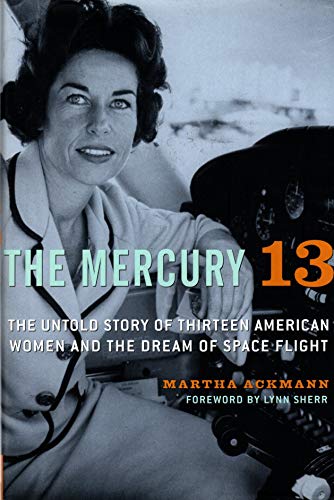
The Mercury 13: The Untold Story of Thirteen American Women and the Dream of Space Flight by Martha Ackmann

Before there was Sally Ride, there was Jerrie Cobb. All eyes were on the Project Mercury astronauts, Air Force test pilots who were all deemed to have “the right stuff” to go into space. Dr. William Randolph Lovelace II wanted to cast a broader net than just the men that the government thought were worthy of going to space. There were many accomplished women pilots in the country, but as women were barred from flying in the military, they were automatically disqualified as astronaut candidates. Dr. Lovelace theorized that women might make better astronauts than men, and pushed for “lady astronauts.” Jerrie Cobb, a woman with an impressive list of aviation achievements, eagerly trained, hoping to be one of the first women in space. When she proved that she could pass the same tests that the prospective male pilots did, more women joined this secret project. Thirteen women passed the arduous tests which proved women were space-worthy, but societal customs and political maneuverings meant that none of the Mercury 13 would ever leave Earth. The Mercury 13 tells the largely unknown story of the women who dared to reach for the stars. Detailed biographies of Jerrie Cobb, Dr. Lovelace, and celebrated pilot Jackie Cochran are woven in with the narrative. Interviews with the women who underwent the Lovelace tests offer personal insight into their experiences. Inspiring and disheartening all at once, Ackmann finally brings to light the story of these brave and tenacious women who were willing to give everything they had for a moonshot of their own.

Note: This book has two different subtitles: The Untold Story of Thirteen American Women and the Dream of Space Flight, and The True Story of Thirteen Women and the Dream of Space Flight. I used the “Untold” version since that’s the copy of the book I have. The actual text of the book is the same in either one.

Fiction

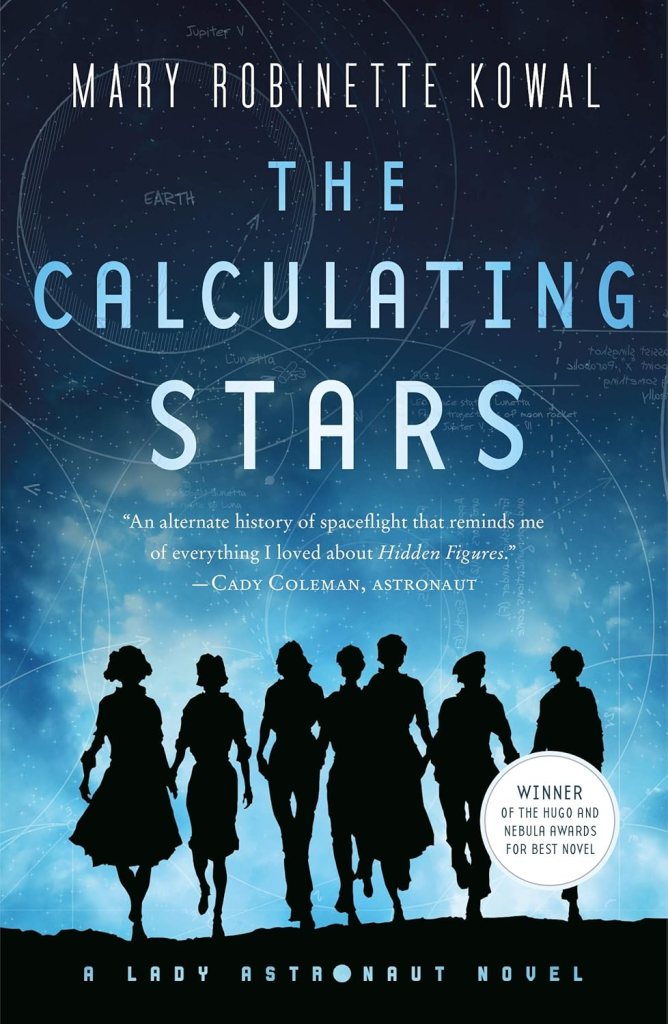
The Calculating Stars by Mary Robinette Kowall

In 1952, Elma York and her husband, Nathaniel, are lucky to be alive after a devastating meteorite strike obliterates much of the eastern coast of the U.S. Elma, a physicist, mathematician, and pilot, is eager to do something, anything, to help survivors and rebuild the country, but her talents are overlooked in favor of men. That is, until she calculates what the long-term effects of the meteorite strike will be. A climate disaster will make Earth unsuitable for habitation, and colonizing space becomes humanity’s only chance for survival. Elma joins the fledgling international space agency, IAC, as a computer, performing calculations that will put a man into orbit. But with so many qualified women pilots and scientists working alongside her, Alma starts to wonder: why can’t women be astronauts? When Elma makes headlines during an all-women airshow, she finally has a chance to advocate for her cause. Sexism and her crippling anxiety would have her stay on the ground, but Elma’s determined – for herself, and for all the brilliant women whose skills have gone unnoticed. One thing I liked was the inclusion of women of color in Elma’s crusade. Elma does have her prejudices and blind spots, but she learns from her mistakes. The real-life Project Mercury astronauts and Mercury 13 were all White, and I was glad to see diversity being added to the space race. The Calculating Stars is great for fans of alt-history and realistic sci-fi. 

See you next year!

Nov. 2024 Recs: Native American Heritage Month

Without in any way limiting the author’s exclusive rights under copyright, any use of this publication to “train” generative artificial intelligence (AI) technologies to generate text is expressly prohibited. The author reserves all rights to license uses of this work for generative AI training and development of machine learning language models.


November is Native American Heritage Month! Native American Heritage Month was established in 1990 to recognize and celebrate the diverse cultures of Indigenous Americans. There are 574 federally recognized Indigenous nations in the United States. Native Land Digital contains a map which shows the original territories of Indigenous peoples across the globe. I encourage everyone to check it out and learn about the original inhabitants of your area. 

Nonfiction

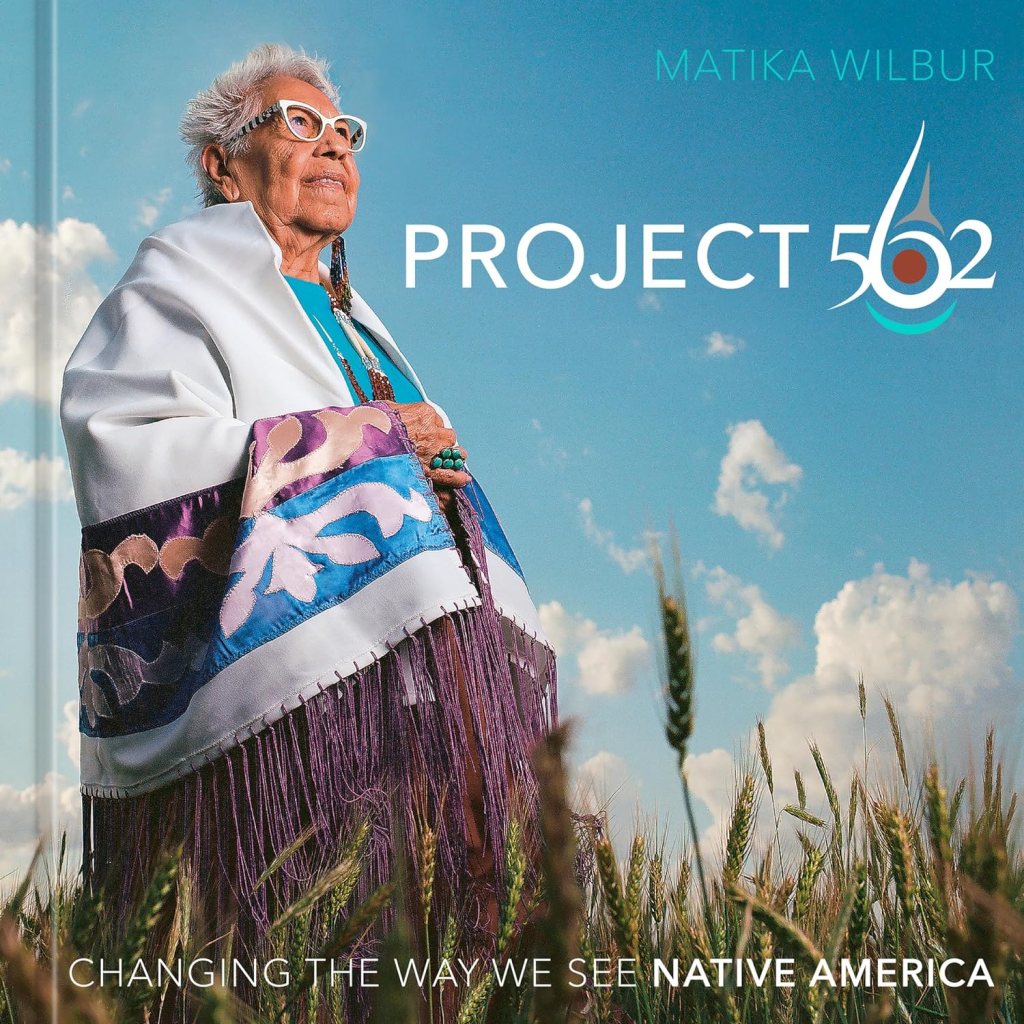
Project 562: Changing the Way We See Native America by Matika Wilbur

“Representation without us is representation done to us.” With these words, Matika Wilbur introduces Project 562, a photojournalism project that shares the lives of Indigenous People across the United States. Traveling thousands of miles, Wilbur set out to interview and photograph someone from each Indigenous nation. (Note: when the project began in 2012, there were 562 federally recognized Indigenous Nations; there are now 574.) Wilbur’s portrait photography is gorgeous, each accompanied by the subject’s story: an Ojibwe man harvesting wild rice; Two Spirit powwow dancers; a woman recounting how boarding school has shaped her family for generations; the teen beauty queen who entered the pageant because everyone told her she wouldn’t win. This work captures the diversity of contemporary Indigenous people while honoring tradition and heritage. Wilbur’s beautiful work is not to be missed, and serves as a reminder that  “Indigenous existence is all around us. It is up to us to listen.”

Fiction

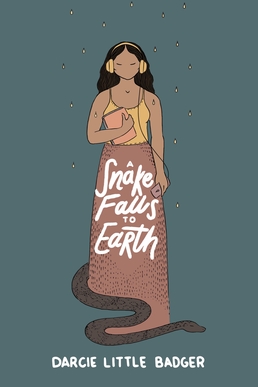
A Snake Falls to Earth by Darcie Little Badger

Nina, a Lipan Apache teen living in Texas, has family mysteries to solve. Specifically, the last story her great-great grandmother Rosita would ever tell her. There’s one big problem: Rosita told the story in Spanish and Lipan Apache, and Nina has no idea what she was trying to say. As she painstakingly works on translating the story, she discovers more mysteries. Did Rosita really see a fish-girl in her seemingly bottomless well? Why does Grandma get sick when she leaves the land that’s been in her family for generations? And are those mysterious people who come to her father’s bookstore really animal-people from the Reflecting World? 

Meanwhile, in the Reflecting World, Oli is a timid cottonmouth snake reluctantly forced into adulthood. After a rough start, Oli makes a life for himself. It’s not always easy, though he tries to steer clear of the catfish cultists and bear bounty hunters. When his best friend, a toad named Ami, falls ill, Oli is terrified that Ami’s species is facing extinction – a death sentence for the animal-people in this world. If he can get to the human world, maybe he can find out what’s happening to Ami’s species and fix it. With a pair of rambunctious coyote sisters and a red-tailed hawk at his side, Oli is ready to go to the ends of the earth (or fall to it) to save his friend. 

October 2024 Recs: Spooky Season

It’s spooky season! While I am not a huge fan of horror, I can appreciate how the genre can work on multiple levels. Scary stories are excellent ways to examine human nature and society…and perfect for keeping you up on dark and stormy nights. 

Nonfiction

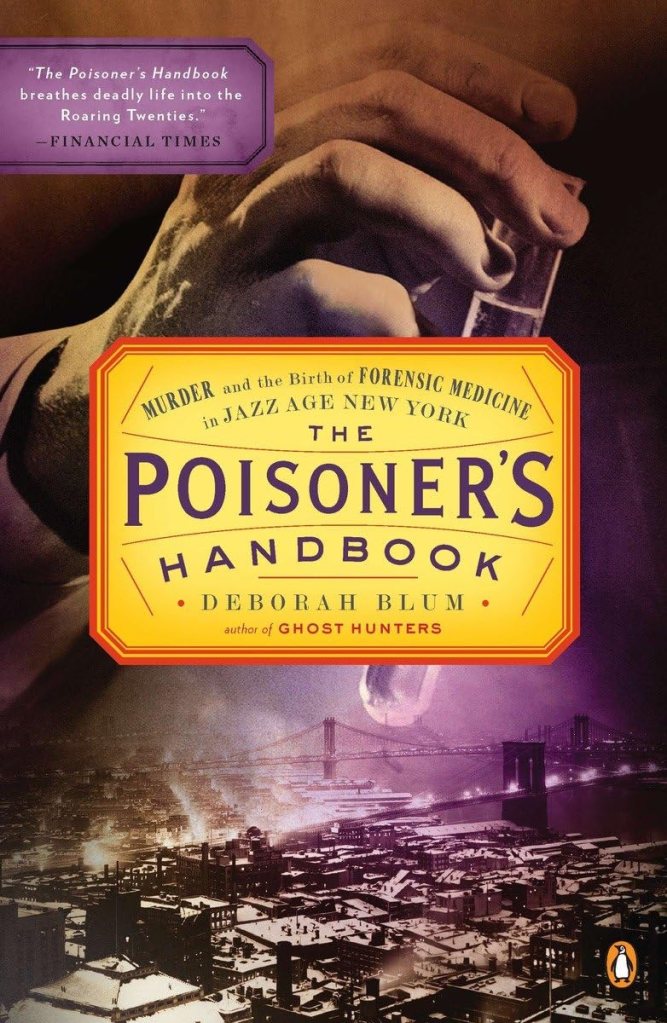
The Poisoner’s Handbook:  Murder and the Birth of Forensic Medicine in Jazz Age New York by Deborah Blum

Prohibition-era New York City was a hotbed of political corruption, organized crime, and poison. Poison was a deadly fact of life, found in the bootlegged liquor of speakeasies, beauty tonics, and in the hands of impatient heirs and jealous spouses. New York City’s chief medical examiner, Charles Norris, set out to change things. With his assistant Alexander Gettler, the NYC medical examiner’s office became the birthplace of forensic medicine. Working long hours, they examined corpses, exhumed bodies, and invented groundbreaking new tests to identify poisons, and put poisoners behind bars. Each chapter is centered on a different poison: chloroform and cyanide to kill, methyl alcohol served in speakeasies, industrial poisons such as tetraethyl lead and radium, and more. The Poisoner’s Handbook is a perfect for lovers of true crime and science history, though there are moments where a strong stomach is helpful.

Lakewood by Megan Giddings

After the death of her grandmother, college student Lena Johnson takes over the role of head of household. Her mother, Deziree, suffers from a mysterious serious illness (or possibly illnesses)  which has racked up more medical debt than the Johnson family can afford. Sometimes, it’s a choice between paying for water or paying for medicine. When Lena gets invited to take part in a research study that pays beyond well and offers amazing health insurance for Deziree, she thinks she’s found her way out. Lena moves to the sleepy town of Lakewood to become a test subject in a secretive government research project. She knows that what she’s doing is risky, but she is willing to endure everything for her mother’s sake. When will the risks become too big, and what will the consequences be when they do? Drawing from the historical medical exploitation of BIPOC individuals (Lena is Black; the experimenters are all White), Lakewood is a slow burn horror that will get under your skin…in more ways than one.

Indie Review: OMG UR a Teenager!

I’m a Reedsy Discovery reviewer! I received a free ARC of OMG UR a Teenager! by Leslie Young for this review.

⭐⭐⭐⭐

Twelve-year-old Kat Cruz can’t wait for her next birthday. Before she can become a teenager, though, she’ll have to make it through seventh grade. The year starts off rough when her parents buy the most run-down house in the neighborhood, and a bully snaps a picture of Kat in front of her new house. She’s constantly stuck babysitting her younger brother, who thinks he’s a superhero. Kat’s editorials in the school newspaper make a splash, but not always in a good way. She’s also crushing on her new neighbor, Will, despite the fact that his mom doesn’t seem to like her. With new challenges every day, will Kat make it to her thirteenth birthday in one piece? 

OMG UR a Teenager by Leslie Young is a contemporary slice-of-life novel full of clear, crisp writing that makes it easy for young readers to get into the story. The relatability will keep them invested throughout the book. Kat experiences things that many kids going through pre-adolescence face: bullying, the excitement and mortification of buying your first bra, and changing family dynamics. Most of all, she wants to be seen as the mature nearly-teen she is, not a child and permanent babysitter for her little brother, Max. Tween readers will understand exactly how she feels, and adults will easily recall both the joys and pains of middle school.

Kat’s family dynamic is true to life as well, with well-intentioned parents who don’t understand their daughter’s point of view, an annoying little brother that Kat loves (even if she wants to kill him sometimes), and her vivacious grandmother whose Alzheimer’s puts extra strain on the family. Kat’s and Max’s relationship is developed particularly well, showing their closeness (especially in the climax), even if they don’t always get along. However, Gran’s storyline wasn’t as well-developed, making her inclusion in the book feel unnecessary.

At times the story can feel disjointed, such as an abrupt cut from summer to Halloween. Like Gran’s story, some plot points are dropped without a conclusion. Kat’s narration is also, at times, too mature to be realistic for a twelve-year-old. While adult readers might have to stretch their suspension of disbelief at some of Kat’s inner monologues, tween readers may find her insights useful in their own lives.

Overall, OMG UR a Teenager is a warm-hearted, relatable story for tweens, and anyone who’s ever been one.

May Book Recs: Asian-American and Pacific Islander Heritage Month

Without in any way limiting the author’s exclusive rights under copyright, any use of this publication to “train” generative artificial intelligence (AI) technologies to generate text is expressly prohibited. The author reserves all rights to license uses of this work for generative AI training and development of machine learning language models.


May is Asian American and Pacific Island Heritage Month in the U.S.! AAPI Month began as Asian/Pacific Heritage Week in 1978, and was extended to the entire month of May in 1990. In 2009, the obserservance’s name was changed to Asian American and Pacific Islander Heritage Month. Asia and the Pacific island are both huge places with numerous cultures, and a short list like this can’t possibly cover every country. I’ve decided to showcase four books for this month, with one book focusing on Asia, and one on the Pacific Islands for each category. 

As a reminder: I don’t distinguish YA from adult books on these lists. This is a deliberate choice, for several different reasons I might get into on another post. However, if you are dead-set on not reading any books outside your demographic age, here’s a simple guide: if the main character is a teenager, it’s probably a YA book; if the main character is an adult, it’s probably an adult book. This isn’t always the case, and I do try to note when books featuring teen characters would be better suited for older audiences.

Without further ado, here’s some books to celebrate AAPI month!

Nonfiction

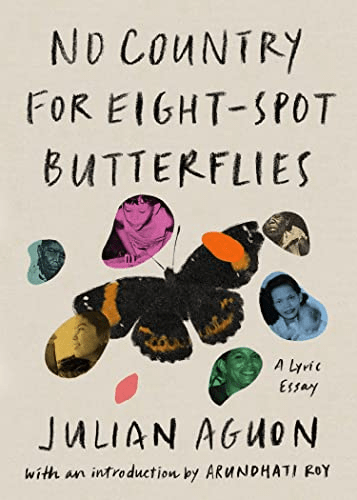
No Country for Eight-Spot Butterflies: A Lyric Essay by Julian Aguon

Julian Aguon is a Chamorro human rights lawyer and the founder of Blue Ocean Law, which specializes in Indigenous rights and environmental justice. He’s also a passionate and talented writer, as exemplified in No Country for Eight-Spot Butterflies. This book is a collection of his essays, speeches, and poems, but it’s also a love letter to the young people of Guam. “The Ocean Within” encourages high school graduates to imagine, dream big, and “get quiet” when they search for their destiny. Other essays discuss threats to the natural world, through climate change and increased militarization of Guam, despite its residents’ protests. Loss and grief are also central themes, shown in deeply personal writing. Though some entries are painful (“Fighting Words” is particularly difficult to read), overall, the book encourages its readers to make changes in the world, even if it’s only in a small way. My favorite essay was “Nikki and Me,” which resonated so strongly with me I had to read it twice. 

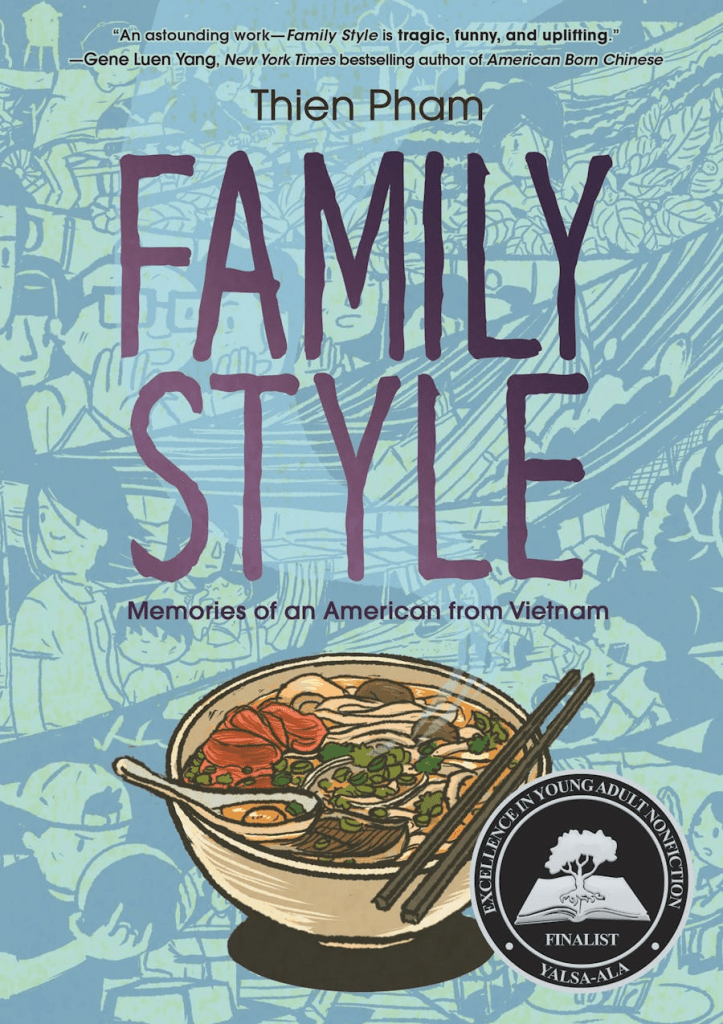
Family Style by Thien Pham

Thien’s first memory is “the saltiness of fish…and the sweetness of rice” when he was a young child on a refugee boat traveling from Vietnam to Thailand. Food is the prominent framing device in this graphic novel memoir, which shows Thien’s life first as a refugee, then as a Vietnamese immigrant, and finally as a U.S. citizen. Each period of his life is marked by an important food, from the bánh cuốn his mother cooked in a refugee camp in Thailand to the ham and cheese croissants that signify the Pham family gaining financial independence in the United States. Thien chronicles his family’s story of starting a new life in America with help from other Vietnamese refugees. Challenges included learning English, financial hardships, and strange cafeteria food. At times Thien questions his cultural identity, trying to understand what it means to be Vietnamese and American. While parts of Thien’s story are harrowing, particularly his journey to Thailand, the graphic novel is well-balanced with humorous and touching memories as well. 

Fiction

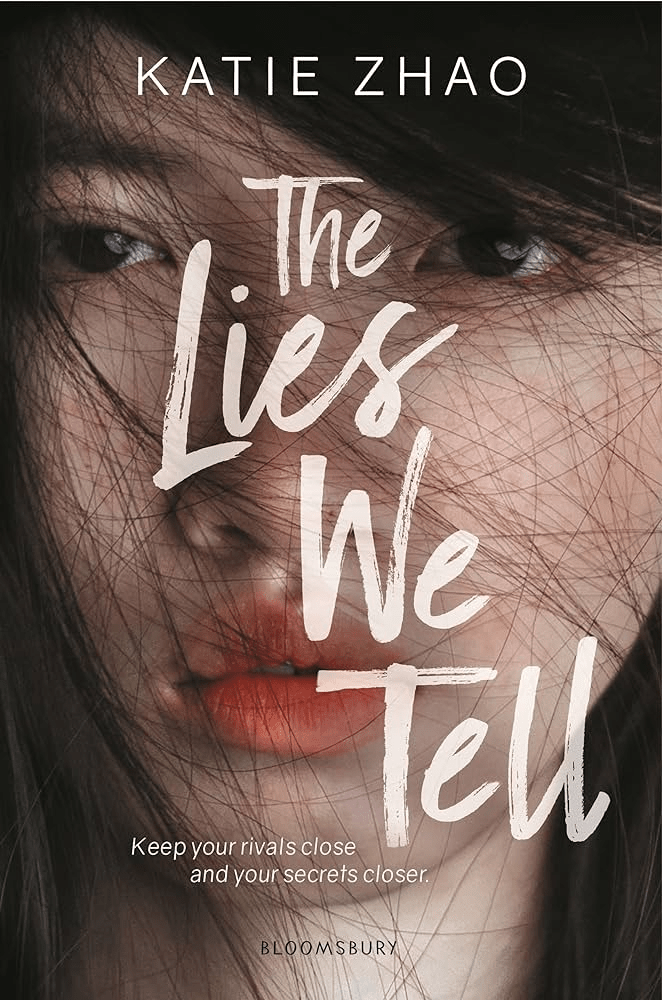
The Lies We Tell by Kate Zhao

When someone asks Anna Xu why she wants to go to Brookings for college, she tells them that it’s a prestigious school, and the in-state tuition will save her a lot of money. What she doesn’t say is that she wants to solve the murder of Melissa Hong, a Brookings student and Anna’s former babysitter. College life isn’t want Anna thought it would be, with a roommate who loves to party, and her old academic rival, Chris Lu, keeps popping up in unexpected places. At least she has Jane on Friend Me, the school’s friend-finding app. Anna’s investigation is derailed when Chris’s family’s bakery is vandalized with a racial slur, and strange things start happening to her and other Asian students on campus. Is Melissa Hong’s killer still out there? Anna needs to find out what happened to Melissa fast…before the same thing happens to her. 

Dragonfruit by Makiia Lucier

In the Nominomi sea, “dragonfruit” – seadragon eggs – are said to be able to undo a person’s greatest sorrow, though at a price. Hanalei knows this is true: after she and Princess Oliana were poisoned, Hanalei’s father stole dragonfruit intended for the princess to save his young daughter. Hanalei survived, though her father did not, and the princess remains in a coma. Hanalei spent the next ten years of her life in exile, but the sight of a pregnant seadragon gives her hope. After an encounter with dangerous dragon hunters, Hanalei arrives back in her home kingdom of Tamarind. There, she reunites with her childhood friend, Prince Samahitamahenele. She and Sam finally have a chance to save Princess Oliana, but they are not the only ones seeking the dragonfruit. Dangers await them across the waves, and even if they reach the dragonfruit first, what price will they pay? Dragonfruit is a lush and imaginative fantasy steeped in Pacific Islander mythology and imagery. 

Librarianing 101: Keep Calm and Weed On

Without in any way limiting the author’s exclusive rights under copyright, any use of this publication to “train” generative artificial intelligence (AI) technologies to generate text is expressly prohibited. The author reserves all rights to license uses of this work for generative AI training and development of machine learning language models.


My husband once told me, “I love how excited you get over very boring things.” Explaining the intricacies of cataloging books or reading pages of library policy would be boring to most people, but they’re not to me. I can get into unprovoked deep dives on library science and the history of youth literature, because these are things that I care very much about. But when I get going, it turns out that most people also have at least a small amount of interest in the inner workings of a library. Instead of our normal book post today, I want to give everyone a peek behind the desk and talk about one of my favorite “boring” library things: collection development. Specifically, “deselecting” materials from the collection, called weeding. 

C’mon, I know you’re at least a little curious about how we decide to get rid of things. 

But first you need to accept a hard truth: libraries throw away books. Like, a lot of books. I know how bad this sounds. Libraries are supposed to safeguard these tomes and preserve them for the world to enjoy, right? Aren’t books precious gems that need to be saved? 

Excluding things like rare first editions and other historically important books…not really. For the vast majority of books, I think that their true value is what the reader gives them. While I’m not getting rid of anything on my personal bookshelf at home, just yesterday I happily discarded a little over thirty books without a twinge of guilt. 

While this may sound cruel to book lovers, weeding is essential to a healthy library collection. There’s the matter of space, of course: no library can fit every book its users might need. But it’s also a matter of relevance. One of those books I recently discarded was a book about A.I. that was published in 2005. A.I. is a very hot topic right now, and this is technology that will continue to shape our future. But an almost 20 year old book on the topic isn’t relevant anymore. Not only is the information in the book dated, it’s also inaccurate. Misinformation is just as bad as no information, if not worse. Weeding gives library staff an opportunity to assess the collection, and to see what needs to be updated and where gaps are. It’s a critical tool in curating a library collection that best suits the needs of its users. 

I have a love/hate relationship with weeding. Sometimes it feels great, and other times it’s really tough to make the decision of what book stays and which goes. 

How do librarians make that decision? There are a lot of factors involved in deselecting materials, and it’s best to make each decision on a book-by-book basis. 

The first thing I look at are the number of check-outs a book has, and the last time it was checked out. In library terms, we call these “grubby” and “dusty” or “dead” items. 

Grubby items are books and other materials with a lot of check-outs. Popular books that get checked out a lot are going to get worn down through the wear and tear of frequent handling. I’d love to believe that everyone treats their library books with respect and care. However, I’ve seen enough books returned with stains, torn pages, and (on a memorable occasion), live ants, so I know this is not the case. The more times a book has been checked out, the more likely it’s going to return with damage, especially if it’s a book for children. But even if nothing bad happens to those books while they’re checked out, it doesn’t mean that they’ll be in pristine condition after they’ve been checked out 50 times. Oils from our hands will get on the pages, spines can become unglued, chunks of pages can come loose or fall apart for no other reason than the fact that the book’s been used a lot. Then there’s the smell. You know it: the dusty smell of old books. If you love that smell, skip the next paragraph, because I’m about to ruin it for you. 

You know what that smell is? Human skin particles. Gross, but true. 

When I have a “grubby” book in hand, the first thing I do is check its condition. I look for torn pages, markings, damaged spines, stains, liquid damage, and, for some books, see if it passes the literal sniff test. The two grossest things I look for are mold and insects. These are both really bad things to find in a book. Mold doesn’t just present a potential health hazard. It spreads fast and can eat through entire library collections in no time. Get rid of moldy books quickly, before every book around it becomes a moldy book. 

If you find bugs in a book, hopefully they’re already dead. If you decide not to keep the book, then you’ll need to clean up the insect murder scene, make sure there are no survivors, and clean the book. Living bugs are a whole different story. There are plenty of critters who would just love to eat through those tasty, tasty pages. In fact, this is where the term “bookworm” comes from! Just like mold, bugs can literally eat their way through a library. Even insects that don’t eat books can be a problem. I spent way too long cleaning a picture book full of live ants. It was gross, time-consuming, and absolutely necessary. Insect invasions can lead to all kinds of problems for library staff and patrons. Once my library had to close due to wasps in staff areas. Turns out most people do not like their coffee covered in bees.

Determining whether to get rid of a grubby book can be challenging, since they  often become grubby due to popularity. In this case, ordering a new copy is usually the best option. However, this isn’t always possible. Funding to purchase new books might be limited, the book could be out of print, or the book might only be available in a format the library doesn’t want. For example, sometimes old picture books are no longer available in hardcover, and I can only purchase a softcover copy. Paperbacks are more easily damaged than hardcover, thin, softcover picture books can quickly be lost on the shelves between thicker books. When that’s the case, it may be time to say farewell to your much-loved book. 

“Dusty” or “dead” books are the opposite of “grubby” books. These are books that haven’t had a lot of check-outs, or books that haven’t been checked out in a long time. The definition of a “long time” depends on the library, but it’s typically between two to three years. While that’s a helpful guideline to start with, it’s by no means the only thing to take into consideration when deciding to keep or weed a book. 

First of all, low check-outs or no check-outs doesn’t mean that the book isn’t being used. It’s entirely possible that library patrons are looking at the book at the library instead of taking it home. Patrons may be reluctant or embarrassed to check out books about health, sexuality, gender identity, and other sensitive topics. This is especially true when it comes to books for teens, who may not feel safe or comfortable bringing these books home, and may not have access to them at school. 

Another consideration is the number of libraries nearby that have the same title. If a book you’re considering discarding is available in 15 other nearby libraries, you probably don’t need to hang on to it. But if you’re the only library in 30 miles who has this book, you’ll probably want to keep it, even if it doesn’t get a lot of circulation. 

You’ll also want to check the content of the book. If it’s a nonfiction book, it’s important to see how many books on the topic (or a similar one) you have. If it’s children’s nonfiction, you’ll also want to make sure you have books of varying complexity. The book a six-year-old needs to do his homework is going to be very different than the book an eleven-year-old needs, even if it covers the same topic. 

The content of the book also needs to be accurate and relevant. Some topics, like health and technology, change very rapidly, and books in those areas can become obsolete fast.

Content also matters in terms of fiction. For example, if I have to choose between a YA romance and a YA novel about drug abuse, I’m keeping the latter. Romance is always popular, which is why there’s always so much on the shelf. The book about drug abuse is probably not as much fun as a boy-meets-girl story, but it is something that is present in every community and too many families. I have always believed that fiction is a safe way to learn about a tough topic, and I try to keep books that deal with current issues on the shelf. It’s also important to have a diverse collection with books that feature characters with a variety of races, sexualities, backgrounds, and ideas. 

And that, in a nutshell, is weeding. 

Well, sort of. As I said before, deselecting materials should be done on an item-by-item basis. 

 “Grubby” and “dusty” aren’t the only criteria librarians use to decide whether or not to weed an item, but they are a helpful place to start.

Keep calm and weed on. 

Banned Book: Prince and Knight

Without in any way limiting the author’s exclusive rights under copyright, any use of this publication to “train” generative artificial intelligence (AI) technologies to generate text is expressly prohibited. The author reserves all rights to license uses of this work for generative AI training and development of machine learning language models.


Think of your favorite fairy tale. Were there talking animals? A handsome prince falling in love with a beautiful princess? Did it teach a lesson? 

When we’re very young, fairy tales and fables are usually our first introduction to stories. We learn a lot about narrative structure from these old tales. We learn that stories have a beginning, a middle, and an end. Stories have characters and conflicts. We even learn some basic symbolism: a cottage represents safety and home, the woods represent danger, and a castle represents success. A beautiful person is good, and an ugly person is evil. These simple, familiar stories set the foundation for our understanding of narratives long before we have the ability to read one on our own. 

There are many things in traditional stories that aren’t viewed as fondly today as they once were, like beauty equating to goodness and women as prizes. There are lots of retellings of classic stories now, which often change turn the formerly helpless maiden into a certified bad-ass. Heck, the best-selling Twisted Tale series are just Disney AUs based on their popular movies.

I didn’t write my earlier post about traditional literature just because it’s one of my favorite genres (though that is true), but because I want to discuss the oft-challenged picture book, Prince and Knight, but Daniel Haack and Stevie Lewis.

Well, let’s look at this dangerous book together. I love the illustrations – bright and colorful, and perfect for a picture book. The story is also told in rhyme, which I enjoyed. Sometimes rhyming picture books can be clunky or choose awkward words to make the rhyme work, but I didn’t see any of that here. Overall, it’s nice to look at and fun to read out loud.

Prince and Knight repeats familiar fairy tale beats: a prince goes on a journey, overcomes a challenge, and is rewarded with true love. The main difference between this and stories like Sleeping Beauty is that the prince’s true love is another man. 

The story goes like this: a prince is getting ready to inherit the kingdom, but the king and queen know that it’s too much work to rule alone. They want their son to find a nice girl and get married. He meets many lovely ladies, but he doesn’t want to marry any of them. When a dragon attacks, the prince races to save the kingdom. He’s not fighting alone, either. A bold knight rushes into the battle to assist the king. They save each other’s lives, and together, capture the beast. Soon, the prince realizes that his one true love, the one he’s been searching for, is this brave knight in shining armor. The prince and the knight are married, the kingdom rejoices, and everyone lives happily ever after.

I loved Prince & Knight. There’s action, but not violence (the prince and knight tie up the dragon rather than slay it), and it has an adorable happily ever after. My favorite thing about the book might be the king and queen’s reaction to the prince falling in love with another man. They’re ecstatic that he’s found someone and don’t care that it’s not a princess, and the whole kingdom celebrates their wedding. 

Cute, right?

Unfortunately, not everyone thought so. According to the ALA Prince and Knight was one of the most frequently banned or challenged books in 2019 for “featuring a gay marriage and LGBTQIA+ content; for being ‘a deliberate attempt to indoctrinate young children’ with the potential to cause confusion, curiosity, and gender dysphoria; and for conflicting with a religious viewpoint”

Siiiigh. Let’s break this down.

Prince and Knight was published in 2018, three years after same-sex marriage became legal throughout the United States. According to Pew Research Center, a majority Americans support same-sex marriage and it’s part of the cultural landscape, whether you think it should be or not.

“Confusion” and “curiosity” are natural parts of childhood. Young kids are learning about the world and, no matter what book you read to a young child, they’re going to have questions. For an example from my own life, I was in fourth grade when I two older students – who were also my neighbors – told me that our principal was a lesbian. I’d never even heard the word “lesbian” before, and it had to be explained to me: girls who love girls. I became worried, and asked, “am I a lesbian because I love my mom?” The older girls told me that girl family members didn’t count. Later, my neighbor’s mother called my house to warn my mom that I might be asking some questions about what I’d learned that day. But I can’t remember asking any other questions about it, or even it being that big of a deal in the long run. If a child has a question about the gay marriage in the book, “Some boys fall in love with other boys” isn’t indoctrination, it’s just a true statement. And it’s not going to be as earth-shattering as you think. And while we’re not totally certain what causes gender dysphoria, you don’t get it from reading a picture book.

As far as a religious viewpoint goes…I’m pretty sure we can guess which religion the complainants are talking about. Some religious communities, like the Buddhist Churches of America and some Jewish movements have celebrated or supported same-sex marriage for decades, and many sects of Christianity do so as well now. Even the Catholic church is slooooowly becoming more accepting of same-sex couples. So this book isn’t against all religious viewpoints, just a certain one. 

At the start of this post, I talked about the role fairy tales play in our formative years. So I have a question: why is Prince and Knight indoctrination, but a story like “Sleeping Beauty” isn’t? Classic Western fairy tales are often about finding true love through magical means. The prince magically awakens a sleeping princess with a kiss; a princess kisses a frog and finds her true love; a glass slipper fits only one woman perfectly. So many stories treat the princess as a prize to be won. I would say reading only fairy tales like that introduce kids to harmful stereotypes of gender. So why aren’t tales of heterosexual love accused of indoctrinating kids? 

I love fairy tales, old and new. I am aware of the pitfalls in classic traditional stories, and I enjoy adaptations that change things up. I still think fairy tales and other traditional stories and rhymes are an important part of early literacy. But there’s a phrase I heard once that’s always stuck with me: “It’s not what you have, it’s what you don’t have.” This sums up how I feel about a lot of media diets. If you get nothing but stories with a narrow view of what the world is like, it’s going to affect how you see the world. I don’t see anything inherently wrong with traditional stories, but I think it’s important for children to see stories where the princess saves the prince, where the ugly person is kind, and where the prince and the knight find true love. 

Because in real life, girls can save boys, not-beautiful people can be kind, and two men can fall in love and marry each other. To pretend otherwise is insulting to all of those who don’t live in a fairytale.

March Book Recs: The Troubles

March is Women’s History Month, and it’s also Irish Heritage Month! I’ve decided to combine both of those things for this list. Media often show stereotypical depictions of the Irish, flattening an entire culture into a few jokes about alcoholism and leprechauns. Like millions of Americans, I have Irish heritage, and these depictions have always irked me. 

One part of Irish history that has long been close to my heart is The Troubles. The Troubles were 30 year period of political and sectarian violence between Unionists and loyalists (mostly Ulster Protestants) who wanted Northern Ireland to remain part of the U.K., and Irish nationalists and republicans (mostly Irish Catholic) who wanted Northern Ireland to join the Republic of Ireland. The Troubles officially came to an end with the 1998 Good Friday Agreement, which ended much of the violence in Northern Ireland. But my personal connection with The Troubles isn’t just from my Irish-Catholic heritage or watching the show Derry Girls. In the early 2000s, my family hosted a girl from Derry for three summers. Those were the best summer vacations I’d ever have. My mom described them as “a six-week sleepover.” While our guest did talk about some of the violence she and her family experienced, my memories of her and our summers together are full of laughter, dares, and the filthiest jokes I’d ever heard. 

For the March recommendation list, I’ve chosen two books where The Troubles play a central role in the lives of women. These are both great as audiobooks. Other than the readers’ lovely Irish accents, you’ll also be able to hear the correct pronunciation of Irish words.

Nonfiction

Thin Places: A Natural History of Healing and Home by Kerri ní Dochartaigh

Kerri ní Dochartaigh was born in Derry halfway through The Troubles to a Protestant father and Catholic mother. She lost two homes in the span of one year, once due to a petrol bomb, and once due to harassment. To escape the violence in Derry, she found solace in the natural world, in her cement-filled backyard and “thin places” where the Veil between this world and the spiritual one is thin. ní Dochartaigh’s memoir is one of great sadness as she writes about the emotional scars that have shaped her entire life. Yet there is great beauty to be found in it as well, as she tenderly writes about her beloved thin places, the endangered Irish language, the resiliency of moths, and what it means to be an Irish woman. She also discusses violence in Northern Ireland following Brexit, and what she fears and hopes for Derry, the city she loves and hates. Often heartbreaking, Thin Places is a gorgeously written meditation on loss, trauma, and healing. 

Fiction

Factory Girls by Michelle Gallen

It’s 1994, and smart-mouthed Maeve cannot wait to get out of her small town in Northern Ireland and start studying journalism in London. She and her friends Caroline and Aoife must first get their exam results to confirm their places in their chosen universities. To save up for their futures, the three young women get jobs in the local shirt factory for the summer. The job brings new challenges Maeve has never faced before: ironing 100 shirts a day, working alongside Protestants for the first time, and avoiding the advances of the factory’s lecherous English owner, Andy Strawbridge. Tensions rise between the Catholic and Protestant workers whenever there’s a bombing or murder, which occurs all too frequently. As the summer goes on, Maeve starts to realize that there is something going on behind the scenes at the factory, but standing up for herself and her friends could cost her dearly. Flashbacks show Maeve’s experiences growing up during The Troubles, including the death of her elder sister and bombings that were called “lucky” because everyone survived. As a slice-of-life novel, the plot can feel thin at times. However, Maeve’s narration and snappy dialogue is laugh-out-loud funny, and watching her and her friends find their path to adulthood is satisfying. Though the main characters are teenagers, frequent sexual references make this a book better suited to an adult audience.

Banned Book: Flamer by Mike Curato

This is the last post of the year! I will be taking a break in January and be back in February.


New on the ALA’s Banned Book list this year is the graphic novel Flamer by Mike Curato. If you’re a picture book aficionado, you might already be familiar with his work, such as the Little Elliot series.

In 2022, Flamer became challenged and banned books in the U.S. due to LGBTQIA+ content, and being considered as “sexually explicit.” Despite this, the book has received high praise from critics, but I think the blurb on the cover says it all.

This book will save lives.

Jarret J. Krosoczka

Fourteen-year-old Aiden Navarro isn’t excited to go to high school. He was frequently bullied at his Catholic middle school, and fears that public high school will be much worse. His parents’ frequent fights don’t make his home life easy, either. Thankfully, he has an escape during the summer at sleep away Boy Scout camp. Aiden loves scouting, but the Summer of ’95 isn’t going to be like any camp experience he’s had before. As the summer goes on, Aiden finds himself drawn to his confidant bunk mate, Elias. At first Aiden thinks that he admires Elias’s confidence and friendly nature. It can’t be a crush, right? That would make Aiden gay. And if being gay is a sin that can condemn you to hell (and get you kicked out of Boy Scouts), then it must be pretty bad. And Aiden isn’t a bad kid.

So he can’t be gay…right?

The last two weeks of summer camp are filled with some great memories – and also some terrible ones. Though Aiden makes great friends and loves camp, he’s also subjected to homophobic and racist bullying. When things look at their bleakest, Aiden wonders: does his life really have value?

The comic is in black and white, except when fire and a few other important objects are depicted. Flames are yellow, red, and orange, the only colors in the book. It’s used to great effect, especially in the climax and resolution.

Non-spoiler review: Flamer hits on heavy real-life topics that many tweens and teens can relate to. The main themes of identity and growing up are relevant to everyone, not just LGBTQIA+ youth. There is some mild sexual content, so I’d recommend this book to kids 13-14 and older.

I want to talk about the reasons that Flamer was challenged, banned, removed, or relocated.

One of the reasons was that Flamer is “sexually explicit.” Is it? Well, I think that depends on who you ask. Explicit-ness can be subjective and your feelings about what is and is not “sexually explicit” can change with time and experience. Some of the things that made me blush when I was fourteen I’m totally comfortable with now and I wouldn’t consider “explicit” today. Whether you find the sexual content in the book offensive or too much is really up to your own comfort levels. For me, the sexual content in Flamer was a little uncomfortable to read, but it wasn’t graphic. It seemed realistic and fit with the overall theme and story of the book. I can’t really object to it.

The other major complaint against Flamer is that it contains LGBTQIA+ content. And, well, duh. It’s a story about a young teenager accepting himself as gay.

As we saw earlier, LGBTQIA+ content was a really common reason given to challenge/ban books for the last 10 years. I won’t beat around the bush: this is homophobia and transphobia. There’s no other way to explain it. Otherwise, why would perfectly innocent (and adorable) books like And Tango Makes Three or This Day in June be challenged so frequently? I wouldn’t hand an elementary-age child Flamer; it’s not appropriate for the age group. But a cute picture book about a same-sex couple like Prince and Knight? Well, I wouldn’t have a problem suggesting that to a young child.

Because queer people (and penguins) exist. Everyone – from all walks of life – need to see themselves represented in media, but I think this is especially true for kids. Our early experiences shape our lives, and it’s important to see ourselves reflected in what we watch and read. Simply put, if you can’t see it, you can’t be it.

Beyond this point, there are going to be spoilers. If you’re interested in reading Flamer, check it out before you scroll down. I’d hate to ruin the (awesome) ending for you.

Content warning: there will be mentions of suicide from here on out. If that’s not something you want to read about, it’s okay to sit this one out. Mental health resources can be found at the bottom of this post.

Towards the end of Flamer, Aiden feels that everyone has turned against him. His best friend hasn’t written him back after he hinted at being gay in his most recent letter to her; a camp counselor he looked up to was removed from camp after he was discovered to be gay; Elias has been avoiding Aiden after Aiden surprised him with a kiss on his cheek. After yet another day of harsh bullying, Aiden can’t see how his life will ever get better. It feels like it would be better to end it now, and save himself years of misery. He runs to the camp’s outdoor chapel with a pocket knife and plans to take his own life.

Before Aiden can harm himself, he is taken to a strange place filled with darkness and fire. In a beautiful sequence, he speaks to “the fire of life” within himself. It challenges him: why is Aiden trying to destroy them both? They are not weak. They deserve to live. In this encounter, Aiden realizes that his life may not be as easy as his friends’, but it still has value. He still deserves to live. No matter what happens, he is enough. Just as he is.

It’s a powerful moment.

Even more powerful when you consider that suicide is the second leading cause of death among teens in the United Sates. LGBTQIA+ youth are at a higher risk for suicide, especially when they live in environments that are not supportive of their identities.

LGBTQ youth are not inherently prone to suicide risk because of their sexual orientation or gender identity but rather placed at higher risk because of how they are mistreated and stigmatized in society.

The Trevor Project, Facts about LGBTQ Youth Suicide, 2021

Aiden is fictional. But his feelings are real to those who’ve lived through them. The impact that Flamer can have on its readers is also very real. No matter how bad things have been for Aiden, or how bad they might get, he knows that he as value as a human being. And that’s a really great message, especially for teenagers. Even more so for LGBTQIA+ youth who need to see someone with the same struggles they’re going through, and come through it feeling strong.

One last thing to really drive the message home: Flamer is true. Well, parts of it. Flamer is a semi-autobiographical graphic novel, inspired by author and illustrator Mike Curato’s experiences as a gay Boy Scout in the 90s. In an author’s note at the end of the book, Curato shares some of his internal conflicts when he was Aiden’s age, and some memories from camp.

Including his suicide attempt in the camp’s chapel.

Curato survived, and went on to become a much-loved, award-winning illustrator. And now his story – and Aiden’s – is there to tell kids like him you are worthwhile. You are valued. You are enough.

And I cannot imagine why anyone who would be so cruel as to take that message away from kids who so badly need to hear it.

National Suicide Prevention Hotline (US): 1-800-273-8255
List of Suicide Crisis Lines (Worldwide)
The Trevor Project Lifeline: 1-866-488-7386 | Text: START to 678-678 | Online chat available
Q Chat Space

More resources can be found here: https://booksoverlookedblog.com/resources/

Banned Books 3: Other

This is the final entry of our banned books triptych. I’d wanted to talk about this in my previous post, but I got a little carried away and couldn’t find a good place for it. (tl;dr: “This is America. You want to live in North Korea, you can live in North Korea. I don’t want to. I want to live in America.” – Ron Swanson)

Now we come to the most common reason books have been challenged or banned: that strange, nebulous category of “other.” 

And let me tell you: “other” is wild. Some of my favorite reasons given include a book using the phrase “poo poo head” (Super Diaper Baby by Dav Pilkey) and the Harry Potter books for having real curses and spells.

The curses and spells used in the books are actual curses and spells; which when read by a human being risk conjuring evil spirits into the presence of the person reading the text.

Rev. Dan Reehill

I am extremely disappointed. In the many years I’ve been reading Harry Potter,  I have never once summoned an evil spirit. Not even by accident. And if those are real spells in the book, there must be a hell of a delay effect on them. There’s a few people that have overdue Avada Kedavras coming for them.

But most of the “other” reasons given are way less amusing. You can read my list here, or check out the ALA’s list of most challenged books to see reasons why books were challenged. There’s a lot to go through, so I’m only going to discuss a few here. Specifically, the ones that really grind my gears.

Think of the children! 

Books that will, somehow, damage children if they read it. This is the justification that book challengers use all the time. Some of the books whose challenges fall under this broad category are: 

Beyond Magenta: Transgender Teens Speak Out by Susan Kuklin (2015, 2019, 2021) for the effect it would have on young people
A Day in the Life of Marlon Bundo by Jill Twiss (2018, 2019) – “designed to pollute the morals of its readers”
Fifty Shades of Grey by E.L. James (2013, 2015) – concerns that “teenagers will want to try it”
Of Mice and Men by John Steinbeck (2020) – negative effect of slurs on students
Prince and Knight by Daniel Haack (2019) – would lead to confusion, curiosity, and gender dysphoria

Some of these are valid concerns. I wouldn’t want teenagers reading Fifty Shades of Grey. Classics like Of Mice and Men, Huckleberry Finn, and To Kill a Mockingbird have all come under fire for racial slurs and stereotyping, and those are fair criticisms. When I read Huckleberry Finn and To Kill a Mockingbird for English class in high school, my teacher addressed the issue head-on. He told the class that these books had slurs in them, and we were going to discuss the language in the book. He also made it clear that we were not to use those words outside of book discussions. Whether this had any impact on the language the students used outside of class I couldn’t say; I didn’t hear many racial slurs being thrown around before or after we read those books. But my high school was also pretty homogeneous, with White Catholic kids as far as the eye could see. In a more diverse school, I can see how books with slurs could be a problem. 

I still love To Kill a Mockingbird, though it’s important to acknowledge its failings: White savior, slurs, and false accusations of rape. When I encountered these criticisms, it forced me to re-evaluate the novel and think about it from different perspectives. Yes, it is problematic. Does that mean it belongs in a classroom? At this point, I think there’s enough literature available by people of color telling their own stories that it can be reasonably replaced with something more relevant and less patronizing to students of color. 

Does that mean it should be removed from schools or public libraries? 

My answer should be pretty obvious. I say no. With each (worthy) critique I found of Mockingbird, it made me understand the text in a new way and look at it with a more critical eye. It’s important to revisit the classics and look over what made them great, what makes them not-so-great today, and what value they still have in the modern day. Turn those not-so-great things into discussions and teachable moments, and use them as an opportunity to practice critical thinking on something that is pertinent to today’s reality. 

Most of the other cries to “think of the children” are not so well-intentioned. As you can see in the examples given here, would-be book banners fear that kids will be exposed to anything that isn’t heterosexual and cisgendered. It’s anti-LGBTQIA+ fear mongering coming from deeply misinformed individuals at best and outright bigots at worst. Reading a book where two men fall in love is not going to make anyone gay  any more than reading a book where a man and a woman fall in love will make them straight. It’s so obvious that I shouldn’t even need to say that, but here we are. That fear alone is homophobic and transphobic, as it implies that being queer or nonbinary is lesser or undesirable.

Even without that baseless fear, these “concerned parents” don’t want kids to see LGBTQIA+ content because…well, because. Because their religion tells them it’s wrong, or because the subject makes them uncomfortable, or because they’re simply afraid of stories that introduce experiences that are different from their own. 

Censoring, challenging, and banning books with LGBTQIA+ content hurts kids. It hurts queer, questioning, and nonbinary kids who need to see themselves in media, to know that they aren’t alone. For straight, cisgender kids, they can learn empathy and become allies. Many who want LGBTQIA+ books out of school libraries cite “parental rights,” saying that parents should be able to decide what books kids can and can’t read. But what a few parents want can’t speak for every parent. Parents – especially those who have LGBTQIA+ kids – may want their kids to read books that others are fighting so hard to take away. A few parents cannot and should not speak for an entire community. 

Instead of “think of the children,” let the children think for themselves. 

This book is indoctrination! 

Of the books that I looked at, there were only two books that were explicitly accused of indoctrinating their readers: The Hate U Give by Angie Thomas, and Prince and Knight by Daniel Haack and Stevie Lewis. But books are frequently challenged because they are perceived as promoting some kind of agenda, be it religious, political, or something else. The word “indoctrination” might not be in a book challenge itself, but the fear of it is there. 

Some of the books that this would apply to:

And Tango Makes Three by Peter Parnell, Justin Richardson, and Henry Cole (2012. 2014, 2017, 2019) – “promotes the homosexual agenda”
The Curious Incident of the Dog in the Night-Time by Mark Haddon (2015) – atheism
The Kite Runner by Khalid Hosseini (2012, 2014, 2017) – promotes Islam; would “lead to terrorism”
Melissa by Alex Gino (2016, 2017, 2018, 2019, 2020) – encouraged children to change their bodies with hormones
Stamped: Racism, Anti-Racism, and You by Ibram X. Kendi and Jason Reynolds (2020) – using “selective storytelling incidents” 

Sigh. 

I once knew a man who disparaged public schools and universities, saying that all they did was brainwash students. He was homeschooled in a very Christian household, but never stopped to think that what he had learned could also be considered “brainwashing.”* His education was also based on an agenda, but one created by his family rather than the state. He was still being taught what someone else deemed to be important. The things we learn when we’re young stick with us, whether or not they’re explicitly taught. 

When you pick up a book that contains information or ideas outside your realm of experience, you can analyze it critically, you can learn from it, you can forget about it, you can close yourself off and reject it. Encountering new ideas and perspectives can be challenging. I’ve certainly experienced that.  When I read How to Be Anti-Racist by Ibram X. Kendi, I found myself bristling at some of the content. I had to remind myself that I was reading this book to learn, even if it meant reading things where my knee-jerk reaction was to reject the information. 

Books with diverse perspectives are important tools to understand the world and things outside of our experiences. Opening the world up to new ideas and helping readers to think critically about new information is the opposite of indoctrination. 

By taking books away from would-be readers (who, in terms of banned books, are mostly youth), you limit the amount and type of information they can receive. If those readers can’t have access to a wide variety of material and are limited to only reading things that are “approved” by one authority or another…

Well, that is what I call indoctrination. 

To avoid controversy/Controversial issues

Beyond Magenta: Transgender Teens Speak Out by Susan Kuklin (2015, 2019, 2021) – to “ward off complaints”
Melissa by Alex Gino (2016, 2017, 2018, 2019, 2020) – to avoid controversy
All American Boys by Jason Reynolds and Brandon Kiely (2020) – “too much of a sensitive issue right now” 

Let me say this first: I get it. I’ve only had one real complaint about a book (so far) and it was a little scary. A woman was furious about a Sesame Street board book which showed the character wearing masks and social distancing. Thankfully, she didn’t make a request to remove the book from the library. I only listened to what she had to say and helped her find books for her kids (who, incidentally, were much too old for board books). It shocked me a little bit, but thankfully nothing more came of it. 

When it comes to books with controversial topics, I understand taking caution. As I mentioned in my last post, recently libraries have lost funding and even faced threats of violence for materials that they have on the shelf. 

Removing materials over challenges that may never happen is a form of self-censorship. I refer back to the ALA Library Bill of Rights, which states, in part:

II. Libraries should provide materials and information presenting all points of view on current and historical issues. Materials should not be proscribed or removed because of partisan or doctrinal disapproval.

III. Libraries should challenge censorship in the fulfillment of their responsibility to provide information and enlightenment.

I understand the fear of having “controversial” books on the shelves. But I’m also disappointed. Removing or restricting access to these books feels like capitulating to bullies. Granted, maybe there was a real fear of violence in these cases, but it’s frustrating to see. You can’t challenge censorship by removing materials for a “just in case” scenario.

And, finally, the most bonkers reason given to challenge or ban a book comes from Melissa by Alex Geno:

Because schools and libraries should not “put books in a child’s hand that require discussion”

Then what are schools and libraries for

What are books for, if not to inform and entertain? To introduce new ideas and new ways of seeing the world, even if it’s a view you’re not familiar with? To maybe even learn something new about yourself?

Schools and libraries absolutely should put books in children’s hands that require critical thinking. Books that feed curious brains and answer questions, either with facts or through the lens of fiction. This is the whole point of intellectual freedom. 

Intellectual freedom is a fundamental human right, the basis of democracy and free speech. 

And anyone who tries to abridge that freedom is a poo poo head.

*Disclaimer: This is just one example of a person I knew who was homeschooled. There are lots of good reasons to homeschool kids, and just because kids are homeschooled doesn’t mean that they’ll be closed off to new experiences.