FFM 9: Butcher Bird and Spider Lily

Without in any way limiting the author’s exclusive rights under copyright, any use of this publication to “train” generative artificial intelligence (AI) technologies to generate text is expressly prohibited. The author reserves all rights to license uses of this work for generative AI training and development of machine learning language models

July is Flash Fiction Month! I’ll be sharing short short stories here through the month of July. More notes about this story are at the end of the post.


“Are the cuffs really necessary?” Butcher Bird wriggled her arms, rattling the chain. “You know I can’t use my powers inside.”

Sitting across the metal table, Spider Lily glared at her. “You’re dangerous enough without them.”

Butcher Bird grinned. “Glad you remembered that.”

Spider Lily extended her arm and rolled up her sleeve. Unlike most superhero costumes, Lily’s was loose-fitting. At least a dozen spiders crawled up and down Lily’s arm. It was a warning. “The Association gave me ten minutes to talk to you. I want to hear your side of the story.”

Bird scoffed. “Since when do you want to hear my side of the story, Lil?” 

“I know we’ve had our differences, and that you’ve never been interested in joining the Association. But LAPH still sets the standards for what is and is not acceptable superhero behavior. We’ve ignored your previous infractions, but today you’ve taken things too far.” Lily pinched her fingers close together. “You’re this close to being declared a supervillain.” 

Bird let out a harsh, one-syllable laugh. “You people really have no perspective, do you? Do you know what that rocket was loaded with?”

“You impaled the CEO, several times, in a gigantic nest of barbed wire and left him to die.” 

Bird gestured to the emblem on her chest, which depicted a white and gray bird with a black mask around its eyes and at the tips of its wings: a loggerhead shrike. “Um, yeah. That’s kind of my whole thing. It was people, by the way.”

Lily’s brows met in a point. “What?”

“On the rocket. Not probes. It was a bunch of people in vegetative states. Their families thought they’d taken them off life support, but no, your beloved spaceman CEO thought they’d be excellent test subjects. Did he die, by the way? I didn’t get a chance to go back to check. You know. Because arrested.” She jiggled the chain of her cuffs again. 

Lily blinked several times. “He’s still alive, in the ICU.”

“Damn. Next time I’ll do better.” She sounded genuinely disappointed.

“See, that’s the kind of thing that makes you sound like a supervillain!” Lily huffed, then calmed herself. “How did you know there were people on that rocket?” 

“I got a tip-off.” Bird shrugged as best she could. “Someone who suspected her favorite uncle wasn’t going to the great beyond. At least not in the figurative sense.”

Lily narrowed her eyes. “Why would she tell you, and not us?” 

“Oh, she tried. She went to the cops first, then through the usual LAPH channels. Cops laughed at her, she was ignored by the hotline…thankfully, she found me.” A smug smile appeared on Bird’s face. “That’s the advantage of working with a small business.”

Lily jotted something down on her tablet. “Let’s talk about the cops.”

“Oh boy, here it comes…” Bird rolled her eyes. “They were shooting at me.”

“Because you were attacking a CEO at a rocket launch!” Lily slammed her hand against the table. “Three of them died, Butcher Bird. You’re really living up to your name.”

Bird quirked an eyebrow. “And?”

Lily straightened herself. “Superheroes are always meant to work with law enforcement, never against it.”

Bird’s face hardened. “Even if law enforcement was trying to help a megalomanic shoot coma patients into space, without their family’s knowledge or consent? You’re okay with that?”

Lily’s eyes flashed. “No. I’m not okay with that. But going off the knowledge the officers had at the time–”

“–which my source tried to tell them, but they ignored–” Bird cut in. “This is the problem with you Association people. Everything is black and white with you. But the people like me, who don’t live an ivory tower, or whatever your HQ is made of…” Bird scuffed her toe along the clean floor. “We know better. No one is totally good, and no one is totally bad. Just because you’re in the ‘Loose Association of Powerful Heroes’ doesn’t mean that you actually are a hero. Just because you destroy a launchpad doesn’t mean you’re bad.” 

“But you did destroy a launchpad. And a lot more than that.” 

Bird leaned back in her chair. “Hell yeah, I did. And I would do it all again.” 

“I think I’ve got enough here.” Lily stood up. “The sec-bots will see you back to your cell.” 

“So, am I a supervillain now?” Bird asked as she walked past. 

“I’m not at liberty to say.” Lily had her hand on the door. “It’s not my decision.” 

“Don’t give me that Association talk. Look at me, Lil. Look me in the eyes and tell me what you would do,” Bird challenged. 

Lily swallowed, and took in the face of the woman who used to be her friend. “I don’t know,” she admitted. 

“Not so easy, is it?”

“No,” Lily said quietly.

“As long as you know that.” Bird nodded. “Do what you have to, Lil.” 


This is another FFM challenge! Participants were given songs by other brave souls attempting FFM to use as inspiration for today’s story. This was inspired by “Renegade” by Styx (Butcher Bird being caught by the long arm of superhero law) and “My Back Pages” by the Byrds (“My guard stood hard when abstract threats/Too noble to neglect/Deceived me into thinking/I had something to protect/Good and bad, I define these terms/Quite clear, no doubt, somehow”)

Butcher Bird and Spider Lily popped into my head a few months ago, and I knew I had to write about them for FFM. I didn’t think this would be their introduction, though! Butcher Bird was always meant to be an anti-heroine, the song choices really screamed her name. I’ll probably have a couple other stories about these two, because I want to see them in action.

The loggerhead shrike is one of my favorite perching birds because they’re small and vicious. They impale their prey on thorns or barbed wire. And, credit where it’s due: the name Loose Association of Powerful Heroes was actually made up by my friend Sam, waaaay back, and I never forgot it.

Indie Review: OMG UR a Teenager!

I’m a Reedsy Discovery reviewer! I received a free ARC of OMG UR a Teenager! by Leslie Young for this review.

⭐⭐⭐⭐

Twelve-year-old Kat Cruz can’t wait for her next birthday. Before she can become a teenager, though, she’ll have to make it through seventh grade. The year starts off rough when her parents buy the most run-down house in the neighborhood, and a bully snaps a picture of Kat in front of her new house. She’s constantly stuck babysitting her younger brother, who thinks he’s a superhero. Kat’s editorials in the school newspaper make a splash, but not always in a good way. She’s also crushing on her new neighbor, Will, despite the fact that his mom doesn’t seem to like her. With new challenges every day, will Kat make it to her thirteenth birthday in one piece? 

OMG UR a Teenager by Leslie Young is a contemporary slice-of-life novel full of clear, crisp writing that makes it easy for young readers to get into the story. The relatability will keep them invested throughout the book. Kat experiences things that many kids going through pre-adolescence face: bullying, the excitement and mortification of buying your first bra, and changing family dynamics. Most of all, she wants to be seen as the mature nearly-teen she is, not a child and permanent babysitter for her little brother, Max. Tween readers will understand exactly how she feels, and adults will easily recall both the joys and pains of middle school.

Kat’s family dynamic is true to life as well, with well-intentioned parents who don’t understand their daughter’s point of view, an annoying little brother that Kat loves (even if she wants to kill him sometimes), and her vivacious grandmother whose Alzheimer’s puts extra strain on the family. Kat’s and Max’s relationship is developed particularly well, showing their closeness (especially in the climax), even if they don’t always get along. However, Gran’s storyline wasn’t as well-developed, making her inclusion in the book feel unnecessary.

At times the story can feel disjointed, such as an abrupt cut from summer to Halloween. Like Gran’s story, some plot points are dropped without a conclusion. Kat’s narration is also, at times, too mature to be realistic for a twelve-year-old. While adult readers might have to stretch their suspension of disbelief at some of Kat’s inner monologues, tween readers may find her insights useful in their own lives.

Overall, OMG UR a Teenager is a warm-hearted, relatable story for tweens, and anyone who’s ever been one.

March Book Recs: The Troubles

March is Women’s History Month, and it’s also Irish Heritage Month! I’ve decided to combine both of those things for this list. Media often show stereotypical depictions of the Irish, flattening an entire culture into a few jokes about alcoholism and leprechauns. Like millions of Americans, I have Irish heritage, and these depictions have always irked me. 

One part of Irish history that has long been close to my heart is The Troubles. The Troubles were 30 year period of political and sectarian violence between Unionists and loyalists (mostly Ulster Protestants) who wanted Northern Ireland to remain part of the U.K., and Irish nationalists and republicans (mostly Irish Catholic) who wanted Northern Ireland to join the Republic of Ireland. The Troubles officially came to an end with the 1998 Good Friday Agreement, which ended much of the violence in Northern Ireland. But my personal connection with The Troubles isn’t just from my Irish-Catholic heritage or watching the show Derry Girls. In the early 2000s, my family hosted a girl from Derry for three summers. Those were the best summer vacations I’d ever have. My mom described them as “a six-week sleepover.” While our guest did talk about some of the violence she and her family experienced, my memories of her and our summers together are full of laughter, dares, and the filthiest jokes I’d ever heard. 

For the March recommendation list, I’ve chosen two books where The Troubles play a central role in the lives of women. These are both great as audiobooks. Other than the readers’ lovely Irish accents, you’ll also be able to hear the correct pronunciation of Irish words.

Nonfiction

Thin Places: A Natural History of Healing and Home by Kerri ní Dochartaigh

Kerri ní Dochartaigh was born in Derry halfway through The Troubles to a Protestant father and Catholic mother. She lost two homes in the span of one year, once due to a petrol bomb, and once due to harassment. To escape the violence in Derry, she found solace in the natural world, in her cement-filled backyard and “thin places” where the Veil between this world and the spiritual one is thin. ní Dochartaigh’s memoir is one of great sadness as she writes about the emotional scars that have shaped her entire life. Yet there is great beauty to be found in it as well, as she tenderly writes about her beloved thin places, the endangered Irish language, the resiliency of moths, and what it means to be an Irish woman. She also discusses violence in Northern Ireland following Brexit, and what she fears and hopes for Derry, the city she loves and hates. Often heartbreaking, Thin Places is a gorgeously written meditation on loss, trauma, and healing. 

Fiction

Factory Girls by Michelle Gallen

It’s 1994, and smart-mouthed Maeve cannot wait to get out of her small town in Northern Ireland and start studying journalism in London. She and her friends Caroline and Aoife must first get their exam results to confirm their places in their chosen universities. To save up for their futures, the three young women get jobs in the local shirt factory for the summer. The job brings new challenges Maeve has never faced before: ironing 100 shirts a day, working alongside Protestants for the first time, and avoiding the advances of the factory’s lecherous English owner, Andy Strawbridge. Tensions rise between the Catholic and Protestant workers whenever there’s a bombing or murder, which occurs all too frequently. As the summer goes on, Maeve starts to realize that there is something going on behind the scenes at the factory, but standing up for herself and her friends could cost her dearly. Flashbacks show Maeve’s experiences growing up during The Troubles, including the death of her elder sister and bombings that were called “lucky” because everyone survived. As a slice-of-life novel, the plot can feel thin at times. However, Maeve’s narration and snappy dialogue is laugh-out-loud funny, and watching her and her friends find their path to adulthood is satisfying. Though the main characters are teenagers, frequent sexual references make this a book better suited to an adult audience.

Once Upon a Time: Traditional Literature

Without in any way limiting the author’s exclusive rights under copyright, any use of this publication to “train” generative artificial intelligence (AI) technologies to generate text is expressly prohibited. The author reserves all rights to license uses of this work for generative AI training and development of machine learning language models.


Apologies for missing last week’s post; I was ill. 

I want to take a break from our regularly-scheduled book rants to talk a bit about traditional literature. The term“traditional literature” might conjure up images of stodgy old books with nigh-unreadable prose for the modern reader. But you might be surprised to learn that you’ve probably been reading traditional literature since you were a kid! Traditional literature encompasses stories and poems that have been passed down from generation to generation, such as myths, fairy tales, and nursery rhymes. 

Traditional stories rely on patterns, motifs, symbols, and tropes. These stories were passed down orally long before they were ever written down, and using those storytelling devices helped both the teller and the listener to remember the story. Familiar patterns also helped listeners participate in stories by providing clues about what will happen next. We still use many of these today, opening with “once upon a time” and ending with “and they lived happily ever after.” 

Folk traditions in storytelling are both unique and universal. Many folklore stories from across the world share the same tropes, but use the story teller’s culture as a backdrop for the tale. Compare “The Rough-Faced Girl,” “Mufaro’s Beautiful Daughters,” and “The Irish Cinder Lad.” They’re all versions of the French Cinderella story, but come from the Algonquin Nation, Zimbabwe, and Ireland, respectively. 

Settings tend to be used again and again, with reliable associations. In the Anglo-European tradition, many stories start in a cottage, where simple, everyday folk live. A castle is where some aspire to be, and reaching it symbolizes success. The forest is dark, where mysterious creatures live and dangerous and unpredictable things happen. The road is where characters encounter new people and influences. This is a place where change occurs. 

Characterization relies heavily on archetypes. Each character plays a clear role: hero, villain, helper, trickster, numbskull, etc., though some characters represent more than one. In Jack and the Beanstalk, for example, Jack is both a hero and a trickster. 

Traditional stories often follow the monomyth structure, sometimes called the hero’s journey. The hero begins living a simple life at home, but problems arise that call them to go on a quest. They face challenges, meet a helper (often a mentor-figure), are validated as a hero by powerful forces, wins their prize, and changes by the end of the story. 

There are also several different types of traditional stories, such as fables, legends, folk tales, tall tales, fairy tales, and myths. Some are meant to teach lessons, such as Aesop’s fables, and others attempt to explain natural phenomena, such as winter being caused by the goddess Persephone being in Hades. 

Now that we know a little about how traditional literature works, I want to talk about its importance. Like a lot of children, I knew stories like Little Red Riding Hood and Goldilocks and the Three Bears by heart before I could even read. I didn’t just learn traditional stories from books, either. I learned them from movies (especially Disney), TV shows, songs, crafts, and my friends. Fairy tales and other forms of traditional literature are ubiquitous in early childhood. 

I don’t think it’s just because these are well-known and well-loved stories that our parents and grandparents grew up with. Nor is it that they’re in the public domain and therefore free for media companies and publishers to create work from. Both of those things play a big role in keeping traditional tales a mainstay of our culture, but I don’t think they’re the only factors. 

I think another big factor that contributes to traditional stories surviving for centuries is how concrete they are. When you look at these stories, the protagonists typically need to overcome some physical obstacle, be it a big bad wolf or a wicked step-mother. Things also tend to be black and white: either you are good, and will have a happy ending, or you are bad, and will be defeated. Some stories may have a simple moral that a child can apply to everyday life. 

Young children are very much concrete thinkers. Abstract concepts can be difficult for them to grasp. Think back to learning math when you were young. Numbers are an abstract idea, until you have something to count. For me, learning addition and subtraction was the same as adding or taking away beans from a pile. In Piaget’s Stages of Cognitive Development, he theorizes that children have difficulty with abstract concepts until around age 12. Until then, children understand the world in a physical way.

That means there isn’t a lot of room for nuance when it comes to stories. The characters are good or bad; they will succeed or they will fail. I once heard a preschooler, upon seeing a picture of Elsa from Frozen, say that Elsa was “mean.” Elsa went from foe to friend over the course of Frozen, but for this child, Elsa couldn’t be both. She was the bad guy at the start of the movie, and for this child, that’s where she stayed until the end. 

Traditional stories don’t really have character development, except for maybe the character learning a lesson at the end. But the nature of traditional stories is that they don’t need character development. Little Red Riding Hood having a dark night of the soul in the wolf’s belly wouldn’t add anything important to the story, and it would confuse the heck out of its young readers. 

The black-and-white, simple structures of traditional stories combined with how prominent they are in children’s lives means that the messages in those old stories means that the messages within them are very easy to ingrain in a child’s mind. 

It’s also not a huge leap to say that old fairy tales don’t always have great messages by today’s standards. Damsels in distress and beauty equating to goodness are both common examples of this.* But there are also many lovely stories that have positive messages, too. One of my favorite fairy tales since I was a kid is the Three Billy Goats Gruff, where cleverness wins the day. There’s plenty of value to be found in traditional literature, and we should be conscientious of what stories, songs, and poems we share with children today.

*I also recommend against kissing frogs.

Feb. 2024 Book Recs.: Black History Month

And we’re back with two book recommendations for Februrary!

February is Black History Month in the United States! Black History Month was first conceptualized as Negro History Week in 1925, by historian Carter G. Woodson and the Association for the Study of Negro Life and History. Since then, Black History Month has evolved to be a celebration of the achievements of Black Americans, as well as a time to learn about and remember America’s troubled racial history.

Fiction 

All You Have to Do by Autumn Allan

It’s 1995, and high school senior Gibran is in trouble. Again. After (literally) pulling the plug on a racist talent show act at the beginning of the school year, he’s one stunt away from getting expelled from Lakeside, his mostly White prep school. His mom wants him to keep his head down for the rest of the year and graduate, but Gibran’s not so sure he can do that. Especially after the school refuses to honor his and other Black students’ requests to honor the upcoming Million Man March.  Soon, Gibran finds himself leading the charge against the daily injustices he and other Black students face at Lakeside, but his activism may put his future at risk. 

It’s 1968, and Columbia University student Kevin is outraged at his school. Columbia University is attempting to expand its reach into Harlem by building a new gym on public land, which would displace Harlem’s Black and Puerto Rican residents. Kevin tutors young Black men in Harlem, but he wants to do something more. After Columbia’s disappointing response to the death of Martin Luther King, Jr., Kevin joins the student resistance. The student protests evolve into the real-life campus takeover, with a shocking response. All You Have To Do is a character-driven novel that looks at Black activism and how it affects the characters’ lives, both positively and negatively. While Gibran and Kevin both feel called to action, they also come to see how their work can hurt their relationships – especially with Dawn, Kevin’s sister, and Gibran’s mother. The novel includes debates about whether radical action is the “right” way to protest, as well as discussions of the roles Black women play in activism. 

Nonfiction

Unequal: A Story of America by Michael Eric Dyson and Marc Favreau


Black history in the United States is too often flattened to just a few eras or movements: enslavement and the Civil War, the Civil Rights movement in the 1960s, and more recently, the Black Lives Matter movement. The history of race and racism in the U.S. is far more complicated, and not neatly divided into historical periods. Unequal is partially a collection of biographies of Black activists, starting with Mary Church Terrell in the 1890s, and concluding with the Black Lives Matter movement and Nikole Hannah-Jones. Some activists, like Martin Luther King, Jr. or Malcolm X are well-known. Less well-known activists like Ossian Sweet and Yusuf Salaam are a welcome inclusion. Interwoven with each biography is information about the time period, which describes the legal discrimination and cultural norms that made segregation and inequality acceptable. Each chapter also ties into the effects of racism today, including discrimination in housing, health care, and environmental racism. The book addresses how American history has been Whitewashed, and the importance of learning and remembering history. The afterword states that the historical events in the book are still reflected in the modern day, and calls on readers to understand the past. This is a great choice for teens and adults who want to learn more about Black history, and how systemic racism permeates American culture today.

Indie Review: Curse of the Terracotta Warriors

I’m a Reedsy Discovery reviewer! I received a free ARC of Curse of the Terracotta Warriors by Mark Douglas for this review.

⭐⭐⭐

When the police come to Maddie Jones’s school, she thinks they’re going to arrest her for one of her many pranks. But the truth is much worse: her archaeologist dad has been kidnapped (Or dadnapped?). Maddie is certain this has something to do with the shipment of Qin dynasty terracotta warriors that just arrived at her dad’s museum from China. With the help of her two younger brothers, Maddie will face untold dangers and unravel ancient secrets to get her dad back. And she thought climbing the rock wall in gym class was tough…

Curse of the Terracotta Warriors is an action-packed book that moves quickly. Almost every chapter ends in a cliffhanger, which keeps the reader tuning pages. Unfortunately, much of the action sequences in Part One can feel repetitive, and the novel would have benefited from tightening up the first third of the book.

Maddie is, far and away, the star of the novel. She’s bold, a natural troublemaker with a snarky personality that will instantly endear her to readers. Told from Maddie’s first-person point of view, her clear voice and colorful narration will leave readers cheering for her through the most dire situations.

There are a few writing pitfalls throughout the book. Capitalization is occasionally inconsistent, with some character’s names or the start of sentences not being capitalized while common nouns are. Another instance sees Maddie “hurtling” over an obstacle rather than “hurdling” it. These aren’t major issues, and nothing that another proofing wouldn’t fix.

The Chinese setting of Xi’an is bland and feels shallow and poorly researched. Characters refer to “Chinese letters” and the “Chinese alphabet” when it’s common knowledge that Mandarin does not have an alphabet. The characters also watch CNN in their hotel room in Xi’an and use Wi-Fi at a Starbucks to do research, despite the fact that Chinese media is heavily censored. The Chinese setting doesn’t pop enough, and these inaccuracies show through.

Even so, Curse of the Terracotta Warriors is a fun, entertaining romp with a vivacious protagonist that’s tough to put down. Its short, action-packed chapters make this a great pick for reluctant readers, and middle-grade kids who love adventures.

Sep. Book Recs: Hispanic Heritage Month

September marks the beginning of Hispanic Heritage Month in the U.S.! Hispanic Heritage Month begins on September 15 and goes to October 15. It’s a little unusual for a monthly observation to begin in the middle of the month, but there’s a reason for it. On September 15, 1821, Costa Rica, El Salvador, Guatemala, Honduras, and Nicaragua declared independence from Spain. Mexico declared its independence on September 16, 1810, and Chile did so on September 18, 1810. Almost 200 years later, Belize would declare independence from Great Britain on September 21, 1981. 

Hispanic Heritage Month celebrates the achievement, culture, and traditions of Latinx Americans of Mexican, Central American, South American, Caribbean, and Spanish ancestry. 

As always, I can only offer a smidgen of what is out there for books by and about Latinx individuals. If you’re looking for more, Pura Belpré award winners and honorees are a great place to start! There are also many Latinx authors and illustrators doing stellar work. To name a few: Alma Flor Ada, Julia Alvarez, Jorge Argueta, Monica Brown, Isabel Campoy, Joe Cepeda, Angela Cervantes, Veronica Chambers, Sandra Cisneros, Judith Ortiz Cofer, Raul Colón, Carmen Agra Deedy, Lulu Delacre, David Díaz, Angela Dominguez, Margarita Engle, Xavier Garza, Christina Díaz González, Carmen T. Bernier-Grand, Susan Guevara, Francisco Jiménez, René Colato Laínez, Rafael López, Meg Medina, Marisa Montes, Pat Mora, Yuyi Morales, Sara Palacios, John Parra, Celia C. Pérez, Pam Muñoz Ryan, Benjamín Alire Sáenz, Garo Soto, Francisco X. Stork, Carmen Tafolla, Raúl the Third, Duncan Tonatiuh, and Erica Velazquez. 

That’s quite a list! You’ll find some of those writers on this list as well. ¡Vamos a leer!

Nonfiction

Enchanted Air: A Memoir by Margarita Engle

Margarita is a child of two countries: the United States, and Cuba. Her mother’s country, Cuba, is a place of dancing trees, singing vendors, and beautiful forests and farms. Cuba is a place where Margarita can be brave – as brave as a boy. But most of the year she lives in Los Angeles, timid and lonely. Growing up in the 1950s and 60s, she doesn’t understand how two countries she loves so much can hate each other. As relations between Cuba and the United States worsen, Margarita wonders: will her relatives in Cuba hate her? Why is her mother choosing to be “stateless”? When will she visit her beloved Cuba again? In evocative verse, Engle shares her experiences growing up Cuban-American during the Bay of Pigs invasion and Cuban Missile Crisis, her summers in Cuba before the United States embargo against the country, and her deep and abiding love for words and poetry. 

Once I was You: A Memoir / Una vez fui tuí: Memorias by Maria Hinojosa

When Mexican-born Maria Hinojosa came to the United States as a one-year-old in 1962, she was nearly separated from her family. Only her mother refusing to leave her child allowed Maria to move to the U.S. with her family. In this memoir, Hinojosa chronicles her life and they many identities she has: an immigrant, a woman, a survivor of sexual assault, a wife, mother, and award-winning journalist. She started as an intern at NPR, pitching stories by day and waiting tables by night. Throughout her career, she sought to highlight human stories that are often overlooked, and give a voice to the voiceless. Yet this book is about more than one woman’s life. Opening on an encounter with children who were separated from their families while crossing the U.S.-Mexico border, Hinojosa gives a history of changing immigration policies from the 1960s to 2020, when the book was published. She explains the politics behind the end of Immigration Naturalization Services (INS) and the formation of Immigration and Customs Enforcement (ICE), and the societal and political changes that brought us to where we are now. Most sobering, Hinojosa describes the horrifying conditions of immigrant detention centers, and the ICE raids that help fill those centers. A powerful memoir of resilience, alongside painful reminders of the U.S.’s broken immigration system today. Published subsequently in Spanish. A young reader’s edition which focuses on Hinojosa’s childhood and adolescence is also available. 

Wild Tongues Can’t Be Tamed: 15 Voices from the Latinx Diaspora, edited by Saraciea J. Fennell

There are as many ways to be Latinx as there are Latinx people in the world. This essay collection gives voice to Latinx and Afro-Latinx writers’ experiences. Each essay has its own style and theme: “Eres Un Pocho” by Mark Oshira, written as second-person letters to a younger self, and “#JulianforSpiderman” by Julian Randall is a reflection of Afro-Latinx identity told alongside the story of Miles Morales. “More than Nervios” by Lilliam Riviera describes challenges Latinx individuals face in receiving treatment for mental health issues, and Jasminne Mendez recounts coming face to face with racism in theatre. Frequently underrepresented Latinx ethnicities are represented as well, like Honduran and Panamania writers. These beautiful, sometimes heartbreaking essays each tell a unique and personal story, often of seeking and discovering identity. Colorism is another prominent theme. Each essay is deeply human, and the struggle to understand yourself and your place in the world is something everyone can relate to, no matter their background. 

Inventing Latinos: A New Story of American Racism by Laura E. Gómez

“Race isn’t real, but racism is.” This is the thesis statement of Inventing Latinos. Published just before the United States’s controversial 2020 Census, Gómez presents a macro-level overview “the how and why of Latinx identity becoming a distinctive racial identity.” She starts with the legacies of Spanish colonization and American imperialism, the effects of which still echo today. She explores the complexity of racial identity with the mestizaje population, racially mixed people with Indigenous, Spanish, and African ancestry. She also discusses discrimination faced by Latinx Americans, particularly in schools, and that Latinx populations are often treated as a “buffer” group between White and Black populations in the United States. Gómez ends an overview of Trump-era policies steeped in anti-Latinx racism, and argues to list Latino/a/x as a race rather than an ethnicity on future censuses. While not everyone agrees with Gómez on this matter, this academic overview of Latinx identity contains important (if dry at times) information. 

A Land of Books: Dreams of Young Mexihcah Word Painters by Duncan Tonatiuh

Before the arrival of Europeans, Mesoamerica was an amoxtlalpan – a “land of books.” A young Mexihcah (Aztec) girl tells her little brother about the process of making books (amoxtin) to her younger brother, starting with their tlahcuilohqueh parents – painters of words. She describes the process, from creating paper pulp from tree bark and dyes from plants and insects to paint the books. The book informs readers about Mexihcah culture, including education, literacy, and religion. Nahuatl words are used throughout the text, with a glossary and pronunciation guide in the back. This picture book has beautiful illustrations, done in the Pre-Columbian style inspired by Indigenous Mesoamerican art. A detailed author’s note talks about the history of Mexihcah codices (of which only 15 remain) and the importance of preserving Indigenous art. 

Fiction

Cuba in my Pocket by Adrianna Cuevas

After the failure of the Bay of Pigs invasion solidifies Fidel Castro’s power in Cuba, twelve-year-old Cumba lives in fear. Fear of executions, fear of whispering neighbors, and fear of the soldier who seems to track his every footstep. In danger of being recruited into Young Rebels, and eventually military service, Cumba’s family decides to send him to the United States. After reaching Miami, Cumba must contend with not knowing English, strange food, and most of all, missing his family. He gradually adjusts to life in the United States, sharing Prima Benita’s house with two other teenage refugees. He deeply misses home, and struggles to hold out hope that his family will join him in the U.S. in the future. 

Woven in Moonlight by Isabel Ibañez

In this Bolivian-inspired fantasy, Ximena was left orphaned after the Llascan revolt leveled her home and forced Illustrians like herself out of La Ciudad. After the revolt, Ximena was plucked out of the rubble due to her resemblance to the last surviving Illustrian royal, the condesa Catalina. For ten years Ximena has acted as Catalina’s decoy, and only Catalina’s inner circle knows the truth. When the Llascan king Atoc demands the condesa’s hand in marriage, it is Ximena’s duty to go to the capital in her place. Yet she has no plans to see herself or Catalina married. Thirsty for revenge, she will spy and search for the Estrella, a mysterious artifact that Atoc used to summon an army of ghosts during the revolt. Using her gift to spin thread from moonlight, Ximena sends messages hidden in tapestries back to Catalina. Yet as she comes to know the Llascans around her – and the mysterious vigilante, El Lobo – she begins to question her mission. Atoc is too dangerous to remain on the throne, but is Catalina really the queen that they need?

Our Shadows Have Claws: 15 Latin American Monster Stories, edited by Yamile Saied Méndez and Amparo Ortiz

A black wolf with red eyes stalks a high school bully. Death welcomes a girl into her home. A girl raised as a vampire hunter prepares for the fight of her life. Our Shadows Have Claws is an anthology of fifteen different monster stories set across Latin America and the Latinx Diaspora. Despite what the title suggests, these are not all horror stories. Some are romance, some are heartwarming, and some will make you shiver when you hear something go “bump” in the night. Themes of racism and colorism are woven throughout; environmentalism, heritage, and finding home are other important themes. All but one of the stories star girls, but each lead character must face their fears to protect their loved ones, themselves, or just to discover who they are. “Beware the Empty Subway Car” by Maika and Maritza Moulite was my favorite, the story of a hidden lougarou who suddenly wants to be seen. If you like supernatural stories, there’s something for everyone in this collection. 

Gods of Jade and Shadow by Silvia Moreno-Garcia

The Jazz Age is in full swing, and Casiopea Tun has dreams – dreams of driving an automobile, swimming in the Pacific, and dancing fast in nightclubs. She has no way of chasing those dreams, living as her grandfather’s servant following the death of her Mayan father. She thinks she must simply wait for the old man to die before she can leave her small town on the Yucatán Peninsula…until she opens a mysterious box and accidentally frees a Mayan god of death from imprisonment. Hun-Kamé once reigned over the underworld Xibalba, until his treacherous brother beheaded him and scattered his eye, ear, finger, and jade necklace across Mexico. Hun-Kamé’s and Casiopea’s fates are now tied together, and she must help him retrieve what has been stolen from him. Their time is short – the bond between them drains Casiopea’s life and threatens Hun-Kamé’s godhood. Together, they travel across Mexico and face challenges Casiopea has only read about in books. A gorgeous fairytale, rich with Mayan mythology. 

My Papi Has a Motorcycle / Mi papi tiene una moto by Isabel Quintero. Illustrated by Zeke Peña. 

Daisy loves riding around town with her Papi on his motorcycle. Like a streaking comet, they fly through the neighborhood. Daisy can see how her city is changing: Don Rudy’s Raspados has shut down; new homes are being built where citrus groves once stood. Yet Daisy knows that, no matter how much her city changes, it will always be a part of her, just like her father’s love. With a beautiful palette of sunset colors, this picture book tells the story of a neighborhood gentrifying, but the strong sense of community binding it together. Published concurrently in Spanish and English, Spanish words are sprinkled throughout the English version. 

And for girls with dads with motorcycles, this hits straight home. 
52 Books in 52 Weeks: Best Sellers & Diversity

This is the final post in my 52 Books project, and it covers an enormous topic: diversity in youth literature.

This is a hugely important topic to me. I didn’t grow up in an area with a lot of diversity of race, religion, or otherwise. Like many small town kids, my window to the wider world came from media: books, TV, and movies. Growing up, my impressions of people who were different from me came from what I saw and read.

But good representation is even more important if you’re part of a group that isn’t depicted frequently in media, or depicted stereotypically. This is especially true for children and teens. Think back to your childhood heroes for a minute. Who did you admire, and why? As I’ve mentioned before, one of my heroes was astronaut Eileen Collins, the first woman to command the Space Shuttle. I followed her career with great interest, dreaming of the day I would be the first person on Mars. While I’m not an astronaut, she inspired a lifelong interest in space, aviation, and most importantly to my current career, STEAM education.

All people, but kids especially, need to see themselves in the books they read or shows they watch. If you can’t see it, you can’t be it.

Things are changing in the publishing industry. Since 1985, the Cooperative Children’s Book Center has kept track of youth literature by and about Black, Indigenous, and People of Color. While we certainly have more BIPOC voices than before, publishing remains White and male dominated. It’s also important to see how many debut writers of color are published each year. Kwame Alexander and Jason Reynolds may top the charts (and with good reason), but one or two voices can’t speak for an entire group of people.

Another reason this is so important for me is because I’m a public librarian in Florida. Florida is one of the most diverse states in the U.S.A., and I live in one of the most diverse counties within that state. Florida is also banning books and removing them from schools left, right, and center. Legislation like the “Don’t Say Gay” law, bans on teaching critical race theory, and even blocking AP African American Studies in schools have forced teachers and school media specialists to go through their libraries and remove books, or risk losing their jobs. I won’t get into all of this right now – that’s another post entirely. But I will say that anti-LGBTQAI+ and removing discussions of race in the classroom is both infuriating, and a disservice to our kids. Kids have the right to information and books, and to learn about the wider world, and politicians are robbing them of that freedom in a reactionary attempt to appeal to their base.

None of these laws target public libraries yet. I feel that I have a responsibility to the kids and families that I work with to keep our collections diverse and inclusive, so every kid can see themselves as heroes and leaders.

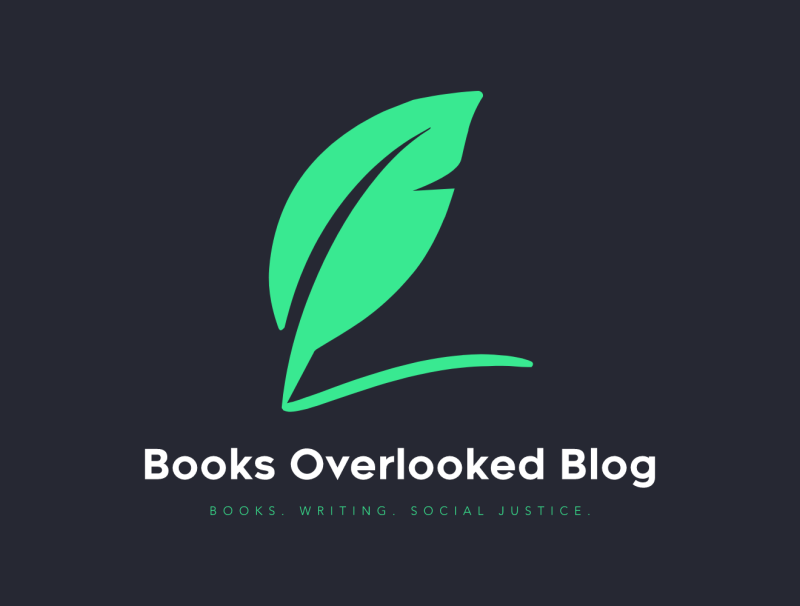
While reading my 52 books, I took note of what racial diversity was present. There are a few ways that I could do this, but I decided to keep track of the main character(s) in each book. They’re who the reader will be spending the most time with, after all. It’s not perfect data, either, but I love a good pie chart. My stats also don’t go into how these characters are depicted. Some books are represented more than once, in the case of multiple lead characters. For example, Ground Zero stars Brandon, who is cued as Latinx, and Reshmina, who is Afghani. For that book, I marked it as both Latinx and Middle-Eastern. Other books that have ensemble casts are marked as “multiracial.” To clarify: I use the term “multiracial” as it refers to race, while “multiethnic” refers to cultural identity. I’ve also included the categories of “animal” and “objects,” since a few books star critters or machines (Dog Man is categorized as “Animal,” btw). Finally, when characters’ races aren’t mentioned, White is the assumed default. Wait, don’t click away! Let me explain:

This is an issue when it comes to reading and writing fiction: if a character’s skin color is not described, most readers picture that character as White. Cover art may support this as well. It’s also really unfair, so for you novelists out there: please describe ALL your characters’ skin tones, not just some of them! The Tumblr Blog Writing With Color is an awesome resource for writing all kinds of skin tones.

Now, let’s get to the data! And if you’re uncomfortable, good. I am too.

I am far from an expert on diversity, equity, and inclusion. I also need to acknowledge that being White, cishet, and middle class, I’m speaking from a point of privilege.

To that end, I’ve started talking to people who aren’t me and have different identities and experiences one simple and important question: “Why does representation in literature matter?” I have already received some very well-thought out and in-depth answers, and I’m looking forward to reading more and sharing responses in a later post.

Until then, there are a plethora of resources online that can help you find multicultural literature, and why #WeNeedDiverseBooks.

Black History Month: February Book Recs

Welcome to my February book list! Each month, I’ll be bringing you a fresh list of books all based on a different theme. 

February is Black History Month in the United States, and that’s a vast subject area. Black history in the U.S. didn’t begin in 1776, and it didn’t end with Obama’s election. For this reason, I wanted to include some Black history that isn’t discussed frequently, and maybe a couple things you’ve never heard of. 

I also wanted to highlight Black authors and illustrators. I can’t possibly list every author or illustrator worthy of reading, but if you’re interested in reading more multicultural literature from Black authors and artists, might I recommend…

Chimamanda Ngozi Adichie, Kwame Alexander, Ashley Bryan, Bryan Collier, R. Gregory Christie, Christopher Paul Curtis, Leo & Diane Dillon, Edwidge Danticat, Sharon Draper, Roxane Gay, Nikki Giovanni, Nikki Grimes, Virginia Hamilton, Victor LaVelle, Julius Lester, E.B. Lewis, Kekla Magoon, Patricia McKissack, Christopher Myers, Walter Dean Myers, Kadir Nelson, Nnedi Okorafor, Jerry Pinkney, Jason Reynolds, Christian Robinson, Javaka Steptoe, John Steptoe, Nic Stone, Mildred Taylor, Rita Williams-Garcia, Colson Whitehead, and Jacqueline Woodson. 

Now, the usual disclaimer. I am a youth librarian, which means I’m most familiar with books written for young people. This means you’ll see a lot of YA and juvenile books on these lists. If you’re an adult looking for something good to read, don’t feel bad or embarrassed about reading youth books. Juvenile and YA books deal with themes and ideas that are applicable to all ages, even if the text isn’t as challenging as books written for adults. And there’s no age limit on good stories. 

I also want to remind everyone that not every book will appeal to everyone. You may hate a book that I love, and that’s okay. Not liking a book doesn’t mean that the book is bad, it just means that you don’t like it. I’ll try to appeal to a wide range of interests, but I don’t expect for you to love or even be interested in everything on this list. There’s a reader for every book, and every book has a reader. I’d love to help readers and books find each other! 

The New Jim Crow: Mass Incarceration in the Age of Colorblindness by Michelle Alexander

While the USA has come a long way in terms of liberty and justice for all, there are still miles and miles to go. The New Jim Crow discusses mass incarceration of Black Americans, typically due to policies from Reagan’s “War on Drugs” and other anti-drug crusades that target people of color, especially young Black men. Being labeled as a felon allows for legal discrimination in housing, education, careers, and even the basic right to vote. Michelle Alexander posits that this has led to the creation of an “undercaste” of Black Americans, legally disenfranchised by the justice system. Originally published in 2010, The New Jim Crow has inspired activists to work to change the American justice system, including the creation of The Marshall Project and the Art for Justice Fund. One thing that I really appreciated about this book was that Alexander acknowledges that the information is hard to read and accept, and that the book’s not for everyone. These are hard but important truths to learn, but nothing can be changed until it’s acknowledged and challenged. 

One Last Word: Wisdom of the Harlem Renaissance by Nikki Grimes, various illustrators. 

The Harlem Renaissance produced some of the United States’ most iconic musicians, artists, actors, and writers. One Last Word is a poetry collection that celebrates the work of writers from the Harlem Renaissance, like Langston Hughes, Countee Cullen, Georgia Douglas Johnson, and many more. Alongside the original poem, Grimes remixes the work using the golden shovel method. She creates new poems from the originals, filled with truth and hope for modern readers. Vivid illustrations from accomplished artists accentuate each page. If you’re a poetry lover of any kind, this is a must read. 

The Black Jacobins by C.L.R. James

The Haitian Revolution with the most successful slave rebellion in history. It was the only one that led to the creation of a country free of enslavement, and ruled by formerly enslaved people. The widespread political, economic, and cultural effects of the Haitian Revolution still echo today. Written in 1938, The Black Jacobins by Trinidad historian C.L.R. James set outs to correct the White, Euro-centric histories that marginalized or dismissed the Revolution. The Black Jacobins gives a thorough account of the Haitian Revolution. Its central figure is Toussaint Louverture. Born into slavery, Louverture became a central figure in the Revolution, as a general, politician, and unifying symbol for Haitians. This book is essential when learning about Haitian and Caribbean history. 

The Highwaymen: Florida’s African-American Landscape Painters by Gary Monroe

The Highwaymen were a group of 26 Black landscape painters in Florida in the 1950s and 60s. They painted idealized images of Florida’s landscape: palm trees swaying in the breeze, white sand beaches, sunrise by the ocean. Segregation was deeply ingrained in Florida, and galleries refused to sell Black artists’ paintings. Instead, the Highwaymen (and one Highwaywoman) sold their paintings from door-to-door and out of the trunks of their cars. This enabled the artists to make independent livings with their paintings, away from the back-breaking work in the citrus groves. Monroe’s book tells the story of the Highwaymen, alongside full-color reproductions of their paintings. Published in 2001, the book doesn’t tell the Highwaymen’s more recent history. In 2004, they were recognized in the Florida Artists Hall of Fame, and in 2020, they won the Florida Folk Heritage Award. Today, 18 original paintings hang in the Smithsonian’s National Museum of African American History and Culture.

Heart and Soul: The Story of America and African Americans by Kadir Nelson.

This children’s book is written in the style of a grandparent telling their grandchild the history of the United States. It starts with the fact that Black folks have been in the United States just as long as White colonists, but are rarely depicted in national history. It tells the story of the struggles and triumphs Black Americans faced, covering the Revolutionary War up to the Civil Rights Movement. An epilogue depicts the storyteller voting for Barack Obama. The text is informative and accessible, even when dealing with heavy topics. The illustrations are powerful, gorgeous full-page paintings. George Washington on a horse while an enslaved man stands beside him is one of the most poignant images that you’ll remember long after you close the book. 

Fiction

Mare’s War by Tanita S. Davis

Feisty, chain-smoking Mare is anything but a conventional grandmother. Octavia and Tali, her teenage granddaughters, are mortified to be seen with her. Going on a cross-country trip with Mare at the wheel is the last thing they want to do during their summer. Mare makes a deal with them for the trip: she won’t smoke, and they won’t use their “earphones.” As the miles pass, Mare tells the girls her story: growing up in segregated Alabama, running away from home at age 17 to pursue a better life, and lying about her age to join the Women’s Army Corps during World War II. Mare shares her experiences of life in 6888th Central Postal Directory Battalion – the only battalion of Black women who served overseas in World War II. In alternating chapters of “Then” and “Now,” Octavia and Tali come to understand the experiences that shaped their grandmother, the family bond they share, and the same strengths and insecurities they share with Mare…and that it’s not so bad to be like their grandma. 

The Davenports by Krystal Marquis

In 1910, the Davenports are one of Chicago’s few wealthy Black families. As such, siblings Olivia, John, and Helen, are constantly under scrutiny. They must uphold the legacy that their formerly enslaved father built. Olivia thinks her successful courtship with Jacob, England’s most eligible Black bachelor will do the trick. That is, until she meets a civil rights activist who makes her question her privileged upbringing and shows her the horrors of Jim Crow. John and Helen are more focused on fixing horseless carriages, while Helen chafes at the limited roles women have in society. Alongside the siblings, Olivia’s best friend hatches a plan to marry John, and the siblings’ childhood friend and maid dreams of starting her own business. The book examines racism, gender norms, and classism in the often overlooked Reconstruction Era. The characters are passionate, take-charge women, and there’s plenty of romantic moments (and a couple love triangles) to swoon over.

Noor by Nnedi Okorafor

AO (Anwuli Okwudili, but she prefers “Artificial Organism”) has extensive bionic augmentations as a result of severe physical disabilities. These augmentations include artificial legs, mechanical hands, and even a brain implant.  AO accepts these augmentations as a necessary part of her life and who she is. However, the world does not see it this way. There are many who see her as a devil, more machine than woman. When an altercation at the market leaves two men dead, AO must flee. She meets a Fulani herdsman, DNA, who has been falsely labeled as a terrorist. Together, they travel across the desert to the Red Eye: a perpetual sandstorm where the wind can strip your bones clean, and the only place they might find safety. Nigerian-American Nnedi Okorafor is the master of Africanfuturism, with books like Akata Witch and the Binti trilogy. If you’re interested in sci-fi, she needs to be on your radar. 

All American Boys by Jason Reynolds and Brendan Kiely

Rashad is Black, Quinn is White, and though they got to the same school, neither boy knows the other’s name. A quick stop to a corner store on the way to the party pushes their lives together in ways they never expected or wanted. Quinn witnesses a police officer brutally beating Rashad, with little or no provocation. The narration follows both boys after the event. Rashad, recovering in the hospital, wants to be left alone to focus on his art. He doesn’t want the painful attention that comes with being the latest Black victim of police brutality. Quinn is troubled as well: the police officer is a surrogate father to him, and Quinn would have never imagined that he was capable of such violence. The large-scale issues of racism, power, and injustice are integrated seamlessly into the narrative. All American Boys was one of the most frequently challenged or banned books in 2020, for reasons including being “too much of a sensitive matter right now.” Speaking for myself, any book that makes the Top 10 most challenged books is a book I want to read.

One Crazy Summer by Rita Williams-Garcia

It’s 1968, and Delphine and her younger sisters are spending a month in California with their estranged mother, Cecile. They expect a warm welcome and a visit to Disneyland, but their trip to Oakland is nothing like they imagined. Cecile, a poet and member of the Black Panthers, resents the intrusion into her life. Instead of the mothering the girls are hoping for, she sends them to a nearby summer camp run by the Black Panthers. During the summer, Delphine participates in a Black Panther rally and becomes a young activist, all the while yearning for a true connection with the mother who left her. I love this middle-grade book for its memorable characters (particularly Delphine’s strong voice), a broader and more honest depiction of Black Panthers than typically seen in media, and the unique backdrop of 1960s Oakland. 

New Year, New Me! January Book Recommendations

Welcome to my first monthly book list! Each month, I’ll be bringing you a fresh list of books all based on a different theme. If you have an idea for a themed list, please let me know!

Before we get in, there’s a few things you should know. First, I am a youth librarian, which means I’m most familiar with books written for young people. This means you’ll see a lot of YA and juvenile books on these lists. If you’re an adult looking for something good to read, don’t feel bad or embarrassed about reading youth books. Juvenile and YA books deal with themes and ideas that are applicable to all ages, even if the text isn’t as challenging as books written for adults. And there’s no age limit on good stories.

I’ll also be listing non-fiction and fiction, because there’s a lot of great non-fiction out there that needs some love, too.

I also want to remind everyone that not every book will appeal to every reader. You may hate a book that I love, and that’s okay. Not liking a book doesn’t mean that the book is bad, it just means that you don’t like it. I’ll try to appeal to a wide range of interests, but I don’t expect for you to love or even be interested in everything on this list. There’s a reader for every book, and every book has a reader. I’d love to help readers and books find each other!

New Year, New Me

Nonfiction

ADD-Friendly Ways to Organize Your Life by Judith Kolberg and Dr. Kathleen Nadeau

Thanks to the way my brain is wired, I live in a kind of an entropic mess mixed in the occasional bursts of cleaning and organizing, then promising myself “I’ll never let it get that bad again.” It always turns out to be a lie, but I try.

So when I recommend a book on organizing that actually works for me, I mean it actually works. ADD Friendly Ways… teaches you how to work with your ADD, rather than against it, to get organized. This book is written in short, helpful chapters and formatted specifically to help people with ADHD be able to sit and read it. It gives practical tips on organizing your life which are easy to follow, and offers suggestions for how to find more support if needed and to take control of your life. It’s the best organization self-help book I’ve ever used, and the only one I’ve seen that specifically addresses the role that ADHD plays in the struggle of keeping your life together.

The War of Art by Stephen Pressfield

Making stuff is hard. Whether it’s writing, drawing, dancing, or sculpting, no creative endeavor comes easily. Pressfield calls the universal force that acts against our creativity “resistance,” and it can come in many forms. It could be fear, pressure to perform, irritations in your daily life, or the fact that the new Pokemon game just dropped and how can you be expected to write when you can’t get Sprigatito out of your head? Pressfield brilliantly describes resistance, how to overcome it, and the sacred act of creating. Each short chapter is a micro pep talk for anyone experiencing resistance. It’s a small, thin book and shouldn’t take you long to read. I read it cover to cover years about five years ago and still take it off my shelf when I’m feeling stuck.

The Confidence Code/The Confidence Code for Girls and Living the Confidence Code by Clair Shipman and Katty Kay

Self-doubt. Imposter syndrome. Lack of confidence. We’ve all experienced it, especially girls and women who have internalized messages that they will never be enough. The Confidence Code is a best-selling guide to empower women to become self-assured and confident in their lives, using scientific research and proven methods of behavioral research. Following the success of The Confidence Code, the young reader’s edition, The Confidence Code for Girls aims to reach teen and tween girls struggling with inner doubt.

Living the Confidence Code is true stories of girls, ranging from grade school to teenagers, who are changing the world. These inspiring stories show how everyday girls can have a major impact on their homes, the lives of others, and the world. The word “inspiring” gets tossed around a lot, but I really mean it. After reading this book I was ready to start writing letters to the editor and began researching ways to help with period poverty in my area. If these kids can change their hometowns, I can too!

Draw Stronger: Self Care for Cartoonists and Other Visual Artists by Kriota Willberg

Whether you draw, paint, or write, creating art takes a physical toll on your body. Draw Stronger is a comic book that shows how chronic pain and injuries can occur, and provides tips to prevent and treat injuries. Fun and informative, this is a must-read for anyone who spends good chunks of time sitting at a desk drawing, writing, or typing. While this is geared mainly at visual artists, I’ve found it helpful for dealing with a repetitive strain injury caused by a lockdown’s worth of handwriting.

Fiction:

When Women Were Dragons by Kelly Barnhill

Alex is one of the many who was left behind after the Mass Dragoning of 1955, when hundreds of thousands of women transformed into dragons, wrecked a path of fiery destruction, and took to the skies. She is left with questions: did they choose to become dragons? Why did her beloved Aunt Marla change, but not her mother? Propriety forbids Alex from ever asking. Instead, she must deal with her overprotective mother, her distant father, and a younger sister obsessed with dragons. Most troubling of all, there’s the insistence that her aunt never actually existed. In a world where women are forced into small, confined roles, what happens when they (literally) rise up? Kelly Barnhill is already known for some excellent fantasy for youth, but this novel for adults does not disappoint.

A Psalm for the Wild-Built by Becky Chambers

Two hundred years ago on the moon of Panga, all robots gained consciousness. They left human society peacefully, and were given half the moon to do with as they pleased — which was to leave it untouched and observe the natural world around them. Two centuries later, Sibling Dex is a tea monk who travels the roads of Panga, offering tea, a listening ear, and small comforts to anyone who needs it. Feeling restless in their life, Dex seeks a new journey in a remote corner of the human world. Incredibly, they meet Mosscap on their way. Mosscap and Dex share the first human-robot contact in two hundred years. Mosscap comes in peace, but also bearing a question for Dex: what do humans need? Elegantly written, imaginative, and relaxing, this is one of my favorite books I’ve read recently. I want to live in this world. Thankfully, there’s a sequel as well, so you can return to Panga again.

Whistle: A New Gotham City Hero by E. Forester and Manuel Preitano

Willow Zimmerman is busy. She’s a teen activist who spends her weekends protesting at city hall to help her rundown Gotham neighborhood. Her nights are spent working at the local animal shelter to help pay her mother’s medical bills. When E. Nigma, an old friend of her mother’s, shows up in Willow’s life, he makes her a job offer she can’t refuse. Soon Willow is organizing his high-rolling (and not entirely legal) poker games for E. Nigma and his ludicrously wealthy friends. After an encounter with one of Gotham’s many notorious villains, Willow discovers she has superpowers, including telepathy with dogs. She also learns who her employer really is. The high life isn’t all it’s cracked up to be, and Willow must decide where her values truly lie, and the cost of following her convictions. The story is more about Willow growing as a person, rather than her as a superhero, but she’s such a great character you’ll be wanting to read more of her adventures.

Juliet Takes a Breath by Gabby Rivera

Juliet Palante is a self-described “closeted Puerto-Rican baby-dyke from the Bronx.” Even though her coming out didn’t go as planned, she’s still got a lot to look forward to. Juliet

has just landed her dream internship working for Harlowe Brisbane in Portland, Oregon. Harlowe is a feminist lesbian author, and the strong, empowered woman that Juliet wants to be. But life on the West Coast isn’t what Juliet had expected. She’s not sure about the New Age culture that surrounds her, or even if Harlowe’s (who is White) brand of feminism is right for her. This is a coming-of-age story that examines gaps in the mainstream feminist movement and intersectionality, all while Juliet realistically explores her own identity, and maybe even falls in love. In short: a novel to provoke thought and discussions that will ultimately leave you breathless.

Sherwood by Megan Spooner

Robin of Loxley is dead, killed in the Crusades far from the shores of England and his beloved Lady Marian. Robin was not only Marian’s betrothed, but also her best friend and closest confidant. With Robin gone and Guy of Gisbourn aiming to take his place, the poor of Nottingham have no one to speak for them. Despite the deep grief Marian carries with her, she cannot ignore the suffering of the people of Nottingham. When her friends are threatened by the dogged Gisbourn and the Sheriff of Nottingham, she will take up Robin’s mantle and become her own hero. Well-written, this is an action-packed and enjoyable re-imagining of the Robin Hood legend.