Sunshine State Books: The Lost Year by Katherine Marsh

Without in any way limiting the author’s exclusive rights under copyright, any use of this publication to “train” generative artificial intelligence (AI) technologies to generate text is expressly prohibited.


It took some time, but I’m back! I have lots of literary-based goals for 2026. I’ve already started one of them: The OKayest Travel Blog. I spent two weeks in Japan last fall, and I wanted to share stories about my trip. Right now there are only a couple posts, but I aim to get one up once a month. I’m also in the early stages of starting a BookTok, so I’ll be sharing that when it finally happens. I’m doing plenty of writing, and even more reading. Which brings us to our first book review of the new year…

Every year, the Sunshine State Young Readers Award (SSYRA) Program in Florida names several lucky books Sunshine State books. These books have been voted on by schools across Florida as “the best” books for K-12 students. Alongside students’ and teachers’ votes, these books are “selected for their wide appeal, literary value, varied genres, curriculum connections, and/or multicultural representation.” As soon as the annual list gets released, your friendly Florida public librarians scramble to get them onto the shelves and into kids’ hands ASAP. The Sunshine State books make up the bulk of summer reading lists, and they fly off the shelves.  There have been many books that I would just love to read, but I hold off until winter or the next summer. The demand for these books is just too high, especially in the summer and fall, and I want to make sure that the kids who need them for school have them. 

But this year was different. A local school reached out to the public libraries and asked for help with their annual Battle of the Books. The librarians who signed up had to read two books from the Grade 6-8 list and write fifteen open-ended comprehension questions about them. A chance to read cool kids’ books on the clock? I jumped at the opportunity. 

The Lost Year by Katherine Marsh is the first of the two Sunshine State books I read. Here’s the SSRYA summary of the book: 

Thirteen-year-old Matthew is miserable. His journalist dad is stuck overseas indefinitely, and his mom has moved his one-hundred-year-old great-grandmother in with them to ride out the pandemic. Matthew is stuck at home during the early days of the pandemic, and he would rather play video games than hang out with his great-grandmother, GG. But Matthew’s mom has other plans. Forced to unpack GG’s storage boxes, Matthew finds a tattered blackand-white photo in his great-grandmother’s belongings that serves as a clue to a hidden chapter of her past, one that will lead to a life-shattering family secret. 

One of the reasons I wanted to read this book was because it took place, in part, during the COVID lockdown. It’s not a time that I look back on fondly, but I was one of the lucky few that was comfortable during that strange time. It was an unexpected break from a job I hated, my husband was still working, so we still had an income, and I was taking a young adult literature class in grad school. I spent most of my lockdown reading YA books, writing poetry, and playing Monster Prom. I wanted to see COVID from a kid’s perspective. I also wanted to see this modern historical event in fiction. It’s one thing to read about World War II in a novel, but another to read about an event you actually lived through. 

The other reason was that I wanted to know what the family secret was. I assumed that it was something World War II related. World War II is practically its own fiction genre at this point. I was wrong.

The novel is still centered around a major historic event in the 20th Century, but one I didn’t expect: the Holodomor. The Holodomor was a human-made famine in Ukraine from 1932 to 1933 which resulted in the deaths of millions of Ukrainians. I knew a little bit about the Holodomor, mostly because I’d read about Walter Duranty’s infamously inaccurate reporting of the famine. I’ve never seen it in a fiction book before. I’m sure that many young readers had never heard of the Holodomor before picking up The Lost Year either. While you should stick to non-fiction resources when you’re doing research, I think novels are a really good entry point for kids to learn more about history. Case in point: I wouldn’t be nearly as interested in Revolutionary War history as I am today if not for Felicity from the American Girl franchise. 

Despite what the summary led me to believe, most of the story is not about Matthew. It’s about three cousins leading very different lives in 1933, until they all brought together by the famine. Matthew’s chapters largely act as framing devices as he learns their stories from GG. He’s not as well developed as the cousins, but his character arc has a satisfying conclusion that works beautifully with the book’s theme. 

The cousins Matthew’s learns about are Helen, Mila, and Nadiya. Mila lives an easy life in Kyiv, the daughter of a high-ranking Soviet officer. Nadiya is from the Ukrainian countryside, and everything changes when she knocks on Mila’s door. Nadiya claims that she is Mila’s cousin, which Mila denies. To Mila, this girl is a kulak, an enemy of the State, and has to be lying about Mila’s father. When Mila discovers that Nadiya really is her cousin, and people are starving to death all around her, she has a choice to make. Can she protect Nadiya? Should she?

Helen lives with her family in New York City and strives to be a normal American girl, not the child of immigrants. When she reads Walter Duranty’s infamous “Russians Hungry, But Not Starving” article about the famine, she knows that it isn’t true. According to her parents, her family in Ukraine is struggling to survive. After some urging from a new friend, Helen sets out to collect the stories of friends and neighbors about the famine their relatives are experiencing. As she records history, she’s determined to help her relatives across the sea any way she can. 

My short review: The Lost Year is really good and you should read it. 

It isn’t always easy to read. It obviously deals with a heavy subject matter, and some readers may not be ready to revisit COVID. As I got to the end of the book, I  even put off reading it for a few days because I was so worried about one of the characters. Even so, it became one of my favorite books that I read in 2025. To me, it’s comparable with Out of the Dust or Number the Stars. All three books take place during a troubled time, and they don’t shy away from the dangers and tragedies of those time periods. 

There are those who think children need to be shielded from tragedy, and I understand that. I even agree, to a point. But I also believe that children are often more robust than we give them credit for. I also think that fiction is a safe way to introduce children to hard things. For example, one of the picture books I had growing up was called I Had a Friend Named Peter by Janice Cohn. In it, a young girl’s friend, Peter, dies. The book uses a narrative to teach children about death, and help facilitate conversations between children and their caregivers on the subject. In my opinion, the narrative makes it easier to engage with these topics. While I Had a Friend Named Peter is pretty didactic, I believe this is true of many books. There are so many great books that deal with tough subjects, whether they be historical events like the Holodomor, or things that are universally relevant to all of us: loss, love, friendship, jealousy, navigating relationships. 

I think this is true of books that are not strictly meant to teach as well. There are so many books that deal with tough subjects that are relevant to everyone’s life. Fiction can be a shield. It allows us to experience things through the eyes of characters. We can share their feelings, but also put the book away when we need to. When we encounter hard times, we have someone we can relate to, and even look to for comfort. 

There were a lot of things that I loved about the book. I’m very picky when it comes to historical fiction, but Soviet Union history is something that I have a lot of interest in. I also really like the small details of everyday life in historical settings when they’re interwoven in the text. I really hate a research dump in fiction, which was one of the problems I had with Magic Lessons. Here, those little details come naturally, like Mila’s favorite candy being Bumble Bears, or the characters playing the Russian card game Trust, Don’t Trust. 

Even the 2020 timeline has this. Maybe the COVID shutdown isn’t far enough back to be considered historical fiction, but someday it will be. Ten, fifteen, twenty years from now, those details of school over Zoom, only being able to see your friends if they walk by your house, and the anxiety and monotony of lockdown will be one way that kids will learn about what that strange time was really like.

I really liked the character arcs for Helen and Mila. Helen just wants to be a regular American girl. She doesn’t want to stick out, and wants to hide what makes her different from all the other kids she goes to school with. After she learns about the famine, and her family’s personal connection to it, she starts to change. Over the course of the novel, Helen learns how to find her voice and takes pride in her Ukrainian heritage. She takes an active role in preserving history, even if she doesn’t see it that way at the time. Her clever thinking helps save Nadiya’s life, and she pushes the adults in her life into action. 

The character who goes through the most change is Mila. She starts the novel as the spoiled daughter of a high-ranking Soviet officer and has an easy life full of luxuries the rest of the Soviet people do not have. Mila is ignorant of the things happening all around her, and sees the world in a black and white way. You are either a good Communist, protected by Papa Stalin, or you are a kulak, and deserve whatever happens to you. When Nadiya knocks on her door, Mila doesn’t believe that a kulak could be her cousin, or that the famine is even real. Instead of staying in her comfortable world of piano lessons and propaganda, she chooses to learn more and discover the truth for herself. 

The other thing I loved about the book was the overarching theme of storytelling. Storytelling plays a significant role for each of the three POV characters. In 2020, as GG tells Matthew her story, he discovers that there’s so much more to her than he ever knew. He also learns that her whole story has never been told, not even to her daughter or her cousin Helen. Matthew records GG’s stories, but ultimately gets her to share her story with the world, so that the truth of what happened to her won’t be forgotten. 

Mila’s father tells her stories every day. Instead of fairytales, though, he tells her stories of Soviet heroes and the greatness of the Soviet Union. Mila eagerly absorbs these stories and never thinks to question them. Those stories form the basis of her beliefs about the Soviet Union and her own life. When Nadiya forces her to confront the truth, Papa’s stories become just as fanciful as Baba Yaga. The book also shows how it’s hard to let go of the things you believe, even when it’s staring you in the face. 

Helen collects personal stories about the Holodomor at first to write to The New York Times with a rebuttal to Duranty’s reporting on the famine. These stories help her become engrained in her community and spur her into action. As we see in the epilogue, Helen’s dedication to sharing the truth about the Holodomor shapes her entire life. Her work helps preserve the true history of both her family and the famine, but it also guides her into the future. 

When we read about historical events, it can be easy to get lost in the numbers. Storytelling and oral history puts a face on the survivors. I can read facts about the Dust Bowl, but it won’t make me feel anything as much as my grandma’s stories about living through it did. Stories are entertaining, of course. But they can also be used to teach, to put a face on history, and to keep the memories of our loved ones alive. The Lost Year does all of these. 

If you’re interested in learning more about the Holodomor, you can visit the Holodomor Research and Education Consortium (HREC) website. The section Witness Accounts contains links to oral history collections and other primary resources. Author Katherine Marsh and her cousin, Andrea Zoltanetzky, share their family’s memories of the Holodomor and the Ukrainian immigrant experience in the book’s backmatter, and in this YouTube video: 

The discussion questions I wrote for the book: 

1.       What do you think The Lost Year refers to for Matthew? What does it refer to for Helen and Mila?

2.       Helen’s mother and Matthew’s mother warn them that they’re upsetting people by asking for their stories. Why did GG and the people Helen interviewed share their stories, even if they’re upsetting?

3.       What role does storytelling play in the story for Mila, Helen, and Matthew?

4.       Ruth says that Helen is a good leader. In what ways is she a leader?

5.       How does Mila deal with losing faith in her father, while at the same time loving him very much?

6.       How does meeting Nadiya change the way that Mila understands the world? 

7.       How is Mila’s friendship with Nadiya different from her friendship with Katya? How is it similar?

8.       Why did GG hide her true identity for so long?

9.       Why does Helen want to be seen as a normal American girl?

10.   The main characters’ parents all guide them in different ways through the novel. How does their parents’ guidance shape them at the start of the book? How does it shape them by the end of the book?

11.   What similarities does the book show between the COVID-19 pandemic and the Holodomor?

12.   How does Mila see Dasha at the beginning, middle, and end of the book? How does Dasha see Mila?

13.   Anna Mikhailovna says that Mila is either foolish or lucky. How is she foolish, lucky, or both?

14.   Why did Helen think that she couldn’t write to The New York Times?

15.   How did Mila’s and Nadiya’s roles reverse by the end of the novel?

Dec. 2025 Book Recs: Just Books I Liked


Without in any way limiting the author’s exclusive rights under copyright, any use of this publication to “train” generative artificial intelligence (AI) technologies to generate text is expressly prohibited.


Quick announcement before we begin: I’ve decided that I will not be doing book recommendation lists in 2026. Making these lists has been a great experience, and I’ve read a lot of excellent books that I might not have picked up otherwise. They’ve really helped me diversify my book shelves and read outside my comfort zone, and I hope they’ve done the same for you too. 

It’s also a lot of work. I don’t just read two books a month – I “sample” several, which usually means reading at least 100 pages. Most of the reading I’ve done for the past two years has been just for these recommendation lists, and it’s time to take a break and read…well, whatever I want. Maybe I’ll finally get around to Sunrise on the Reaping. This doesn’t mean that the blog is finished, though. I’ll still be doing “books I didn’t pick” and “dusty” titles, and hopefully more. I’d really love to do something about literature and theatre, and Shakespeare adaptations. (But have you ever read Shakespeare? It’s hard.) 

Let’s get into the final book recommendation list: Just Stuff I Liked. These are books that are worthy of sharing, but never made it onto a list before. Here are some of my favorite books in the last few years that never made it to the blog.

Nonfiction

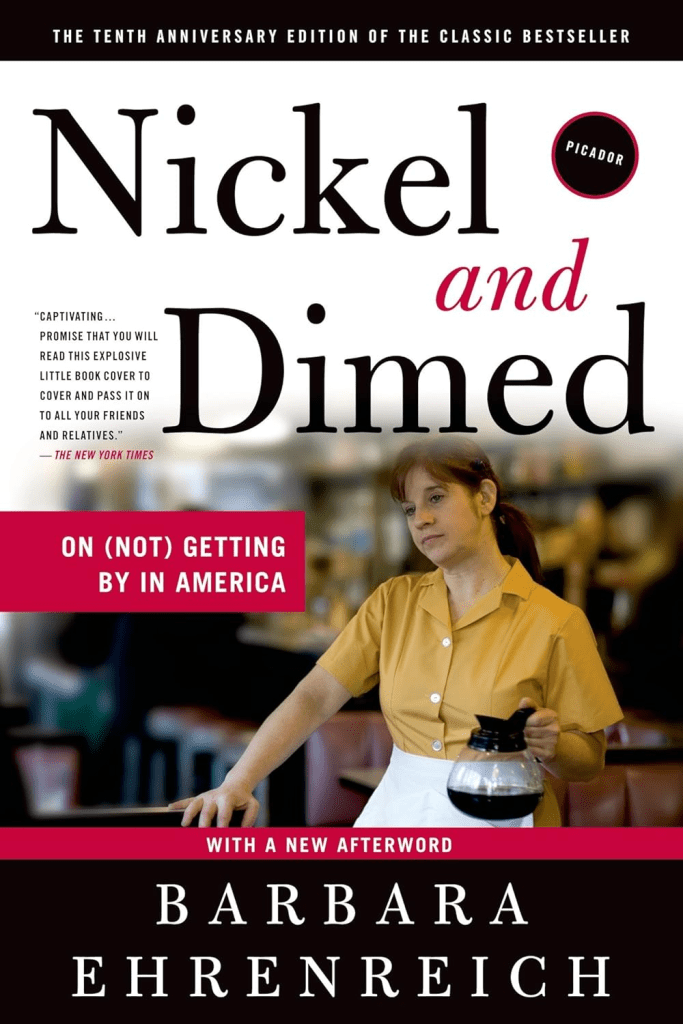
Nickel and Dimed: On (Not) Getting by in America by Barbara Ehrenreich

First published in 2001, Nickel and Dimed has remained scarily relevant for over twenty years. Between 1998 and 2000, writer Barbara Ehrenreich voluntarily joined the ranks of the working poor. She worked as a maid, nursing home aid, waitress, and Wal-Mart associate to understand the lived realities of millions of Americans below the poverty line. This book documents her experiences and struggles, such as working through pain and finding housing within her budget. The experiment ended when Ehrenreich faced homelessness, or, as she put it, she could no longer afford to work at Wal-Mart. Along with issues with housing, she also looks at food insecurity, the impact of manual labor on employees’ health, and hiring practices that veer into discriminatory. While the numbers have changed since this book was published, the facts have not. Nickel and Dimed remains a revelatory must-read for Americans today. 

Her Space, Her Time: How Trailblazing Women Scientists Decoded the Hidden Universe by Shohini Ghose

Women have long been involved in scientific fields, but have rarely gotten acknowledged for their work until recent history. Her Space, Her Time finally gives some of these brilliant women their much overdue credit. In the late 19th Century, astronomer Annie Jump Cannon helped create Harvard’s Classification Scheme, which is still used today, while being paid less than her male counterparts. Lise Meitner and her nephew Otto Frisch published the first paper on nuclear fission. Meitner’s longtime collaborator Otto Hahn was awarded the Nobel Prize for this discovery, and Meitner was left in obscurity. We all know Marie Curie, but what about Harriet Brooks or Bibha Chowdhuri? Each chapter focuses on a different scientific top, such as astronomy, physics, or chemistry, and the women who helped revolutionize their fields of study. Ghose explains complex scientific concepts in an understandable way, perfect for science lovers who chickened out of taking physics in high school (read: me). I learned so much from this book, not only about science, but also about the phenomenal women who helped shape our understanding of the universe, from the smallest sub-atomic particles to the Big Bang.

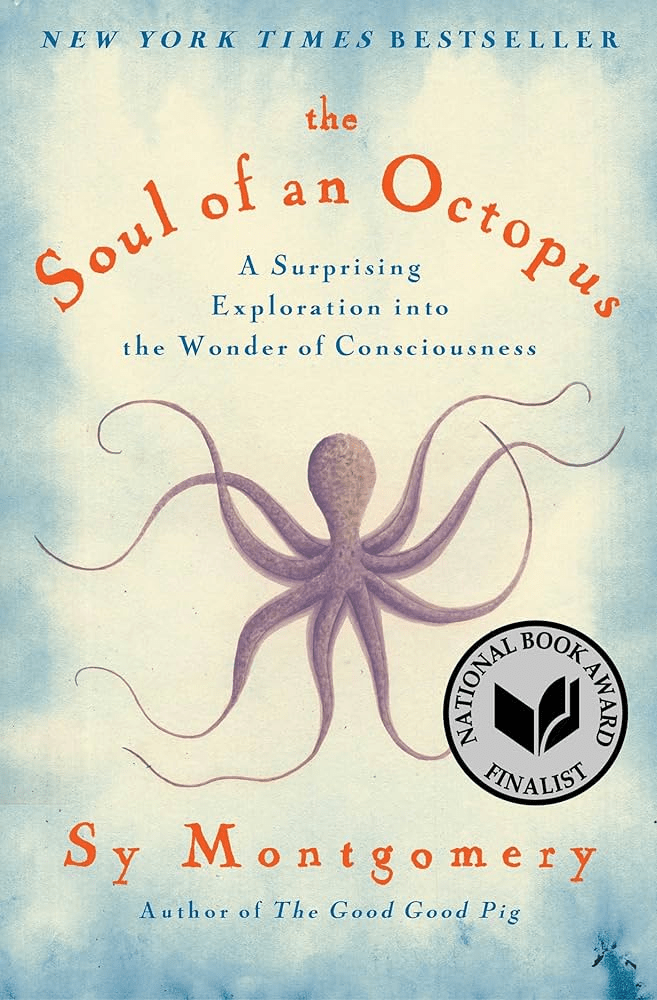
The Soul of an Octopus: A Surprising Explorating Into the Wonder of Consciousness  by Sy Montgomery


The intelligence and physiology of octopuses1 make them among the most fascinating animals on the planet. Naturalist Sy Montgomery was intrigued by octopus consciousness before she had the chance to meet one in person. At her casual visits to the aquarium, she felt that they were watching her as much as she was watching them. Montgomery first met the Pacific Octopus Athena, who eagerly latched on to Montgomery’s arm. Athena was strong enough to pull Montgomery into her icy tank, but instead was playful and curious. Thus began a series of octopus friends that Montgomery got to observe from their youth to death: Octavia, Kali, and Karma. Octopuses are highly intelligent animals that require toys and stimulation to keep them occupied; a bored octopus can be dangerous to itself and its handlers. They also have distinct personalities (Montgomery notes that Kali was aptly named) and strong emotions. Soul of an Octopus offers a compelling look at octopus consciousness both like and unlike our own. 

Patriot: A Memoir by Alexei Navalny

This story of Alexei Navalny’s life begins when he nearly died. While flying from Tomsk, Siberia to Moscow, he was poisoned with the nerve agent Novichok. He spent 18 days in a coma, and spent several months recovering in Berlin. Navalny knew who his would-be assassin was: Vladimir Putin. Navalny has been an outspoken critic of Putin’s regime and leader of the opposition party, the Anti-Corruption Foundation. He began writing his memoir while recovering from the poisoning, and ended it in prison. First is Navalny’s biography, where he recounts growing up before and after the fall of the Soviet Union and his education and early years as a lawyer. He writes about how he became the Russian opposition leader, and the dangerous and life-altering consequences for him and his family. One chilling chapter details Navalny returning to Russia after his poisoning, despite knowing that he will likely be arrested once he returns. The second half of the book is Navalny’s prison diaries and social media posts. He shares his experience in prison, including a hunger strike when he was denied medical care. The entries become sparser as his punishments in prison worsen, and Navalny would be killed in a prison above the Arctic Circle. Despite bleak circumstances, his writing never veers into self-pity or nihilism. Instead, he writes passionately about his work and condemns the invasion. Navalny also never loses his sharp sense of humor, adding some surprising moments of levity. While not an easy read, it is a powerful memorial and a stark reminder of how important it is to stand against authoritarianism. 

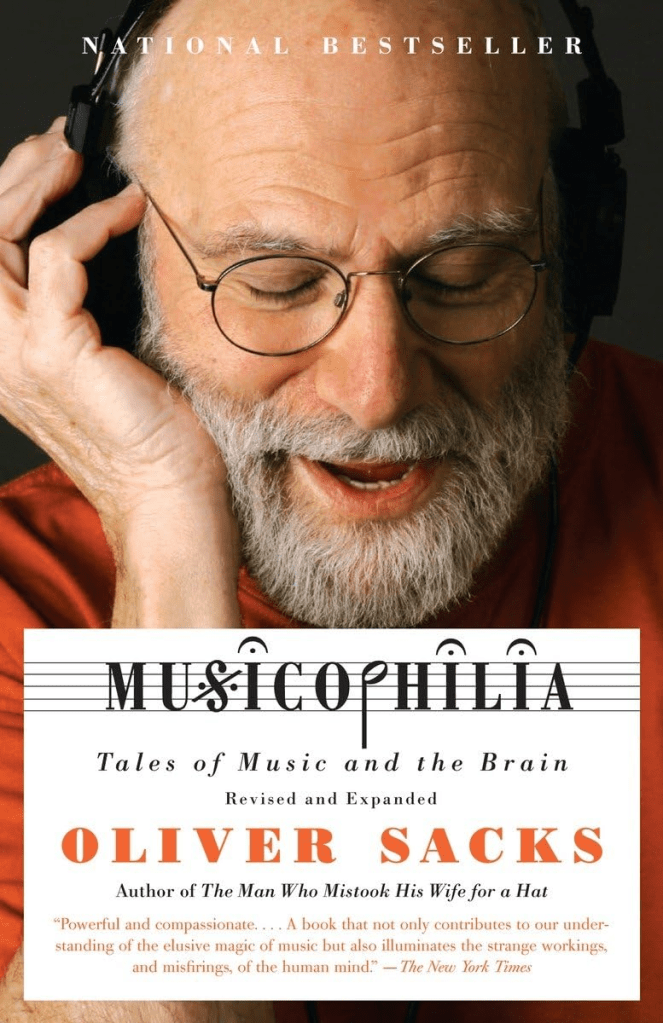
Musicophilia: Tales of Music and the Brain by Oliver Sacks

Ah, music! Who doesn’t love a great song that you can sing along to? Well, if you have amusia, a symphony may sound like pots and pans banging together. Musical hallucinations are real, too, and can cause a great deal of distress. But many of us love music, and our brains do, too. Oliver Sacks, best known for his work The Man Who Mistook His Wife For a Hat, takes a look into the good, the bad, and the utterly strange ways that music affects our brains. The book opens with the case of Tony Cicoria, a man who never had more than a casual interest in music. Then he was struck by lightning. Cicoria survived, but was struck by another passion: classical music. Within three months of his recovery, he was spending almost all of his time playing piano and composing music. His new obsession lasted decades. This is only one of the stories about the mysterious relationship between music and the human brain. Others include a man with amnesia whose memory lasts only seconds, but can still read and play music, a musician with severe Tourette’s whose tics diminish greatly only when he performs, among others. The therapeutic effects of music on people with Parkinson’s and Alzheimer’s is shown as well. Sacks never turns these narratives into freak shows, but writes compassionately about the power of music and the mysteries of the human brain. 

Fiction

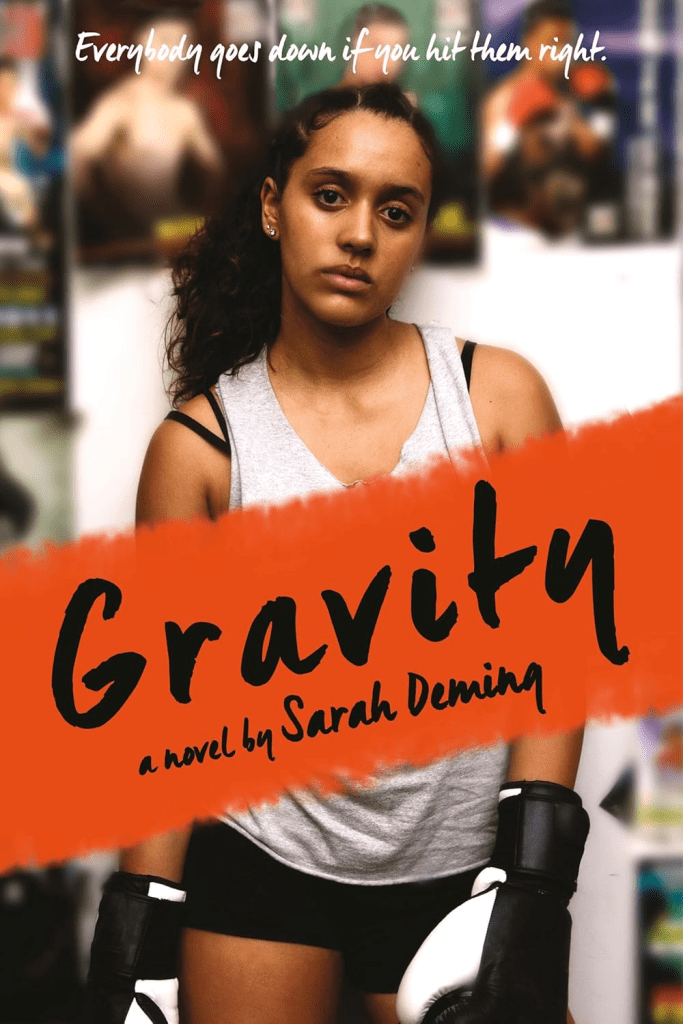
Gravity by Sarah Deming

Gravity Delgado is a force to be reckoned with. This young woman is a fierce, undefeated boxer, preparing for the 2016 Olympics in Rio. She’s been training since she was twelve, but her biggest challengers are the ones that she faces outside the ring. Her alcoholic mother, responsibilities for her younger brother, and a heady romance all threaten Gravity’s rising star. She still has her supportive aunt and cousin, as well as her found family at the gym in her corner. Still, Gravity’s biggest obstacle might be herself. The boxing matches are exciting to read, and include both the physical and mental aspects of a bout. Gravity makes mistakes and occasionally stumbles, but you’ll be cheering for her in and out of the ring. A novel that pulls no punches in the best way. 

The Truth About Everything by Bridget Farr

Fifteen-year-old Lark knows how to drive, fix an engine, and catch her own food, but she can barely read. She and her parents know the end is coming, and they’ll be the only ones left standing after the inevitable downfall of America. Raised by two doomsday preppers, Lark has never questioned the conspiracy theories that she was raised on. Then Lark gets her period for the first time. She thinks that she’s miscarrying, something that has happened to her mother many times before, but doesn’t know how she could have gotten pregnant in the first place. After her mother explains what her period is, Lark starts to wonder what else her parents haven’t told her? Lark secretly enrolls herself in high school, where new knowledge conflicts with everything she’s been taught at home. She’s hungry to learn, even when it means uncovering painful truths. But soon, Lark finds herself at a crossroads. What is the real truth? And what will Lark have to sacrifice for it? Pairs well with Educated by Tara Westover. 

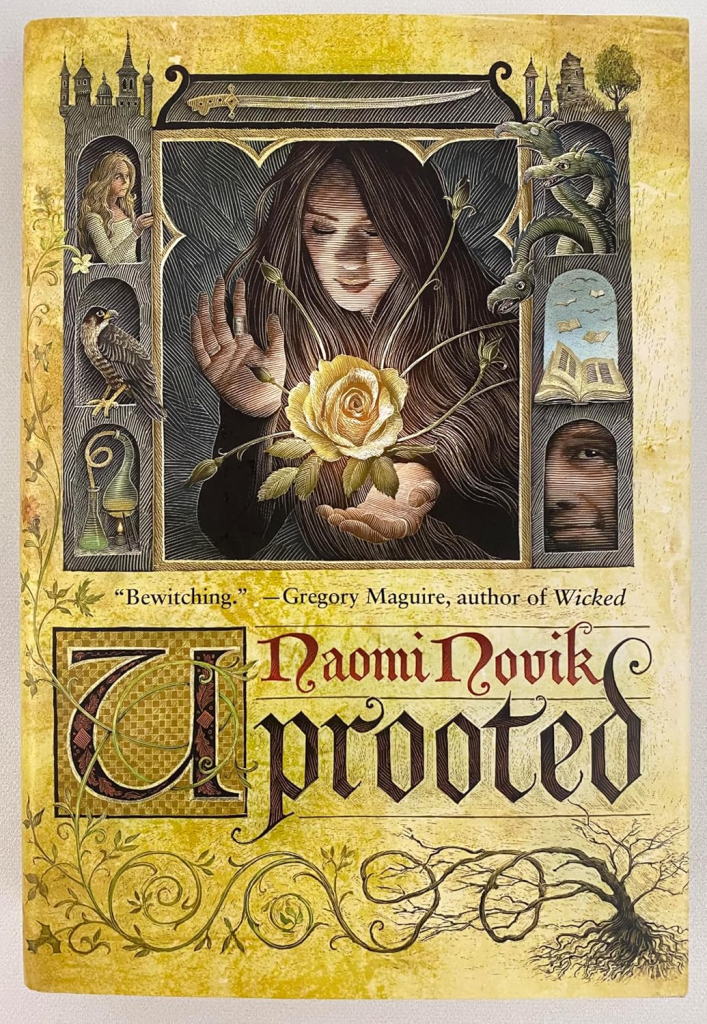
Uprooted by Naomi Novik

Once every ten years, the Dragon takes a village girl into his tower in the corrupt Wood. When she leaves a decade later, with jewels and finery, she is irrevocably changed and leaves the village forever. But the Dragon isn’t a scaly creature that breathes fire. He is a seemingly ageless, enigmatic wizard. Agnieszka has no fear of being taken. The Dragon only takes the most remarkable young ladies, and she’s nothing special. Though no one says it, everyone believes that Kasia, Agnieszka’s best friend, will be the one he picks. Yet it is Agnieszka the Dragon, reluctantly on his part. She is a witch, and her newly-found powers could be devastating if the corruption of the Wood reaches her. Agnieszka and the Dragon have a rocky start, but their mutual dislike of each other must be put aside when the Wood threatens her home. The well-developed characters, rich, Eastern European-inspired setting, and fantastic storytelling will leave you spellbound. 

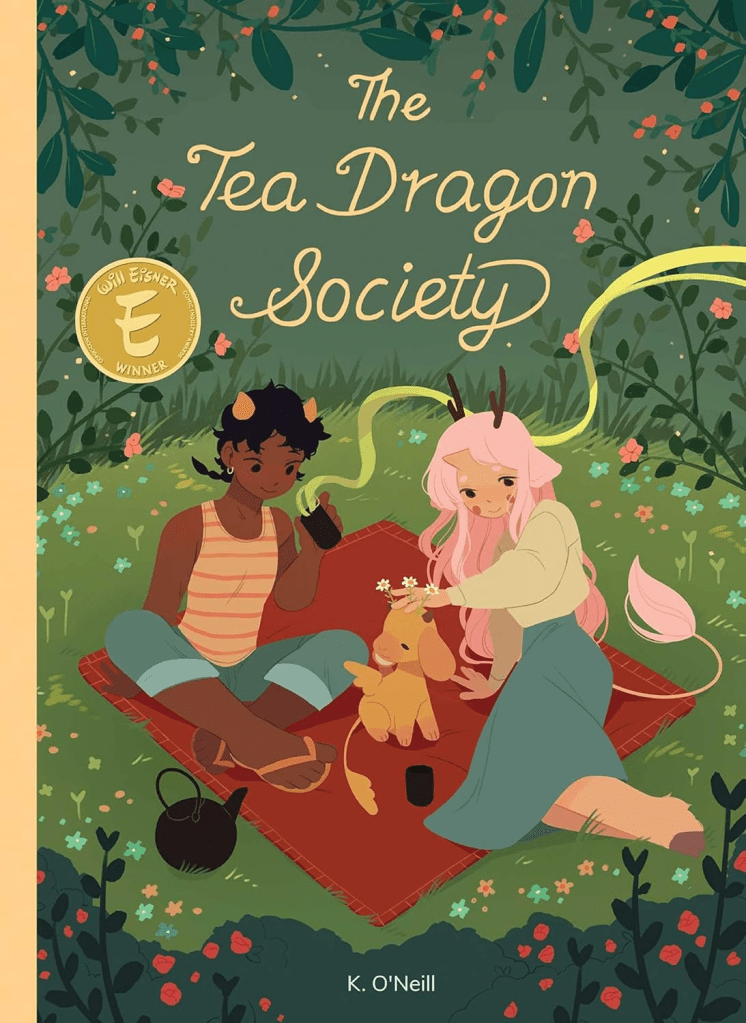
The Tea Dragon Society by K. O’Neil

Half-human, half-goblin Greta is an apprentice blacksmith in a world where the old crafts are fading. Greta helps a lost tea dragon – a small dragon that grows tea leaves – find its caretakers, and she is introduced to the Tea Dragon Society. Like blacksmithing, the care and cultivation of tea dragons is a dying art. The Tea Dragon Society is made up now only of Hesekiel, his partner Erik, and a shy girl named Minette. As a year passes, Greta learns to care for the dragons alongside Minette, assuring Hesekiel that the Tea Dragon Society will go on. I’ve enjoyed O’Neil’s other graphic novels, and The Tea Dragon Society embodies so much of what I love about their work. The artwork is soft, with no heavy outlines, adding to the whimsical feel of the world. It features a diverse cast in a simple but visually beautiful story. The Tea Dragon Society is the graphic novel equivalent of sliding into a warm bubble bath…maybe with a nice cup of tea. 

Long Way Down by Jason Reynolds

Will’s older brother, Shawn, has just been murdered. Will knows the rules of his neighborhood: don’t cry, don’t snitch, always get revenge. Will takes Shawn’s gun, and take the elevator from his eighth-floor apartment down to the first floor. The doors open on the seventh floor, and Shawn’s friend Buck gets on. Except Buck shouldn’t be here – he was already shot to death. On each floor, another ghost gets on. All of them played a role in Will’s life, and all of them were victims of gun violence. Each tells Will their stories, challenging his resolve. Can he kill his brother’s killer? Should he? This is a short, intense novel in verse that will stay with you long after you turn the final page.  

  1. Yes, that is the correct pluralization. Octopodes is acceptable, octopi is right out.  ↩︎

Sep. 2025 Book Recs.: Hispanic Heritage Month

Without in any way limiting the author’s exclusive rights under copyright, any use of this publication to “train” generative artificial intelligence (AI) technologies to generate text is expressly prohibited. The author reserves all rights to license uses of this work for generative AI training and development of machine learning language models.


And we’re back! Thank you to everyone who read my work for Flash Fiction Month.

September marks the beginning of Hispanic Heritage Month! Hispanic Heritage Month celebrates the achievement, culture, and traditions of Latinx Americans of Mexican, Central American, South American, Caribbean, and Spanish ancestry.

Hispanic Heritage Month officially begins on September 15, and goes until October 15. The mid-month start date is because many Hispanic countries declared their independence from Spain in September. Costa Rica, El Salvador, Guatemala, Honduras, and Nicaragua all declared independence on September 15, 1821. Mexico declared its independence on September 16, 1810, and Chile did so on September 18, 1810. Over 150 years later, years later, Belize would declare independence from Great Britain on September 21, 1981.


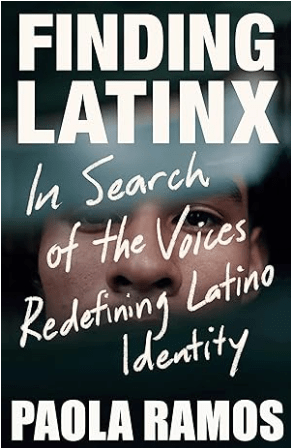
Nonfiction: Finding Latinx: In Search of the Voices Redefining Latin Identity by Paola Ramos

What does it mean to be Latinx? For journalist Paola Ramos, “Latinx” covers who she is: Latina, Cuban, Mexican, and American. But who are the millions of Americans who identify as Latinx? Ramos traveled across the United States to find out. She met with farmworkers in California, old friends in Miami, and Indigenous Maya communities in the Southern United States. She shares an iftar meal with Latinx Muslims in Washington, D.C. and cheers on an undocumented drag queen competing in the Miss Gay America pageant in Missouri. Ramos even sits down with Enrique Tarrio to try to understand what drove this Afro-Latinx man to the White supremacist group, The Proud Boys. (Note: Tarrio’s role in the Jan. 6 attacks is not mentioned. This book was published in 2020, and this chapter was likely written prior to the event.) Ramos gives readers a snapshot of the rich diversity of Latinx people in the United States, from the every day to the extraordinary. 

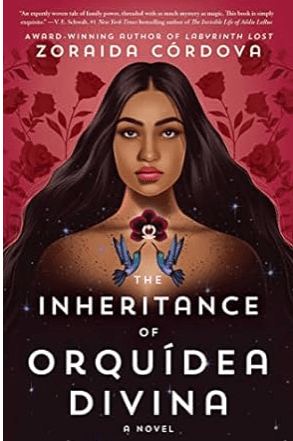
Fiction: The Inheritance of Orquídea Divina by Zoraida Córdova

Orquídea Montoya’s living descendants receive a mysterious message from the matriarch of the family: I am dying. Come and collect your inheritance. When the family gathers at the homestead in Four Rivers, but instead of dying, Orquídea transforms into a ceiba tree. Two of Orquídea’s grandchildren, Rey and Marimar, are left with flowers growing out of their bodies, as is Orquídea’s great-granddaughter, Rhiannon. The family is left with more questions than answers, with Marimar pondering Orquídea’s parting words: protect your magic. When a mysterious force begins tearing through the Montoyas, the family travels to Ecuador, Orquídea’s birthplace, searching for answers. Orquídea’s history unfolds in alternating chapters, with her story dovetailing beautifully with her descendents’ during the climax. This is an intergenerational story of magic, monsters, and family secrets coming to light. And if you’re a regular reader of this blog, you’ll see it has something rare: an omniscient narrator that I actually liked. 

BIDP: Magic Lessons by Alice Hoffman

Without in any way limiting the author’s exclusive rights under copyright, any use of this publication to “train” generative artificial intelligence (AI) technologies to generate text is expressly prohibited. The author reserves all rights to license uses of this work for generative AI training and development of machine learning language models.


It’s time for another round of Books I Didn’t Pick, and we’ll be taking a step into a world of witchcraft with Magic Lessons by Alice Hoffman. Watching the movie Practical Magic has become a Halloween tradition for my sister and me. It’s a really fun movie, and we both like the strong bond between the two main characters, who are also sisters. My own sister gifted me Magic Lessons, the first book chronologically (but not the first written) in the Practical Magic series. 

I think I need to add a disclaimer here: I haven’t read the other books in the series, so my interpretation of things may not be accurate to the series as a whole. But as long as you’re not looking for deep lore analysis, pour yourself a cup of Courage Tea and get comfy.

Magic Lessons is the story of Maria Owens, powerful witch and matriarch of the Owens family. Centuries ago, Maria was scorned by a man, and cast a powerful curse: any man that loved an Owens woman was doomed to die. But who was Maria Owens outside of her curse? Who was the man who spurned Maria? And what happened to Maria after she was nearly hanged as a witch? 

The writing is beautiful. It goes into great depths to describe the details of life in the 1600s, and at times it feels downright cozy. Hoffman has done an incredible amount of research on the time period, and it shows. However, that research at times also gets in the way of the storytelling. The pages are full of history lessons, some relevant to the story, some not. Too much of this history is also given to the reader divorced from the story itself. For example, in the first chapter, the omniscient narrator tells the reader that 90% of women in Maria’s time were illiterate. The book gives us this actual percentage, rather than weaving it into the rest of the narrative. Several chapters start with the history of an area, but don’t add much to the story otherwise. The only “research dump” like this that was really relevant to the story was information about the Salem witch trials, though the characters had left Salem years ago by that point.

While the writing is lovely, the book can be achingly slow. This was because, in part, I had very few characters to cheer for. I liked Maria’s foster mother, Hannah, and Maria’s love interest, Samuel. However, Maria was a hard sell for me. Maria starts  as a perfect, precocious child who becomes a talented and powerful witch. The first three chapters dedicate a lot of time telling the re about how cool and special Maria is. I understood why, as Hoffman needs to establish Maria’s talents and skills, but it got tiresome quickly. I reached my breaking point in chapter three after Maria helps two of her friends deal with abusive husbands. Both of her friends go on to name their first daughters Maria “so that they said that name a hundred times a day with love and devotion.” 

The novel also uses real historical figures as characters, most notably John Hathorne, a magistrate of the Massachusetts Bay Colony and prominent judge in the Salem Witch Trials. In real life, Hathorne would ultimately sentence 19 innocent people to death for the crime of witchcraft. Presenting fictionalized versions of real people can be a delicate thing. Hathorne is given nuance, especially when he and Maria first meet early in the book. I liked that he was shown to be repressed by Puritan society. At that point in time, we typically think of women being repressed, not men. I appreciated seeing how such a strict religious society affected men as well. 

If you were looking for subtlety in the characters, you’ll be disappointed. The omniscient narrator tells you every aspect of their outer and inner lives, without leaving room for interpretation. While Maria and Hathorne have layers, they’re not gradually peeled back as the story progresses. Too often, we learn the characters’ thoughts and feelings through the narration, rather than their words and actions. When this happens, I feel like I’m reading a detailed outline of a story, but not really experiencing it alongside the characters. And, because I could rarely connect with the characters, Magic Lessons committed the greatest sin that any novel can commit.

I was bored. 

Since I didn’t feel invested in the characters, I needed a strong plot to make the book more interesting to read. As I mentioned before, though, the plot is very slow-paced. It was kind of like going fishing: the scenery was pretty, nothing would happen for a long time, and then you’d get a few minutes of frantic action. After the halfway mark, the plot became circular, with the main conflicts repeating themselves twice over. The climax was fantastic, but for the most part, getting there was a slog.

The novel suffers from prequelitis as well. Maria lays her curse because she has to, since it’s an important part of the books in the rest of the series. But the timing of it was terrible, because she fell in love just before the curse was laid. Towards the end of the book, Maria buys a house and sets up a trust so it will always remain in the family. That would be nice, except she buys the house in Salem. The place where she was scorned, nearly killed,  and full of people who want to kill her loved ones. So why does she want to buy a house in Salem? Because the other books in the series take place in Salem.1 Things happen because they have to, not because they make sense for the characters or the plot.

Obviously this wasn’t a great book for me. So it might surprise you to read that I’ve actually recommended it to a few other people. Well, to people who loved Where the Crawdads Sing. Much like Crawdads, the beautiful writing is what makes Magic Lessons shine. 

I’ve seen mostly positive reviews for Magic Lessons, which often cite the prose, the mother-daughter relationship, and Hoffman’s depiction of women as some of the strongest points in the book. I honestly don’t think that Magic Lessons is a bad book, so much as it is a bad book for me. It’s “no thoughts, just vibes,” and that’s not really the kind of story I go for. If that’s something you enjoy, and you like historical fiction (especially with a touch of magic), check this one out. I recommend reading on a rainy Sunday afternoon with a cup of tea.

Because I enjoy doing this, I have my chapter-by-chapter review below. I tried to not get too spoilery in the main review, but everything in the chapter breakdown is a big spoiler party.


  • Chapter 1: I like Hannah and the last scene was very good, but so much of this chapter feels like a research dump.
  • Chapter 2: I don’t really like omniscient narrators, but it’s not driving me crazy, even if it means there’s not a lot of dialogue.
  • Chapter 3: The book has started getting better, since it’s no longer all about how special Maria is.
  • Chapter 4: I’m really curious how the book will handle Hathorne going forward. I think it’s interesting that the author depicts Hathorne as repressed by Puritan society, not just repressed women.
  • Chapter 5: Faith continues the Owens tradition of “precocious child wise beyond her years.”
  • Chapter 6: Shit finally got real. Also, why are all but two men in the book utter scum? Martha’s husband could have been kind and died, and it wouldn’t quell her desire for a daughter of her own.
  • Chapter 7: This is a problem with prequels: Maria lays the curse because she has to, because it’s dealt with in the later books. But she lays the curse after she realizes she’s in love with Sam, so now the whole chapter is about how she can’t be with him, and it’s frustrating as all hell.
  • Chapter 8: The first two pages of this chapter are just history lessons that have nothing to do with Faith. Faith is a lot like her mom, which goes back to her being the “perfect child” trope. Also, Hathorne – real guy who sent real innocent people to their real deaths – has been given much more sympathy than the fictional Martha.
  • Chapter 9: Another frustrating chapter of Sam wanting to be with Maria, and her telling him no, then they sleep together anyway.
  • Chapter 10: Maria’s story is just more of the same; Faith’s the one I’m invested in now.
  • Chapter 11: …is Hoffman implying that Katherine Parr was not only a witch, but an evil one? Curious to see where the story will go now, as the biggest plot line so far has been wrapped up and there’s still 100 pages left.
  • Chapter 12: So much of this book has been about Maria looking for Faith, but we barely see them together once they’re reunited. Talk about a lot of buildup with little emotional payoff.
  • Chapter 13: I don’t like Faith, but I am 100% here for her seeking revenge on Hathorne. However, this circular plot is getting even more circular. We’ve had the will they-won’t they with Sam and Maria three times now, and now Faith and her mother are separated again.
  • Chapter 14: This is fine. At least the plot’s moving forward, and of course Maria is just the best writer ever. The Fall Out of Love Tea is a bit manipulative, though, if you ask me.
  • Chapter 15: Of course it’s Faith that ensures Hathorne will be remembered as a bad man, not just society in general thinking that killing innocent people is bad.
  • Chapter 16: Maria’s house is perfect, just like Maria. The epilogue still doesn’t tell us why Maria chose to settle in Salem, but it tells us every herb in her pantry and the outfit she wore when she sat for a portrait. Why. 
  1. The Salem thing bugged me so much I had to stop reading for a couple days. No, it’s never explained why Maria settled in Salem.  ↩︎

Dusty List: Into the Sublime

Without in any way limiting the author’s exclusive rights under copyright, any use of this publication to “train” generative artificial intelligence (AI) technologies to generate text is expressly prohibited. The author reserves all rights to license uses of this work for generative AI training and development of machine learning language models.


I read a lot of YA books. I like them, and I’m also in charge of the YA section at my library. That means a lot of weeding, and a lot of ordering new books. 

I wrote a post all about how librarians decide what items to get rid of, but didn’t really talk about how materials get added to the collection. That’s because each library will handle it a bit differently, but there is one thing they all rely on: reviews.

I don’t mean reviews from Amazon or Goodreads, but professional reviews from sources like Kirkus or Library Journal are hugely important. Professional book reviews give a synopsis of the book, a sentence or two about the writing, and often a note about whether or not it’s worth purchasing. After reading the reviews for Into the Sublime, I ordered it, and put it on my TBR list. Thrillers and horrors circulate very well among teens at my library, and with the creepy cover art, I thought this one would be a hit. 

Two years later, it landed on an inventory list as a “dusty book” – that is, it’s been sitting at the library for two years and hasn’t been checked out. That usually means it’s time to “send it to a nice library upstate” ….aka discard it. No one wanted to read this book. 

No one, that is, but me. 

Welcome to the first edition of the Dusty List, reading the YAs that everyone else has overlooked. Let’s start the descent with Into the Sublime, a survival horror by Kate A. Boorman.

Amelie’s best friend was her cousin, Sasha. They were both part of Dissent, a group of teenage thrill-seekers who took on death-defying challenges. The group broke up after Sasha suffered a terrible accident at a Dissent challenge, but Amelie’s not ready to let it go. She wants to keep the promise she made to Sasha, and go on the adventure they never got to do together: finding a legendary subterranean lake, the Sublime. The legends say that the lake has the power to change things, and there’s a lot that Amelie wants to change. She and three other girls, Gia, H, and Devon, set out on a day trip to find the Sublime. Days later, Amelie and two other girls emerge from the cave, covered in blood. 

Only they know what happened in the dark. And Amelie is ready to talk. 

Into the Sublime is a framed narrative that starts with an email sent from Amelie to an unknown recipient, then the story jumps back to three months prior. Amelie is found in the Colorado wilderness, covered in blood, and the two girls who were found with her are being transported to the hospital. Two police officers watch over Amelie while they wait for her parents to arrive, and Amelie starts telling them the story of what happened. But how much of it is the truth? How much is manipulation? And what happened to the fourth girl? 

Using this framing device was a brilliant move for a number of reasons. First, it and the prologue email sucked me into the novel right away. Most of the story is told from Amelie’s first person perspective of her time in the cave. Between each section there are interludes written from the perspective of Officer Vargas, who treats Amelie with sympathy and suspicion in equal amounts. Vargas’s investigation reveals new information that Amelie hasn’t given us, which adds a few twists and ramps up the mysteries. It also serves as a break from Amelie’s story. The bulk of the novel takes place in the cave, and there are a lot of intense scenes. Cutting to the present with the cops gives readers a breather, and Vargas’s narration offers us another interpretation of all that Amelie’s said.

There’s another reason this works well for adult readers. For the first few chapters, you’re going to need to hit your willing suspension of disbelief button pretty hard. As with a lot of horror fiction, the characters make bad choices that lead them into dangerous situations. Yet knowing that trope wasn’t enough for me to overlook all the mistakes the girls made before they even reached the cave. Most of them were wildly unprepared to do a day hike, let alone any kind of caving. They fail to follow even the most basic safety rules when it comes to hiking, and even leave behind necessary supplies, like extra water and flashlights. 

I had to dust off my old psychology degree to get past that. Let’s take a quick peek into the teenage mind. There are two mindsets adolescents have that contribute to risk-taking. Of course, adults can also have these mental constructs, though typically not as strongly as a teenager would. First is the “personal fable.” The personal fable is, in TikTok speak, “main character syndrome.” Part of this is believing that bad things won’t happen to them. So, sure, just because Amelie’s cousin broke her neck during a Dissent stunt doesn’t mean that Amelie will. After all, she’s the one who came up with the plan. She’s got directions to the lake. She’s immune. 

The other mindset is called the “imaginary audience.” This is where you feel like the spotlight’s always on you. No matter what you’re doing, someone is watching. The “imaginary audience” doesn’t seem to have as much influence on Amelie’s and the other girls’ behavior at first, especially given the small number of characters in the story. But as the story unfolds, the reader can see how much Amelie’s perception of the other girls and their perception of her shifts the dynamics between the characters. 

I’ve said time and time again that the thing that draws me into a is the characters. Into the Sublime is an exception to that rule. Amelie and her companions Gia, H, and Devon are all interesting in their own ways, especially as they each have different motives for wanting to find the Sublime. But by the end of the book I didn’t like most of the characters, with the exception of H. At first I thought Devon, with her unique outlook, would be my favorite, but that changed by the end of the novel. 

Even if the characters were people I’d never want to be friends with in real life, I kept reading, because I just had to know how it all ended. The girls’ changing loyalties and motivations throughout the book ratchets up the tension until the very end, and keeps the reader guessing. 

I also really liked the setting. Most of the book, aside from the intervals with the police officers, takes place in the cave. Caving is challenging and often dangerous, even when you know what you’re doing. Getting lost, losing your light, bottomless pits, and squeezes could all end in disaster. The environment by itself is frightening enough, especially considering how unprepared the girls are. The scares only intensify with eerie encounters and dangerous changes in the cave. 

I do have a couple minor nit-picks1 other than what I’ve mentioned here, but overall I liked this book a lot. I think there is a bit of a high barrier for entry, especially for adult readers, but it’s a well-written, thrilling adventure. If you’re into survival stories with a bit of horror, check this one out. 

Literally check it out. It’s on the dusty list. 

  1. Very minor. Like, “why does so much of Gia’s dialogue end in a question mark when she’s making a statement?” nit-picks. ↩︎

Nov. 2024 Recs: Native American Heritage Month

Without in any way limiting the author’s exclusive rights under copyright, any use of this publication to “train” generative artificial intelligence (AI) technologies to generate text is expressly prohibited. The author reserves all rights to license uses of this work for generative AI training and development of machine learning language models.


November is Native American Heritage Month! Native American Heritage Month was established in 1990 to recognize and celebrate the diverse cultures of Indigenous Americans. There are 574 federally recognized Indigenous nations in the United States. Native Land Digital contains a map which shows the original territories of Indigenous peoples across the globe. I encourage everyone to check it out and learn about the original inhabitants of your area. 

Nonfiction

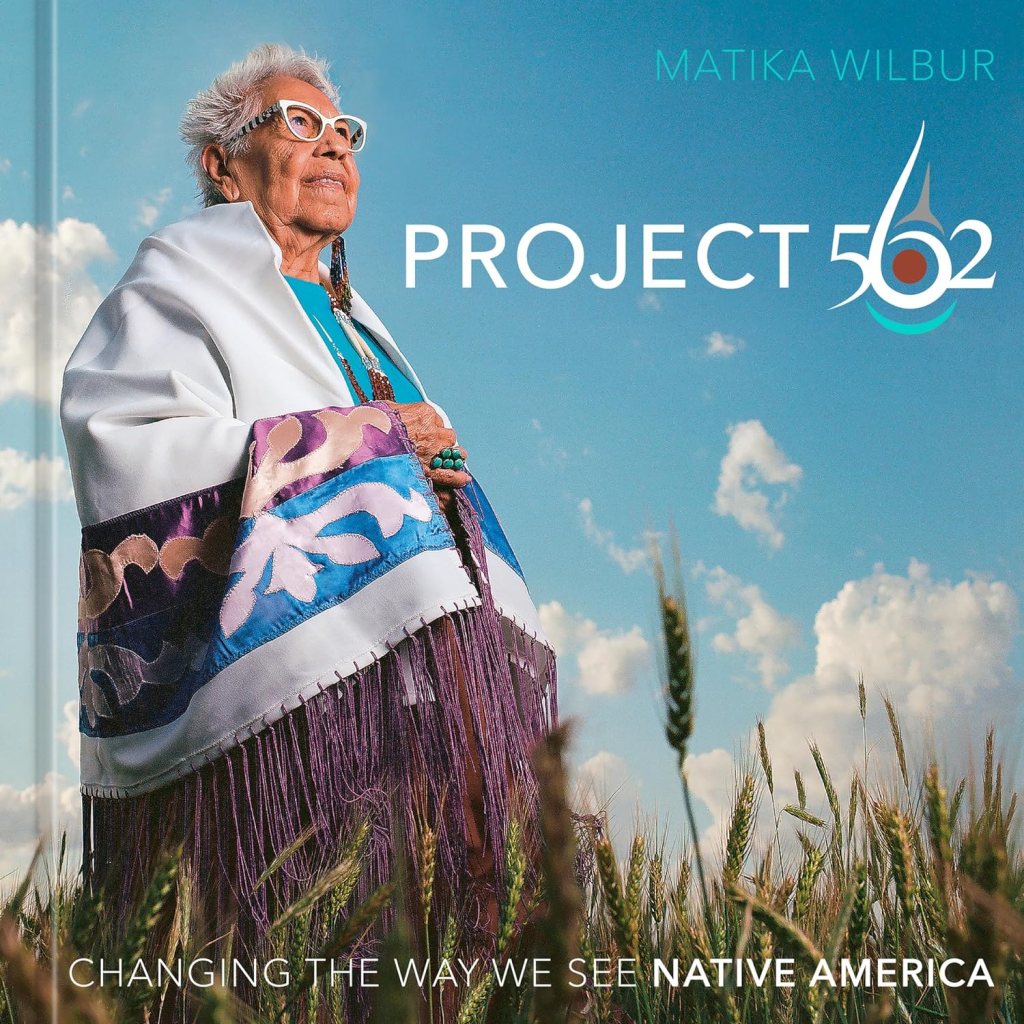
Project 562: Changing the Way We See Native America by Matika Wilbur

“Representation without us is representation done to us.” With these words, Matika Wilbur introduces Project 562, a photojournalism project that shares the lives of Indigenous People across the United States. Traveling thousands of miles, Wilbur set out to interview and photograph someone from each Indigenous nation. (Note: when the project began in 2012, there were 562 federally recognized Indigenous Nations; there are now 574.) Wilbur’s portrait photography is gorgeous, each accompanied by the subject’s story: an Ojibwe man harvesting wild rice; Two Spirit powwow dancers; a woman recounting how boarding school has shaped her family for generations; the teen beauty queen who entered the pageant because everyone told her she wouldn’t win. This work captures the diversity of contemporary Indigenous people while honoring tradition and heritage. Wilbur’s beautiful work is not to be missed, and serves as a reminder that  “Indigenous existence is all around us. It is up to us to listen.”

Fiction

A Snake Falls to Earth by Darcie Little Badger

Nina, a Lipan Apache teen living in Texas, has family mysteries to solve. Specifically, the last story her great-great grandmother Rosita would ever tell her. There’s one big problem: Rosita told the story in Spanish and Lipan Apache, and Nina has no idea what she was trying to say. As she painstakingly works on translating the story, she discovers more mysteries. Did Rosita really see a fish-girl in her seemingly bottomless well? Why does Grandma get sick when she leaves the land that’s been in her family for generations? And are those mysterious people who come to her father’s bookstore really animal-people from the Reflecting World? 

Meanwhile, in the Reflecting World, Oli is a timid cottonmouth snake reluctantly forced into adulthood. After a rough start, Oli makes a life for himself. It’s not always easy, though he tries to steer clear of the catfish cultists and bear bounty hunters. When his best friend, a toad named Ami, falls ill, Oli is terrified that Ami’s species is facing extinction – a death sentence for the animal-people in this world. If he can get to the human world, maybe he can find out what’s happening to Ami’s species and fix it. With a pair of rambunctious coyote sisters and a red-tailed hawk at his side, Oli is ready to go to the ends of the earth (or fall to it) to save his friend. 

October 2024 Recs: Spooky Season

It’s spooky season! While I am not a huge fan of horror, I can appreciate how the genre can work on multiple levels. Scary stories are excellent ways to examine human nature and society…and perfect for keeping you up on dark and stormy nights. 

Nonfiction

The Poisoner’s Handbook:  Murder and the Birth of Forensic Medicine in Jazz Age New York by Deborah Blum

Prohibition-era New York City was a hotbed of political corruption, organized crime, and poison. Poison was a deadly fact of life, found in the bootlegged liquor of speakeasies, beauty tonics, and in the hands of impatient heirs and jealous spouses. New York City’s chief medical examiner, Charles Norris, set out to change things. With his assistant Alexander Gettler, the NYC medical examiner’s office became the birthplace of forensic medicine. Working long hours, they examined corpses, exhumed bodies, and invented groundbreaking new tests to identify poisons, and put poisoners behind bars. Each chapter is centered on a different poison: chloroform and cyanide to kill, methyl alcohol served in speakeasies, industrial poisons such as tetraethyl lead and radium, and more. The Poisoner’s Handbook is a perfect for lovers of true crime and science history, though there are moments where a strong stomach is helpful.

Lakewood by Megan Giddings

After the death of her grandmother, college student Lena Johnson takes over the role of head of household. Her mother, Deziree, suffers from a mysterious serious illness (or possibly illnesses)  which has racked up more medical debt than the Johnson family can afford. Sometimes, it’s a choice between paying for water or paying for medicine. When Lena gets invited to take part in a research study that pays beyond well and offers amazing health insurance for Deziree, she thinks she’s found her way out. Lena moves to the sleepy town of Lakewood to become a test subject in a secretive government research project. She knows that what she’s doing is risky, but she is willing to endure everything for her mother’s sake. When will the risks become too big, and what will the consequences be when they do? Drawing from the historical medical exploitation of BIPOC individuals (Lena is Black; the experimenters are all White), Lakewood is a slow burn horror that will get under your skin…in more ways than one.

Indie Review: OMG UR a Teenager!

I’m a Reedsy Discovery reviewer! I received a free ARC of OMG UR a Teenager! by Leslie Young for this review.

⭐⭐⭐⭐

Twelve-year-old Kat Cruz can’t wait for her next birthday. Before she can become a teenager, though, she’ll have to make it through seventh grade. The year starts off rough when her parents buy the most run-down house in the neighborhood, and a bully snaps a picture of Kat in front of her new house. She’s constantly stuck babysitting her younger brother, who thinks he’s a superhero. Kat’s editorials in the school newspaper make a splash, but not always in a good way. She’s also crushing on her new neighbor, Will, despite the fact that his mom doesn’t seem to like her. With new challenges every day, will Kat make it to her thirteenth birthday in one piece? 

OMG UR a Teenager by Leslie Young is a contemporary slice-of-life novel full of clear, crisp writing that makes it easy for young readers to get into the story. The relatability will keep them invested throughout the book. Kat experiences things that many kids going through pre-adolescence face: bullying, the excitement and mortification of buying your first bra, and changing family dynamics. Most of all, she wants to be seen as the mature nearly-teen she is, not a child and permanent babysitter for her little brother, Max. Tween readers will understand exactly how she feels, and adults will easily recall both the joys and pains of middle school.

Kat’s family dynamic is true to life as well, with well-intentioned parents who don’t understand their daughter’s point of view, an annoying little brother that Kat loves (even if she wants to kill him sometimes), and her vivacious grandmother whose Alzheimer’s puts extra strain on the family. Kat’s and Max’s relationship is developed particularly well, showing their closeness (especially in the climax), even if they don’t always get along. However, Gran’s storyline wasn’t as well-developed, making her inclusion in the book feel unnecessary.

At times the story can feel disjointed, such as an abrupt cut from summer to Halloween. Like Gran’s story, some plot points are dropped without a conclusion. Kat’s narration is also, at times, too mature to be realistic for a twelve-year-old. While adult readers might have to stretch their suspension of disbelief at some of Kat’s inner monologues, tween readers may find her insights useful in their own lives.

Overall, OMG UR a Teenager is a warm-hearted, relatable story for tweens, and anyone who’s ever been one.

May Book Recs: Asian-American and Pacific Islander Heritage Month

Without in any way limiting the author’s exclusive rights under copyright, any use of this publication to “train” generative artificial intelligence (AI) technologies to generate text is expressly prohibited. The author reserves all rights to license uses of this work for generative AI training and development of machine learning language models.


May is Asian American and Pacific Island Heritage Month in the U.S.! AAPI Month began as Asian/Pacific Heritage Week in 1978, and was extended to the entire month of May in 1990. In 2009, the obserservance’s name was changed to Asian American and Pacific Islander Heritage Month. Asia and the Pacific island are both huge places with numerous cultures, and a short list like this can’t possibly cover every country. I’ve decided to showcase four books for this month, with one book focusing on Asia, and one on the Pacific Islands for each category. 

As a reminder: I don’t distinguish YA from adult books on these lists. This is a deliberate choice, for several different reasons I might get into on another post. However, if you are dead-set on not reading any books outside your demographic age, here’s a simple guide: if the main character is a teenager, it’s probably a YA book; if the main character is an adult, it’s probably an adult book. This isn’t always the case, and I do try to note when books featuring teen characters would be better suited for older audiences.

Without further ado, here’s some books to celebrate AAPI month!

Nonfiction

No Country for Eight-Spot Butterflies: A Lyric Essay by Julian Aguon

Julian Aguon is a Chamorro human rights lawyer and the founder of Blue Ocean Law, which specializes in Indigenous rights and environmental justice. He’s also a passionate and talented writer, as exemplified in No Country for Eight-Spot Butterflies. This book is a collection of his essays, speeches, and poems, but it’s also a love letter to the young people of Guam. “The Ocean Within” encourages high school graduates to imagine, dream big, and “get quiet” when they search for their destiny. Other essays discuss threats to the natural world, through climate change and increased militarization of Guam, despite its residents’ protests. Loss and grief are also central themes, shown in deeply personal writing. Though some entries are painful (“Fighting Words” is particularly difficult to read), overall, the book encourages its readers to make changes in the world, even if it’s only in a small way. My favorite essay was “Nikki and Me,” which resonated so strongly with me I had to read it twice. 

Family Style by Thien Pham

Thien’s first memory is “the saltiness of fish…and the sweetness of rice” when he was a young child on a refugee boat traveling from Vietnam to Thailand. Food is the prominent framing device in this graphic novel memoir, which shows Thien’s life first as a refugee, then as a Vietnamese immigrant, and finally as a U.S. citizen. Each period of his life is marked by an important food, from the bánh cuốn his mother cooked in a refugee camp in Thailand to the ham and cheese croissants that signify the Pham family gaining financial independence in the United States. Thien chronicles his family’s story of starting a new life in America with help from other Vietnamese refugees. Challenges included learning English, financial hardships, and strange cafeteria food. At times Thien questions his cultural identity, trying to understand what it means to be Vietnamese and American. While parts of Thien’s story are harrowing, particularly his journey to Thailand, the graphic novel is well-balanced with humorous and touching memories as well. 

Fiction

The Lies We Tell by Kate Zhao

When someone asks Anna Xu why she wants to go to Brookings for college, she tells them that it’s a prestigious school, and the in-state tuition will save her a lot of money. What she doesn’t say is that she wants to solve the murder of Melissa Hong, a Brookings student and Anna’s former babysitter. College life isn’t want Anna thought it would be, with a roommate who loves to party, and her old academic rival, Chris Lu, keeps popping up in unexpected places. At least she has Jane on Friend Me, the school’s friend-finding app. Anna’s investigation is derailed when Chris’s family’s bakery is vandalized with a racial slur, and strange things start happening to her and other Asian students on campus. Is Melissa Hong’s killer still out there? Anna needs to find out what happened to Melissa fast…before the same thing happens to her. 

Dragonfruit by Makiia Lucier

In the Nominomi sea, “dragonfruit” – seadragon eggs – are said to be able to undo a person’s greatest sorrow, though at a price. Hanalei knows this is true: after she and Princess Oliana were poisoned, Hanalei’s father stole dragonfruit intended for the princess to save his young daughter. Hanalei survived, though her father did not, and the princess remains in a coma. Hanalei spent the next ten years of her life in exile, but the sight of a pregnant seadragon gives her hope. After an encounter with dangerous dragon hunters, Hanalei arrives back in her home kingdom of Tamarind. There, she reunites with her childhood friend, Prince Samahitamahenele. She and Sam finally have a chance to save Princess Oliana, but they are not the only ones seeking the dragonfruit. Dangers await them across the waves, and even if they reach the dragonfruit first, what price will they pay? Dragonfruit is a lush and imaginative fantasy steeped in Pacific Islander mythology and imagery. 

April Book Recs: Let There (Not) Be Light

At a restaurant, a sommelier might recommend the perfect red wine to go with your steak. I aspire to be a book sommelier who finds nonfiction and fiction that complement each other, bringing out the best flavors in each text to enhance your reading experience. For April, I would like to offer two books that pair well together for a little bit of “light” reading.

Nonfiction

The End of Night: Searching for Natural Darkness in the Age of Artificial Light by Paul Bogard

Have you ever seen the Milky Way with your naked eye? When was the last time you saw a truly starry sky? Earth is brighter than ever, but does that mean that it’s better for its residents? Starting with the brightest light on the planet – The Luxor Sky Beam in Las Vegas –  and ending with the darkest skies in the United States, Bogard examines the multitude of ways that widespread artificial lighting has changed our world. He interviews engineers, astronomers, ecologists, third-shift workers, and even clergy members about what the loss of darkness means for humans and the natural world. Starlight is not the only thing we risk losing when dark skies disappear: Bogard also investigates the health and safety risks associated with artificial lighting, and the disconnect between ourselves and nature. This is a thought-provoking book that will make you see your world – both in day and night – a little differently. 

Fiction

The City of Ember by Jeanne DuPrau

Twelve-year-olds Lina and Doon have lived in the city of Ember their entire lives, where nothing is more important than light. Without the electric lights, the city would be in complete darkness all the time. With no known way to make portable light, blackouts are frightening for all the city’s residents. When Assignment Day arrives, Lina is disappointed that she’s been assigned to be a laborer at the Pipeworks. Much to her surprise, Doon trades assignments with her. Now Lina can spend her days running through Ember as a messenger, while Doon descends into the bowels of the city. With blackouts increasing at an alarming rate, Doon knows that something is wrong in Ember. If he can get close to the generator that powers the city, maybe he can learn why the blackouts are happening. Meanwhile, Lina discovers a two-hundred-year-old message from the founders of the city. Parts of it have been destroyed, but whatever it contains could be the key to saving Ember. She and Doon must work together to discover the forgotten secrets of Ember, and maybe even bring its citizens into the light.