The Magician’s Nephew, Chapter 1: Growing Up is Hard To Do

I’ve always loved fantasy stories, and I think one of the most influential ones in my life has been The Magician’s Nephew by C.S. Lewis. All told, I would read the first four (in chronological order) of The Chronicles of Narnia: The Magician’s Nephew; The Lion, the Witch and the Wardrobe; The Horse and His Boy; Prince Caspian. I never quite made it to the three final books, though I owned them all. If anyone ever asked me which book was my favorite (and no one ever did), I would have told them The Magician’s Nephew. It was the first in the Narnia series that I ever read, and it opened up a world of magic to me.

When I was in grade school, my Aunt Linda was sick with ovarian cancer. I spent many weekends traveling to hospitals two or three hours away from home to see her. It was a hard time for me, and I think one of the reasons I really fell in love with fantasy books was because I needed some magic in my life.

Right from the first few pages of this book, though, I realized that it wasn’t just a need to escape that compelled me to read — and love — this book as a child. When the main character, Digory, meets his friend Polly for the first time, she can see that he’s been crying. He explains:

‘And so would you [. . .] if your father was away in India–and you had to come and live with an Aunt and an Uncle who’s mad (who would like that?)–and if the reason was that they were looking after your Mother–and if your Mother was ill and going to–going to–die.’

Well, shit. Already something I could relate to, and we’re only on page six.

I also forgot how quickly children’s books start. Digory and Polly meet, they’re friends, they go explore houses. There’s not much build-up before they reach Uncle Andrew’s study and begin their real adventure.

Now, there’s plenty of criticism about C.S. Lewis, but there is at least one thing he does right: captures the enchantment of childhood. Polly has a secret “cave” in the attic of her house, and it’s a place that I would have loved to have as a child. Re-reading this, I still wish I had a place like this.

 Polly had used the bit of the tunnel just beside the cistern as a smugglers’ cave. She had brought up bits of old packing cases and the seats of broken kitchen chairs, and things of that sort, and spread them across from rafter to rafter so as to make a bit of floor. Here she kept a cash-box containing various treasures, and a story she was writing and usually a few apples. She had often drunk a quiet bottle of ginger-beer in there: the old bottles made it look more like a smugglers’ cave.
 A cozy hideaway, a space just for you to be alone in. And there’s something about making this in her attic that makes it truly child-like. Perhaps because even if I had a hide-out like that as a kid, I wouldn’t be able to fit into it as an adult. If I did, and I returned to it, it would be a place full of nostalgia, certainly, but not a place of wonder as it once had been.

Childhood is a common theme throughout the Narnia series. Peter and Susan get booted out of Narnia at the end of Prince Caspian because they’re too old, and the only people who can save Narnia are children. There’s a little sadness when it comes to leaving your childhood behind, knowing that magic isn’t really real, that you’ll never find a secret world in your closet or get a letter delivered by owl. (My owl with my Hogwarts letter just got lost! I swear!) There’s one passage in the first chapter that captures this exquisitely, when Digory and Polly are discussing what might be in the empty house they’re trying to sneak into.

‘But I don’t expect it’s really empty at all,’ said Digory.

‘What do you expect?’

‘I expect someone lives there in secret, only coming in and out at night, with a dark lantern. We shall probably discover a gang of desperate criminals and get a reward. It’s all rot to say a house would be empty all those years unless there was some mystery.’

‘Daddy thought it must be the drains,’ said Polly.

‘Pooh! Grown-ups are always thinking of uninteresting explanations,’ said Digory.

When we talk about the end of childhood, we talk about children losing their innocence, or gaining responsibilities. Maybe every so often, we should think about their imaginations, too, and keeping our own ones intact.

We all have to grow up, but our imaginations don’t have to be a casualty of adulthood.

Biggest Bullshit Moments in Snow Drop, Part 2

Unfortunately, Snow Drop doesn’t end with So-Na getting away from her horrible father. Instead, the story only goes downhill from there, bringing us bigger and bigger moments of utter shit. Watch out, it only gets worse.

Volume 7: Easily Forgiven, and True Love
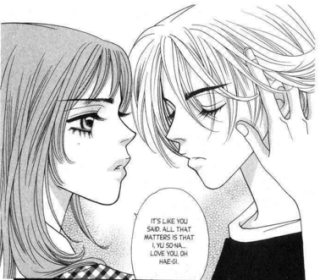

Watch out, this one’s a two-parter. Volume 7 is a tribute to bad decisions. Hae-Gi and So-Na return to her home, so Hae-Gi can ask her father for permission to date her. So much for that independence she was trying to achieve. Dear old Dad finally reveals why he’s so against their relationship: Hae-Gi’s brother, Gae-Ri, was the one who kidnapped So-Na years before. In retaliation, So-Na’s father had Gae-Ri and his accomplices killed.
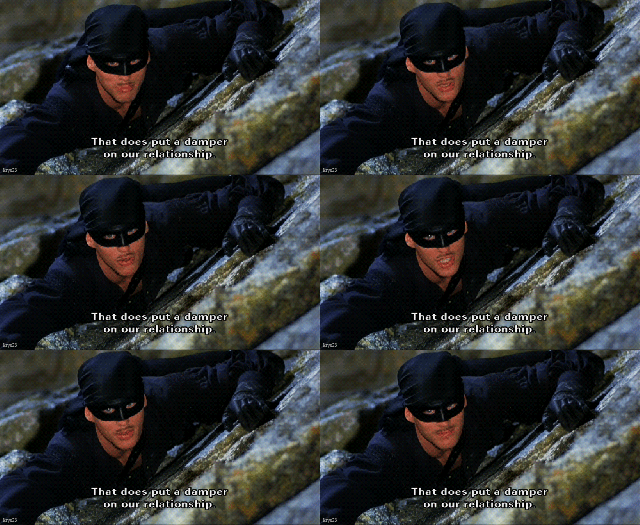
You’d think that would be enough to break up Hae-Gi and So-Na, or at the very least, make them re-think the relationship. While So-Na does show some hesitation about moving forward, about five minutes later Hae-Gi says that he doesn’t care what happened between their families, just that he loves So-Na. I love my boyfriend, too, but if his parents killed my sister, I don’t think we’d continue seeing each other.

It doesn’t matter, though, because So-Na and Hae-Gi run away together. I used to think that was romantic and brave, but now I think it’s really dumb. So-Na clearly has a death wish, as she keeps saying that as long as she and Hae-Gi can die together, she’ll be happy. What?

But even more than that, what bothers me is this “one true love” nonsense. Remember, Hae-Gi and So-Na are seventeen. They’re in high school. Think back to the people you dated in high school. I became enamored with the first guy I ever dated when I discovered that he was a Lord of the Rings fan, just like me. Or the second person I dated in high school, who I was first interested in because he was an anime fan. Because clearly liking the same thing means that you’ll be together forever. The idea that you’ll find the person you’re meant to be with forever in high school, to me, is a load of crap.The first person you date is most likely not going to be the person you’re going to marry, and they’re definitely not going to be worth dying over.

Volume 8: So-Na Dates Hwi-Rim
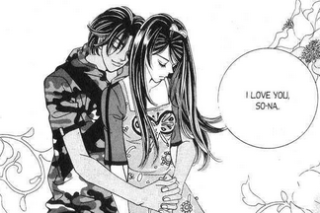
Or, put another way, So-Na willingly dates the man who tried to rape her

There are so many problems with this. I’m not even sure where to start.

Rape in fiction is a quandary, and we could argue all day about using it as a plot device, as a way to show character, and whether or not it’s okay to use. It may make me uncomfortable, and I may not like to see rape used in fiction, but does that mean it should never be used? I believe – and this is just my own opinion – that if rape (or in this case, attempted rape) is used in a story, it has to be necessary; it can’t just be for shits’n’giggles. That is, it should propel the story forward, reveal something new about the characters involved, and not trivialize the victim’s experience.

So-Na’s kidnapping traumatized her for years, and left her reclusive and depressed, and she admits to being suicidal before the series began. Sure, it’s not the happiest backstory, but her reaction to it, I think, is normal and expected of someone who’s been through that. However, Hwi-Rim’s attempted rape doesn’t have that same effect on her. Even if it So-Na didn’t suffer long term effects from it (which she didn’t), I don’t think she would want to be anywhere near Hwi-Rim, let alone dating him. This is what I mean about trivializing the victim. The attempted rape is all but forgotten, and the only hang-ups she has about dating Hwi-Rim is that he’s not Hae-Gi. And the reason Hwi-Rim tried to rape So-Na in the first place was because he loved her.

For some context, Hae-Gi and his family were exiled to America, and So-Na wants to date someone to forget about him. She chooses Hwi-Rim because…well, I don’t know. If she wanted to date someone, she could have gone out with, say the class president who asked her out, and by the way, hasn’t tried to fucking rape her. 

I think the lessons Snow Drop is telling us is that:

1. Rape is an expression of love.

2. Attempted rape has no lasting traumatic effects on the victim.

3. A romantic relationship with your would-be rapist is okay and probably healing.

I just…if I had a week, I couldn’t tell list all the reasons that explain how fucked up that all is.

Volume 9: So-Na Has No Identity Outside of Hae-Gi
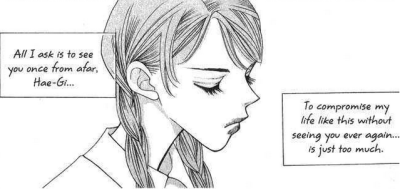
This book is much more mild than the last few, but there’s still one thing in it that really bothers me. So-Na is now going to a different school and has made friends with the “delinquent” girls. This is supposed to show us how depressed and self-destructive So-Na’s become since Hae-Gi was exiled, but I think it misses its mark. It doesn’t make me pity So-Na; in fact, I think it makes me dislike her a lot. I think this is just my own mentality, though. Maybe this hit harder for other readers, but I’ve always been the girl going, “I don’t need no man!” I hate when a girl loses her lover, and falls to pieces. Part of that is because I don’t think I’ve ever seen the reverse – a man losing his lover as well as the will to live – but I hate how tied in So-Na’s mental health is to Hae-Gi. When she’s strong, it’s because she has Hae-Gi’s support. When she’s weak, it’s because he’s gone. Her dependency on him for her own happiness and well-being is cringe-worthy at best, and falls into “Bella jumps off cliff to see her ex-boyfriend” territory at worst. This is exactly why I said I didn’t want this series falling into unsuspecting hands. It’s not romantic, it’s not tragic; it’s a teenage girl making bad choices because she’s going through a break up. So-Na, just get a dramatic haircut or something and move on with your life, like a normal eighteen-year-old.

Oh well. At least no one was sexually assaulted in this volume.

Moment of Redemption: Hae-Gi and So-Na’s Reunion
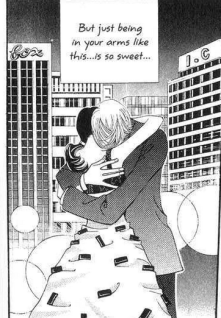
At this point, Hae-Gi and So-Na have not seen each other in at least a year. So-Na travels to America with Hwi-Rim just so she can see him. Literally, just to look at him. Because she swore that she would never see Hae-Gi again, So-Na has no plans to interact with him. When she does get a glimpse at him, though, she’s so overwhelmed she has to run away. Hae-Gi spots her and chases after her, and the couple finally meets again. It’s sad and romantic, and I love the artwork in this scene.

Volume 10: Ha-Da Rapes Ko-Mo
It’s not graphic, but I still don’t want to put a picture up. Please enjoy this royalty-free picture of inter-species friendship instead.

I’ll try to make this quick, because I’m not sure how much more I can stomach. Ha-Da accidentally gets Ko-Mo high as balls (it’s a long story), and has sex with him. That’s bad enough, especially considering that Ko-Mo has spent most of the series trying to get Ha-Da to leave him alone. But, because Ha-Da is a “hero” in the story and we’re supposed to be cheering for him, Ha-Da having sex with a drugged up Ko-Mo can’t be seen as a villainous thing. We’re supposed to like this guy, after all. Instead of Ko-Mo being horribly scarred or attempting to kill Ha-Da (which he’s done), he falls in love. Ko-Mo falls in love with his rapist.

You here that, fellas? If they keep saying “no”, what they need from you is a good dicking.

Fuck. That.

This is even more troubling to me that So-Na dating Hwi-Rim. Hwi-Rim’s attempted rape of So-Na was portrayed as monstrous and violent, but Ha-Da’s rape of Ko-Mo was portrayed as romantic. All Ko-Mo needed to finally say yes to Ha-Da was a shitton of drugs.

This might be the worst thing I’ve ever read. And I once read a graphic fanfiction about Princess Leia and Optimus Prime.

Volume 11: Snow Drop Just Keeps Going
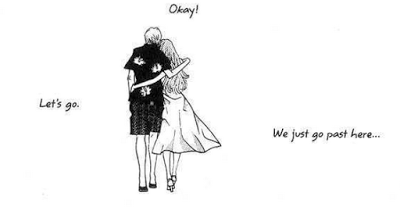
At least Romeo and Juliet stayed dead.

Snow Drop‘s tagline advertises the manhwa as “a Romeo & Juliet style romance”. I’d say that’s accurate, as both works feature feuding families and teenagers making stupid decisions. It really looked So-Na and Hae-Gi were going to go the same way as the original star-crossed couple, when they are shot and stabbed by their own family members. As they lay dying in the hospital, So-Na sees her mother and Hae-Gi in the afterlife. They are amazingly happy, but decide that they want to live together. They don’t die, their families forgive each other, and even Ko-Mo returns his feelings for Ha-Da. It’s a happy ending for everyone!

Except it doesn’t end there. The second half of the book looks like it belongs in a completely different series. The big conflict is that Hae-Gi wants to marry So-Na, but she thinks they’re too young. Finally, she says something sensible. Had I been the creator, I would have either killed them off, and let the second half of this book be about their families, or I would have ended it with Hae-Gi’s and So-Na’s happy ending.

Volume 12: Choi Kyuang-ah Just Gives Up


Choi Kyuang-ah is the creator of Snow Drop, by the way.

I’ve got nothing against happy endings. I think real life needs more happy endings. Even after such a dramatic series where everything is doom and gloom, it’s nice to see So-Na and Hae-Gi succeed, and eventually get married, with their parents approval. In fact, one of my favorite moments comes at their wedding, with So-Na’s father and Hae-Gi’s mother respectfully bowing to one another. But it just drags on and on after that. In fact, most of the book doesn’t even focus on Hae-Gi and So-Na. A good portion of it is dedicated to Hwi-Rim finding love (with a high school student…), and glamour shots of Hae-Gi and So-Na kissing and declaring how much they love each other. The only thing resembling a plot towards the end is So-Na being upset that she likely won’t be able to have children. Flash forward, and we see her, Hae-Gi, and their new baby.

Everyone getting what they want and living happily ever after isn’t a bad ending, but there are two things that bother me about it. First of all, a lot of this really feels inflated and unnecessary. It makes me wonder if Kyuang-ah actually intended for the series to end this way, or if there was some sort of contract stipulation that said “you need to create X number of chapters”. In one of the bonus comics illustrating her life, she even says that the ending was originally going to be much darker. I have to wonder if she gave us the light and fluffy ending because she wanted to, or if it was a case of editorial meddling.

The other thing that bugs me about the ending is that it just doesn’t fit with the rest of the series. Snow Drop is convoluted, violent, and over-the-top dramatic. This ending is so happy, and comes to the characters so easily, makes it feel like it was ripped from a completely different manga. It’s just…too happy, and too neat.

Final Final Verdict:

If you haven’t lost your lunch yet, I’ll be back on soon with The Magician’s Nephew by C.S. Lewis.

Biggest Bullshit Moments in Snow Drop, Part 1

In my introductory post about Snow Drop, I described it as one of the most misguided comic series I’ve ever read. I already know I won’t be able to stomach re-reading the rest of the series, never mind blogging about each book. However, the fist volume only scratches the surface of all the melodrama to come. There’s so much crap in these books, I’ve decided to highlight some of the biggest instances of bullshit in the series.

Volume 2: Ha-Da Pursuing Ko-Mo

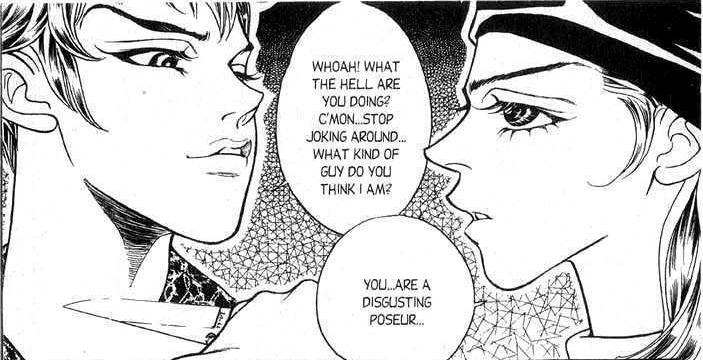
Ha-Da attempts to date Ko-Mo, and this doesn’t go very well for him. To begin with, no one – including So-Na, Hae-Gi, and Ko-Mo himself – tells Ha-Da that Ko-Mo’s male. Ko-Mo isn’t gay, either. Nor does he like being pursued by Ha-Da. Yet, Ko-Mo never tells Ha-Da that he’s a guy. As much as Ko-Mo tells Ha-Da to leave him alone, Ha-Da never takes the hint. Now, when someone tells you to stop doing something because they don’t like it, and you continue doing it, it’s called harassment. Ko-Mo finally puts a fucking KNIFE up to Ha-Da’s throat and mugs him to get him to back off.

He doesn’t.

Volume 3: So-Na Gets Roofied

At this point, So-Na has acquired a rival, Jin Sun-Mi. Sun-Mi is in love with Hae-Gi, but he’s dating So-Na. Sun-Mi decides to try to sabotage their relationship by drugging So-Na so she passes out in a storage shed at school. If that highly illegal and immoral behavior wasn’t bad enough, Sun-Mi has Ha-Da go to the storage shed as well, where he sees unconscious So-Na. He figures out that she’s been drugged, and that Sun-Mi was the culprit. Does he try to wake his best friend? Find help? Call the police? No. Instead, he kisses So-Na. This is meant to be romantic. Instead, the whole situation is disturbing as all hell, especially because Ha-Da knows that So-Na was kidnapped and molested when she was twelve.

What the fuck am I reading.

Moment of Redemption: Hae-Gi and So-Na’s date


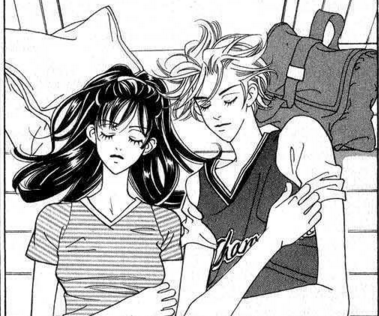
Nothing is completely awful, though, and Snow Drop did have times that I really did enjoy, things that made me want to keep reading, despite all the bullshit going on. Here, Hae-Gi takes So-Na out on an impromptu date. She’s nervous to be alone in the dark with him at first, but comes to realize that she does trust him. They go to a park and stargaze, and So-Na lies down next to him, which is a big deal for her, even if she does panic. This scene also gives us the couple’s first real kiss. It’s a very tender scene, especially considering all they’ve been through to get to this point.

Volume 4: So-Na is Attacked and No One Believes Her


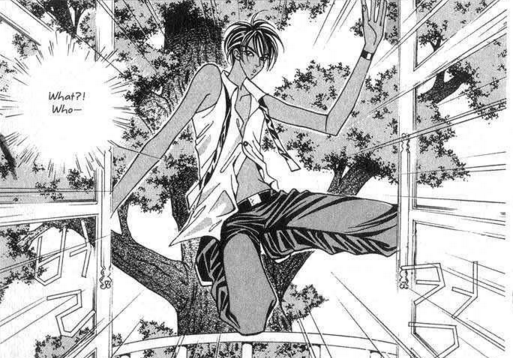
Trouble continues to brew when So-Na finds out that she finds out that she’s engaged to someone she’s never met, Hwi-Rim. Naturally, she objects to the prospect of arranged marriage, and especially to her fiance. It’s fair to say that she didn’t have the best first impression of him. Before So-Na and Hwi-Rim formally meet each other, he breaks into her room through her bedroom window, suggestion that they have a little “morning action”. So-Na throws a number of items to defend herself from him, including a stool, yet he never backs off. In fact, it looks like it’s a turn-on for him. By the time So-Na’s bodyguards arrive on the scene, he vanishes.

Later, So-Na’s father introduces her to Hwi-Rim, telling her that they are engaged now. So-Na tells everyone that he broke into her bedroom. Her bodyguards heard the commotion, and they even say there’s security tapes that could prove it was Hwi-Rim. Does her ever-loving father call off the engagement? Question Hwi-Rim’s character? Listen to his daughter? No. Instead he calls her a liar, and says she’s panicing because she doesn’t want to be married.

Also, how is Hwi-Rim staying in that tree? He has one leg supported by a branch, it looks like, but he’s not holding on to anything. He’s just sort of…hovering above it.

Volume 5:  A Failure to Communicate

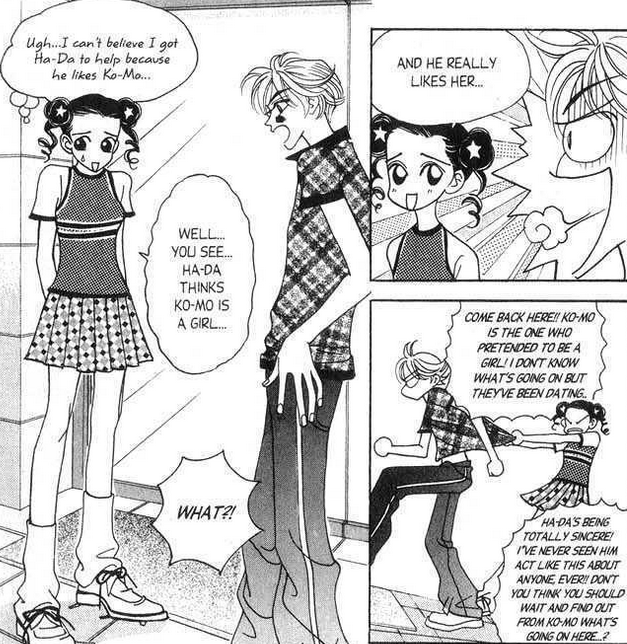
The biggest bullshit moment is actually a little hard to find in this volume. Drama happens, of course, but nothing to the degree of the previous books in the series. In fact, So-Na and Hae-Gi come out triumphant in the face of adversity, for a change. But this is also the book where Ha-Da finds out that Ko-Mo is a man, even though they’ve started dating. Ko-Mo, by the way, still doesn’t like Ha-Da, but is using him to get information. What bugs me about this is So-Na knew that her best friend really liked Ko-Mo, but also that Ko-Mo is a guy. How hard would it have been for So-Na to tell Ha-Da that Ko-Mo’s a guy? Maybe she thought it was funny at first, but really…you dropped the ball on that one, So-Na.

But that’s not so bad. After the questionable (and illegal) behavior of the characters so far, this volume was exciting and more light-hearted than the previous four. If the rest of the series were more like this, I would probably like it a lot more. But that hope spot is short-lived, however, and I remember why this series is so fucked up…

Volume 6: Hwi-Rim Attempts to Rape So-Na

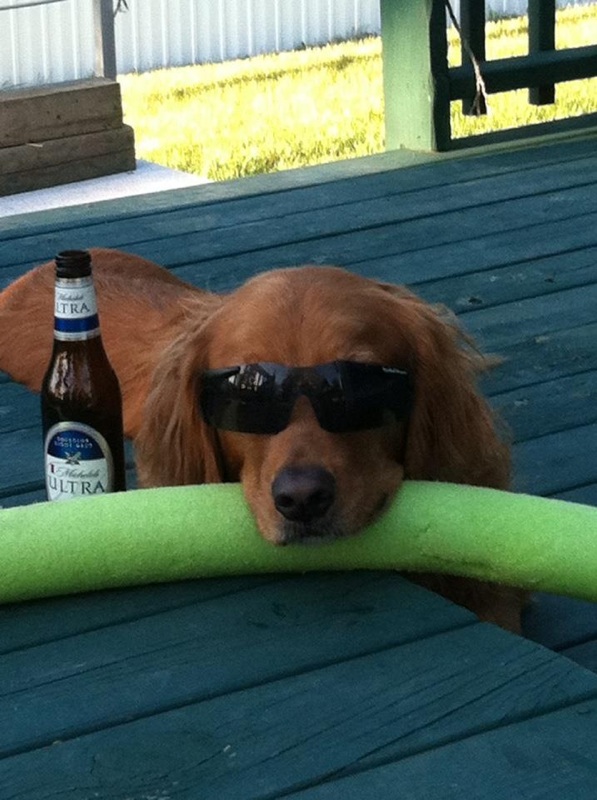
I don’t want to put up a picture of this. Here’s a picture of my dog instead.

This scene freaked me out when I read the series, and still puts me on edge today. Maybe even moreso now. It’s fucked that she’s engaged to this guy, and that no one who can do anything about it will listen to So-Na. She already hated this guy, and the audience already knew that he wasn’t above attacking So-Na…so why put this in? Just to show how depraved Hwi-Rim is, when we’ve already seen it? Hae-Gi at least beat Hwi-Rim to a pulp, but other than that, our villain doesn’t suffer any consequences after that. What’s even more disturbing is how So-Na, a couple books down the road, just seems to forget what Hwi-Rim tried to do to her.

Moment of Redemption: So-Na Stands Up to Her Father

Throughout the series, So-Na’s father is a bully. He verbally abuses and blackmails her, and hits her more than once in the series. He refuses to listen to any of her objections about her engagement to Hwi-Rim, which was arranged to set-up more funds going to his political party. Many times, he tells So-Na that she’s unable to live independently. During a party to celebrate So-Na’s and Hwi-Rim’s engagement, she tells him – and everyone else there – that she and Hwi-Rim will never be married. Her father says that everything she owns, even the clothes on her back, are from him, and she will never survive on her own. So-Na says, “Watch me, I don’t need anything from you!” takes off her dress, and storms out of the dinner in just her underwear. Yes, it’s over the top, but after all her dad’s put her through, I love how she blatantly defies him.

That last book got a bit heavy. Let me end with just one embarrassing story to make things a bit more cheerful around her.

Manga Will Ruin Your Life: So-Na Gets a Job

Remember when I said I didn’t want these books to find young, impressionable minds? This is the reason why. Out on her own, So-Na tries to get a job, and she only gets hired once she admits to her employer that she’s only in it for the money. Her boss tells her that’s the only reason why anyone works, and she should have just said that from the start. It turns out that this is actually pretty terrible advice.

 Eventually, I turned sixteen, and went to a local grocery store for my first-ever job interview. When the woman interviewing me asked why I wanted to work there, I replied, “I want money.” I thought she would appreciate my honesty. She didn’t.

I didn’t get the job. Thanks, Snow Drop.

Snow Drop Chap. 4: The NPC

The chapters are divided pretty unevenly in the first volume of Snow Drop, and this is the shortest. It starts with So-Na solidifying her role as a Mary Sue by being admired by the boys from afar.

Ha-Da complains to So-Na that he didn’t get Ko-Mo’s number. So-Na, to her credit, tries to tell Ha-Da that Ko-Mo’s a guy, but doesn’t get the chance. Instead, he begs So-Na to get Ko-Mo’s number for him. Since he doesn’t know that Ko-Mo is Hae-Gi’s brother, I don’t know why he thought So-Na would be capable of getting Ko-Mo’s number. So-Na accepts the challenge anyway, and decides that she doesn’t need to talk to Hae-Gi. She goes back to her preferred MO of stalking.

Even her body guard comments that this is weird.

While she’s stalking Hae-Gi, it’s revealed that Hae-Gi is dropping out of school to work as a model full-time. His mother has suffered brain damage, and he needs to work to pay for the surgery that might heal her. I know enough about neurology (and have worked with people with traumatic brain injuries in the past) to say that while it might not be impossible, but it’s extremely unlikely that his mom would ever be 100% herself again, even if the surgery was successful. Of course, as Choi Kyang-ah never gives us specifics of the surgery, or what exactly is wrong with Hae-Gi’s mother, it’s hard to say. But there’s a reason that brain surgery is so difficult. Everyone’s brain is mapped out differently, and…

Okay, I could talk about neuropsychology for awhile, but that’s not why we’re here. Even if neuropsych is one of my favorite things ever.

The other thing that bugs me about this is that So-Na finds out all this from overhearing a conversation between Hae-Gi and another classmate. It’s not that it’s an overheard conversation – as convenient as it is – it’s the classmate that bothers me. We don’t know anything about her. She has no name, no background, and we know nothing about her. I would like to, though. She genuinely cares for Hae-Gi and doesn’t want him to drop out. She knows about his mother and how much trouble Ko-Mo gets into. It’s already been established that Hae-Gi doesn’t have any friends, but it sounds like he’s confided in this girl. She seems sweet and concerned, not manipulative and haughty, like So-Na. This is the girl I want to root for. I want So-Na to drop off a cliff, and for Hae-Gi to date a sweet, sensible girl that doesn’t bring any more drama into his already dramatic life.

That doesn’t happen. In fact, this is the last time we ever see this girl in the series. She’s not a character; she’s a sounding board. That’s really unfortunate, because in the few pages she’s in, I already like her a lot more than any of the main characters.

And that’s it. The final chapter of the first volume of Snow Drop.

It wasn’t that good.

Final Verdict: I don’t know.

Here’s one thing I know for sure: I don’t want to keep these books. I own every volume in the series, and most of them are in pretty good condition, so I’d be okay selling them. The problem with my copy in particular is that it has an ink stain that goes through several pages. I might consider giving this to someone who’s okay with that, but I don’t know anyone my age who would enjoy this series, and I wouldn’t want to give it to impressionable, adolescent minds. Like mine was, when I read it.

Anyone out there want a slightly used copy?

Snow Drop Chap. 3: Brotherly Love

At school later, it turns out Hae-Gi doesn’t remember anything from his drunkfest at Romeo. The next day at school, he tries to give So-Na her nursery key back. Here, So-Na makes a critical mistake: as she’s reaching for the key, she admits that she lost Hae-Gi’s marble.

 I know that characters making bad decisions is important for fiction, but the key is literally in her hand. All she had to do is make a fist, and it would be hers again. So-Na couldn’t wait a whole ten seconds to tell him that she lost his marble. Hae-Gi snatches the key away and gets really, really mad at her. Reasonable, and  we get this one moment out of Hae-Gi, when he tells her that there’s something she still needs to learn.

THANK YOU.

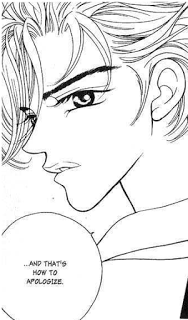
So-Na is so haughty, she’s unlikable and unrelatable. I was pretty glad to see Hae-Gi cut her down to size here. Not that she learns her lesson.

What follows over the next few pages is some verbal barbs and taunting between the two. Because we all know that the foundation for a long, happy relationship is animosity.

Instead of just apologizing and trying not to be a giant dick. So-Na dresses up like she’s going clubbing and stalks Hae-Gi to the store where he works. Her plan appears to be to look good and demand her key back. As you might imagine, she fails.

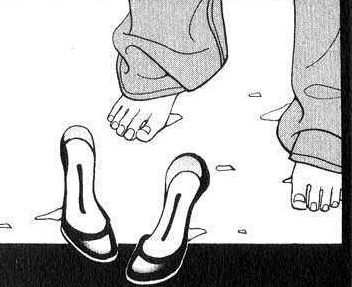
Hae-Gi is more interested in cutting So-Na down to size, and will let give her her key back, if she mops and helps clean up the store. When she complains that she can’t mop in her high-heeled shoes, Hae-Gi lends her his.

That would normally be a detail I wouldn’t mention here, but So-Na wears his shoes home. When I first read that, I thought it was kind of cute, but now I see a big problem with it.

I don’t think those will fit.

What the hell is Hae-Gi going to wear home?!

I also want to point out that it’s established that Hae-Gi is the “poor kid” who has two jobs to support his family. He shouldn’t have to worry about a girl stealing his shoes when he has money troubles enough. So-Na, you’re a jerk.

But there’s something way more at stake here than just Hae-Gi’s shoes.

Maybe an image like that isn’t out of place in a romance series. At first So-Na thinks that the person with Hae-Gi is a sexy girlfriend Hae-Gi’s been hiding. This is incorrect for two reasons, the first being that the long-haired person is actually a guy.

The second is that that guy is Hae-Gi’s brother.

I wish I could insert a sound effect of brakes squealing, as that image makes my brain come to a sudden stop. Also, that brotherly almost kiss is explained, by…well, like this:

Okay, I get it, it was used for comedy, just to create some confusion for So-Na. But then Ha-Da comes along, sees Ko-Mo, and immediately falls in love. Neither Hae-Gi or So-Na bother to tell him that Ko-Mo’s a boy.

Ha-Da doesn’t find out that Ko-Mo’s male until the fourth or fifth book in the series. Hae-Gi and So-Na let him think Ko-Mo’s a girl for…who knows how long?

What great friends.

Anyway, So-Na got her key back, if anyone actually cares.

God, why am I reading this?

Snow Drop Chap. 2: Alcohol Abuse

Welcome back to Snow Drop, and Ha-Da’s inadequately explored hatred of Hae-Gi. Seriously, there’s no reason for Ha-Da to hate Hae-Gi. Is it because Hae-Gi’s good-looking? As I mentioned in my previous post, Hae-Gi has no friends, so it can’t be that Ha-Da is envy of his so-called “popularity”. Granted, the main characters are in high school, a wretched hive of scum and jealousy, but it just seems so stupid and petty.

Much like a seventeen-year-old, come to think of it.

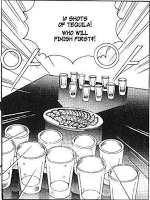
Ha-Da challenges Hae-Gi to a drinking contest with shots of tequila, which Hae-Gi accepts, for some reason. The only logic I can attribute to this decision is “high school”.

I used to read a lot of fanfiction, and participated in online play-by-post roleplays. Every so often, a writer will decide that their character needs to get drunk, either to show how edgy that character is, or give them a chance to make a fool out of themselves. Nine times out of ten, you can tell that the author’s never had a drink in her life. Characters get drunk after one drink, they puke immediately after getting drunk, they magically sober up when a bucket of cold water is dumped on them…

And, okay, some of those writers might have been me, thinking that I knew what heavy drinking was like from the occasional sip my mom let me have from her wine glass.

10 shots?! That’s enough to put me in a coma.

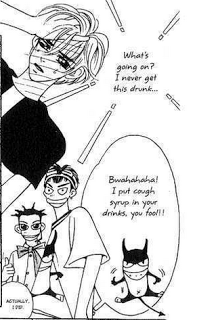
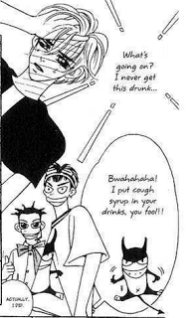
And I’m not saying that Choi Kyuang-ah has never had a drink, but that’s what this scene reminds me of. Not only because Ha-Da doesn’t get entirely blitzed after several shots of tequila (granted, he owns the club so it’s likely that he has a higher alcohol tolerance than Hae-Gi), but because Hae-Gi wasn’t feeling tipsy before the contest began. Which doesn’t seem like it makes sense, until it’s revealed that Ha-Da spiked all of Hae-Gi’s drinks before the contest actually began.

Wait.

That’s not okay.

Our heroes, ladies and gentlemen.

I’m not sure if I was okay with that when I read these books for the first time, but it definitely makes me uncomfortable now. If Hae-Gi was a girl, or Ha-Da was doing this to take sexual advantage of his rival, there’s no way Ha-Da would have gotten off scot-free. Ten shots of tequila are dangerous enough, especially when you only weigh 90 pounds like our pretty-boys here. Spiking Hae-Gi’s drinks beforehand could do some serious damage. You ever hear of alcohol poisoning?

Good, because I’m pretty sure Hae-Gi’s going to have it.

Fortunately, none of those terrible, terrible things that could easily happen after drinking all that happen to Hae-Gi, because he’s just too pretty to die. He just passes out for a bit, and then gets chatty. So-Na has the opportunity to search the unconscious Hae-Gi for her key, but opts not to. While normally I might complain about So-Na being stupid and missing her chance to get her key back, I’m actually okay with it. The poor guys taken enough abuse tonight, a girl who doesn’t like him going through his pockets would just be adding insult to injury.

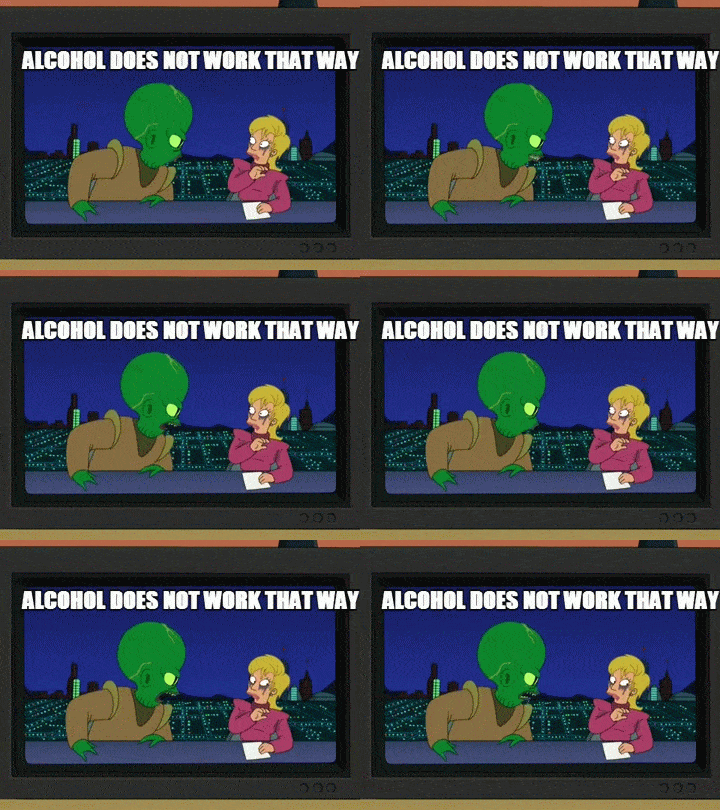
Though I will point out that So-Na’s nameless bodyguard, who’s taking Hae-Gi home, thinks that black coffee will help Hae-Gi sober up.

I didn’t want to have to do this again, but take it away, Morbo:

Drunk!Hae-Gi wakes up and starts talking about “touching the sky” for his brother. What he means by this is that he wants to become a pilot. I really like this, and not just because I’m a student pilot. In a lot of romance manga, the characters are singularly focused on one goal, and then their S.O. comes along and sweeps them off their feet. I wasn’t too crazy about the idea of Hae-Gi being a model, because leads being models/actresses/superstars is pretty common in romance manga. Dreaming of being a pilot is something different, so it stands out to me, and gives Hae-Gi more depth as a character.

If only I could start liking the other leads.

Snow Drop Chap. 1: Meet the (Awful) Cast

I’ve decided that it was only fair to go back to manga for a bit, just because I have an absolutely absurd amount of it. I’m certain that I need to get rid of almost all of it. Even if I don’t intend to keep it all, it’s worth one last read-through. A final goodbye, if you will. I won’t subject you to any more Rave Master for the time being, so we’ll take a sharp turn to Snow Drop, by Choi Kyuang-ah. This is a series I started reading when I was fourteen, and religiously bought every book until the series ended, probably when I was sixteen. And for the purists out there, Snow Drop is technically manwha, as it’s a Korean comic. And it couldn’t be any more different than Rave Master.

Snow Drop is a dark, dramatic teen romance about a couple that no one thinks should be together. I’d read a few manga like this in the past, but I don’t think I’ve ever read one as misguided as Snow Drop.

I almost immediately regretted my decision to re-read this book as soon as I opened it. There are so many problems with the series, and you’d think that would be pretty easy material to make fun of. It has an astounding number of things in it that don’t make any sense, like the belief that who you date in high school is who you’ll end up marrying and having kids with. There’s also several things that are pretty offensive but passed off as “true love”…like the female lead dating the guy who tried to rape her earlier in the series.

Holy hell, how did I manage to stomach any of this?

Unfortunately for the blog (or maybe fortunately), none of this happens in the first volume. This is our introduction to our main characters: So-Na, Ha-Da, and Hae-Gi. And I don’t like any of them. I know I should, but I don’t.

So-Na is our female lead,  a rich seventeen-year-old girl whose passion is her flower nursery, named Snow Drop. She’s almost always accompanied by her obnoxious friend Ha-Da, another rich teenager and self-proclaimed Casanova. The manga kicks off with Ha-Da complaining that he and So-Na have been enrolled in high school, as neither of them have been in school for several years. So-Na’s father basically blackmailed her into returning to school by smashing the windows of the greenhouse, and refusing to stop until she agreed to go back. It’s pretty telling for a character that doesn’t even appear in this volume.

My questions already begin to flare up when the two are introduced to their class for the first time. If Ha-Da and So-Na are part of such wealthy and influential families, why aren’t they sent to an expensive private school? One small change would have helped us avoid a lot of needless stupidity in the series.

I also want to point out that I hate the “new kid stands in front of class and introduces her/himself” cliche. This is mainly because never once, in my life, have I ever seen a teacher call a student to the front of the class to introduce them. Especially not in high school. Has anyone else actually seen this happen? Right now, I’m pretty convinced that this exists only in fiction.

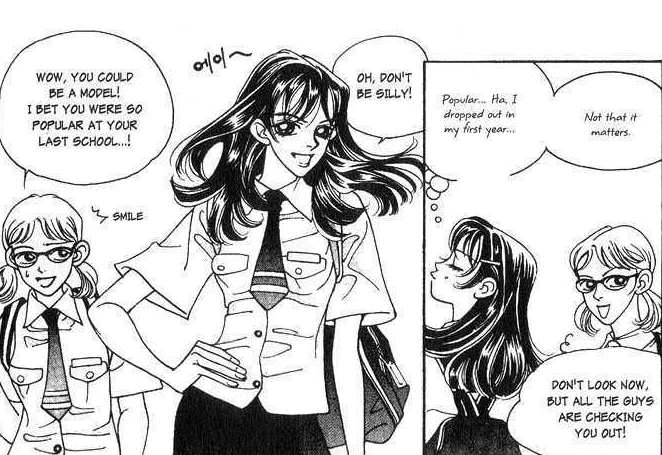
This being a romance manga, So-Na’s seat in class ends up being right next to Hae-Gi’s, the most popular boy in school. I would like to make a couple complaints about this.

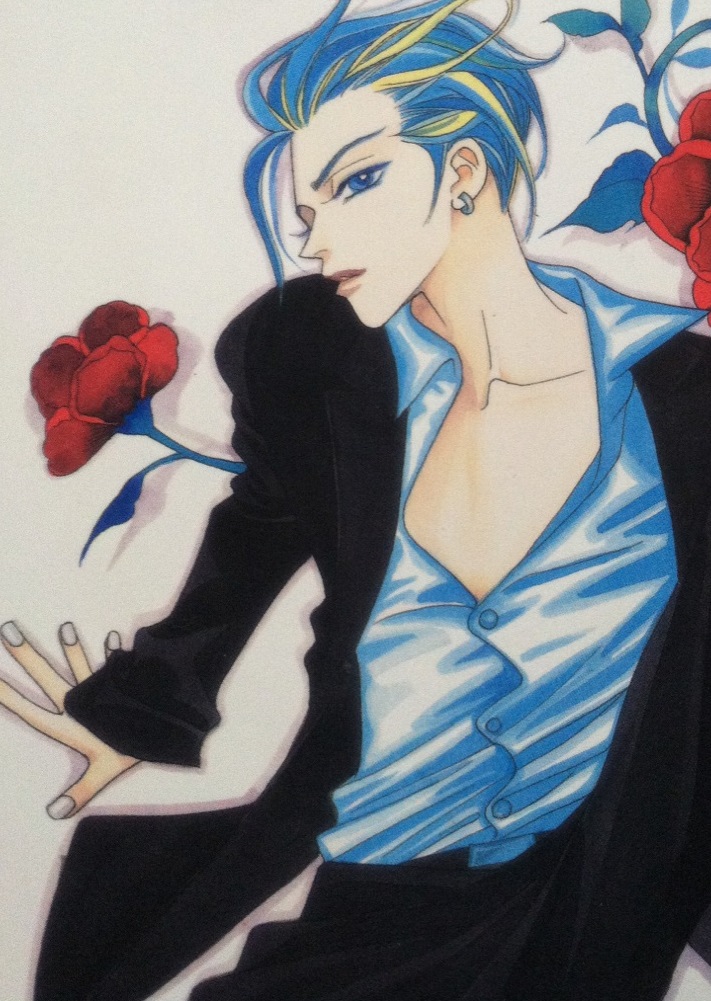
This is what the cover promises:

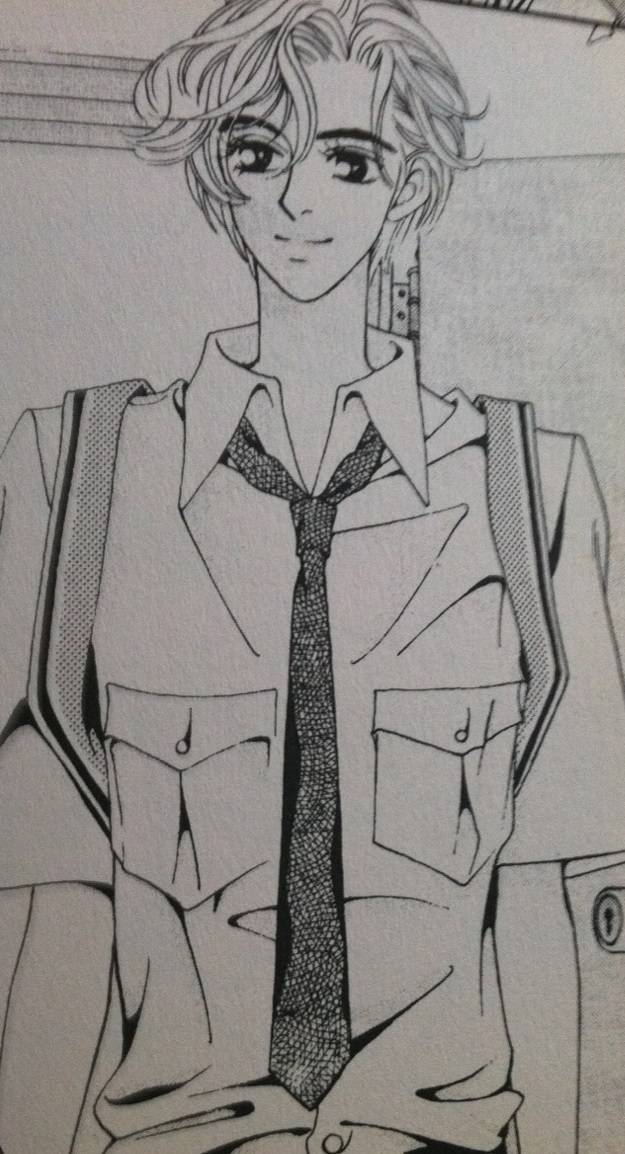
This is what we get:

Okay, he’s cute, but that is not the same person. And that beautiful blue-haired man was the reason I became interested in the series in the first place. Though thinking about it now, I actually didn’t fangirl over any of the characters in this series. Maybe I was over squeeing over fictional characters by that point, or maybe it was because they were all in relationships and therefore untouchable. Really, though, I think it’s because all the characters are dicks.

Looking through the series now, I searched for a character that I really liked, without reservation. I found one: So-Na’s body guard, and I don’t think he even has a name.

Even if the cast is full of jerks, though, there must have been something about it that I liked enough to buy twelve volumes of this crap, so let’s read on.

The other thing that bugs me about Hae-Gi’s introduction is that he’s called the most popular boy in school. Maybe this is a translation error, because Hae-Gi has zero friends. By definition, you have to have friends to be popular. He’s good looking, and a model, so I would accept that he’s the coolest kid in school, but definitely not the most popular. One of the nameless students (read: someone who’s not beautiful) even says that he’s standoffish and uptight about his name.

Ha-Da hates Hae-Gi immediately, for no adequately explored reason, and asks So-Na to figure out what Hae-Gi’s sore spot is. As luck would have it, So-Na is actually able to do this. Hae-Gi is short for Hae-Ba-Ra-Gi, or “sunflower”. His brothers, likewise, have flowery names. Those names (along with So-Na’s, short for So-Na-Moo, or “pine tree”) came from a book So-Na’s mother wrote, which is also entitled Snow Drop.

If you’re asking where So-Na’s mother is, by the way, she’s dead. Like all romantic heroine’s mothers.

So-Na, it turns out, also doesn’t like Hae-Gi because he’s not interested in floral language, after she tries to sell him some flowers.

While making his big, obnoxious introduction, Ha-Da invites all the kids in his new class for a party at a nightclub, Romeo, which he happens to own. And proceeds to insult the students that might not be able to go.

So-Na comes up with a game to ensure that everyone goes to the club, and I want to say right now that she’s surprisingly manipulative. You’d think that a girl who spent the last five years with just one friend would be a little more…obtuse when it comes to that sort of thing.

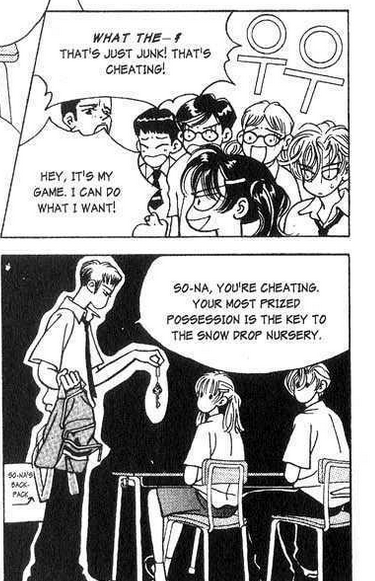
The game is this: you have to find your seatmate’s most precious item and take it from them for the day. The students will exchange everything back at Romeo, but if you don’t show up, then you don’t get your item back. Of course, So-Na ends up picking Hae-Gi’s most precious item, which turns out to be a marble with a feather in it. So-Na, though, doesn’t play by the rules of her own game, until Ha-Da rats her out.

You know, I sort of like Ha-Da better for doing that. I can handle annoying side-kicks; it’s the manipulative main character I’m having a hard time getting past.

Thanks to So-Na’s game, the entire class winds up at Romeo, and So-Na refuses to switch back the marble for her key until the designated swap time at 8 pm, even though Hae-Gi wants to get his marble back as soon as he can. Which is weird, because she really did not want Hae-Gi to get her key in the first place. You’d think she’d be in a hurry to get it back and not linger around Hae-Gi, especially because she doesn’t like him all that much.

As she’s playing with the marble she drops it and ends up losing it in the one place she can’t get it back. I think I’m supposed to worry about So-Na not getting her key back, but I don’t. I don’t like So-Na, and she could have avoided this stupidity had she just exchanged items when Hae-Gi wanted. Maybe if she was more likable I might actually care what happens to her.

God, this is stupid. Why did I choose to read this series again?

The Supernaturalist Chap. 9-10: Goodbye from the World of Tomorrow!

I’ve decided to combine this post to include the final chapters of this book, because Chapter 10 is about four pages long. Chapter 9, though, is another one that could have been broken up into at least two, if you ask me. It’s pretty long, probably the longest in the book. And, boy, does it sting.

It’s a pretty common trope for villains to stand in front of the protagonists, explain their plan, and then walk away, certain that our dashing heroes are going to die in whatever death trap that’s been laid out for them. It’s also widely acknowledged that this is a pretty dumb thing to do. That, and I feel like it’s cheating. Suddenly the book (or movie, as the case often is) has to come to an end, and you haven’t figured out a way to explain to the heroes what’s really going on. Or, in this case,  you need to drop one last bombshell on the characters,  and have no way of doing it other than by some good old-fashioned monologuing.

All that said, I’m not entirely against the “now that I’ve captured you, let me explain my heinous plan” speech. The audience gets information, you have an “ah-ha!” moment, and then the heroes get to save the day, equipped with new knowledge. What bothers me about it here is that it’s Ellie Faustino giving them the speech, though the only person who’s surprised she’s behind this is Stefan. Faustino is too smart and too thorough of a character to tell the Supernaturalists her plans and motives, but does anyway. She even adds a little bit of extra information, just to hurt Stefan. Then she leaves them in a vat of acid to drown. That last sentence makes sense if you’re reading the book, I swear. What makes the villain monologue even worse is that she does it for the dumbest reason:

There are two more things you should know, just to punish you for slowing down my plan.

Really? Killing him wasn’t punishment enough?

Worst of all, Faustino could have had them killed then and there, but she decided “slow death by acid” was the better way to go. Even though she had a sniper, just in the other room, who could have shot them all and saved her some time and pain. Once she leaves, the group breaks out, equipped with new knowledge and…hang on a second, this sounds familiar.

Faustino confirms that the Parasites are benevolent and only feed on pain, that the “Parasite poop” mentioned earlier wasn’t causing the damage to the Satellite, and that Stefan’s accident that also killed his mother was set up by Faustino as an experiment. Ouch.

And I will give her credit for just one thing here: she actually didn’t reveal her entire plan. Once the protagonists escape, they uncover the reason Faustino was so interested in the Parasites in the first place. She’s using the ones Cosmo an Stefan knocked out at Clarissa Frayne (which didn’t die after all) to power a nuclear generator.

Another difference between reading this as a kid and reading this now: relying on nuclear power doesn’t seem that awful to me right now. Sure, it’s not without its own issues, like what to do with all that spent uranium, but I also don’t think that using nuclear power is going to end the world as we know it. But I first read this in 2005, when “weapons of mass destruction” was a pretty common buzzword. Nuclear (or “nuke-you-lur”, as was the pronunciation at the time) anything was associated with weapons and destruction in my mind back then.

I’m also not sure how it’s a nuclear generator if it’s powered by Parasites.

As you might have suspected, they beat Faustino, but the Supernaturalists all take a hit. Stefan gets shot by the sniper that Faustino should have used much earlier in the chapter, and ends up dying to free the Parasites trapped in the generator. Such ends our penultimate chapter.

Somehow, even as a kid, I knew that he wouldn’t survive to see the end of the novel. And even as an adult, Stefan’s death still makes me sad.

One thing I didn’t really think about until I re-read this was the story’s main character. I’d always assumed that the title referred to Cosmo. He’s the first character we meet, we follow the story from his perspective, and we can see that he changes from a meek kid to a pretty gutsy one. But this isn’t his story. It’s Stefan’s. Even at the end of the novel, Cosmo’s character isn’t well-defined, but Stefan’s always has been. He was the leader, and he was the one that pushed his group to fight. When another twist came along – and there were plenty along the way – he was directly involved in all of them. Looking at it now, it almost feels like Cosmo is a vehicle to tell Stefan’s story, rather than his own. I wonder if this was Colfer’s intention, or just something that ended up happening.

The final chapter is pretty brief, more like an epilogue, if epilogues were full of nothing but sequel hooks. We learn that Faustino has survived and will carry on her work anonymously elsewhere, and also that there are other supernatural creatures that Ditto sees, a lot worse than Parasites, and that he, Mona, and Cosmo, should rebuild and do something about them.

But it’s been more than ten years since this book first came out, and I have yet to see a sequel. Which is pretty damn disappointing, if you ask me, because I would buy that so fast.

Final Verdict: Keep/Give Away

Even if I wanted to, I couldn’t sell this as a book. I loved it in high school and read it so many times my copy’s pretty battered. Reading it again, I found it a delightful adventure, fast-paced, full of action and humor to keep the story interesting. The only reason I wouldn’t keep this book is because I have a fourteen-year-old cousin who would probably love it as much as I (still) do, and I may hand it down to him. Or possibly find him a copy that isn’t so beaten up.

Coming up next: the over-the-top manhwa Snow Drop!

The Supernaturalist, Chap. 8: But Wait, There’s More!

This is the one. The one we’ve been waiting for since Cosmo first escaped the orphanage and joined the Supernaturalists. After all the twists and turns in this adventure so far, it’s all about to come to a head. The gang has located the Parasites’ nest, and it just happens to be in the basement of Clarissa Frayne, the place that Cosmo spent most of his life trying to get away from. He does consider, briefly, not returning with Stefan to plant the EMP, but the thought doesn’t last long. After almost floating off through space for all eternity, he’s unquestionably one of the group now, no longer an outsider.

The two get inside Clarissa Frayne easily enough, and sneak down to the basement with no problem. For once, things are going their way. However, the tracking beads in Cosmo’s skin haven’t entirely shorted out, and his faint pattern alerts our favorite marshal, Redwood, that someone’s sneaking around. Someone who’s supposed to be dead, and who Redwood would love to catch. After the crash in the first chapter, he was demoted to security guard, which sees him watching CCTV for most of the day, alongside his idiot coworker.

We don’t know too much about Redwood, but we know that he’s not dumb, and is pretty sadistic. We also know that he’s probably married, as he mentions someone named “Agnes” a few times. Even though we don’t know anything about her, it’s probably a fair guess to say that he’s not as cruel to his wife as he is to the orphans. Redwood’s not a particularly deep character — really, just a one-shot villain, but I’ve suddenly found myself more intrigued by him than ever before, and it was this line that piqued my curiosity:

He needed to get back on the streets, where he had some real power.

By “the streets”, he means becoming a floor marshal again, and dealing with the orphans directly. It’s already been established that Redwood doesn’t think of the orphans as people, which isn’t all that surprising. My question is just why Redwood is so sadistic. I figure that he’s a monster to the orphans because they can’t fight back, at least, not without serious repercussions. He’s cowardly in that regard, no matter how tough and frightening he thinks he is. I just want to know why he’s wired this way, we he won’t pick on someone his own size. What does he get out of tormenting these orphans?

It’s a pretty pointless question to ask, especially at this point in the book. Like I just said, Redwood is a one-shot villain, whose point in the story is to menace Cosmo. That’s really all we need to know about him.

The mission is going smoothly, unlike every other mission prior, that something has to happen. From the three paragraphs I’ve just dedicated to Redwood, it won’t be any surprise when I tell you that, yep, Redwood shows up right after Cosmo and Stefan plant the EMP. The sleeping Parasites wake up when Redwood attempts to take Cosmo hostage, and ends up painfully smacking the butt of a lightning rod into him.There are thousands of them, and Stefan is left with no choice but to detonate the EMP, knocking out all the Parasites, and Redwood, for that matter. This is such a great scene: a massive amount of Parasites just got wiped out Redwood gets his comeuppance, and the power surge shorted out the tracking beads on the orphans, so they can escape from Clarissa Frayne without being traced. Cosmo and Stefan know that the EMP works, and they can finally do some real damage.

‘Time to go,’ said Cosmo. ‘Now or never.’

‘Now,’ decided the diminutive Fence, leading the no-sponsors into the night, like a modern-day Pied Piper.

Seeing the orphans escape, an effective way to fight the Parasites, and a bully getting what’s coming to him. There’s still some loose ends to tie up, but finally the characters – and the reader – can breathe easy and relax. There’s just one problem: that’s not the end of the book. It’s not even the end of the chapter.

Cosmo and Stefan aren’t able to savor their hard-won victory for long. That’s what kills me about this chapter. Just as soon as something goes right, and they finally getting the break they deserve, they get thrown through another loop, and then another. Three loops, in fact.

With books set in the not-too-distant future, characters usually gizmos which, at the time the book comes out, seem really cool and top of the line. However, after enough time goes by, real life technology is going to surpass whatever neat gadgets those characters have. Mona’s phone is a perfect example of this:

Mona’s phone was a pretty old one, without much in the way of technology. But it did have picture capabilities. Sixty seconds of video or a hundred stills.

The Supernaturalist came out in 2004, when cell phones were becoming more widespread. Reading this when I was fifteen, I would’ve been over the moon to have a Trak Phone, never mind one that can take pictures and video. Now, pictures and video come standard on even the simplest cell phones, and let me tell you — the phone I had in 2007 could take more than 60 seconds of video in one sitting. Saying that Mona’s phone was cheap let Colfer get away with it for a bit longer, but not in 2015. Funny, the small things that wear on my suspense of disbelief.

Mona uses her sub-par phone to capture a video of what appears to be Ditto helping a weakened Parasite, and then all hell breaks loose. Here’s Loop #1: Ditto is in league with the Parasites. Confronting him about this, Stefan suddenly falls through Loop #2: that Parasites take pain only, not life force.

This was another part where fifteen-year-old me wanted to throw the book down, because if it was true, then it was completely mind-blowing. The only reason I didn’t take a couple days off the book then was because I needed to see what happened next, which takes us to Loop #3.

Instead of having the happy ending they deserve, all four of them are captured by Myishi paralegals, and Colfer delivers another throw-away line that I would read an entire book about:

Abracadabra Street was no great challenge for a squadron that had broken into several foreign banks, two crime lords’ strongholds, and a private kindergarten.

Colfer, please make your next book all about high-tech brutes breaking into a kindergarten. Why a kindergarten? These are things I need to know.

The Supernaturalist Chap. 7: Spaaaaaace!

I don’t think there’s any rules that are set in stone when it comes to dividing chapters. As far as I can tell, you should make sure that each chapter ends on a note that will make your readers want to know what happens next, and that’s about it. How long or short each chapter is depends on the author and the story. I wish that Colfer had broken chapter seven up a bit more, though, because the chapter length feels uneven with the rest of the novel so far. For instance, Chapter 1 starts with Cosmo wanting to escape Clarissa Frayne, it ends with him doing just that. It’s nice and contained, and propels the story forward. Chapter 7, on the other hand, begins with Stefan sulking as he and Cosmo make their way home, and ends with the Supernaturalists in space. That’s a pretty big leap. There’s enough room for two or three chapters here by the time this one ends.

Stefan finally tells Cosmo his story, too, and it’s nothing we couldn’t figure out. He and his mother were in an accident and badly injured, he watched the Parasites suck his mother’s life energy away until she died. Stefan, in true Angsty Male Lead fashion, blames himself. There were plenty of hints strewn throughout the previous chapters, and his reveal really only serves to add more details to what we already knew – or, at least, assumed we knew. I like to give characters the benefit of the doubt, though, and hope that they’ll surprise me.

Though I didn’t grant this to Snape after reading Harry Potter and the Half-Blood Prince, which resulted in me feeling stupid when I read Deathly Hallows. And I only cried a little bit!

There’s also Cosmo’s awkward flirting with Mona. One great thing about fiction is that it elevates us, and takes us to places we’ve only imagined. We can live vicariously through the characters we cheer on; their triumphs are our triumphs. Our heroes are dashing and handsome and bold, and everything we’re not. Okay, saying the perfect thing at the perfect time is pretty unrealistic, and that’s why characters need to have flaws. We may want to be like them, but we also have to be able to relate to them.

Which is probably why I found Cosmo’s bungled flirting with Mona so cringe-worthy when I was a teenager, and adorable now.

‘Are you coming in, or are you just going to stand there?’ said Mona, without opening her eyes.

Cosmo tried to speak. Say something clever, he ordered his brain.

It’s not going to happen, replied his brain. You have enough spare cells for one word. Make it a good one. ‘Coffee,’ blurted Csomo. It could have been a lot worse under the circumstances.

It was so relatable to me then, because I only wished that I had the courage to talk to the guy I liked in high school. Because he was cute, and popular, and was in a band, and why would he ever want to hang out with someone like me? So, Cosmo, I applaud you, for taking a shot with a girl who you think is out of your league. However bungling a conversationalist you may be.

Mona stretched like a cat, her wiggling toes peeking out from under the unzipped sleeping bags.

‘Little piggies,’ said Cosmo’s mouth before he could stop it. [. . .]

Mona stared at him. ‘Have you ever had, like, a conversation with another person before?’

The story moves on with the Supernaturalists leaving Satellite City, and we see what the world outside the city, and the Satellite’s footprint – look like. Like the “One World Treaty” mentioned a few chapters ago, there are so many things that make me want to read more about the universe this novel takes place in. We’re never told where, geographically, Satellite City is, but outside of it is desert. The narration implies that this wasn’t here naturally, either. It was somehow man made. How? Global warming, nuclear strike, a massive build up of toxins? What turned a (presumably) habitable area into a desert? I want to know these things. Colfer, write a book explaining the basic history of The Supernaturalist universe, kplzthx.

People from the City are legitimately frightened of going to this apparent wasteland. Cosmo and Mona are curious to see what’s outside of the City, but Ditto is pretty uncomfortable with the whole idea.

Ditto shuddered. ‘This place gives me the creeps. You know they don’t have Satellite TV here? Some houses only have ten or fifteen illegal stations. What do they do all day?’

Now, this is where things start to get weird.

To find the Parasites’ nest, our rag-tag heroes need to find a way to track them, and eventually decide to use the Satellite to do so. It’s not something they can do on the ground, though, so they decide to go to space.

Okay, I can roll with a Satellite controlling everything in the city, invisible creatures sucking the life out of people, and rappelling lawyers. What I have a harder time getting behind is space travel. Even if technically they’re actually not going very far out of the Earth’s atmosphere. As a kid, I didn’t like this part because I didn’t think it fit in very well with the rest of the story.

As an adult, I don’t like this part because none of them is qualified to go to space. A big part of my current job is running a space camp for kids, I’ve met (and been hugged by) a real life astronaut, and I know way more about the International Space Station than any twentysomething with a non-STEM degree should know. In other words, I’m a space nerd. Always have been.

So, even though it’s the future and a lot of technology has changed, I’m still calling shenanigans on the space adventure.

First of all, there’s the preflight check. Mona goes through a checklist to determine if the small ship they’ll be using is safe to fly in. Which made perfect sense to me the first time I read this. Mechanic works on engines, therefore mechanic can figure out all engines.

I may not be handy, but I can still figure out basic car stuff: adding various fluids, changing wipers, fixing a flat. But those skills don’t translate to a spaceship. If the “low air pressure” came on in my car, I know exactly what to do. If it came on in the space shuttle, I wouldn’t have a clue what to do, and we would all probably die. It really bothers me that Mona, who’s most likely never worked on a spacecraft of any kind, has enough mechanical expertise to do a prelaunch check on the HALO (high-altitude low-orbit spacecraft) they’ll be using, instead of, say, the guy who actually owns it. I’m pretty sure engine work on cars, no matter how souped-up they may be, doesn’t translate to engine work on spaceships.

Of course, with so much depending on the Satellite, there are plenty of small spacecraft traveling up to it, owned by private companies. The way it’s written, it sounds like going up to the Satellite is just a regular day at the office, even if you’re not one of the “disc jockeys” who are responsible to maintain it.

But the other thing that bothered me about this foray outside the atmosphere is a throwaway line about space suits. It turns out Stefan can’t fit in the one usable suit on board, but Mona chimes in that space suits are one-size-fits-all.

Like Musica’s magical sobriety in Rave Master 2, this one line made we want to do a table flip. Because space suits are not one size fits all, and every. individual. astronaut. gets a suit fitted personally to them. This is how space works.

I think most people would give this a by, but I can’t, and the only reason for that is because I know way too much about space travel as it works right now. There’s plenty to like about this chapter, but this is one thing that I don’t.

On the plus side, we see more and more of Cosmo’s emerging personality. He’s only been with the group for a few days, and as action-packed as they were, he’s still a bit of an outsider. This is the chapter where he seals the deal, by volunteering to put on the suit that doesn’t fit Stefan and going out into space to get onboard the Satellite and use a panel that will sweep the city for energy leaks. The highest concentration of those energy leaks is where the Parasites will be drawn to, therefore, their nest. When something goes wrong with the Satellite, he ends up getting launched into space, and survives only by getting incredibly lucky. If running around on rooftops and learning Stefan’s story didn’t make him a full-fledged member of the group, this certainly did.

Cosmo’s grown from a kid with no idea about his future beyond Clarissa Frayne, and not much of a character himself, to someone pretty gutsy, and loyal to the people who took him in. So much so that he risks his life for their mission. Congratulations, Cosmo, you’re finally figuring out how to be a person, just like we both wanted.