FFM 9: You Gotta Love What You Do

Without in any way limiting the author’s exclusive rights under copyright, any use of this publication to “train” generative artificial intelligence (AI) technologies to generate text is expressly prohibited. The author reserves all rights to license uses of this work for generative AI training and development of machine learning language models.

July is Flash Fiction Month! I’ll be sharing short short stories here through the month of July.


The key to avoiding burnout when you’re working for a non-profit is to find your Thing. You need something in your life that has nothing to do with your job. You don’t bring your Thing into work, work doesn’t come into your Thing. And for non-profit people like us, that can be a really hard thing to find. We’re so passionate about what we do that when we find something that’s just for us we want to share it. 

But take my friend Ty, for example. Works for the Down Syndrome Institute. Loves the people he serves, but the job can wear you down pretty damn fast. He was on the verge of quitting after a rough few months, but he stuck it out. He and his friend Joe started a podcast where they review potato chips. That’s it, that’s the whole show. It’s twenty minutes long, they have a couple hundred listeners, but it’s fun for them and keeps Ty sane and working. 

Or Nat, who’s the assistant director at the Lanceville Women’s Shelter. Talk about a tough job. She’s always loved theatre, though, so she decided to make that her Thing. She builds sets for community theatre groups. Gets to be creative, use her hands, and she really likes not being in charge.

Me? I work for a hospice center. Comforting families, helping ease people’s pain and letting them die peacefully. It’s the hardest job I’ve ever done. It’s also the most important. Because during the hardest moments of someone’s life, I bring them comfort. 

So this is my Thing. Right here. You, and me. Stop squirming. Those knots aren’t coming untied.

Crying won’t help you. I hear it enough.  

There won’t be any comfort here.

FFM 8: Queen of Nothing

Without in any way limiting the author’s exclusive rights under copyright, any use of this publication to “train” generative artificial intelligence (AI) technologies to generate text is expressly prohibited. The author reserves all rights to license uses of this work for generative AI training and development of machine learning language models.

July is Flash Fiction Month! I’ll be sharing short short stories here through the month of July. More notes at the end of the story.


You don’t usually get a choice of where to go when you’re exiled. You just leave in a hurry. Maybe I’m lucky in that regard. I could choose Dublin, or Niagara Falls. Two very different places, but both easily within the queens’ reaches, and filled with their allies.

I chose Niagara Falls. It remains a place of power, despite humans’ many attempts to tame it. It wasn’t the magic alone that made me choose it. I wanted to see the place my antín and her human fell in love, touch the wild waters that had saved her life.

Mamó should have let Antín Fiadh and her human stay here. If she had, my mother would be on the throne now, instead of in a grave. 

My first friends were the crows. I would sit by the water and toss them bread, hoping that one of them might be the Morrigan. I had a quixotic dream that the war goddess would find me and bring me home, raining fire and destruction down on the usurpers. She never came, of course. The gods rarely took sides in Otherworld conflicts anymore; one of them coming to the mortal realm was unthinkable. 

Crows possess many admirable traits. They’re intelligent, grateful, and vindictive. That makes for an excellent friendship. They brought me gifts – shiny tin foil, lost toys, even money on occasion. But their greatest gift to me was a path forward. 

It came to me in the shape of a young man, not human, but not Fae, either. The birds didn’t scatter when he approached, but flew to my shoulders and the bench. Staying close to me.

“Hi. I’ve seen you here a lot. I thought I’d introduce myself.” He waved. “I’m Paul.”

I wasn’t afraid, but I was cautious. “You’ve noticed me?” 

“I thought you might be…” he lowered his voice. “One of us?”

His glamour was weak. He looked human enough, but I could see the shimmer of a tufted tail he wasn’t entirely able to hide. I silently debated what I would tell him. If he was one of Antín Fiadh’s spies, he was doing a poor job of it. 

“Who’s ‘us’?” I asked. 

“You know…Gestalts. Us.” 

Gestalts – people with a mix of human and Fae blood. There were few in Tír na nÓg. The only two I knew of were Antín Fiadh’s children. That alone might have made me distrustful of Paul, but my loneliness was stronger than my caution. I hadn’t just lost my family. I’d lost my entire world. 

“You’re right,” I told him. “I am like you.” I didn’t give him my true name. Even in the mortal realm, names have power. Instead, I took inspiration from my avian friends. “Call me Korbyn.” 

We started meeting regularly, and soon Paul introduced me to his other Gestalt friends. “There’s a lot of people like us around. You just have to know where to look,” he told me. 

Things started to get easier. I still wept for my mother, meeting others with Fae blood eased my inner turmoil somewhat. I wasn’t happy, exactly, but I was finding my place, and there was comfort with my new friends. I started thinking that I might be able to make a life for myself in this world. I wouldn’t forget who I was or where I came from, but maybe I could make a future here. 

Until the day I saw them. Princess Gráinne and her younger brother, Alexander, walking through the park with their cousin-by-friendship. They were all laughing. They didn’t even notice me when they walked by. 

I felt the injustice of it all hit like a physical blow. The princess and prince still had their family. They could go between worlds anytime they chose. I had lost all of that because of who my mother was. 

I watched the prince as he passed by, and a realization struck me. I’d always thought that I had not been executed alongside my mother out of mercy. I was still young, and had no hand in her rebellion. But now, I understood the truth. 

The queens had no spare. 

Gráinne would be in line for the throne after her parents, but inheritance was strictly matrilineal. Alexander would never be king in his own right. If something happened to Gráinne…

The crown would fall to me. 

But how? How could I make it happen? 

The answer came to me the next night, when I was at a party with my friends. I was hardly in a festive mood, but I went anyway. As the night went on, Paul and I ended up next to each other on the couch. He’d drank too much, a plastic cup still in his hand. “Korbyn,” He mumbled, and rested his head on my shoulder. “Why do you feel like home?” 

I threaded my fingers through his wheat-colored hair. “Have you ever been to the Otherworld?” 

“You can’t get there from here,” he slurred. “I want to go. Everyone wants to go.” He looked up at me with glassy eyes. “How can you be homesick for a place you’ve never been?”

“I might know a way,” I said. “But it would take work. A lot of work.”

Paul tried to straighten up to show he was serious. “I can do the work.”

A slow smile uncurled across my face. Paul would be my first. There would be many, many others. 


Today’s challenge: bring forth the dice!

Element 1: Write a story centered around royalty.

Element 2: Roll a six-sided die. Can’t roll a physical one due to your location and/or lack of immediate access to one? No need to worry; we have digital dice too. The number you roll determines your protagonist’s station in the royal family as per the following list:

  • 1-2: The ruling monarch (e.g. king or queen)
  • 3-4: The heir to the throne (e.g. crown prince or crown princess)
  • 5-6: The heir next in line for the throne after the above heir (e.g. the lastborn child of the ruling monarch)

I rolled a 6, so the heir next in line after the previous heir. The royalty aspect of the story was easy to figure out, since the novel I’m working on is about a royal family. Yup, Gráinne’s and Alexander’s parents are Fiadh and Mairead! Korbyn (real name withheld for Fae reasons) is Fiadh’s niece and would be next in line for the throne of something terrible happens to Gráinne.

Korbyn would like to be that terrible thing.

FFM 7: Questions on the Roof


Without in any way limiting the author’s exclusive rights under copyright, any use of this publication to “train” generative artificial intelligence (AI) technologies to generate text is expressly prohibited. The author reserves all rights to license uses of this work for generative AI training and development of machine learning language models.

July is Flash Fiction Month! I’ll be sharing short short stories here through the month of July. More notes at the end of the story.


“Where have you been lately?” Violet asked. She and Dain were at their usual place, the rooftop of a closed tailor shop. It wasn’t uncommon to see people on rooftops, given that almost every Sylph had the ability to fly. 

“Working,” he replied with a shrug. 

“Uh-huh.” Violet cocked her head. “For who? Because I know it ain’t for Jax anymore.” 

“For myself.” 

Violet crossed her arms. “Really? After all we’ve gone through, you’re gonna lie to me now?” She pulled a slightly crumpled joint out of her pocket and stuck it between her lips. 

“Yep.” A tiny smile came over Dain’s face. Irritated seemed to be Violet’s default state. It was always fun to add to it. “I’m taking a break. I’ll get back to it soon.”

Violet’s dark eyes widened. “Shit, Dain. Someone’s got something on you.”

“No one’s got anything on me,” Dain snapped back, though the blue-gray feathers on his wings started to fluff up. “It’s just something I have to do.”

“Forgive me if I don’t believe you,” Violet huffed, then stood up. “I’m off. Can’t risk being seen with you.”

Dain started after her. “Relax. It’s not like that, okay?” He couldn’t have his oldest friend leave him now. And especially couldn’t have her talking to his old crew that he was on someone else’s payroll. Jax might have tolerated Dain going solo for a time, but if he knew the truth, Dain was dead where he stood. 

“Then what is it like?” Violet propped her hand on her hip. Her sparrow wings were already spread, ready to take off. 

I’m working with the cops was the worst thing that Dain could say, but the partial truth he went with wasn’t that much better. “It’s a girl.”

That might have appeased anyone else, but he and Violet had done a little more than fly and smoke together multiple times in the past. No attachment beyond friendship, they’d said. But there were times when both of them hadn’t been good about following that rule. 

Violet folded her wings. “What’s her name?”

“It’s no one you know,” Dain replied. 

“Is she pretty?” Violet asked, walking back towards Dain. 

“Why do you want to know?” He frowned. 

“Just wondering who’s good looking enough to make you give up your livelihood.” 

She wasn’t jealous, Dain realized. Or, if she was, it was taking a backseat to Violet’s curiosity. She was still searching for information. “She’s pretty, she drives me crazy, I’m taking a break because it would be best for both of us. Happy?” 

“No.” Violet went back to the edge of the roof. “You’re throwing away everything for a girl? We’ve both done stupid things, but that might be the dumbest one I’ve ever heard.” 

Violet turned away before Dain could get a proper look at her face, but he heard it in her voice. “You’ve got talent, talent that people would kill for.”

“Oh, they’ve tried,” Dain said. 

“But a pair of big blue eyes comes along and–”

“They’re yellow.” The words were out before he could stop himself.

Violet spun on her heels. “She’s real?” 

Dain’s heart fluttered in his chest. Cordelia was very real. And her eyes were big. 

And she did, in fact, make him crazy. Not in the puppy love kind of way, but in an infuriating, self-righteous kind of way. Like how she just knew what he’d been through, and how he should have chosen another path. 

But she had listened when he set the record straight. And apologized. Cops didn’t apologize for anything, but she did.

It didn’t change the fact that she was always pushing him to do what she wanted, and she didn’t tolerate any bullshit from him and…

…and he kind of liked that he challenged her. 

But Dain especially couldn’t stand how she acted so tough with her magic powers and all, but was afraid of flying in open air. So he held her hand when they flew long distance sometimes, and it was nice that he could help her. 

“She’s not just real,” Violet said, her jaw dropping open slightly. “You’re in love.” 

“I’m not in love,” Dain shot back. 

Now you’re lying to me.” Violet smirked. 

“Absolutely not. She’s pretty, sure, but she’s infuriating and she cares about everything so much and…”

And they did kiss once. Just once. But it was after the fire and their adrenaline was pumping and it was making them do crazy things. 

It had been a very good kiss, though. 

“There it is.”  Violet grinned as the realization washed over Dain’s face. 

Dain forced his expression into a grimace. “Get outta here.” 

Yes, he was in love with Cordelia. But that didn’t mean he was happy about it.


Today’s story was inspired by this prompt from bunnythewriter: Yes I’m in love with her, but I’m not HAPPY about it! 

See, Mom, I can write straight romance, too!

Dain and Cordelia are characters from a novel I’m taking a break on (read: it’s such a mess I can’t bear to look at). As you might have guessed, they have something of a rivalmance. Dain also made an appearance in my 2023 FFM.

I would really love to finish their story one day, but it needs a serious overhaul.

FFM 6: Ringside

Without in any way limiting the author’s exclusive rights under copyright, any use of this publication to “train” generative artificial intelligence (AI) technologies to generate text is expressly prohibited. The author reserves all rights to license uses of this work for generative AI training and development of machine learning language models.

July is Flash Fiction Month! I’ll be sharing short short stories here through the month of July. This is not the story I thought I’d be writing today, but it came to me on my commute and made me laugh, so I had to share.


“I dunno.” Amy propped a hand on her hip. “You look a little out of my weight class.” 

“C’mon.” Jay gave her his obnoxious half-smirk. “Boxing with me is like sex with me. Sweaty, intense, and you’re gonna be seeing stars.” 

Amy snorted. “Does it only last three minutes, too?” 

“Depends on who I’m sparring with. You think you’ve got the stamina to keep up?” 

Amy arched her brows. “Let’s glove up.” 

FFM 5: Guardian of the Gate

Without in any way limiting the author’s exclusive rights under copyright, any use of this publication to “train” generative artificial intelligence (AI) technologies to generate text is expressly prohibited. The author reserves all rights to license uses of this work for generative AI training and development of machine learning language models.

July is Flash Fiction Month! I’ll be sharing short short stories here through the month of July. More notes at the end of this story.


The left head was already slavering. “Let’s eat the mite,” it growled. It inhaled deeply. The scent of the living was rare at the gates of Hades. The mortal squirming beneath Cereberus’s clawed foot gave off an intoxicating smell. The mortal’s fear and desperation only added to the aromatic bouquet. The left head licked the sobbing human’s leg. “Then we leave the gates, and hunt more! We will feast!” 

“Why would a living mortal wish to enter our domain?” The right head snuffled. “This one is only here to find his wife and child. Yes, he was bold enough to attempt to sneak past us, but he came here in pain. Can we add to his suffering, when he’s suffered so much already? He will come to Hades eventually. Raise our foot, and let him leave for now.” 

The right and left looked to the center head. That was the one who made the final decisions, and would decide whether or not to raise Cerberus’s mighty paw and release the mortal. “No living mortal may enter our domain,” the center head barked.  “But this one may not deserve to be devoured just yet. We will raise our foot and let him leave…but he doesn’t need both legs.” 


Today’s challenge was the dreaded 369er! I went with the Greek myth of Cerberus, obviously…but the evolution comes in the form of Cerberus’s heads. Each head represents one of the Freudian concepts of the id, ego, or superego. Since the ego works to balance the wants of the id and superego, it’s the center head, and has control of Cerberus’s body.

Element 1: Today, we would like your story to have a specific theme: evolution of a (real-life or fictional) myth. Please tell in the story’s description which myth you picked or created!

Element 2: We also want a specific format for today’s story: 369er – in other words, 3 interconnected 69-word stories.

FFM 4: Easier to Remain Silent

Without in any way limiting the author’s exclusive rights under copyright, any use of this publication to “train” generative artificial intelligence (AI) technologies to generate text is expressly prohibited. The author reserves all rights to license uses of this work for generative AI training and development of machine learning language models.

July is Flash Fiction Month! I’ll be sharing short short stories here through the month of July. More notes at the end of this story.


“The book is called Two Boys Kissing. Do you really think that’s appropriate for a school library?” This mom was one of a dozen, standing in front of me with a written complaint for the school librarian. “And this one.” Her next book surprised me. I Know Why the Caged Bird Sings by Maya Angelou. “And this one. Why do you allow pornography in our schools?”

“That’s actually a part of our curriculum. We use it in the seniors’ history class and–”

The mom threw the book down on my desk. “Disgusting. Disgusting.

It was only two books. We had plenty of romance novels in the school library already, and the history department had loaner copies of Angelou’s biography. 


“Mom, you’re not thinking. If you look at the statistics, immigrants are actually less likely to commit crimes than–”

She cut me off with a glare. “They committed crimes when they snuck into this country.” 

“That’s really not how–”

“I worked my hands to the bone to give you a better life, and I’ll be damned if someone steals everything that we earned.” 

There was no arguing with her. I let it drop. 


The call came hours before school started. “Mrs. Harris was arrested.” 

“What?” I asked, trying to take in the news. 

“For distributing pornography to minors.” My principal rattled off a series of book titles: Drama, Melissa, It’s Not the Stork. More than I could remember. “This is serious. She might have to register as a sex offender.”


“By the way,” Mom told me. “Could you look into finding someone else to do the yardwork?”

“Someone else? What happened to Diego?” 

Mom looked down at her lap. “ICE.” 

“What the hell? He has a green card!”

“I know.”  She sighed. “He has two kids. I wish I could have done something.”


What can I do? I’m not a lawyer who could defend Mrs. Harris or get Diego out of detention. I’m just one person, one small person with no real power. Maybe if I had fought harder to keep those books, or tried to talk sense into people like mom, or…

Maybe nothing would have changed. 

But I could have fought, and made it a little harder for those big, sweeping powers to do harm. 

I don’t remember when I learned to swallow my own voice, but I know I’m tired of the aftertaste. 


I used the prompt “I don’t remember when I learned to swallow my own voice, but I know I’m tired of the aftertaste.” by Erica, from this year.

Stay safe. Keep fighting.

Project 2025 and Its Threat to Free Expression, Part 1 (PEN America)
Project 2025 and Its Threat to Free Expression, Part 2 (PEN America)
Project 2025 and Its Consequences for Libraries (EveryLibrary Institute, PDF)
Undocumented Immigrant Offending Rate Lower Than U.S.-Born Citizen Rate (National Institute of Justice [pdf])
Is There a Connection Between Undocumented Immigrants and Crime? (The Marshall Project)
Ask PolitiFact: What evidence does the government need to deport green card, visa holders? (PoltiFact)

FFM 3: Love is a Battlefield

Without in any way limiting the author’s exclusive rights under copyright, any use of this publication to “train” generative artificial intelligence (AI) technologies to generate text is expressly prohibited. The author reserves all rights to license uses of this work for generative AI training and development of machine learning language models.

July is Flash Fiction Month! I’ll be sharing short short stories here through the month of July.

Name pronunciation:

Fiadh – Fee-uh
Onóra – Oh-nor-uh
Mairead – Mahr-ee-ed
Caoimhe – Kee-vah

More notes on this story are at the end of the post.


“Fiadh, be sensible.” Onóra finished tying her younger sister’s hair into a series of knots and braids. “You might love a human, but you’ll never be allowed to marry one.” She opened Fiadh’s jewelry box to find baubles for her sister’s horns. “Ugh–what’s this?” 

Onóra pinched a long piece of fabric between her thumb and forefinger. It might have been white once, but was stained with sweat and dark splotches of blood. “Mairead made it for me,” Fiadh replied with a smile. “One of my hand wraps. I still prefer bare-knuckle, but she insisted. I was afraid that it would make my punches too soft.” She formed a fist. “It didn’t.”

“Well, those days are over.” Onóra dropped the wrap on the floor and found some bells for Fiadh’s antlers. “You’re next in line for the throne now. If you keep going like this, both you and Mairead are going to get hurt.”

Fiadh glanced at the wrap. “We’ve both already been hurt. I’m not giving her up. Not for anything.” 


The ball was beautiful, as always. Food and wine were plentiful, as were Fiadh’s suitors. Men and women alike had traveled far for the promise of a dance with the eventual queen. Each partner was more tedious than the last. It was like they had all read from the same “How to Woo a Princess” handbook, feeding her the same praise again and again. Every so often someone would add in something about what their clan could offer the crown.

Fiadh knew that fending off so many potential mates would be irritating, but she hadn’t expected it to be so boring. They would give her gems and dote on her, when what she wanted was a woman who made hand wraps and challenged her. 

She stopped mid-dance with a handsome púca. At least, they might have been handsome. It wasn’t easy to tell with shapeshifters. “Pardon me. I must speak with my mother.” 

Fiadh rarely asked Queen Caoimhe permission for anything, and her request shocked her mother. Caoimhe nearly refused, until Fiadh swore that she would be true to her word. Only then did the queen allow Fiadh to make her announcement. 

The music stopped, and Fiadh called for attention. “I know many of you have come seeking my hand. Your words are kind, but they do not easily sway me. I believe in action. I will only marry someone who can defeat me in unarmed combat. No weapons, no befuddling magic, just a good fight.

“Anyone who wishes to challenge me, come to the training yard at dawn.” 


Eight challengers lined up on the edge of the sparring ring. Her first opponent was Aos Sí like her, but a muscled warrior with fists like stones. They would feel like boulders if they hit her. 

So she wouldn’t get hit. 

Fiadh’s opponent had the advantage in size, but she was faster. She dodged his first swings, then threw a jab to his face. He caught her fist in his massive hand, but not the hook that came for his side. Fiadh moved in. Her foe couldn’t adapt quickly enough to avoid the battering that Fiadh was giving him. If he tried to punch, she slipped out of reach and countered with an uppercut. 

He finally surrendered. Fiadh grinned at her audience. “Right, who’s next?” 


By the fifth bout, Fiadh was getting worn down. By the sixth one, she was making mistakes. She’d beaten her opponent again, but she had a bloody nose and bloodier knuckles. 

Fiadh caught her breath and gestured for her next suitor to come forward: the same púca that she’d cut her dance short with. Fiadh licked her lips. Even at full strength, a shapeshifter would be difficult to deal with. Fiadh had barred magic that affected the senses from the matches, but anything that altered the participants’ bodies was fair game. 

“Another dance, Your Highness?” The púca bowed and looked up to give her a coy smile.

“Gladly.” 

The two fighters circled each other for a moment, sizing the other up. Fiadh made the first move, feinting to the left then striking with a jab to the right. The púca responded instantly, slamming a fist into her side. For a minute they exchanged blows with equal fury. An unexpected hit to Fiadh’s jaw sent her sprawling. 

She gasped. No one had ever knocked her down in a fight before. As she got to her knees, she saw that the púca had partially shifted. Their arms and hands were thick as an ape’s, packing more power with each punch than before. 

Fiadh didn’t stand. She put her hands on the ground changed. Her limbs lengthened; dark hair sprouted along her body. Her antlers enlarged and flattened, until she’d taken on another form: the Irish Elk. 

The púca barely had time to react before Fiadh swept them up with her antlers. She tossed the púca to the ground, not quite gently, and rested a massive hoof on their chest. Not enough to hurt, but enough that they would feel its pressure. 

The púca surrendered. 

Fiadh gave a short victory bugle. She snorted and stomped her hoof, awaiting her next opponent.

No one moved. Then a hooded figure stepped forward. The challenger held out a hand, and Fiadh touched her nose to it and inhaled. She stomped her hoof again, indicating she was ready for the final fight. 

The challenger tapped Fiadh on the nose. 

Fiadh wobbled where she stood, then collapsed. Her elk form melted away as she cried out, “I’ve been defeated! I’ve been bested!” 

The crowd gasped, and all eyes went to the stranger. She pulled the hood away from her face. A face that was utterly, utterly human. The woman helped Fiadh to her feet.

Fiadh grabbed the woman’s hand and raised both of theirs in the air. “Meet my betrothed: Lady Mairead!” 

The uproar was instantaneous. Queen Caoimhe’s face was red with rage, while Onóra just looked shocked…and then started applauding. 

Mairead kissed Fiadh’s cheek. “Let’s get you cleaned up. Why didn’t you wear the wraps?” 


They’re baaaaack! Fiadh and Mairead are characters from the novel I’m currently writing. They’re the main character’s parents. They’re both dead by the time the novel starts, but they have such a fun (and long) backstory that I’ve been writing pieces of it for FFM. There were a few stories about Fiadh, Mairead, and their kids last year. I’ve had a lot of fun writing these “bonus stories” that take place before the novel starts, so I’ll probably have a few more of them this year.

This story was also inspired by the Khutulun. Legend says that she was a great wrestler and would only marry a many who could defeat her. Any losers had to give her a horse. According to some stories, she had 50 horses before she had a husband. Good for you, girl.

This is also for today’s challenge: I Cannot Use That.

Element 1: Pick an item you have interacted with today. Its size, function, location or current state of existence do not matter. What matters is that you have interacted with it today and that you include said item in your story. – the hand wraps

Element 2: That said, your protagonist is not allowed to use the item you chose at all in the story. The reason why is up to you.

Element 3: As tempting as it would be to allow for the briefest of “I cannot use that” shenanigans, we are rather hungry for words after a long hibernation. Your story must be at minimum 300 words long. Because it’s day 3 and this is element number 3, you know? – this was the easiest one for me to do!
FFM 1: Spider Whelp

Without in any way limiting the author’s exclusive rights under copyright, any use of this publication to “train” generative artificial intelligence (AI) technologies to generate text is expressly prohibited. The author reserves all rights to license uses of this work for generative AI training and development of machine learning language models.

July is Flash Fiction Month! I’ll be sharing short short stories here through the month of July. More notes are at the end of the story.


“A ring of disguise. I know you have one.” 

“Thought you might be coming here, spider-whelp.” The human woman said. “Your kind never gets far on their own.”

“They are not my kind.”

The human grinned, baring a broken tooth. “I’ve heard differently.” 


Shoved against the wall, knife to his throat. “Let’s see what you’re hiding under here.” Calloused hands tore the hat off his head. Moonlight white hair spilled down to his chin. 

“That’s what I thought.” The point of the high elf’s blade trailed across flesh, to the spider insignia that stained the drow’s flesh. The high elf elicited a hiss. “You’ve been marked.” 


“I know you’re good,” the human continued. “You’ve killed plenty of my guys. But plenty of the other side’s guys, too. Keep going like that, you’ll be dead before the month is out.” 


There was an understanding between the drow and whoever hired him. He would kill no women, and his loyalty after the job was done was malleable. Most thought he was worth the price anyway.


“I have money,” he told the human. 

“I know. You’ve gotten plenty of it from me. I don’t want your money,” she replied.

The drow scoffed. “All anyone wants in this city is money.” 

“The ring has a price, but it’s not measured in gold.” She fished it from her pocket, a copper band with a tiny glass mirror where a stone would be.

 The drow’s red eyes gleamed. “What is it then?”

“You work for me. Exclusively.”


A mass of bodies under the earth, chanting and calling out to their goddess. They were divided, the men and the women, praising their true queen.

Silver webs shone against the dark, and Lolth came to them. Her many eyes swept over the mass of her worshippers. She picked from the women first, Her newest clerics.

Then, the men. Praying, but not daring to hope that the Queen of Darkness would deign to bless them.

She chose him.


He would not raise a hand to a woman, not even to this one, who both deserved it and had what he most wished for in the world.

But the price was too high.

“I work for no one but myself.” He took a step back.

“That’s what I thought you might say.” 

She drew her sword.


The burst of dark energy had slain the high elf before he could draw the drow’s blood. He had slain many others in the same way. 

With each spell, he could only hope that Lolth did not feel him drawing on Her power. Let her forget about him, and the gift she had given him. She had many, many others to do her bidding. Let him disappear into the crowd again. 

He could feel that borrowed power tingling at his fingertips now. He would not use it.

The drow fled. 


FFM #1 Challenge! Write a story with a nonlinear narrative.

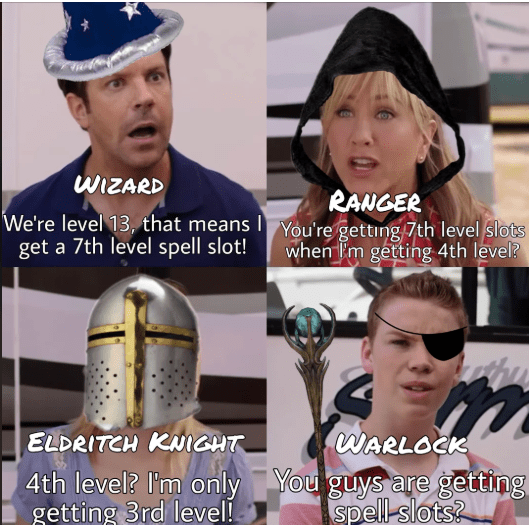
I was really stuck on this one at first. Then I remembered I play DnD, and I have a character for an upcoming campaign that needs a backstory. The character in question is a male drow warlock, who came to Waterdeep from the Underdark. He’s really hoping that Lolth will just forget about him and let him figure out how to be a person.

May 2025 Book Recommendations: AAPI Heritage Month

May is Asian-American and Pacific Islander (AAPI) Heritage Month! Asian American Heritage Month began in 1979 as Asian/Pacific American Week. In 1992, May was permanently recognized as Asian/Pacific American Month. May is a significant month in Asian-American history, as the first Japanese immigrants arrived in the U.S. on May 7, 1843. On May 10, 1869, the first transcontinental railroad was finally completed, which was constructed in part by over 10,000 Chinese workers who faced dangerous conditions, low pay, and discrimination. AAPI month recognizes the contributions of Asian-Americans and Pacific Islanders while celebrating a myriad of rich cultures. 

This month, you get extra books! Asia and the Pacific Islands are huge areas with many diverse cultures, and there’s no way I can cover everything with just a few books. This year, there are two nonfiction books focusing on Asia, as well as one for the Pacific Islands. Normally I would only have one book for Asia in either category, but Banned Book Club feels so pertinent to the time we’re living in now that I had to include it. As it’s part of Korean history and takes place entirely in Korea, I wanted to highlight a book about the Asian-American experience as well. 

A quick note on the authors’ names: in many Asian countries, the family name comes before the personal name. Additionally, Asian immigrants may choose Western names for themselves after moving to a Western country. For this list, I’m using the names the authors were published under. 

Nonfiction

Almost American Girl by Robin Ha

This graphic novel memoir explores identity, adolescence, and the ups and downs of being an immigrant in America. Robin and her mom don’t always see eye-to-eye. Even so, they’re a team with an unbreakable bond. Robin doesn’t know why her mom wants to take them on a vacation to Alabama in the United States, but their trips together are so much fun, Robin trusts her. There, Robin meets Mr. Kim and his family, all Korean-American immigrants. Then Robin’s mom startles her when she announces they’re not going back to Korea. She and Mr. Kim are getting married and staying in America. Robin is suddenly separated from her home, her friends, and her beloved comic books without warning. Her mother insists that they will have a better life in America, away from the stigma of being a single parent, but Robin – doesn’t believe her. Robin enrolls in an American high school where he struggles with fitting in, learning English, and bullying from racist classmates and a manipulative cousin. Difficulties in her mother’s marriage, especially conflicts with her in-laws, add an extra layer of stress in Robin’s new home. As Robin finds her place in America, her strong bond with her mother carries both of them through their new lives as Korean-Americans. 

Banned Book Club by Kim Hyun Sook and Ko Hyung-Ju. Illustrated by Ryan Estrada. 

Hyun Sook’s first day of college in 1983 didn’t go like she expected. Her college campus is disrupted by student protests against South Korea’s Fifth Republic, a military regime with a history of censorship, torture, and murder. Hyun tries to keep her focus on her studies and the masked dance club, but things take an unexpected turn when she gets invited to a book club. Hyun thinks that she and other students will be discussing Western classics like Shakespeare or The Scarlet Letter, but is shocked to learn that it’s actually a club dedicated to reading books banned by the regime. The banned book club does much more than that to stand up to the government, like organizing protests and publishing illegal newspapers. As Hyun learns the truth about the world around her, she becomes more and more involved with the Banned Book Club and their activities. However, fighting back puts her and her family in danger. Banned Book Club is a graphic novel memoir with a unique illustration style. I wanted to highlight this one because it explicitly talks about how disinformation and censorship are tools used to create and aid unchecked power and violence. 

Poūkahangatus by Tayi Tibble

In Poūkahangatus (incisively pronounced “Pocohontas”), New Zealand poet Tayi Tibble explores what it means to be Māori, a woman, and a Millennial/Gen Z. Written in free verse and prose poetry, the collection tackles bigotry, sexism, and Indigenous representation in media. There’s also warmth and nostalgia as Tibble writes about her mother and childhood. My favorite poems were “Cowboys and Indians” a sly condemnation of the White Savior Complex, and “Vampires versus Werewolves.” At first glance it’s a poem about being a teenager at the height of Twilight’s popularity, but unfurls into something much deeper and more complex (“It’s the boy who cried wolf,/but in reverse you cry sheep and/nobody believes your bleating”). Poūkahangatus is a fantastic North American debut, and Tibble as a poet to watch.

Bonus Book: 

Paper Son: The Inspiring Story of Tyrus Wong, Immigrant and Artist by Julie Leung. Illustrated by Chris Sasaki.

Tyrus Wong (born Wong Gen Yao) immigrated to the United States from China in 1919 as a paper son, pretending to be the child of another Chinese person who had received U.S. residency. At age 9, he was temporarily separated from his father and detained at Angel Island Immigration Station before being allowed to enter the country. Tyrus and his father faced discrimination, but nothing dampened his love of art. Tyrus would become an artist for Disney, and eventually the lead artist for Bambi. He combined Eastern and Western art styles to create the film’s gorgeous backgrounds, but was fired soon after, and never got full credit for his work until recent years. This picture book biography is told with beautiful, impressionist illustrations.

Fiction

Ninetails: Nine Tales by Sally Wen Mao

Foxes populate folklore throughout the world. In Chinese mythology, hulijing, or fox spirits, can take on different forms, both benevolent and antagonistic. Ninetails is a collection of nine stories inspired by fox spirit lore. A cursed boy attempts to befriend his ostracized hulijing classmate; a vixen takes revenge on an abuser; a woman shrinks to be the size of wasps while an imposter takes over her life. My favorite was “Lotus Stench” in which a fox and a ghost become roommates. Another story runs through the book at interludes: “The Haunting of Angel Island.” Each part tells the story of a paper daughter detained at Angel Island while waiting for her interrogation to be let into the United States. These interludes are utterly absorbing and were some of my favorite parts of the book. A collection of surreal and engaging stories and historical fantasy.

Sharks in the Time of Saviors by Kawai Strong Washburn

When he was seven years old, Nainoa fell overboard a glass-bottomed boat and into the ocean. He was returned to the boat gently, in the jaws of a shark, holding him as gently as a baby. Since then, Noa has been regarded as a miracle, and everyone in Kalihi knows it. Behind closed doors, Noa struggles with the expectations thrust upon him, while his siblings ache to be seen as something more than Noa’s brother and sister. As time passes, all three are drawn away from the Hawaiian Islands. Eldest brother Dean attends college in Spokane on a basketball scholarship with dreams of fame; Noa’s younger sister hurls herself into rigorous academics and increasingly bigger risks in San Diego. Nainoa works as an EMT in Portland as he tries to understand his abilities, and what he should be doing with his gift. Through all of this, their mother, Malia, believes that Noa has been chosen by the gods to do something great. Tragedy draws the family back together, where they must reconcile their complicated bonds and failures. Sharks in the Time of Saviors is a lyrical family saga with Indigenous Hawaiian religion and mysticism woven throughout. 

Bonus Book

Aloha Everything by Kaylin Melia George. Illustrated by Mae Waite.

A baby nestled under the branches of a koa tree grows to become a proud and strong Hawaiian woman in this vibrant picture book. Through breathtaking illustrations and verse with Hawaiian words sprinkled throughout, the reader watches the girl grow and learn. The book is a celebration of hula, nature, and Hawaiian history and culture. A glossary and pronunciation guide of Hawaiian words is included. What did hula teach her?  What did hula teach you? 

March 2025 Book Recs: Women’s History Month

Without in any way limiting the author’s exclusive rights under copyright, any use of this publication to “train” generative artificial intelligence (AI) technologies to generate text is expressly prohibited. The author reserves all rights to license uses of this work for generative AI training and development of machine learning language models


March is Women’s History Month in the U.S.! Women’s History Month began in California in 1978 as “Women’s History Week.” It was kicked off the week of March 8, International Women’s Day. In 1987, Congress designated March as Women’s History Month. It’s kind of crazy to me that Women’s History Month isn’t even 40 years old yet! 

Women’s History Month is a time to celebrate the achievements and contributions of women that have often been left out of history books. It’s also a time to celebrate the women and girls leading us into the future. 

Quick note: There won’t be a book list for April, but you’ll be getting extra for May.

Nonfiction

Jane Against the World: Roe v. Wade and the Fight for Reproductive Rights by Karen Blumenthal 

I can think of no topic that’s as controversial or ignites as many passionate debates than abortion. But how did we get here? How did women get abortions and reproductive care before Roe vs. Wade? And what comes after it? Jane Against the World looks at the history of abortion and birth control in the United States, reform and repeals, and Roe vs. Wade. The book is broken into four parts. Restrictions is dedicated to the history of abortion and abortion providers in the United States from the 1800s to the 1960s, and highlights the Comstock Act of 1873, about which much debate has arisen following the Dobbs vs. Jackson Women’s Health Organization in 2022. Reform covers reform of abortion laws, legal gray areas of performing abortions, and the beginnings of the pro-life movement, and the road to Roe v. Wade. In part 3, Roe v. Wade, Blumenthal breaks down the complex case in a way that every reader can understand, and goes into detail on court memos, opinions, especially Justice Harry Blackmum’s contribution to the Court’s decision. After Roe chronicles the pushback against Roe v. Wade, including violence against abortion providers and laws that restrict abortion at the state level. Written in 2019 and published in 2020, this book does not include the Dobbs decision that overturned Roe in 2022. While abortion is not an easy topic to read about or discuss, it’s very important to understand how we got to where we are today. 

Fiction

When the Mapou Sings by Nadine Pinede


This novel in verse begins in 1936, two years after the United States ended its occupation of Haiti. While things are still dangerous for those who would speak up against the government, Lucille and her best friend Fifina have big plans of their own. Hungry for knowledge, they dream of opening up a school for girls. Lucille’s world crashes down around her when Fifina’s father is imprisoned, Fifina disappears, and Lucille’s beloved Mapou tree is cut down by the section chief. After receiving a dream from the Mapou, Lucille confronts the section chief, hoping to find Fifina. This act of defiance puts her and her family in danger, and Lucille is forced to leave her home. She works first as a maid for a wealthy Haitian woman, and then for an American woman in Haiti for research. Lucille doesn’t know quite what to make of Mamzelle Hurston, but the two develop a special bond during their time together. Working for Mamzelle Hurston opens up new doors for Lucille, even though it may lead her into danger and hard decisions. This is a fictionalized account of the real servant of Zora Neale Hurston during the time Hurston lived in Haiti, working on Their Eyes Were Watching God. Fictionalizing real people can be a touchy subject, but the setting and themes are thought-provoking. While I thought the ending tied things up just a little too neatly, I wanted to highlight this book because it takes place during a unique time in history which gets very little attention.