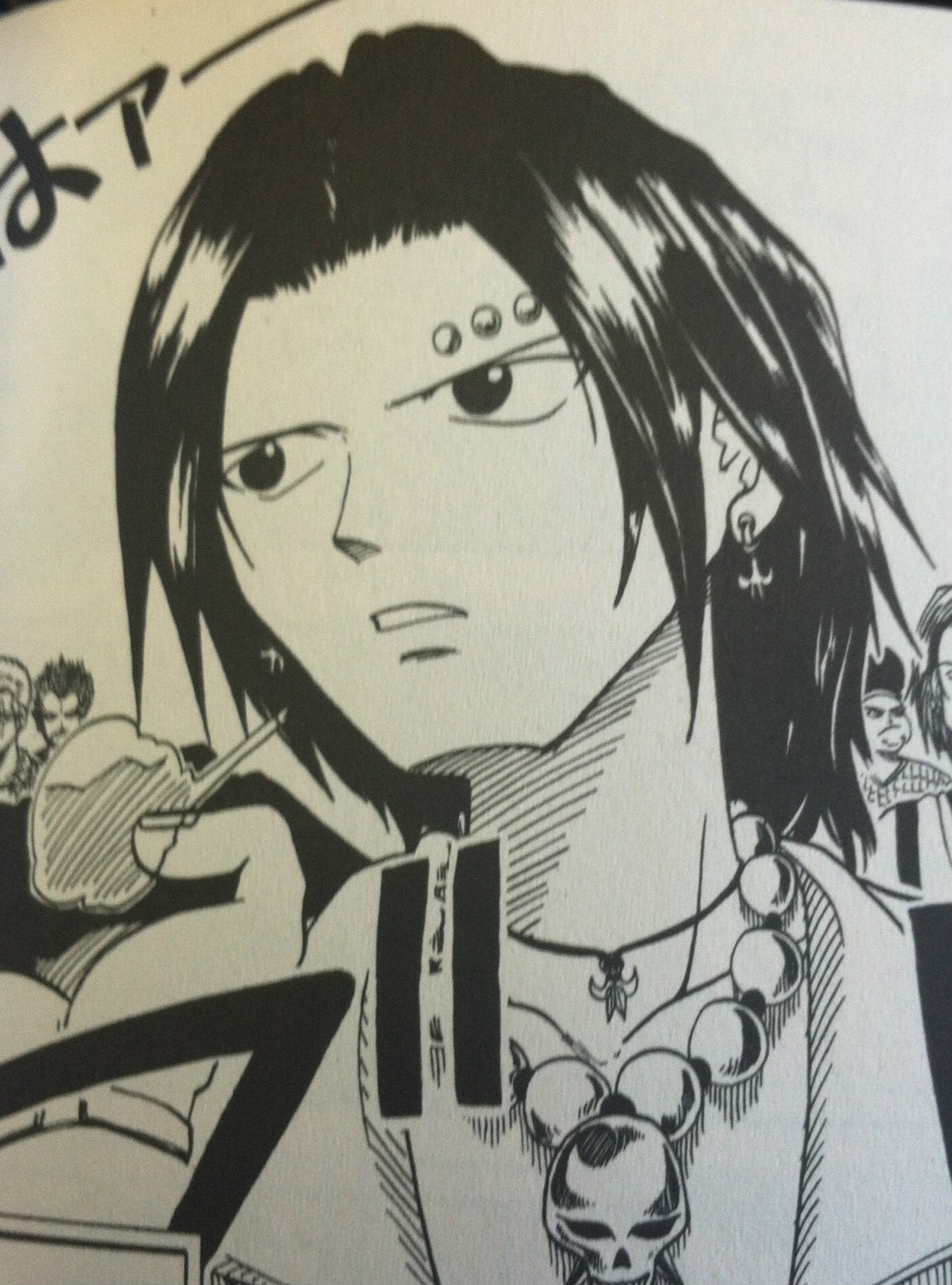
Snow Drop Chap. 4: The NPC

The chapters are divided pretty unevenly in the first volume of Snow Drop, and this is the shortest. It starts with So-Na solidifying her role as a Mary Sue by being admired by the boys from afar.
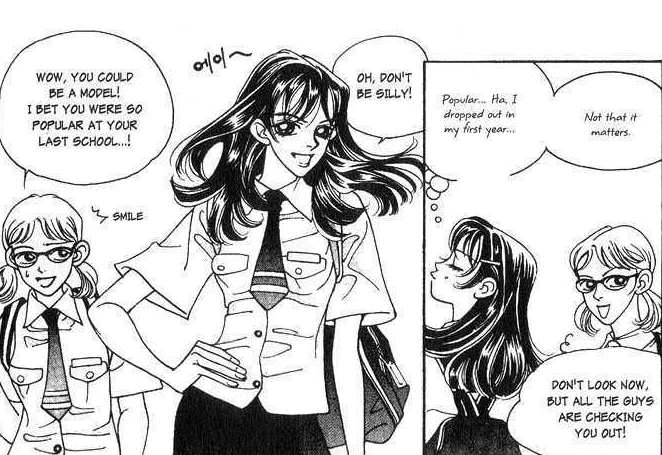
Ha-Da complains to So-Na that he didn’t get Ko-Mo’s number. So-Na, to her credit, tries to tell Ha-Da that Ko-Mo’s a guy, but doesn’t get the chance. Instead, he begs So-Na to get Ko-Mo’s number for him. Since he doesn’t know that Ko-Mo is Hae-Gi’s brother, I don’t know why he thought So-Na would be capable of getting Ko-Mo’s number. So-Na accepts the challenge anyway, and decides that she doesn’t need to talk to Hae-Gi. She goes back to her preferred MO of stalking.

Even her body guard comments that this is weird.

While she’s stalking Hae-Gi, it’s revealed that Hae-Gi is dropping out of school to work as a model full-time. His mother has suffered brain damage, and he needs to work to pay for the surgery that might heal her. I know enough about neurology (and have worked with people with traumatic brain injuries in the past) to say that while it might not be impossible, but it’s extremely unlikely that his mom would ever be 100% herself again, even if the surgery was successful. Of course, as Choi Kyang-ah never gives us specifics of the surgery, or what exactly is wrong with Hae-Gi’s mother, it’s hard to say. But there’s a reason that brain surgery is so difficult. Everyone’s brain is mapped out differently, and…

Okay, I could talk about neuropsychology for awhile, but that’s not why we’re here. Even if neuropsych is one of my favorite things ever.

The other thing that bugs me about this is that So-Na finds out all this from overhearing a conversation between Hae-Gi and another classmate. It’s not that it’s an overheard conversation – as convenient as it is – it’s the classmate that bothers me. We don’t know anything about her. She has no name, no background, and we know nothing about her. I would like to, though. She genuinely cares for Hae-Gi and doesn’t want him to drop out. She knows about his mother and how much trouble Ko-Mo gets into. It’s already been established that Hae-Gi doesn’t have any friends, but it sounds like he’s confided in this girl. She seems sweet and concerned, not manipulative and haughty, like So-Na. This is the girl I want to root for. I want So-Na to drop off a cliff, and for Hae-Gi to date a sweet, sensible girl that doesn’t bring any more drama into his already dramatic life.

That doesn’t happen. In fact, this is the last time we ever see this girl in the series. She’s not a character; she’s a sounding board. That’s really unfortunate, because in the few pages she’s in, I already like her a lot more than any of the main characters.

And that’s it. The final chapter of the first volume of Snow Drop.

It wasn’t that good.

Final Verdict: I don’t know.

Here’s one thing I know for sure: I don’t want to keep these books. I own every volume in the series, and most of them are in pretty good condition, so I’d be okay selling them. The problem with my copy in particular is that it has an ink stain that goes through several pages. I might consider giving this to someone who’s okay with that, but I don’t know anyone my age who would enjoy this series, and I wouldn’t want to give it to impressionable, adolescent minds. Like mine was, when I read it.

Anyone out there want a slightly used copy?
The Supernaturalist, Chap. 4: Cringe-Worthy Cosmo

I love the beginning of this chapter. After a long night of blasting Parasites, the heroes return to their warehouse base to eat and rest for their next escapade. And Cosmo does something that we’ve all done before: 

‘I thought we did okay tonight,’ he said. ‘No one got hurt, and we blasted a hundred of those creatures.’

Cosmo, it’s your first night out. How do you even know what a good night is for them?

Stefan threw down his army-issue spoon. ‘And tomorrow there’ll be two hundred to take their place.’

Cosmo finished his food in silence, chewing slowly. “You know what I think?”

Stefan leaned back in his chair, arms crossed.  ‘No, Cosmo–what do you think?’

Cosmo, no. Cosmo, stop.

‘I think that if we could find out where they lived, then we could do some real damage.’

Stefan laughed sharply, rubbing his face with both hands. ‘For nearly three years I’ve been doing this, and I never thought of that. Wow, you must be some kind of genius, Cosmo. Find out where they live. Amazing.’

There you go, gentle readers. Your daily cringe. Something like this has happened to me more times than I can count. I think it’s most likely to happen when you’re the new guy, but even moreso when you’re the new guy who doesn’t want to be the new guy. You give a suggestion to prove that you’re competent, and it’s immediately rejected. It’s even worse when they make you feel like an idiot.

This chapter is also the first without a lot of action in it. No rooftop falls, no sick teenagers, no Parasite blasting. I’m not complaining, though. The book’s moved at a breakneck pace so far, and now the characters – and the reader – get a breather.

That doesn’t mean it’s not interesting. Along with seeing what Satellite City looks like during the daytime, we also learn more about Mona. It’s been all but outright stated that she was in a gang, and it’s confirmed when she and Cosmo go to her home turf of “Booshka”, named after the slang term for car theft.

I think it’s a little funny how audiences respond to scoundrels. I’ve always liked roguish characters. I’ve written plenty of stories (of varying quality) with a criminal as the star, and like to play the less than law abiding characters in roleplaying games. We cheered when the crew of Serenity stole medical supplies from a hospital in Firefly, but look at it from a different perspective: a bunch of freelancers, with a history of breaking the law, robbed a hospital. Whatever the context, however quickly the hospital could be resupplied, if someone robbed a hospital in real life, we would not be so forgiving.

That’s just one of the things I love about fiction. People we would hate in real life become the ones we cheer for in books and movies.

I bring this up because real life gangs are violent and frightening, and Mona’s old gang, The Sweethearts, seems more along the lines of West Side Story than Sons of Anarchy. They’re not about smuggling drugs or guns, they’re about illegal drag racing.

Now that I’m (in theory) a grown-up with a better understanding of the world, I’d say that’s not so bad. Much better than drug smuggling, at any rate. Reading this now, it seems pretty light, but this book was also written for teenagers. You can argue all day about what is and isn’t appropriate for kids to be exposed to, but I’m glad that it didn’t get much darker than this when it came to the gangs. They play a relatively small role in the overall novel, and a more realistic version may very well have scared the shit out of me.

Even so, I enjoyed Mona’s description of the other gangs in the area.

‘Those are the Irish I’s. They specialize in truckjacking from the docks across the bridge. [. . .] Those tall guys are the Zools. Body guards mostly, they all learn some kind of African martial arts. One of those guys throws something sharp at you, and it’s all over.  [. . .] Those men with the piercings are the Bulldogs. They can strip a bike down in seconds. You turn away to tie your bootlace, and when you come back, your bike is just a skeleton.’

I like the variety, but these descriptions, and other small details in the narrative, really flesh out Satellite City.

When she was a Sweetheart, Mona was the gang’s mechanic. The girl mechanic trope isn’t exactly an original concept at this point, but it’s one I’ve always liked. I like being handy when I can, and it’s good to know what to do when your toilet breaks and you can’t call your dad for help. That said, I rarely figure out things like that without guidance, and at this point I’m much more likely to pay someone to fix things for me than do it myself. Maybe the reason I like this archetype so much is because it’s what I’m not. Hell, maybe that’s the reason I like criminal characters, too.

I keep looking for more of Cosmo’s character to stand out, and it’s finally starting to. At least, his timidity is showing. As he and Mona walk through Booshka to get parts for the Supernaturalists’ vehicle, he shrinks, stares at the ground, trying to make himself small and invisible. Mona, on the other hand, tells him that he needs to walk tall, or the gangs will eat him alive.

C’mon, Cosmo, I know you can do better than that.

The Supernaturalist, Chap. 3: Blowing Bubbles

When I was in high school, my dream was to become an author. I would stay up late writing, and I would read author’s websites, and blogs written by people trying so damn hard to get published. I guess it’s still my dream, but I’ve also learned that you can’t live on the written word. Sooner or later, we all have to grow up and get real jobs. Despite what my younger self might think, being a grown-up isn’t all that bad. In fact, it can be pretty fun. Sure, I don’t have as much free time as I used to, and I have more responsibilities, but I also have money and more freedom. I want to go visit my friends in New Jersey for a weekend? I can just hop in my car and do that. But it’s really all a trade-off.

But I’ve gotten off track now. Point being, I used to read a lot about how to get published, and I learned that your first three chapters have to be really strong. I used to worry that the opening chapters of my cliché fantasy story wouldn’t stand up to editor scrutiny, especially because the plot didn’t really kick off until the third chapter.

Of course, rereading my old work now, I can guarantee that no publisher in their right mind would pick up my various novels.

I’m not a publisher of any kind, and I daresay that this book wouldn’t have any trouble catching interest in the first three chapters. Like I mentioned before, action in The Supernaturalist is continuous. Even when things slow down and there’s no Parasite-blasting, there’s always something happening.

With the magic of science fiction (shut up, that phrase totally makes sense!), Cosmo and Mona have recovered enough to go Parasite hunting. In the past two chapters I’ve talked about how Colfer mainly uses the narration to explain the world, but this chapter uses dialogue more frequently. Not only is Cosmo the new guy on the team, but he’s also spent his entire life in an orphanage. This means that he’s a great “Straight Man” character. 

When you’re writing sci-fi or fantasy, you need a way to explain the “rules” of the universe to the audience. Up to this point, Colfer has mainly put those explanations in the narration. In the first chapter, for example, Redwood threatens to “wrap” the escaping Cosmo and Ziplock, and the following paragraph explains that “wrap” means to “shrink wrap” someone, or coat them in a layer of plastic so they can’t move. In this chapter, the other three main characters have to teach Cosmo about the equipment they’re using, and what sort of crisis they’re running into. It’s his first day on the job, and he’s got a lot to learn.

Mona explained to Cosmo while strapping an extendable bridge on his back. ‘The Big Pig is a twenty-four hour city, so factories revolve their buildings just as they revolve their shifts. Everybody gets eight hours quiet and eight hours south facing. For the other eight, you’re working, so you don’t care where your apartment is. The Satellite tried to squeeze two apartments into one space. Nasty.’

Cosmo shuddered. The Satellite had messed up again. This was becoming a regular occurrence.

There. We’ve just learned about the technology the Supernaturalists are using, and a little bit about the world, too. If it isn’t obvious now, I much prefer when information is presented to the reader through dialogue, but adding Cosmo’s thoughts on the matter also works well. It makes the story flow better, I think, and doesn’t take the reader out of the world.

Colfer also gives us more information about the universe in this chapter. Most of this doesn’t get expanded upon later in the novel, but it helps flesh out the world itself.

Diplomatic immunity had become more or less redundant since the One World treaty, but there was still the odd remote republic that held on to its rights.

One World treaty? I would probably read a novel based on just that.

Cosmo’s first night out with the group is pretty action packed. They swoop into one of the apartments and blast Parasites, which burst into blue bubbles when the jolt of energy from the lightning rod hits them. Like the rest of the book, this chapter is fast-paced, and Cosmo’s doing the best he can to keep up. It’s a fun chapter that explains a lot of the technology the Supernaturalists use, like collapsible bridges to navigate across gaps in rooftops and “gumballs”, a nonlethal but nasty goop that can also be used with the lightning rods.

Mona hits the Parasites with deadly accuracy, Stefan kills them obsessively, and Ditto heals wounded victims. Cosmo, on the other hand, isn’t so sure about all this. The first time he takes aim at a Parasite, he can’t bring himself to shoot at it. When he sees a group of them sucking life energy out of injured people, he realizes – or, perhaps, remembers – what monsters they are, and is finally able to start blasting them.

The Supernaturalists attract a fair amount of attention, bursting in, shooting at apparently nothing, and then fleeing as soon as the lawyers arrive. Lawyers might not sound so bad, until you realize that these guys don’t carry brief cases; they carry lightning rods and rappelling rigs. Atticus Finch they ain’t. Their job is to make sure the victims at the scene sign waivers, and make sure no one gets away from the scene. There’s a delightful exchange between our heroes and a pair of lawyers, which ends with the lawyers getting hit with the aforementioned gumballs after Stefan distracts them. And then they’re off to the next crisis.

In every action movie I’ve ever watched, the explosions don’t start right away. It starts with the hero – usually some divorced, tough dad with a son who hates him – in his every day life. Going to work, getting a beer with friends, trying to get your kids to love you again. Then the aliens come, or the daughter gets kidnapped, and that’s when shooting and throat-punching begins. Between Cosmo falling off the roof and Mona’s nearly fatal illness, we haven’t actually seen a normal day for this motley crew until this chapter.

Going out to emergencies and blasting Parasites, it turns out, is a normal day.  The rest of the novel can’t be like this, or it would get pretty boring. This chapter was really laid out to show what their day-to-day (or, rather, night-to-night) life is like. Which tells me that the novel is going to change from here on out.

One thing that kind of annoys me is that Cosmo’s not very defined as a character. It kind of makes sense, because he spent his whole life in an orphanage, and is out in the real world for the first time in his life. In the previous chapter, Cosmo even notes that the only thing he ever wanted was to get out of Clarissa Frayne, and now that he’s done that, he doesn’t know what he wants. He showed more personality when he hesitated killing the Parasites, but he’s just not that well of a defined character.

Following Mr. Plinkett’s memorable characters test: describe a character without mentioning their appearance, occupation, or role within the story.

Stefan: Tall, dark, and brooding. He’s a natural leader, dedicated to his goal, loves and misses his mother, obsessive when it comes to hunting Parasites.

Mona: Street-wise, quick to act, but also sassy. We know she has a soft spot at Stefan’s mention of her always wanting to take in strays.

Ditto: Pacifist, humorous, alturistic, compassionate, and left his well-paying hospital job to work with Stefan. To him, helping people is more important than getting paid.

Cosmo: Hates Clarissa Frayne, isn’t sure what to do now that he’s out and…uh…

Well.  The good news is that it’s still early in the book, and Cosmo has time to develop his character. That is the point of main characters, after all. They change.

I’ll just leave you with one last quote, and if this doesn’t explain why fifteen-year-old me though Stefan was sexy as hell, nothing will:

“Stefan would be a big hit with the girls, if he ever stopped working long enough to bring one out on a date. He had all the right ingredients. Tall, dark, handsome in a beaten-up-once-too-often way. But Mona knew that Stefan did not have time for himself, let alone anyone else. He only had time for the Parasites.”

Damn. 

Rave Master Chap. 13: It MUST be a Glass Ceiling

This is it. We’ve finally come to the last chapter of the second volume of Rave Master, lucky number 13. It moves fast, and there’s not a lot of plot to talk about here. The chapter begins with Musica #2 facing off against Lance.

Lance’s sword is able to create illusions of beasts when he swings it. He uses the illusions to distract Musica, and then go in to attack. After his first attack, things get a little stupid.

First, Lance stops the battle because Elie’s time is up. That is, the deadline for Haru to arrive with Rave is past. Wounded Musica doesn’t try to stop him, other than yelling at him. Elie, doesn’t move, even though she was cut loose and her legs function absolutely fine.

Seriously. She doesn’t even attempt to escape. She doesn’t get up, doesn’t run, just sits there and screams Haru’s name. I know that she’s scared, and that Haru was supposed to save her, but I don’t think my last word would be my rescuer’s name, especially when that rescuer doesn’t show up in time. My last words are much more likely to be “Fuck you!” or “This is a cool way to die!”

Fortunately, Haru comes bursting onto the scene…through the ceiling.

This is something I thought was awesome as a kid, and ridiculous as an adult. It just leaves me with so many questions:

  • How did Haru get up to the roof in the first place?
  • Musica already cleared the yard of guards, why didn’t he just go through the front door?
  • Lance essentially invited Haru to come and bring him Rave, so shouldn’t the goons be expecting him and just let him through?
  • How many floors does this place have?
  • How thick is that roof, that a sixteen-year-old kid can break through?
  • Shouldn’t Haru have some kind of injury from falling through the ceiling?
  • Why the ceiling?
  • Should I give up trying to apply logic to this universe?

Musica warns Haru about Lance’s tactic, but Haru already knows. Musica the Blacksmith taught him secret of Lance’s sword: that it can only make illusions when it does a full swing. By blocking his attack, Haru is able to prevent him from creating any distracting illusions. Just when it looks like Haru has the advantage, Lance creates another illusion, this time without swinging his sword…

And that’s it. That’s the end of volume 2.

Re-reading this, I remember why I loved the series when I was younger, but I also understand why my slightly older sister said that it was dumb. The Rave Master universe is a weird, goofy place, but it’s also filled with villains that don’t fit the light-heartedness in the background. One chapter is about saving dogs, another chapter is about a man’s family getting massacred. I think the biggest problem I have is that the darker problems get solved too easily, like Musica the Blacksmith suddenly giving up alcohol after meeting Haru. This time around, I thought Haru was dumb, rather than heroic, but I think that idealism is a big part of his character. The villains weren’t very interesting, and Georco was more annoying than threatening.

Even so, it was fun to read through again.

Final Verdict: For Sale

Even though I bought it more than ten years ago, the book itself is in pretty good shape. Rave Master is an entertaining series, and I’m sure some other young otaku will enjoy it.

Next, I’ll be reviewing a high school favorite of mine: The Supernaturalist by Eoin Colfer. Stick around!

Rave Master Chap. 9: Speedy Sobriety

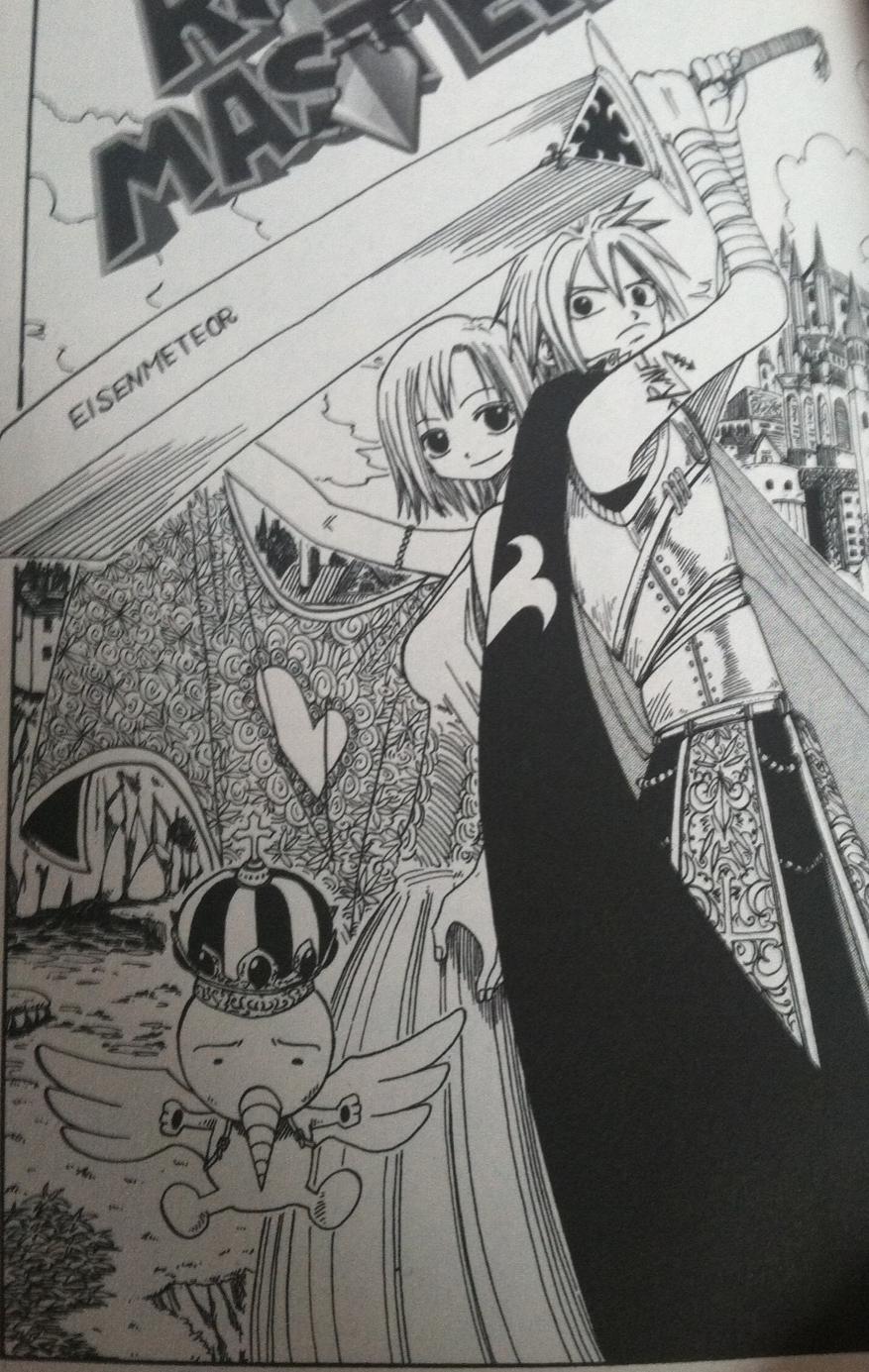
There’s one thing I’ve always loved about Rave Master: the cover art for each of the chapters. It’s the sort of thing I would draw if I had any artistic ability. Every time I see one of them I think that Mashima must have had a grand time working on them. They don’t have anything to do with the story, they’re just fun. The one for chapter nine, though, was my favorite as a kid and is my favorite as an adult.

I just love that! Where’s that manga? I would absolutely read Rave Master as a medieval fantasy. Of course, I’m reading it now anyway, so….

Anyway, Haru, Elie and Plue make their way to Punk Street. Like the rest of the manga so far, I’m having the most fun looking at the settings that Mashima’s put in. There’s a lot to see, and often jokes or small stories going on behind the main one. It’s an enjoyable Easter egg hunt.

The trio decides to split up, Haru and Plue to get food, and Elie to go gambling. I don’t know exactly what money Elie has to go gambling with, as she spent everything she had on the dog race earlier. I’m pretty sure she didn’t get any of her cash back after blowing up the stadium. They both agree to look for Musica and meet back later.

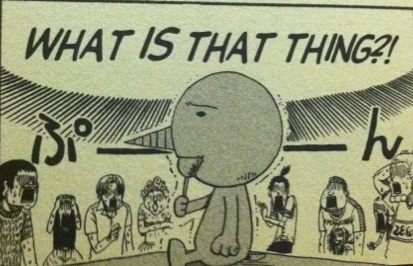
Anyway, I had to stop reading for a minute when I came to this panel:

FINALLY.

It always bewildered me that people would see Plue and think, “it’s a dog”. Or, worse, “it’s a bug”. People are actually freaking out about the weird thing eating lollipops.

I remember watching the anime Gankutsuou when I was in high school, and one of the characters in it had blue skin. One, out of the entire cast. No one every said, “hey, he has blue skin, that’s weird.” It bugged the hell out of me. So, everyone’s bewilderment over what the hell Plue is – even if only for one panel – is awesome, and so much better than the crowd accepting him the minute the see him.

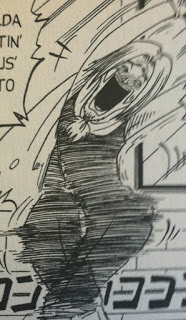
Anyway, Haru runs into a crazy drunk guy at the restaurant who claims to know where to find Musica. Haru tries to get the drunk guy home, who engages in some dancing and some crying, antics that were hilarious to me as a kid, but not so much anymore.

Alcohol dependency! Hilarious!


More hilarity does (not) ensue when Plue gets drunk as well. Haru, frustrated by all this, throws a conveniently placed bucket of water at the drunk. As soon as the water hit him, he begins to melt–

–No, wait, that would make more sense than what actually happens next.

As soon as he gets doused, he sobers up.

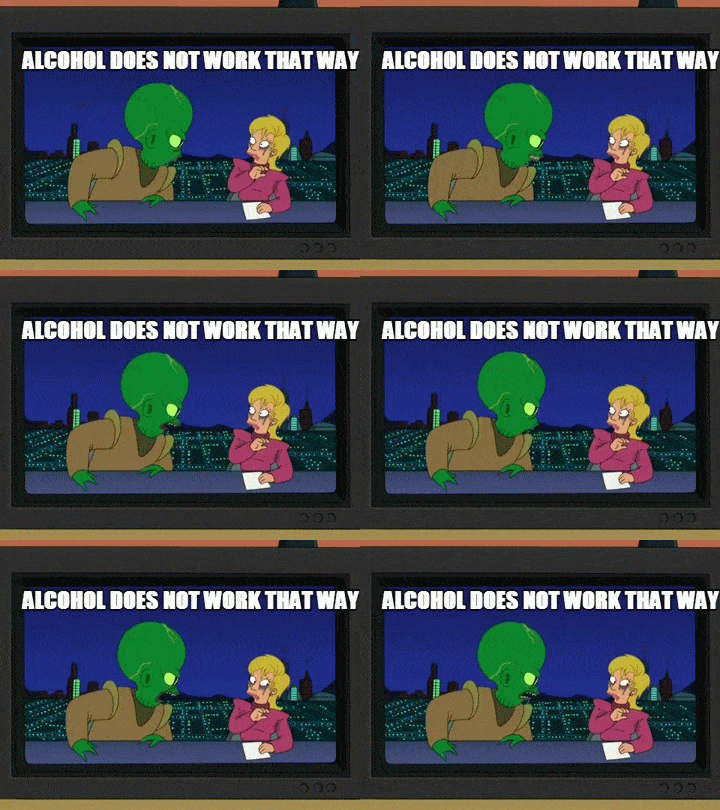
This is another trope I can’t stand. Please allow Morbo to explain:

Listen up, anime. We need to have a little talk about alcohol:

  • If you are drunk and have a bucket of water thrown on you, you don’t become sober. You become drunk and wet.
  • If you’ve been off your face for days and suddenly hear that the man who murdered your father is in town, your oath of vengeance will not sober you up. You will be drunk and pissed off.
  • If you’ve drank too much sake at the cherry blossom festival and an alien attacks, you will not become sober just long enough to save the day. You’re more likely to trip over your katana that your master handed down to you than anything.
  • If you wait long enough and rehydrate yourself, you will become sober, often followed by a hangover.

I know that suspension of disbelief lets fiction get away with a lot, but this is ridiculous.

Anyway, the magically sober man finally reveals that he is Musica, the legendary blacksmith, surprising absolutely no one. He agrees to fix the Ten Powers sword with the caveat that Haru stays away from the shop during that time.

One weird thing I remember about Rave Master is that the name of Haru’s sword changes between the first and second volumes. The sword itself has ten different forms, and Haru can switch between its forms if he has the right Rave stone. In the first book, it was called the Ten Commandments. Maybe because I was raised Catholic and went to Catholic school for most of my life, I thought this was a completely badass name for a sword. In the second book, it’s known as the Ten Powers. I have to wonder if Mashima changed the name of the sword, if there was some kind of translation error, or if keeping the name “Ten Commandments” was too potentially offensive for Western audiences.

Tokyopop – at least when I was reading manga all the freaking time – wasn’t known for being consistent with names, especially with fantasy series when there’s lots of made-up names. I thought that the sword’s name might change from volume to volume, but it remained the “Ten Powers” sword ever since.

Translated manga is weird.

If you ask me, Haru probably shouldn’t have left his sword with a drunk guy that he met not ten minutes ago. Especially because the minute he leaves the smithy, you find out Musica agreed to give Haru’s Rave stone to Demon Card.

So…Demon Card doesn’t know Haru’s in town, didn’t know Haru would be going to Musica, and trusted an alcoholic with that is incredibly important.

Oh, wait, maybe they trusted Musica with it because he can magically sober up.

No, Rave Master, I’m not forgiving you for that one.

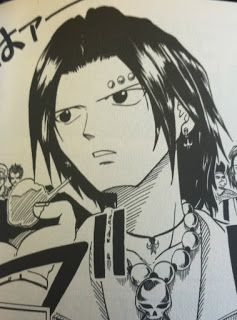
C’mon, he’s a total bad boy!

At the same time, Elie is gleefully leaving a casino and runs into another guy…who also happens to be named Musica. Now, as a thirteen-year-old girl reading this, I was always on the lookout for bishis. That is, the pretty anime boys worthy of squealing over. The moment I saw Musica #2, I knew he was the bishi I had been waiting for.

Yep, I immediately declared him the hot guy and ran to show my sister his picture. She saw him and informed me that he was “butt ugly”. And if my older sister didn’t like he was cute, then he probably wasn’t. After all, she knew more about that kind of thing than I did.

And so chapter 9 ends, with me wondering if Musica #2 was cute or not.


Rave Master Chap. 7-8: My Sister Taught Me That!

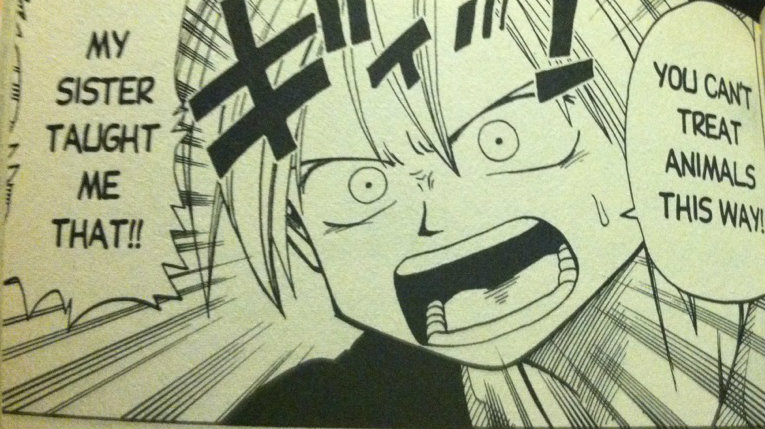
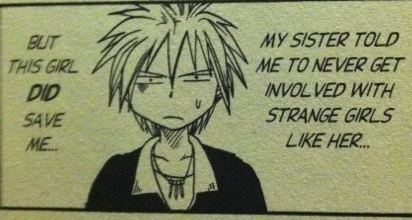
Haru was mostly raised by his older sister, and he really took whatever she taught him to heart. I know this, because he’s always talking about, “my sister taught me that!” I remember that he said something along those lines a lot early in the series, and I remember that it really annoyed me. Possibly because I was thirteen when I first read these books, and therefore my older sister – if you were to ask me – was an idiot. Re-reading these now, it still bugs me a little bit. Not because Haru’s taking his older sister’s advice, but because he mentions “my sister told me…” so often. The other reason is because everything that Haru’s sister has taught him is completely obvious.

Take a drink every time Haru talks about what his sister taught him.

Really, Haru? Dogs are getting impaled on spikes and exploded, but you need your sister’s advice to figure out that animal cruelty is bad?

Despite Elie’s warnings, Haru interrupts the race again. This was Georco’s plan all along, of course: to put Plue in the dangerous race and lure Haru out. Now, there is one thing, and one thing only I will applaud Georco on: he learned from his mistakes. Instead of fighting Haru out in the open, where another explosion could blow his gaseous form away, Georco traps him in a giant steel box with no way out – in other words, no fresh air for Haru to breathe. It kind of begs the question why Georco had a giant, ten foot tall box laying around in the first place, but I can forgive that, because the ridiculous trap was pretty effective. However, I cannot forgive Georco for constantly referring to it as the “Smoke Hiz-ouse”. A part of me died every time I had to read that phrase.

Without oxygen, Haru can’t make explosions, and so it looks like he’s screwed.

The day is saved by Elie, and I love that, purely because it’s the girl saving the guy, and not the other way around. She uses her tonfa blasters (which are like side-arm cannons, I actually like them) to blow up the smoke house to let Haru escape. Plue manages to steal Georco’s dark bring, so he can no longer turn himself into gas. Out in the open again, Haru delivers the final blow to Georco, thus finishing our first Monster of the Week.

With all the action, there wasn’t a lot of plot in Chapter 7, so we’ll move on to Chapter 8.

Now that Georco’s been taken down, Haru and Elie take a minute to talk. Of course, this is after Elie nearly blows up half the stadium with her tonfa blasters.

That’s actually good advice, Haru. Don’t stick it in crazy.

 It turns out the Elie knows where to find Musica, the blacksmith that can repair Haru’s sword. She also reveals what little there is to reveal about her backstory: she has lost her memory. It’s a tired trope at this point, but what I like about Elie is that she’s not angsty about it. There’s plenty of “waaah, I can’t remember!” characters out there, but Elie is happy, excitable, and generally a fun character, rather than being mopey about it. She doesn’t take up too much time feeling sorry for herself, which is nice to see. Yes, she would like her memory back, but she’s also not going to let herself be miserable over it.

Haru and Elie decide to leave Hip Hop Town together. They say that Demon Card is out of commission, so they won’t have to pay the fee to leave. But how does punching the daylights out of Georco take down an evil organization that’s clearly taken over the town? I’m sure Georco has some underlings who would gladly take over his role as boss. Or maybe that’s the end of dog racing in Hip Hop Town forever because Elie completely destroys the stadium.

Seriously. She’s so excited to be leaving town with Haru that she lets off another couple shots from her tonfa blaster and the stadium starts to collapse. Her reason:

The duo escape the stadium by…jumping on a chariot pulled by dogs. I’m not joking. This whole series is so goofy, though, that I think I’ve learned just to go with it by now.

 We’re nearly at the end of the chapter, but there’s just one more thing I want to bring up. We get a brief cutaway to some of Demon Card’s generals, hanging out in the fortress Rhapsodia.

This is when it hit me.

Rhapsodia, like “rhapsody”. Song continent. Hip Hop Town and Punk Street.

THE TOWNS ARE ALL NAMED AFTER MUSIC GENRES.

Ever since I was a kid I thought that all the town names in Rave Master were really dumb. And I never once thought there was a musical motif in the names. HOW THE HELL DID I MISS THAT?

It turns out the town names aren’t dumb; I am.

Prologue: What is This Nonsense?

A couple months ago, I embarked on a new adventure: cleaning my bedroom. This is a feat that has been undertaken many times, but is rarely ever completed. Now, the project has started again with new gusto, but has hit an unexpected road block.

The books.

It has become clear to me that I am a book hoarder. As I struggle to find my bedroom floor, I keep finding more and more books, some dating as far back as elementary school. The biggest problem, the real detriment to completing this feat of cleanliness, is figuring out what to do with the multitude of books.

From the full bookcase…

The overflowing shelves…

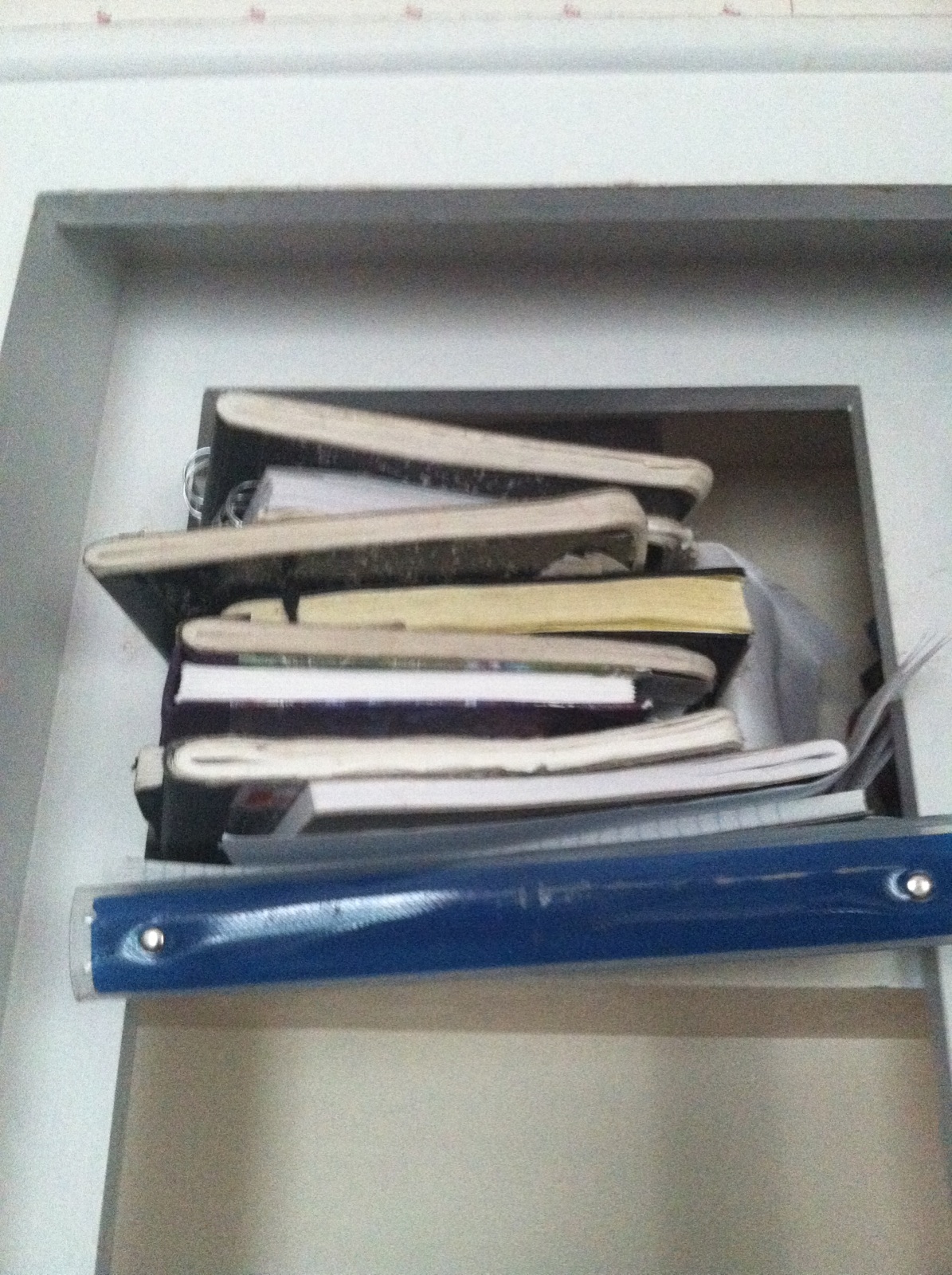
The cluttered cupboards…

And my library is beginning to make its way into the rest of the house…

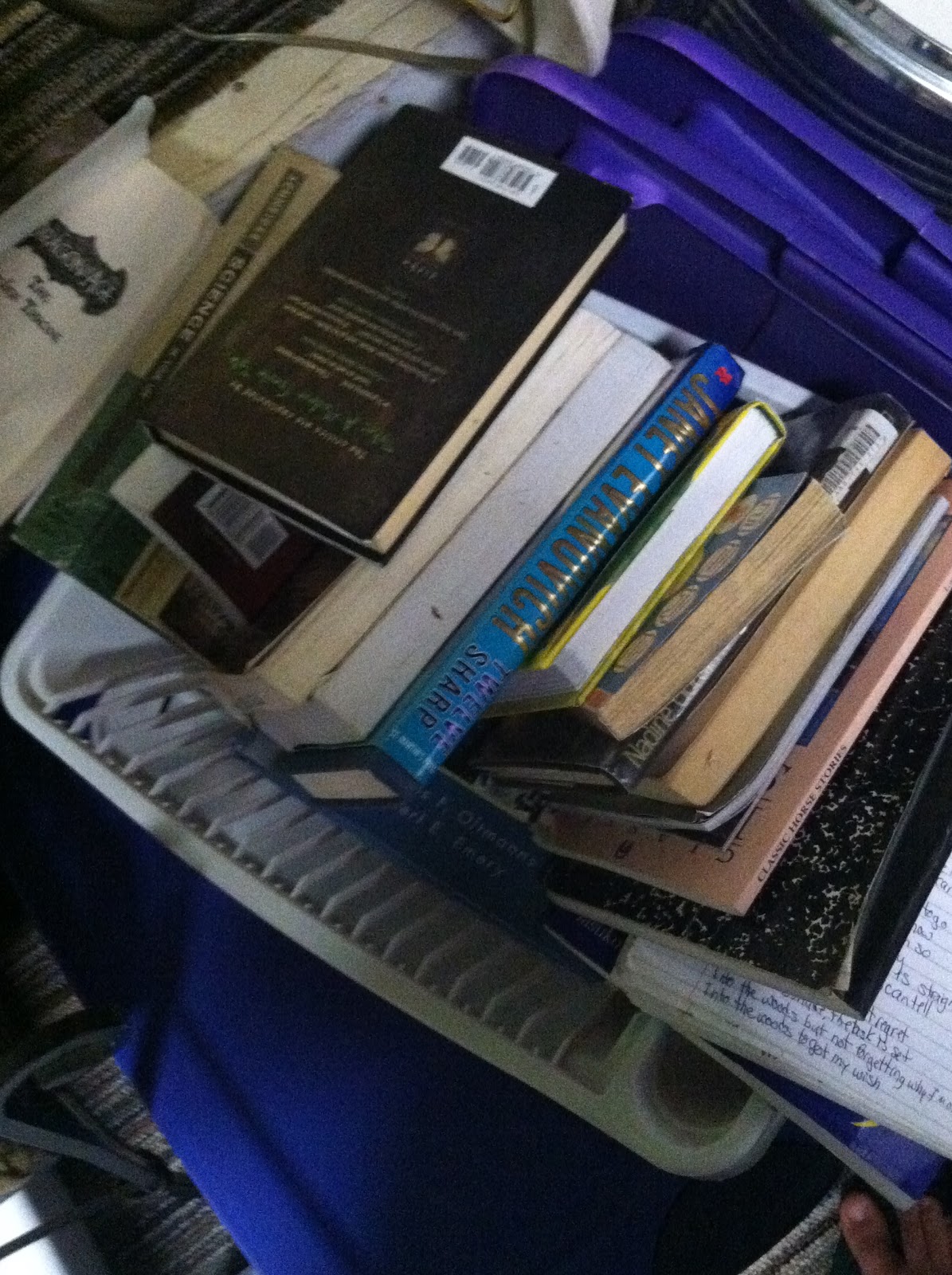
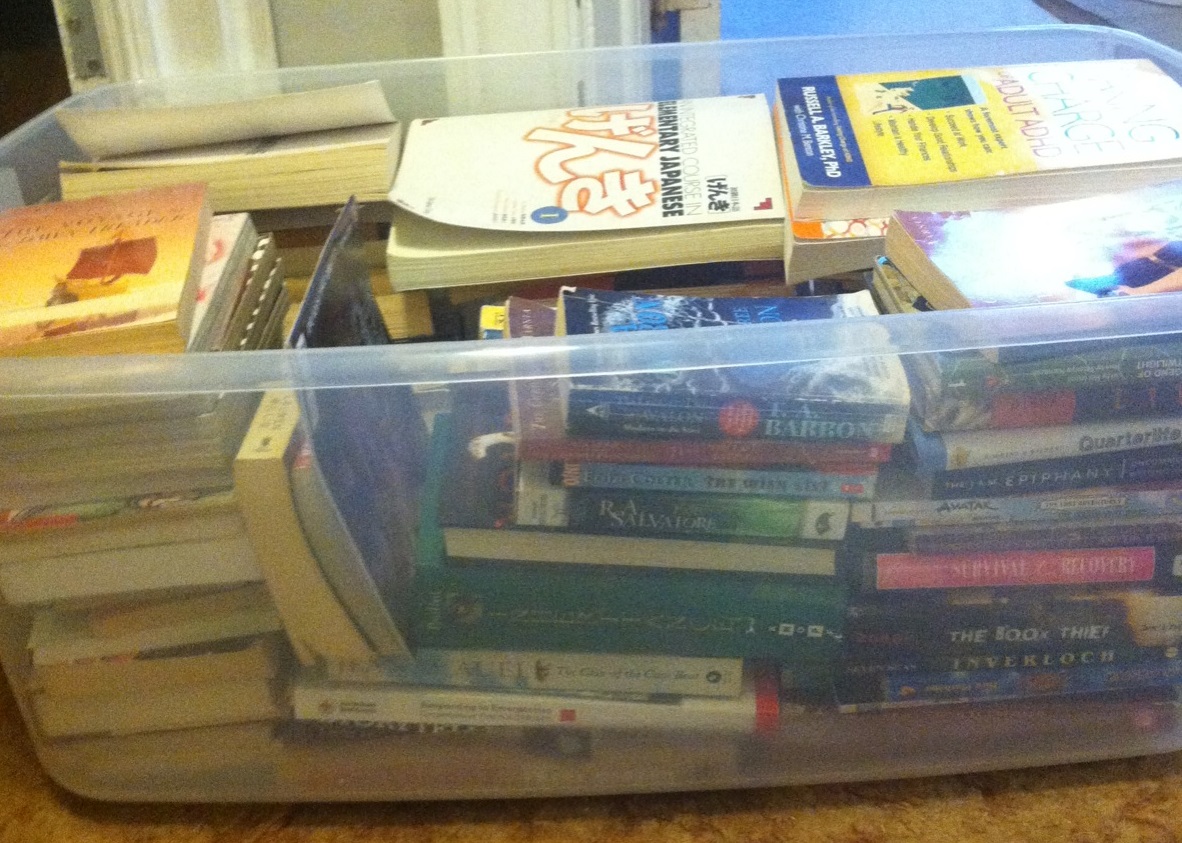
Oh, and in case you’ve ever wondered, here’s what 83 pounds of books look like:

It’s become clear to me: something must be done.

If you’re a reader like me, I think you’ll agree that getting ride of books isn’t a task that can be undertaken lightly. From the books you’ve read once and never touched again, the ones you seem to re-read every year, or the ones you keep around purely for sentimental value, it’s not easy to decide which should stay and which should go. That’s where this blog come in.

I’ll be reading through this nonsense – indeed, re-reading my childhood and adolescence – to help determine the fate of all the books that I loved so much growing up. A few times a week, I’ll be reviewing a chapter or two here, to help determine what should stay and what should go.

So fasten your seatbelts kids, it’s gonna be a verbose ride.